Kirjojen hintavertailu. Mukana 12 657 676 kirjaa ja 12 kauppaa.

Kirjailija

Dominic Pettman

Kirjat ja teokset yhdessä paikassa: 21 kirjaa, julkaisuja vuosilta 2006-2025, suosituimpien joukossa Look at the Bunny – Totem, Taboo, Technology. Vertaile teosten hintoja ja tarkista saatavuus suomalaisista kirjakaupoista.

21 kirjaa

Kirjojen julkaisuhaarukka 2006-2025.

Ghosting

Ghosting

Dominic Pettman

JOHN WILEY AND SONS LTD
2025
sidottu
Abandonment is as old as time, but ghosting is a modern twist on this ancient experience. It translates this age-old phenomenon into our modern world of screens, delete buttons and blocking options. Ghosting is not only an unpleasant experience, or cowardly act, but a symptom of our increasingly spectral – that is, mediated and virtual – relationship to the world. The overabundance of new modes of communication has invited an almost infinite number of contacts and conversations. At the same time, it has also offered an unprecedented opportunity for ignoring messages from others. And just as we invented the car crash when we invented automobiles, we also encouraged ghosting when we created the internet.Ghosting creates an empty space in our minds: a space faithfully tracing the silhouette of the one who ghosted us. But unlike traditional ghosts, today’s ghosters simply disappear, leaving behind a form of haunting that is closer to mourning: mourning for someone who is not in fact dead. In putting a kind of preemptive mourning into our everyday affairs, ghosting tells us much about the current human relationship – or non-relationship – to a shared sense of mortality, purpose, and spirit. This book – the first sustained analysis of ghosting – traces the source of this vexed experience to, and through, our current media ecology, technological networks, political landscape, collective psychology, romantic mantras, and deep sense of social neglect.
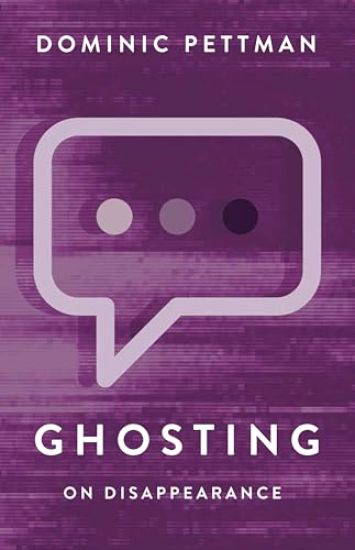
Ghosting

Ghosting

Dominic Pettman

JOHN WILEY AND SONS LTD
2025
nidottu
Abandonment is as old as time, but ghosting is a modern twist on this ancient experience. It translates this age-old phenomenon into our modern world of screens, delete buttons and blocking options. Ghosting is not only an unpleasant experience, or cowardly act, but a symptom of our increasingly spectral – that is, mediated and virtual – relationship to the world. The overabundance of new modes of communication has invited an almost infinite number of contacts and conversations. At the same time, it has also offered an unprecedented opportunity for ignoring messages from others. And just as we invented the car crash when we invented automobiles, we also encouraged ghosting when we created the internet.Ghosting creates an empty space in our minds: a space faithfully tracing the silhouette of the one who ghosted us. But unlike traditional ghosts, today’s ghosters simply disappear, leaving behind a form of haunting that is closer to mourning: mourning for someone who is not in fact dead. In putting a kind of preemptive mourning into our everyday affairs, ghosting tells us much about the current human relationship – or non-relationship – to a shared sense of mortality, purpose, and spirit. This book – the first sustained analysis of ghosting – traces the source of this vexed experience to, and through, our current media ecology, technological networks, political landscape, collective psychology, romantic mantras, and deep sense of social neglect.
Seeking Attention

Seeking Attention

Dominic Pettman

Watkins Media Limited
2025
pokkari
A book depicting the intimate complicity between attention and identity. . . "You are what you pay attention to."Simone Weil famously stated: "Attention is the rarest and purest form of generosity." But what, in fact, counts as attention? Especially in our discombobulated age?Seeking Attention contributes to the burgeoning discussion around "attention studies," in a novel format - one that seeks to be as accessible as it is thought-provoking. The book presents a series of short "portraits" of different archetypal figures - the detective, the fan, the shrink, the parent, the lover, and others - with a focus on the specific ways in which they pay attention (to themselves, to others, to the world, and so forth). Using this frame allows the reader to reconsider the ways in which they themselves have likely been taking their own attention for granted. The figures featured in the book share certain traits, but also exhibit their own idiosyncratic relationship to the situations and contexts in which they find themselves. In this sense, the book is a somewhat mischievous phenomenology. Each "type" represents a different relationship to attention, and thus reframes its many failures, compromises, blind-spots, and discontents. (As well as its occasional triumphs.)By paying attention to attention, this book offers a rogue's gallery of customary ways in which we not only navigate the world, but help co-create it. These thirty portraits aim to inspire readers from diverse backgrounds to think more carefully, and in a more textured way, about precisely why it is so difficult these days for us to pay attention in a sustained way. As such, the book offers some models - traditional and emerging - for practicing multi-sensual ways of being truly present: ones that potentially embody the collective will to work effectively against all the insidious avatars of the Industrial-Distraction Complex.
Telling the Bees

Telling the Bees

Dominic Pettman

FORDHAM UNIVERSITY PRESS
2024
sidottu
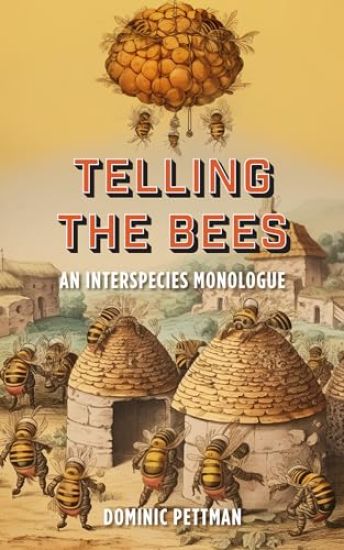
In a bid to wean himself off Facebook and Twitter, media scholar and cultural theorist Dominic Pettman decided to revive an ancient custom. He decided to tell the local bees of his thoughts, theories, musings, and meditations. The result was an apian journal that parses the daily news and the routines of modern life in a more sustained and reflective way than the Pavlovian posts to which we are so addicted. The account that emerges from Pettman's regular discussion with the bees forms a compelling portrait of the tumultuous period running from the Fall of 2019 to New Year's Eve, 2022. What began as a reflection on the traumatic effects of an "unprecedented" presidency soon evolved into a real-time response to the equally extraordinary events of the pandemic and its aftermath. One key concern that emerges from Pettman's ongoing discussion with the bees is the extent to which, thanks to the alienating effects of neoliberalism, we were already engaged in an advanced form of social distancing long before anyone had heard of COVID. Other key themes include education, human-animal relations, climate change, mediated intimacy, attention ecologies, collective memory, slow violence, the self-fulfilling prophecy that is New York City, the never-ending end of history, and the mundane strategies we share in a bid to forge on, despite the accumulating challenges of the twenty-first century. Telling the Bees is an invitation to rediscover the art of reflection and a profound meditation on human connection, alienation, and our collective yearning for intimacy in an age of distance. Through what Pettman describes as an "interspecies monologue," readers are treated to a unique perspective on navigating the complexities of the twenty-first century, inspired by the ingenuity and resilience of our natural cohabitants.
Telling the Bees

Telling the Bees

Dominic Pettman

FORDHAM UNIVERSITY PRESS
2024
pokkari
In a bid to wean himself off Facebook and Twitter, media scholar and cultural theorist Dominic Pettman decided to revive an ancient custom. He decided to tell the local bees of his thoughts, theories, musings, and meditations. The result was an apian journal that parses the daily news and the routines of modern life in a more sustained and reflective way than the Pavlovian posts to which we are so addicted. The account that emerges from Pettman's regular discussion with the bees forms a compelling portrait of the tumultuous period running from the Fall of 2019 to New Year's Eve, 2022. What began as a reflection on the traumatic effects of an "unprecedented" presidency soon evolved into a real-time response to the equally extraordinary events of the pandemic and its aftermath. One key concern that emerges from Pettman's ongoing discussion with the bees is the extent to which, thanks to the alienating effects of neoliberalism, we were already engaged in an advanced form of social distancing long before anyone had heard of COVID. Other key themes include education, human-animal relations, climate change, mediated intimacy, attention ecologies, collective memory, slow violence, the self-fulfilling prophecy that is New York City, the never-ending end of history, and the mundane strategies we share in a bid to forge on, despite the accumulating challenges of the twenty-first century. Telling the Bees is an invitation to rediscover the art of reflection and a profound meditation on human connection, alienation, and our collective yearning for intimacy in an age of distance. Through what Pettman describes as an "interspecies monologue," readers are treated to a unique perspective on navigating the complexities of the twenty-first century, inspired by the ingenuity and resilience of our natural cohabitants.
Sad Planets

Sad Planets

Dominic Pettman; Eugene Thacker

JOHN WILEY AND SONS LTD
2024
sidottu
“Everything is sad,” wrote the Ancient poets. But is this sadness merely a human experience, projected onto the world, or is there a gloom attributable to the world itself? Could the universe be forever weeping the “tears of things”? In this series of meditations, Dominic Pettman and Eugene Thacker explore some of the key “negative affects” – both eternal and emergent – associated with climate change, environmental destruction, and cosmic solitude. In so doing they unearth something so obvious that it has gone largely unnoticed: the question of how we should feel about climate change. Between the information gathered by planetary sensors and the simple act of breathing the air, new unsettling moods are produced for which we currently lack an adequate language. Should we feel grief over the loss of our planet? Or is the strange feeling of witnessing mass extinction an indicator that the planet was never “ours” to begin with? Sad Planets explores this relationship between our all-too-human melancholia and a more impersonal sorrow, nestled in the heart of the cosmic elements.Spanning a wide range of topics – from the history of cosmology to the “existential threat” of climate change – this book is a reckoning with the limits of human existence and comprehension. As Pettman and Thacker observe, never before have we known so much about the planet and the cosmos, and yet never before have we felt so estranged from that same planet, to say nothing of the stars beyond.
Sad Planets

Sad Planets

Dominic Pettman; Eugene Thacker

JOHN WILEY AND SONS LTD
2024
nidottu
“Everything is sad,” wrote the Ancient poets. But is this sadness merely a human experience, projected onto the world, or is there a gloom attributable to the world itself? Could the universe be forever weeping the “tears of things”? In this series of meditations, Dominic Pettman and Eugene Thacker explore some of the key “negative affects” – both eternal and emergent – associated with climate change, environmental destruction, and cosmic solitude. In so doing they unearth something so obvious that it has gone largely unnoticed: the question of how we should feel about climate change. Between the information gathered by planetary sensors and the simple act of breathing the air, new unsettling moods are produced for which we currently lack an adequate language. Should we feel grief over the loss of our planet? Or is the strange feeling of witnessing mass extinction an indicator that the planet was never “ours” to begin with? Sad Planets explores this relationship between our all-too-human melancholia and a more impersonal sorrow, nestled in the heart of the cosmic elements.Spanning a wide range of topics – from the history of cosmology to the “existential threat” of climate change – this book is a reckoning with the limits of human existence and comprehension. As Pettman and Thacker observe, never before have we known so much about the planet and the cosmos, and yet never before have we felt so estranged from that same planet, to say nothing of the stars beyond.
Peak Libido

Peak Libido

Dominic Pettman

Polity Press
2020
sidottu
What is the carbon footprint of your libido? In this highly original book, Dominic Pettman examines the mutual influence and impact of human desire and ecological crisis. His account is premised on a simple but startling observation: the decline of libido among the world’s population, the loss of the human sex drive, closely tracks the destruction of environments worldwide. The advent of the Anthropocene leads to the decline of eros, the weakening of the link between sexual pleasure and human reproduction, and thus, potentially, to human extinction. Our capacity to care for one another in any meaningful way is being replaced by a restless, technologically-enhanced zombie drive. The environmental crisis of our time is also, and simultaneously, a crisis of human reproduction and of interpersonal intimacy. What Freud called ‘libidinal economy’ has morphed into libidinal ecology. Drawing on the work of a wide range of thinkers from Georges Bataille to Donna Haraway, Pettman explores the implications of peak libido, linking this development to the new cultural interest in eco-sexuality, polyamory, and other cases of the ‘greening of the libido’. Peak Libido is a forceful reminder that our hearts and loins are primarily ecological organs, beholden to their wider environments, and, as such, they share the same fate.
Peak Libido

Peak Libido

Dominic Pettman

Polity Press
2020
nidottu
What is the carbon footprint of your libido? In this highly original book, Dominic Pettman examines the mutual influence and impact of human desire and ecological crisis. His account is premised on a simple but startling observation: the decline of libido among the world’s population, the loss of the human sex drive, closely tracks the destruction of environments worldwide. The advent of the Anthropocene leads to the decline of eros, the weakening of the link between sexual pleasure and human reproduction, and thus, potentially, to human extinction. Our capacity to care for one another in any meaningful way is being replaced by a restless, technologically-enhanced zombie drive. The environmental crisis of our time is also, and simultaneously, a crisis of human reproduction and of interpersonal intimacy. What Freud called ‘libidinal economy’ has morphed into libidinal ecology. Drawing on the work of a wide range of thinkers from Georges Bataille to Donna Haraway, Pettman explores the implications of peak libido, linking this development to the new cultural interest in eco-sexuality, polyamory, and other cases of the ‘greening of the libido’. Peak Libido is a forceful reminder that our hearts and loins are primarily ecological organs, beholden to their wider environments, and, as such, they share the same fate.
The Humid Condition: (More) Overheated Observations
The Humid Condition: (More) Overheated Observations continues on the clicking heels of Dominic Pettman's Humid, All Too Humid (2016), providing a companion volume of pithy and witty observations for our overheated age. Covering topics from pop culture to academia to romance to politics to human mortality to everything in between, this collection of pointed musings aims to amuse, edify, instruct, provoke, tease, caution, and inspire. As with the first installment, the spirit of this book represents a fusion of Montaigne and Wilde; a mashup of Adorno and Yogi Berra; a parallel channeling of Marx and Marx (both Karl and Groucho). No doubt, Hannah Arendt would be appalled at the irreverence on display within these pages. Then again, "Heidegger has left the bildung." And as the author himself notes: "I have nothing new to say. And I'm saying it "Dominic Pettman is Professor of Culture & Media at the New School for Social Research and Eugene Lang College. He is the author of numerous books on technology, humans, and other animals, including Creaturely Love (Minnesota, 2017) and Sonic Intimacy (Stanford, 2017). Previous books published by punctum include In Divisible Cities, Humid, All Too Humid, and Metagestures.
Metagestures

Metagestures

Dominic Pettman; Carla Nappi

Punctum Books
2019
nidottu
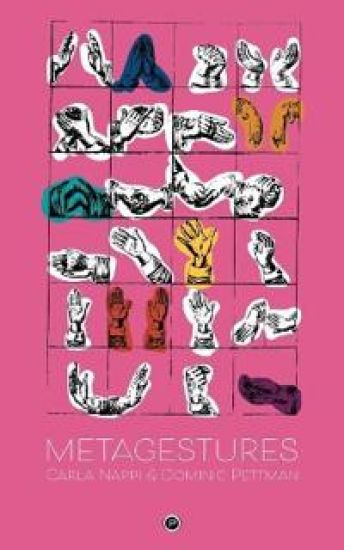
What kinds of knowledge and understandings of the world can be generated - and shared - when we use para-academic techniques and sensibilities to decode or respond to relatively orthodox intellectual objects? And what worlds might be possible if we practiced scholarly work from a place of collaboration and pleasure, as joyful fellow explorers?In METAGESTURES, historian Carla Nappi and cultural theorist Dominic Pettman explore the use of fiction as a tool to write and think with works of theory. Taking Vil m Flusser's GESTURES as its point of inspiration and departure, METAGESTURES collects 16 pairs of short stories in which Pettman and Nappi make fictional worlds that animate and enliven each of the major gestures in Flusser's book. Nappi and Pettman focus on Flusser's mediations on the gestures of filming, planting, loving, smoking a pipe, turning a mask around, and much more, with their own creative explorations of each theme, in a gathering of short fictions that test, expand, and further the social scientific claims of the original text with new scenarios and occasions. Here, Flusser's reflections on physical gesture serve as an inspiration for new ways of conceiving and conducting theory, and for thoughtful creative scholarly imagining, with and alongside one another.Carla Nappi is a historical pataphysicist and Mellon Chair in History at the University of Pittsburgh. She has published widely in the history of bodies, medicine, and translation in early modern China, and you can explore her recent shenanigans at carlanappi.com.Dominic Pettman is Professor of Culture & Media at the New School for Social Research and Eugene Lang College, and the author of numerous books on technology, humans, and other animals; including the recent Creaturely Love (Minnesota University Press) and Sonic Intimacy (Stanford University Press).
Creaturely Love

Creaturely Love

Dominic Pettman

University of Minnesota Press
2017
nidottu
To our modern ears the word “creature” has wild, musky, even monstrous, connotations. And yet the terms “creaturely” and “love,” taken together, have traditionally been associated with theological debates around the enigmatic affection between God and His key creation, Man. In Creaturely Love, Dominic Pettman explores the ways in which desire makes us both more, and less, human. In an eminently approachable work of wide cultural reach and meticulous scholarship, Pettman undertakes an unprecedented examination of how animals shape the understanding and expression of love between people. Focusing on key figures in modern philosophy, art, and literature (Nietzsche, Salomé, Rilke, Balthus, Musil, Proust), premodern texts and fairy tales (Fourier, Fournival, Ovid), and contemporary films and online phenomena (Wendy and Lucy, Her, memes), Pettman demonstrates that from pet names to spirit animals, and allegories to analogies, animals have constantly appeared in our writings and thoughts about passionate desire.By following certain charismatic animals during their passage through the love letters of philosophers, the romances of novelists, the conceits of fables, the epiphanies of poets, the paradoxes of contemporary films, and the digital menageries of the Internet, Creaturely Love ultimately argues that in our utilization of the animal in our amorous expression, we are acknowledging that what we adore in our beloveds is not (only) their humanity, but their creatureliness.
Creaturely Love

Creaturely Love

Dominic Pettman

University of Minnesota Press
2017
sidottu
To our modern ears the word “creature” has wild, musky, even monstrous, connotations. And yet the terms “creaturely” and “love,” taken together, have traditionally been associated with theological debates around the enigmatic affection between God and His key creation, Man. In Creaturely Love, Dominic Pettman explores the ways in which desire makes us both more, and less, human. In an eminently approachable work of wide cultural reach and meticulous scholarship, Pettman undertakes an unprecedented examination of how animals shape the understanding and expression of love between people. Focusing on key figures in modern philosophy, art, and literature (Nietzsche, Salomé, Rilke, Balthus, Musil, Proust), premodern texts and fairy tales (Fourier, Fournival, Ovid), and contemporary films and online phenomena (Wendy and Lucy, Her, memes), Pettman demonstrates that from pet names to spirit animals, and allegories to analogies, animals have constantly appeared in our writings and thoughts about passionate desire.By following certain charismatic animals during their passage through the love letters of philosophers, the romances of novelists, the conceits of fables, the epiphanies of poets, the paradoxes of contemporary films, and the digital menageries of the Internet, Creaturely Love ultimately argues that in our utilization of the animal in our amorous expression, we are acknowledging that what we adore in our beloveds is not (only) their humanity, but their creatureliness.
Sonic Intimacy

Sonic Intimacy

Dominic Pettman

Stanford University Press
2017
pokkari
Sonic Intimacy asks us who—or what—deserves to have a voice, beyond the human. Arguing that our ears are far too narrowly attuned to our own species, the book explores four different types of voices: the cybernetic, the gendered, the creaturely, and the ecological. Through both a conceptual framework and a series of case studies, Dominic Pettman tracks some of the ways in which these voices intersect and interact. He demonstrates how intimacy is forged through the ear, perhaps even more than through any other sense, mode, or medium. The voice, then, is what creates intimacy, both fleeting and lasting, not only between people, but also between animals, machines, and even natural elements: those presumed not to have a voice in the first place. Taken together, the manifold, material, actual voices of the world, whether primarily natural or technological, are a complex cacophony that is desperately trying to tell us something about the rapidly failing health of the planet and its inhabitants. As Pettman cautions, we would do well to listen.
Sonic Intimacy

Sonic Intimacy

Dominic Pettman

Stanford University Press
2017
sidottu
Sonic Intimacy asks us who—or what—deserves to have a voice, beyond the human. Arguing that our ears are far too narrowly attuned to our own species, the book explores four different types of voices: the cybernetic, the gendered, the creaturely, and the ecological. Through both a conceptual framework and a series of case studies, Dominic Pettman tracks some of the ways in which these voices intersect and interact. He demonstrates how intimacy is forged through the ear, perhaps even more than through any other sense, mode, or medium. The voice, then, is what creates intimacy, both fleeting and lasting, not only between people, but also between animals, machines, and even natural elements: those presumed not to have a voice in the first place. Taken together, the manifold, material, actual voices of the world, whether primarily natural or technological, are a complex cacophony that is desperately trying to tell us something about the rapidly failing health of the planet and its inhabitants. As Pettman cautions, we would do well to listen.
Infinite Distraction

Infinite Distraction

Dominic Pettman

Polity Press
2016
sidottu
It is often argued that contemporary media homogenize our thoughts and actions, without us being fully aware of the restrictions they impose. But what if the problem is not that we are all synchronized to the same motions or moments, but rather dispersed into countless different emotional micro-experiences? What if the effect of so-called social media is to calibrate the interactive spectacle so that we never fully feel the same way as other potential allies at the same time? While one person is fuming about economic injustice or climate change denial, another is giggling at a cute cat video. And, two hours late, vice versa. The nebulous indignation which constitutes the very fuel of true social change can be redirected safely around the network, avoiding any dangerous surges of radical activity. In this short and provocative book, Dominic Pettman examines the deliberate deployment of what he calls ?hypermodulation,? as a key strategy encoded into the contemporary media environment. His account challenges the various narratives that portray social media as a sinister space of synchronized attention, in which we are busily ?clicking ourselves to death.? This critical reflection on the unprecedented power of the Internet requires us to rethink the potential for infinite distraction that our latest technologies now allow.
Infinite Distraction

Infinite Distraction

Dominic Pettman

Polity Press
2016
nidottu
It is often argued that contemporary media homogenize our thoughts and actions, without us being fully aware of the restrictions they impose. But what if the problem is not that we are all synchronized to the same motions or moments, but rather dispersed into countless different emotional micro-experiences? What if the effect of so-called social media is to calibrate the interactive spectacle so that we never fully feel the same way as other potential allies at the same time? While one person is fuming about economic injustice or climate change denial, another is giggling at a cute cat video. And, two hours late, vice versa. The nebulous indignation which constitutes the very fuel of true social change can be redirected safely around the network, avoiding any dangerous surges of radical activity. In this short and provocative book, Dominic Pettman examines the deliberate deployment of what he calls ?hypermodulation,? as a key strategy encoded into the contemporary media environment. His account challenges the various narratives that portray social media as a sinister space of synchronized attention, in which we are busily ?clicking ourselves to death.? This critical reflection on the unprecedented power of the Internet requires us to rethink the potential for infinite distraction that our latest technologies now allow.
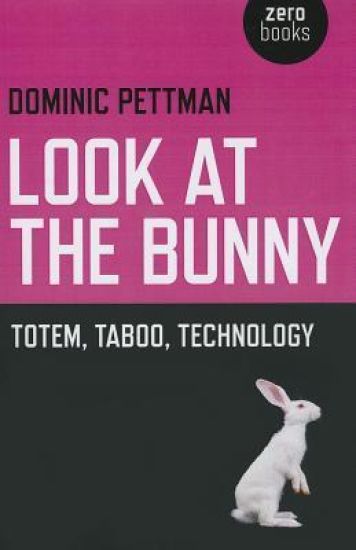
Look at the Bunny – Totem, Taboo, Technology

Look at the Bunny – Totem, Taboo, Technology

Dominic Pettman

John Hunt Publishing
2013
nidottu
Are totems merely a thing of the distant past? Or might it be that our sleek new machines are producing totemic forces which we are only beginning to recognize? This book asks to what degree today's media technologies are haunted by a Freudian ghost, functioning as totems or taboos (or both). By isolating five case-studies (rabbits in popular culture, animated creatures that go "off-program," virtual lovers, jealous animal spirit guides, and electronic paradises), Look at the Bunny highlights and explores today's techno-totemic environment. In doing so, it explores how nonhuman avatars are increasingly expected to shepherd us beyond our land-locked identities, into a risky - sometimes ecstatic - relationship with the Other.
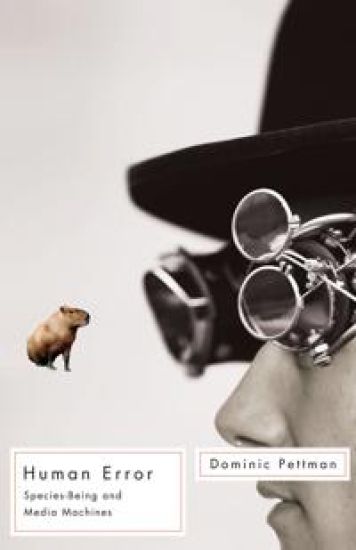
Human Error

Human Error

Dominic Pettman

University of Minnesota Press
2011
nidottu
What exactly is the human element separating humans from animals and machines? The common answers that immediately come to mind-like art, empathy, or technology-fall apart under close inspection. Dominic Pettman argues that it is a mistake to define such rigid distinctions in the first place, and the most decisive “human error” may be the ingrained impulse to understand ourselves primarily in contrast to our other worldly companions. In Human Error, Pettman describes the three sides of the cybernetic triangle-human, animal, and machine-as a rubric for understanding key figures, texts, and sites where our species-being is either reinforced or challenged by our relationship to our own narcissistic technologies. Consequently, species-being has become a matter of specious-being, in which the idea of humanity is not only a case of mistaken identity but indeed the mistake of identity. Human Error boldly insists on the necessity of relinquishing our anthropomorphism but also on the extreme difficulty of doing so, given how deeply this attitude is bound with all our other most cherished beliefs about forms of life.
Love and Other Technologies

Love and Other Technologies

Dominic Pettman

Fordham University Press
2006
pokkari
Can love really be considered another form of technology? Dominic Pettman says it can—although not before carefully redefining technology as a cultural challenge to what we mean by the "human" in the information age. Using the writings of such important thinkers as Giorgio Agamben, Jean-Luc Nancy, and Bernard Stiegler as a springboard, Pettman explores the "techtonic" movements of contemporary culture, specifically in relation to the language of eros. Highly ritualized expressions of desire—love, in other words—always reveal an era's attitude toward what it means to exist as a self among others. For Pettman, the articulation of love is a technique of belonging: a way of responding to the basic plurality of everyone's identity, a process that becomes increasingly complex as the forms of mediated communication, from cell phone and text messaging to the mass media, multiply and mesh together. Wresting the idea of love from the arthritic hands of Romanticism, Pettman demonstrates the ways in which this dynamic assemblage—"the stirrings of the soul"—have always been a matter of tools, devices, prosthetics, and media. Love is, after all, something we make. And, love, this book argues, is not eternal, but external.