

Kirjailija
Don Berry
Kirjat ja teokset yhdessä paikassa: 14 kirjaa, julkaisuja vuosilta 2004-2025, suosituimpien joukossa Moontrap. Vertaile teosten hintoja ja tarkista saatavuus suomalaisista kirjakaupoista.
14 kirjaa
Kirjojen julkaisuhaarukka 2004-2025.

In Far Bolivia; A Story of a Strange Wild Land (Edition1)
Don Berry
VIJ Books (India) Pty Ltd
2023
nidottu
Dieses klassische Buch wurde urspr nglich vor Jahrzehnten ver ffentlicht als "Man Alone" . Es wurde jetzt von Writat f r seine deutschsprachigen Leser ins Deutsche bersetzt. Bei Writat liegt uns die Bewahrung des literarischen Erbes der Vergangenheit sehr am Herzen. Wir haben dieses Buch ins Deutsche bersetzt, damit es heutige und zuk nftige Generationen lesen und bewahren k nnen.

Ce livre classique a t initialement publi il y a des d cennies sous le titre "Man Alone" . Il a maintenant t traduit par Writat en langue fran aise pour leurs lecteurs francophones. Chez Writat, nous sommes passionn s par la pr servation du patrimoine litt raire du pass . Nous avons traduit ce livre en fran ais afin que les g n rations pr sentes et futures puissent le lire et le conserver.



An Analysis of Friedrich Nietzsche's Beyond Good and Evil
Don Berry
Macat International Limited
2017
sidottu
No philosopher could be a better example of creative thinking in action than Friedrich Nietzsche: a German iconoclast who systematically attacked the traditionally accepted views of academic philosophers, seeking to tear down their rickety platform and replace it with a platform of his own. Creative thinkers are people who redefine issues and topics in novel ways to create novel connections, explanations and hypotheses – people, in short, who can turn a topic on its head and present it in an entirely new light. Nietzsche called them “free spirits” – those unwilling to accept the dogmas of the past, wanting instead to think clearly for themselves. In Beyond Good and Evil, Nietzsche focuses his attention on nothing less than the underlying basis of our moral assumptions, unleashing a powerful, polemical critique of the moral dogmas of the past and his own time. His book, which remains one of the most influential works of moral philosophy ever written, is not just an example of creative thinking at work, it is also a passionate argument for its importance. As Nietzsche wrote, “Morality in Europe … is the morality of herd animals.” But if one is ready to think differently and stand out from the herd, “other (and especially higher) moralities are … possible.”

An Analysis of Friedrich Nietzsche's On the Genealogy of Morality
Don Berry
Macat International Limited
2017
sidottu
Friedrich Nietzsche’s On the Genealogy of Morality is a sustained feat of incisive interpretation. Well known as one of Nietzsche’s greatest works, and as one of the most important books of nineteenth-century philosophy, On the Genealogy of Morality also provided the inspiration for the methodologies of several key philosophers of the modern age. Michel Foucault and Judith Butler, among others, cite Nietzsche as an influence specifically because of the interpretative techniques laid out in this work – techniques which are a model for the ways in which interpretation can be used to power critical thinking of the highest order. The key aspects of interpretation are understanding, clarifying, and questioning definitions; what Nietzsche brings to the process is a sense of how important context, history and culture are to understanding any term. In the case of morals, for instance, he argues that if we are to truly understand what we mean by “good” or “evil,” we cannot ever assume the two concepts have a stable meaning, outside of a given moment in history. Indeed, to understand what they mean now, and might mean in the future, we need to trace the genealogy of concepts back to their very roots – a feat of interpretation that Nietzsche undertakes masterfully.

An Analysis of Friedrich Nietzsche's Beyond Good and Evil
Don Berry
Macat International Limited
2017
nidottu
No philosopher could be a better example of creative thinking in action than Friedrich Nietzsche: a German iconoclast who systematically attacked the traditionally accepted views of academic philosophers, seeking to tear down their rickety platform and replace it with a platform of his own. Creative thinkers are people who redefine issues and topics in novel ways to create novel connections, explanations and hypotheses – people, in short, who can turn a topic on its head and present it in an entirely new light. Nietzsche called them “free spirits” – those unwilling to accept the dogmas of the past, wanting instead to think clearly for themselves. In Beyond Good and Evil, Nietzsche focuses his attention on nothing less than the underlying basis of our moral assumptions, unleashing a powerful, polemical critique of the moral dogmas of the past and his own time. His book, which remains one of the most influential works of moral philosophy ever written, is not just an example of creative thinking at work, it is also a passionate argument for its importance. As Nietzsche wrote, “Morality in Europe … is the morality of herd animals.” But if one is ready to think differently and stand out from the herd, “other (and especially higher) moralities are … possible.”
An Analysis of Friedrich Nietzsche's On the Genealogy of Morality
Don Berry
Macat International Limited
2017
nidottu
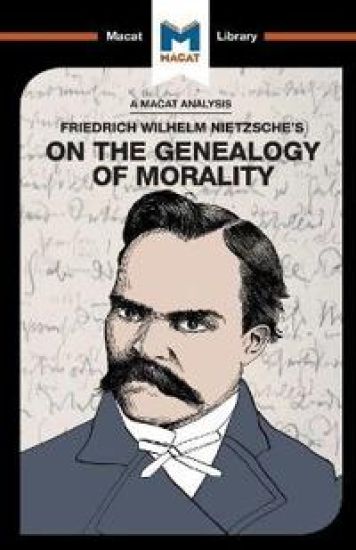
Friedrich Nietzsche’s On the Genealogy of Morality is a sustained feat of incisive interpretation. Well known as one of Nietzsche’s greatest works, and as one of the most important books of nineteenth-century philosophy, On the Genealogy of Morality also provided the inspiration for the methodologies of several key philosophers of the modern age. Michel Foucault and Judith Butler, among others, cite Nietzsche as an influence specifically because of the interpretative techniques laid out in this work – techniques which are a model for the ways in which interpretation can be used to power critical thinking of the highest order. The key aspects of interpretation are understanding, clarifying, and questioning definitions; what Nietzsche brings to the process is a sense of how important context, history and culture are to understanding any term. In the case of morals, for instance, he argues that if we are to truly understand what we mean by “good” or “evil,” we cannot ever assume the two concepts have a stable meaning, outside of a given moment in history. Indeed, to understand what they mean now, and might mean in the future, we need to trace the genealogy of concepts back to their very roots – a feat of interpretation that Nietzsche undertakes masterfully.



Is a lively and captivating history of the formative years of the American fur trade, the period in which the Rocky Mountain Fur Company, with its corps of trappers and traders, grew to be the greatest name in the mountains.
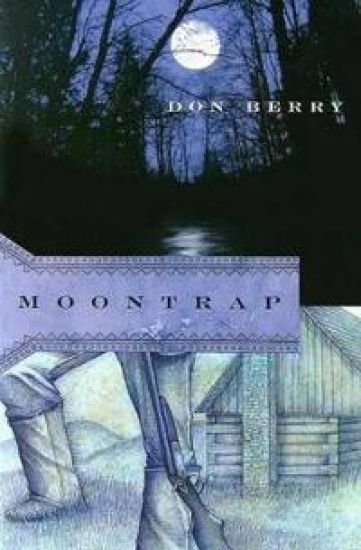
Following Trask in Don Berry's trilogy of novels set in the Oregon Territory, Moontrap is a book of remarkable beauty and power about a man caught between his vivid past and an uncertain future. The year is 1850, a transitional period in the new Oregon Territory, with settlers and lawmakers working to subdue the untamed, uncivilized region. Johnson Monday, a former mountain man, has been living on a bend of the Willamette River near Oregon City with his Shoshone Indian wife for seven years, struggling to make a place in settled society. One summer morning, Monday's old friend Webster T. Webster, a raucous, unrepentant trapper, arrives for an unexpected visit. With his earthy humor and stubborn adherence to the simple life, Webb leads Monday through adventures that flirt dangerously close to lawlessness, while helping him to rediscover his moral center. Through defiance, triumph, and tragedy, Moontrap follows Johnson Monday as he comes to realize that relinquishing the stark honesty of mountain life for the compromises of civilization is too high a price to pay. Nominated for a National Book Award and winner of the Spur Award of the Western Writers of America for best historical novel, Moontrap recounts the conflict one man faces in keeping with his old ways or forging a new life. The OSU Press is proud to reissue this richly comic and intensely poignant portrayal of pioneer life in the Northwest.
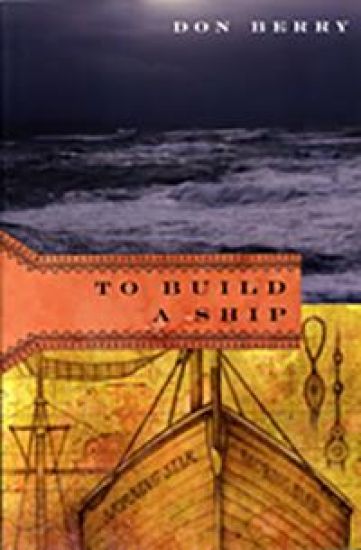
In To Build a Ship, Don Berry explores the extent to which a man can betray himself and his morality for a dream or obsession. It's the story of a handful of settlers who take up land on the beautiful Tillamook Bay in the early 1850s--defiant dreamers battling the wilderness. With forested mountains at their backs and the open sea as their sole road to trade, they are suddenly isolated from the outside world when the only captain who would enter their harbor dies. With the survival of their new settlement threatened, they decide to build their own schooner. At first the challenge brings out the best in the men, but the tension of their gigantic purpose overtakes them. Obstacles accumulate and complications mount: a death, a murder trial, trouble with restive Indians, and finally a travesty of justice. Excitement, shock, and gripping drama mark this story of men pushed to the point of madness as they see the Morning Star of Tillamook slowly take shape on the wild Pacific shore. Don Berry's novels about the Oregon Territory are as rich and compelling today as when they were first published more than forty years ago. These new editions of Trask, Moontrap, and To Build a Ship include an introduction by Jeff Baker, book critic for The Oregonian.