Kirjojen hintavertailu. Mukana 12 595 353 kirjaa ja 12 kauppaa.
Kirjailija
Don Share
Kirjat ja teokset yhdessä paikassa: 6 kirjaa, julkaisuja vuosilta 2007-2023, suosituimpien joukossa Cases in Comparative Politics. Vertaile teosten hintoja ja tarkista saatavuus suomalaisista kirjakaupoista.
Cases and Concepts in Comparative Politics bridges the gap between understanding and doing comparative politics. Concepts are presented in the context of real situations with pedagogy that asks students to apply their new knowledge immediately in country case studies. Students spend more time actually doing the work of comparative politics. Through Dynamic Data Figures in the Norton Illumine Ebook, in addition to InQuizitive, students have even more support in learning the core concepts of comparative politics and applying them to real-world examples.
Essentials of Comparative Politics with Cases integrates clear, concise, and contemporary coverage of major political concepts with the relevant case studies for the AP® curriculum: the United Kingdom, Russia, China, Iran, Mexico, and Nigeria. A new United States case study provides students with a helpful reference point for comparing and contrasting political institutions and processes across the globe. New AP® resources and InQuizitive, Norton’s adaptive learning tool, support students and instructors with the core concept mastery needed for the AP® exam. AP® is a trademark registered and/or owned by the College Board, which was not involved in the production of, and does not endorse, this product.
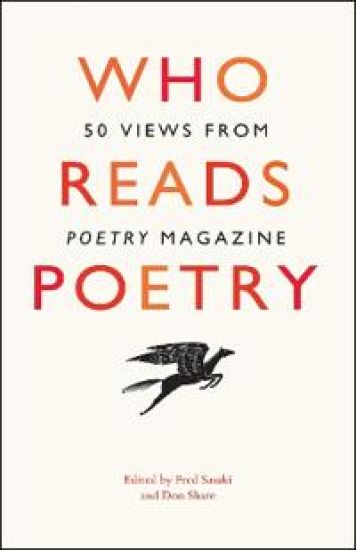
Who reads poetry? We know that poets do, but what about the rest of us? When and why do we turn to verse? Seeking the answer, Poetry magazine since 2005 has published a column called "The View From Here," which has invited readers "from outside the world of poetry" to describe what has drawn them to poetry. Over the years, the incredibly diverse set of contributors have included philosophers, journalists, musicians, and artists, as well as doctors and soldiers, an iron-worker, an anthropologist, and an economist. This collection brings together fifty compelling pieces, which are in turns surprising, provocative, touching, and funny. In one essay, musician Neko Case calls poetry "a delicate, pretty lady with a candy exoskeleton on the outside of her crepe-paper dress." In another, anthropologist Helen Fisher turns to poetry while researching the effects of love on the brain, "As other anthropologists have studied fossils, arrowheads, or pot shards to understand human thought, I studied poetry...I wasn't disappointed: everywhere poets have described the emotional fallout produced by the brain's eruptions." Even film critic Roger Ebert memorized the poetry of e. e. cummings, and the rapper Rhymefest attests here to the self-actualizing power of poems: "Words can create worlds, and I've discovered that poetry can not only be read but also lived out. My life is a poem." Music critic Alex Ross tells us that he keeps a paperback of The Palm at the End of the Mind by Wallace Stevens on his desk next to other, more utilitarian books like a German dictionary, a King James Bible, and a Macintosh troubleshooting manual. Who Reads Poetry offers a truly unique and broad selection of perspectives and reflections, proving that poetry can be read by everyone. No matter what you're seeking, you can find it within the lines of a poem.
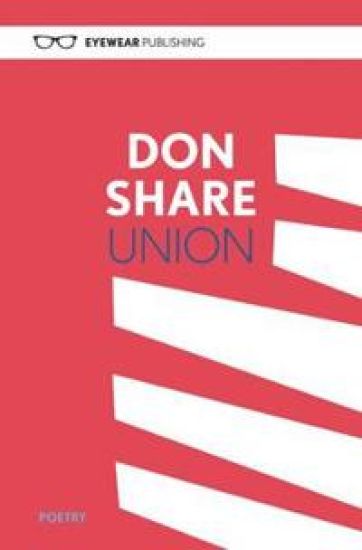
Poetry. "'We fought America in ourselves,' Don Share writes, and UNION suggests—in exquisitely lyrical gestures—the breadth and depth of our public and private, civil and uncivil wars. These quietly powerful poems range from the gritty intrigues of New York City to subsistence farms, where 'the dogs are in charge'. Along the way, they witness the vestiges of place embodied in the 'lazy-built, leaky drawl' of regional accents and the eloquence of artifacts that comprised an epoch—the Triptiks, Reader's Digest Condensed, Castro Convertibles, and Olds 88 of post World War II American culture. But UNION also sings the eternal concerns of love and time, death and longing. And 'sing' is the right verb for Share's passionate, richly realized work. Few poets manage such dexterous and fresh music. Few books are as lovely or profound."—Alice Fulton
Don Share’s latest collection, Squandermania, is a book of poems that are slightly death-haunted and studded with references to marriage and fatherhood, geology and biology. It also revives a luminous, if complex, domesticity – not something most men take as their subject. Its focus is the frenzied energy and unreal depression of living in a world at war with terror, and ultimately with itself. Here the paralysis of long-standing grief and fear combine with strange energy of trying to get by from day to day: “If these are the woods, / I'm not out of them yet.” There are poems about the intimate household terrors of marital relations and questions raised by children about what happens in the world, and others woven from a tapestry of literary interactions with sources that range from Burton's Anatomy of Melancholy and Bacon's essay On Building to the “rotten kid theorem.” Proverbs cease to reassure as the poet monitors news about global warning, war, and other self-inflicted disasters. What William James called the "trail of the human serpent" that runs over everything has at least (and perhaps finally) brought us to a world in which, as Share describes it, "anti-depressants make certain people violently depressed; / testing a safer system causes reactors to explode; / more freeways create more traffic; / the power grid dims, powerless; / [and] antibiotics make stronger germs." These poems of conscience and imagination record the struggle to continue living in a "glitterbound microcosm" amidst the impulses of maniacal squandering and ceaseless destruction.