

Kirjailija
Don Slater
Kirjat ja teokset yhdessä paikassa: 9 kirjaa, julkaisuja vuosilta 1998-2025, suosituimpien joukossa The Internet. Vertaile teosten hintoja ja tarkista saatavuus suomalaisista kirjakaupoista.
9 kirjaa
Kirjojen julkaisuhaarukka 1998-2025.

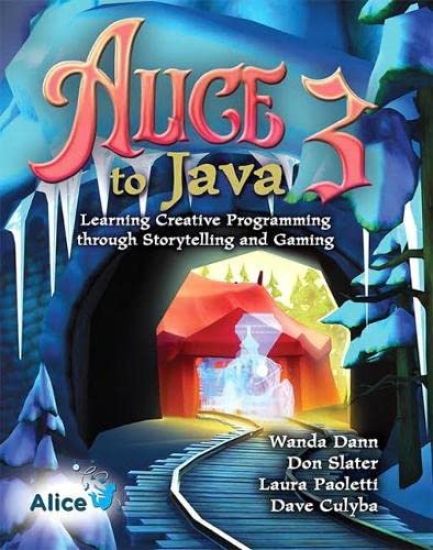
For courses in Introductory Programming for Java and Alice Learn programming basics in a creative context that’s more engaging and less complicated Taking a computer programming course can be challenging, time-consuming, and downright frustrating–but there’s a better way. Alice 3 to Java: Learning Creative Programming through Storytelling and Gaming, First Edition introduces readers to programming in a creative context that’s more engaging and less complicated, while still covering all the essential concepts you’d expect to see in an introductory programming course. Readers are invited to step into the world of creating 3D animations through chapters that present programming concepts with hands-on examples. Throughout the text, readers create a short story or game centered on Lawrence Prenderghast’s Haunted Circus, a story by Laura Paoletti. Students bring the story to life through projects and exercises using Alice, an animation tool similar to professional software used by studios like Pixar and DreamWorks. Later in the book, students may apply what they’ve learned in Alice to using Java, a professional, production-level programming course.
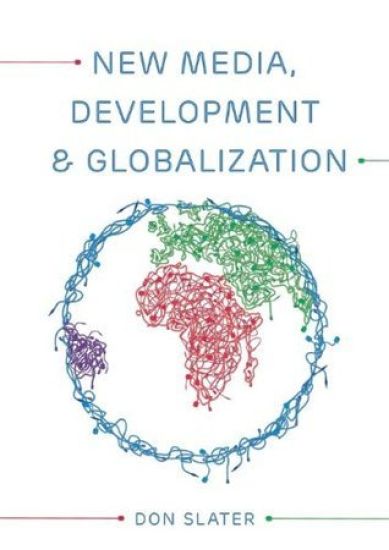
New Media, Development and Globalization: Making Connections in the Global South
Don Slater
Polity Press
2013
nidottu
New media, development and globalization are the key terms through which the future is being imagined and performed in governance, development initiatives and public and political discourse. Yet these authoritative terms have arisen within particular cultural and ideological contexts. In using them, we risk promoting over-generalized and seemingly unchallengeable frameworks for action and knowledge production which can blind us to the complex global patterns and promise of social reality.This compelling book forces us to look at these terms afresh. Drawing on more than ten years of ethnographic fieldwork in Latin America, West Africa and South Asia, Don Slater seeks to challenge these terms as voicing specific northern narratives rather than universal truths, and to see them from the perspective of southern people and communities who are equally concerned to understand new machines for communication, new models of social change and new maps of social connection. The central question the book poses is: how we can democratize the ways we think and practise new media, development and globalization, opening these terms to dialogue and challenge within North-South relations? Rooted in sociological debates, New Media, Development and Globalization will also be a provocative contribution to media and cultural studies, studies of digital culture, development studies, geography and anthropology.
New Media, Development and Globalization: Making Connections in the Global South
Don Slater
Polity Press
2013
sidottu
New media, development and globalization are the key terms through which the future is being imagined and performed in governance, development initiatives and public and political discourse. Yet these authoritative terms have arisen within particular cultural and ideological contexts. In using them, we risk promoting over-generalized and seemingly unchallengeable frameworks for action and knowledge production which can blind us to the complex global patterns and promise of social reality.This compelling book forces us to look at these terms afresh. Drawing on more than ten years of ethnographic fieldwork in Latin America, West Africa and South Asia, Don Slater seeks to challenge these terms as voicing specific northern narratives rather than universal truths, and to see them from the perspective of southern people and communities who are equally concerned to understand new machines for communication, new models of social change and new maps of social connection. The central question the book poses is: how we can democratize the ways we think and practise new media, development and globalization, opening these terms to dialogue and challenge within North-South relations? Rooted in sociological debates, New Media, Development and Globalization will also be a provocative contribution to media and cultural studies, studies of digital culture, development studies, geography and anthropology.
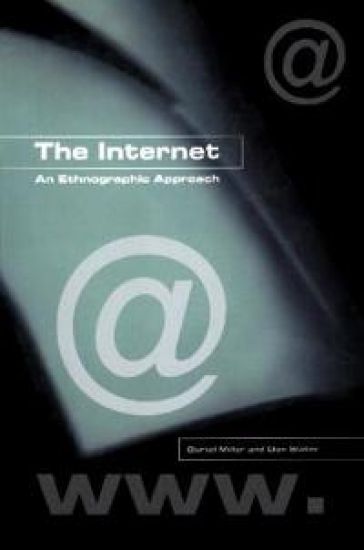
An examination of Internet culture and consumption. From cybercafes to businesses, from middle class houses to squatters settlements, the authors have gathered material on subjects as varied as personal relations, commerce, sex and religion.

Market Society provides an original and accessible review of changing conceptions of the market in modern social thought. The book considers markets as social institutions rather than simply formal models, arguing that modern ideas of the market are based on critical notions of social order, social action and social relations. Examining a range of perspectives on the market from across different social science disciplines, Market Society surveys a complex field of ideas in a clear and comprehensive manner. In this way it seeks to extend economic sociology beyond a critique of mainstream economics, and to engage more broadly with social, political and cultural theory. The book explores historical approaches to the emergence of a modern market society, as well as major approaches to the market within modern economic theory and sociology. It addresses key arguments in economic sociology and anthropology, the relation between markets and states, and critical and cultural theories of market rationality. It concludes with a discussion of markets and culture in a late modern context. This wide-ranging text will be of interest to undergraduate and postgraduate students in sociology, economic theory and history, politics, social and political theory, anthropology and cultural studies.

This pathbreaking book is the first to provide a rigorous and comprehensive examination of Internet culture and consumption. A rich ethnography of Internet use, the book offers a sustained account not just of being online, but of the social, political and cultural contexts which account for the contemporary Internet experience. From cybercafes to businesses, from middle class houses to squatters settlements, from the political economy of Internet provision to the development of ecommerce, the authors have gathered a wealth of material based on fieldwork in Trinidad. Looking at the full range of Internet media -- including websites, email and chat -- the book brings out unforeseen consequences and contradictions in areas as varied as personal relations, commerce, nationalism, sex and religion. This is the first book-length treatment of the impact of the Internet on a particular region. By focusing on one place, it demonstrates the potential for a comprehensive approach to new media. It points to the future direction of Internet research, proposing a detailed agenda for comparative ethnographic study of the cultural significance and effects of the Internet in modern society. Clearly written for the non-specialist reader, it offers a detailed account of the complex integration between on-line and off-line worlds. An innovative tie-in with the book's own website provides copious illustrations amounting to over 2,000 web-pages that bring the material right to your computer.
A comprehensive introduction to the issues, concepts and theories through which people have tried to understand consumer culture throughout the modern period. The book features reviews of major theorists set within a full account of the development of the subject.