Kirjojen hintavertailu. Mukana 12 510 563 kirjaa ja 12 kauppaa.

Kirjailija

Don W. King

Kirjat ja teokset yhdessä paikassa: 6 kirjaa, julkaisuja vuosilta 2001-2026, suosituimpien joukossa Amobarbital Effects and Lateralized Brain Function. Vertaile teosten hintoja ja tarkista saatavuus suomalaisista kirjakaupoista.

6 kirjaa

Kirjojen julkaisuhaarukka 2001-2026.

Amobarbital Effects and Lateralized Brain Function

Amobarbital Effects and Lateralized Brain Function

David W. Loring; Kimford J. Meador; Gregory P. Lee; Don W. King

Springer-Verlag New York Inc.
2013
nidottu
The intracarotid amobarbital (or Amytal) procedure is commonly referred to as the Wada test in tribute to Juhn Wada, the physician who devised the technique and performed the fIrst basic animal research and clinical studies with this method. Wada testing has become an integral part of the pre­ operative evaluation for epilepsy surgery. Interestingly, however, Wada initially developed this method as a technique to assess language dominance in psychiatric patients in order that electroconvulsant therapy could be applied unilaterally to the non-dominant hemisphere. Epilepsy surgery has matured as a viable treatment for intractable seizures and is no longer confmed to a few major universities and medical institutes. Yet, as is increasingly clear by examining the surveys of approaches used by epilepsy surgery centers (e.g., Rausch, 1987; Snyder, Novelly, & Harris, 1990), there is not only great heterogeneity in the methods used during Wada testing to assess language and memory functions, but there also seems to be a lack of consensus regarding the theoretical assumptions, and perhaps, even the goals of this procedure.
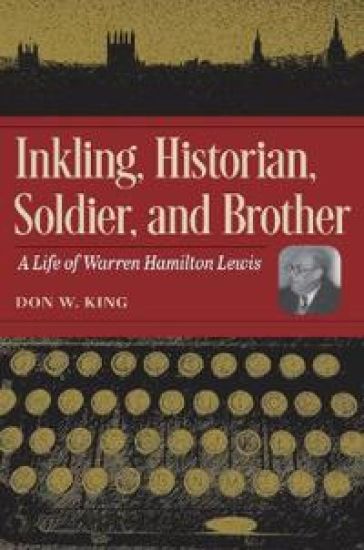
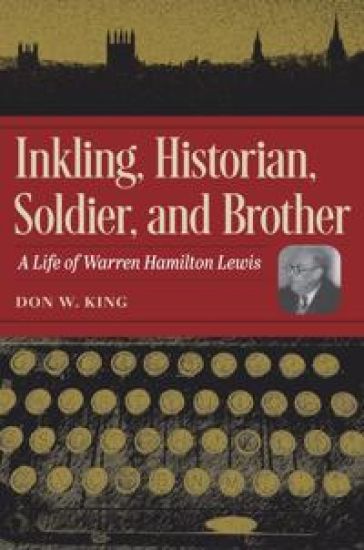
Inkling, Historian, Soldier, and Brother

Inkling, Historian, Soldier, and Brother

Don W. King

KENT STATE UNIVERSITY PRESS
2022
sidottu
The first full biography of Warren Lewis, brother and secretary of C. S. LewisDetailing the life of Warren Hamilton Lewis, author Don W. King gives us new insights into the life and mind of Warren's famous brother, C. S. Lewis, and also demonstrates how Warren's experiences provide an illuminating window into the events, personalities, and culture of 20th-century England. Inkling, Historian, Soldier, and Brother will appeal to those interested in C. S. Lewis and British social and cultural history.As a career soldier, Warren served in France during the nightmare of World War I and was later posted to Sierra Leone and Shanghai. On his retirement from the army, he became an active member of the household at the Kilns, the residence outside Oxford that he co-owned with his brother and Mrs. Janie Moore, and he played an important role in the relationship between his brother and Joy Davidman, the woman who became C. S. Lewis's wife. A talented writer and accomplished amateur historian, Warren also researched and wrote seven books on 17th-century French history.Inkling, Historian, Soldier, and Brother examines Warren Lewis's role as an original member of the Oxford Inklings—that now famous group of novelists, thinkers, clergy, poets, essayists, medical men, scholars, and friends who met regularly to drink beer; discuss books, ideas, history, and writers; and share pieces of their own writing for feedback from the group. Drawing from Warren Lewis's unpublished diaries, his letters, the memoir he wrote about his family, and other primary materials, this biography is an engaging story of a fascinating life, period of history, and of the warm and loving relationship between Warren and his brother, which lasted throughout their lives.
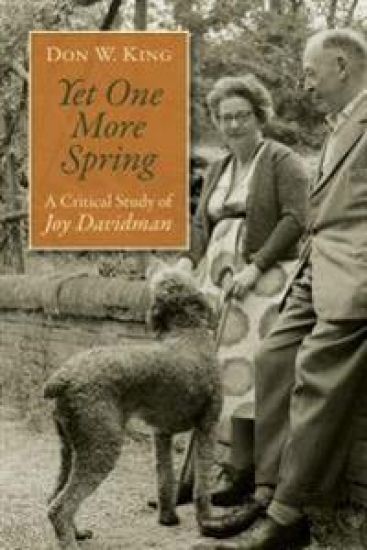
Yet One More Spring

Yet One More Spring

Don W. King

William B Eerdmans Publishing Co
2015
nidottu
Joy Davidman (1915-1960) is probably best known today as the woman that C. S. Lewis married in the last decade of his life. But she was also an accomplished writer in her own right - an awardwinning poet and a prolific book, theater, and film reviewer during the late 1930s and early 1940s.Yet One More Spring is the first comprehensive critical study of Joy Davidman's poetry, nonfiction, and fiction. Don King studies her body of work - including both published and unpublished works - chronologically, tracing her development as a writer and revealing Davidman's literary influence on C. S. Lewis. King also shows how Davidman's work reflects her religious and intellectual journey from secular Judaism to atheism to Communism to Christianity.Drawing as it does on a cache of previously unknown manuscripts of Davidman's work, Yet One More Spring brings to light the work of a very gifted but largely overlooked American writer.
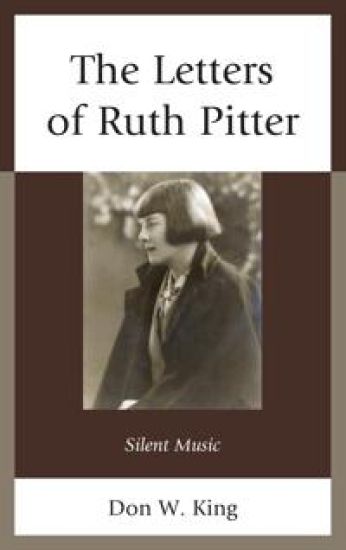
The Letters of Ruth Pitter

The Letters of Ruth Pitter

Don W. King

University of Delaware Press
2014
sidottu
Although Ruth Pitter (1897–1992) is not well known, her credentials as a poet are extensive, and in England from the mid-1930s to the mid-1970s she maintained a modest yet loyal readership. In total she produced eighteen volumes of new and collected verse. Her A Trophy of Arms (1936) won the Hawthornden Prize for Poetry in 1937, and in 1954 she was awarded the William E. Heinemann Award for The Ermine (1953). Most notably, perhaps, she became the first woman to receive the Queen’s Gold Medal for Poetry in 1955. Furthermore, from 1946 to 1972 she was often a guest on BBC radio and television programs, In 1974 The Royal Society of Literature elected her to its highest honor, a Companion of Literature, and in 1979 she received her last national award when she was appointed a Commander of the British Empire. Pitter was a voluminous letter writer. Her friends and correspondents read like a “Who’s Who” of twentieth-century British literary luminaries, including AE (George Russell), A. R. Orage, Hiliare Belloc, Walter de la Mare, Julian Huxley, John Masefield, Phillip and Ottoline Morrell, George Orwell, Dylan Thomas, T. S. Eliot, C. S. Lewis, James Stephens, Dorothy L. Sayers, Siegfried Sassoon, Virginia Sackville-West, Dorothy Wellesley, Lord David Cecil, John Betjeman, Evelyn Waugh, John Wain, Kathleen Raine, and May Sarton. Stylistically Pitter’s letters are marked by crisp prose, precise imagery, and elegant simplicity reflecting a well-read and vigorous mind—lithe, curious, penetrating, analytical, and perceptive. Of her more than one thousand letters covering the years 1908–1988, published here is a generous selection. These selected letters go a long way toward illustrating Pitter’s desire to reach a public interested in her as both a poet and personal commentator. These letters offer an understanding of “the silent music, the dance in stillness, the hints and echoes and messages of which everything is full” reflected in her life and poetry. In total they provide an essential introduction to the work of this neglected twentieth-century poet.
C.S. Lewis, Poet

C.S. Lewis, Poet

Don W. King

Kent State University Press
2001
nidottu
C. S. Lewis is best known as the creator of the fanciful world of Narnia and as a masterful writer of literary criticism and Christian apologetics. But he began his literary career as a poet, under the pseudonym of Clive Hamilton, and only later did he turn to prose writing and find fame. In C. S. Lewis, Poet: The Legacy of His Poetic Impulse Don W. King contends that Lewis's poetic aspirations enhanced his prose and helped make him the master stylist so revered by the literary world. With its careful examination of early diaries and letters, and the inclusion of four of Lewis's previously unpublished narrative poems and eleven of his previously unpublished short poems, this important book explains the man through his writing and considers how Lewis's lifelong devotion to poetry is best realized in his works of prose. Readers and admirers of Lewis will certainly find their understanding of his writing greatly enhanced by this perceptive book.