Kirjojen hintavertailu. Mukana 12 376 295 kirjaa ja 12 kauppaa.

Kirjailija

Donald A. Hagner

Kirjat ja teokset yhdessä paikassa: 11 kirjaa, julkaisuja vuosilta 1997-2025, suosituimpien joukossa Jesus and Paul in the Context of Judaism and Early Christianity. Vertaile teosten hintoja ja tarkista saatavuus suomalaisista kirjakaupoista.

Mukana myös kirjoitusasut: Donald A Hagner

11 kirjaa

Kirjojen julkaisuhaarukka 1997-2025.

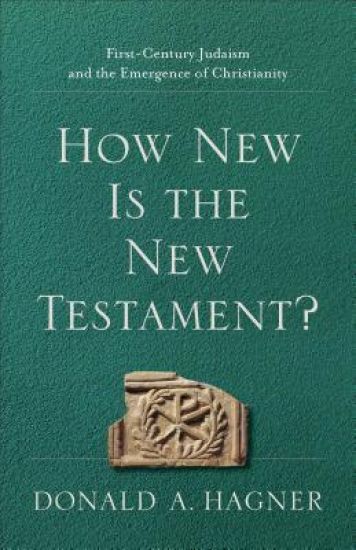
How New Is the New Testament? – First–Century Judaism and the Emergence of Christianity

How New Is the New Testament? – First–Century Judaism and the Emergence of Christianity

Donald A. Hagner

Baker Academic, Div of Baker Publishing Group
2018
nidottu
What is so new about the New Testament? Senior scholar Donald Hagner tackles the issue of how distinct early Christianity was from the first-century Judaism from which it emerged. He surveys newness in the entire New Testament canon, examining the evidence for points of continuity and discontinuity between formative Judaism and early Christianity. Hagner's accessible analysis of the New Testament text shows that despite Christianity's thorough Jewishness, from the beginning dramatic newness was an essential aspect of this early literature.
Ordet är dig mycket nära : Tolkningar av Gamla testamentet

Ordet är dig mycket nära : Tolkningar av Gamla testamentet

James Starr; Birger Olsson; Greger Andersson; Göran Eidevall; Beth E. Elness-Hansson; Josef Forsling; Donald A. Hagner; Camilla von Heijne; Knut Holter; Tord Larsson; Fredrik Lindström; Stig Norin; Staffan Olofsson; Kamilla Skarström Hinojosa; Bernice Sundkvist; Lena-Sofia Tiemeyer; Åke Viberg; David Willgren

Artos Norma Bokförlag
2018
nidottu
Vad sysslar de med, de gammaltestamentliga exegeterna i Sverige? Undervisar förstås, men vad mer? Vad forskar de om? i den här boken får du en del svar på den frågan. Den började som en konferensdag till LarsOlov Erikssons ära, när han efter en lång tjänstgöring slutade som lektor i gamla testamentets exegetik vid Johannelunds teologiska högskola. Därför finns också några internationella forskarbidrag med, men de flesta är svenska. De som har huvudansvar för gamla testamentet vid universitet och högskolor i Sverige fick en fråga om de vill bidra och de flesta svarade ja. Därför presenteras här svensk bibelforskning i dag, begränsat till gamla testamentet. Flera bidrag känner vi igen som traditionella forskningsämnen inom gamla testamentet, analyser av enskilda texter och fördjupningar i enskilda ämnen. Men det finns också mycket nytt. Nya metodiska grepp, hermeneutiska diskussioner, berättelseanalyser, receptionshis­ toriska framställningar, kulturrelaterade undersökningar m.m. till och med en presentation av kung David i filmens värld och läsningar av Tomas Tranströmers dikter. Resultaten visar på en mycket stor mångfald. Den som vill veta mera om gammaltestamentlig forskning i dag har här en guldgruva. Nya insikter, nya metoder, nya former av exegetik i dag i Sverige.
From Good News to Gospels

From Good News to Gospels

David Wenham; Donald A. Hagner

William B Eerdmans Publishing Co
2018
nidottu
What did the first Christians say about Jesus?The good news about Jesus spread like wildfire through the Roman Empire in the decades between his death and the writing of the first gospels--but how? What exactly did the first Christians say about Jesus?In From Good News to Gospels David Wenham delves into the Gospels, Acts, and the writings of Paul to uncover evidence of a strong and substantial oral tradition in the early church. With implications for the historicity of the New Testament, the Synoptic problem, the composition of the gospels, and other topics of vital concern, From Good News to Gospels will inform, engage, and challenge readers, inspiring them to better understand and appreciate the earliest gospel message.
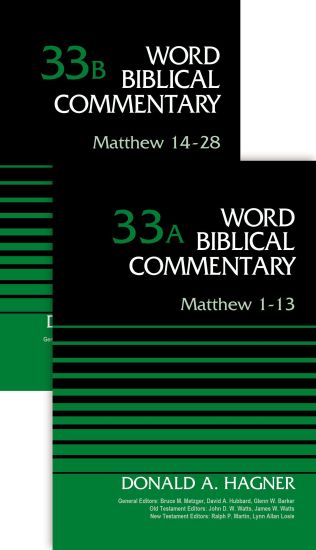
Matthew (2-Volume Set---33A and 33B)

Matthew (2-Volume Set---33A and 33B)

Donald A. Hagner

Zondervan
2017
sidottu
The Word Biblical Commentary delivers the best in biblical scholarship, from the leading scholars of our day who share a commitment to Scripture as divine revelation. This series emphasizes a thorough analysis of textual, linguistic, structural, and theological evidence. The result is judicious and balanced insight into the meanings of the text in the framework of biblical theology. These widely acclaimed commentaries serve as exceptional resources for the professional theologian and instructor, the seminary or university student, the working minister, and everyone concerned with building theological understanding from a solid base of biblical scholarship.Overview of Commentary OrganizationIntroduction—covers issues pertaining to the whole book, including context, date, authorship, composition, interpretive issues, purpose, and theology.Each section of the commentary includes:Pericope Bibliography—a helpful resource containing the most important works that pertain to each particular pericope.Translation—the author’s own translation of the biblical text, reflecting the end result of exegesis and attending to Hebrew and Greek idiomatic usage of words, phrases, and tenses, yet in reasonably good English.Notes—the author’s notes to the translation that address any textual variants, grammatical forms, syntactical constructions, basic meanings of words, and problems of translation.Form/Structure/Setting—a discussion of redaction, genre, sources, and tradition as they concern the origin of the pericope, its canonical form, and its relation to the biblical and extra-biblical contexts in order to illuminate the structure and character of the pericope. Rhetorical or compositional features important to understanding the passage are also introduced here.Comment—verse-by-verse interpretation of the text and dialogue with other interpreters, engaging with current opinion and scholarly research.Explanation—brings together all the results of the discussion in previous sections to expose the meaning and intention of the text at several levels: (1) within the context of the book itself; (2) its meaning in the OT or NT; (3) its place in the entire canon; (4) theological relevance to broader OT or NT issues.General Bibliography—occurring at the end of each volume, this extensive bibliographycontains all sources used anywhere in the commentary.
Matthew 14-28, Volume 33B

Matthew 14-28, Volume 33B

Donald A. Hagner

Zondervan
2015
sidottu
The Word Biblical Commentary delivers the best in biblical scholarship, from the leading scholars of our day who share a commitment to Scripture as divine revelation. This series emphasizes a thorough analysis of textual, linguistic, structural, and theological evidence. The result is judicious and balanced insight into the meanings of the text in the framework of biblical theology. These widely acclaimed commentaries serve as exceptional resources for the professional theologian and instructor, the seminary or university student, the working minister, and everyone concerned with building theological understanding from a solid base of biblical scholarship.Overview of Commentary OrganizationIntroduction—covers issues pertaining to the whole book, including context, date, authorship, composition, interpretive issues, purpose, and theology.Each section of the commentary includes:Pericope Bibliography—a helpful resource containing the most important works that pertain to each particular pericope.Translation—the author’s own translation of the biblical text, reflecting the end result of exegesis and attending to Hebrew and Greek idiomatic usage of words, phrases, and tenses, yet in reasonably good English.Notes—the author’s notes to the translation that address any textual variants, grammatical forms, syntactical constructions, basic meanings of words, and problems of translation.Form/Structure/Setting—a discussion of redaction, genre, sources, and tradition as they concern the origin of the pericope, its canonical form, and its relation to the biblical and extra-biblical contexts in order to illuminate the structure and character of the pericope. Rhetorical or compositional features important to understanding the passage are also introduced here.Comment—verse-by-verse interpretation of the text and dialogue with other interpreters, engaging with current opinion and scholarly research.Explanation—brings together all the results of the discussion in previous sections to expose the meaning and intention of the text at several levels: (1) within the context of the book itself; (2) its meaning in the OT or NT; (3) its place in the entire canon; (4) theological relevance to broader OT or NT issues.General Bibliography—occurring at the end of each volume, this extensive bibliographycontains all sources used anywhere in the commentary.
Matthew 1-13, Volume 33A

Matthew 1-13, Volume 33A

Donald A. Hagner

Zondervan
2015
sidottu
The Word Biblical Commentary delivers the best in biblical scholarship, from the leading scholars of our day who share a commitment to Scripture as divine revelation. This series emphasizes a thorough analysis of textual, linguistic, structural, and theological evidence. The result is judicious and balanced insight into the meanings of the text in the framework of biblical theology. These widely acclaimed commentaries serve as exceptional resources for the professional theologian and instructor, the seminary or university student, the working minister, and everyone concerned with building theological understanding from a solid base of biblical scholarship.Overview of Commentary OrganizationIntroduction—covers issues pertaining to the whole book, including context, date, authorship, composition, interpretive issues, purpose, and theology.Each section of the commentary includes:Pericope Bibliography—a helpful resource containing the most important works that pertain to each particular pericope.Translation—the author’s own translation of the biblical text, reflecting the end result of exegesis and attending to Hebrew and Greek idiomatic usage of words, phrases, and tenses, yet in reasonably good English.Notes—the author’s notes to the translation that address any textual variants, grammatical forms, syntactical constructions, basic meanings of words, and problems of translation.Form/Structure/Setting—a discussion of redaction, genre, sources, and tradition as they concern the origin of the pericope, its canonical form, and its relation to the biblical and extra-biblical contexts in order to illuminate the structure and character of the pericope. Rhetorical or compositional features important to understanding the passage are also introduced here.Comment—verse-by-verse interpretation of the text and dialogue with other interpreters, engaging with current opinion and scholarly research.Explanation—brings together all the results of the discussion in previous sections to expose the meaning and intention of the text at several levels: (1) within the context of the book itself; (2) its meaning in the OT or NT; (3) its place in the entire canon; (4) theological relevance to broader OT or NT issues.General Bibliography—occurring at the end of each volume, this extensive bibliographycontains all sources used anywhere in the commentary.
Encountering the Book of Hebrews – An Exposition

Encountering the Book of Hebrews – An Exposition

Donald A. Hagner

Baker Academic, Div of Baker Publishing Group
2002
nidottu
Although the Book of Hebrews "is not exactly what most of us would regard as a user-friendly book," notes Donald Hagner, "Hebrews has always been popular among Christians." Encountering the Book of Hebrews was written to help students more fully appreciate the complexities of this favorite section of Scripture.Hagner begins by exploring introductory issues (e.g., historical backgrounds, author, audience, date, purpose, structure, genre) and overarching themes (e.g., heavenly archetypes and earthly copies, the use of the Old Testament, the attitude toward Judaism). The heart of the book then offers a chapter-by-chapter exposition of Hebrews. Unlike commentaries, it does not try to be exhaustive--examining all details and answering all questions--but instead guides students to the issues that are most important for their study of this difficult book. Hagner concludes with a final look at the contribution of Hebrews to the New Testament, New Testament theology, the church, and the individual Christian.As with other volumes in the Encountering Biblical Studies series, Encountering the Book of Hebrews is designed for classroom use and includes a number of helpful features, including further-reading sections, key terms, chapter objectives, and outlines along with numerous sidebars and illustrations.