Kirjojen hintavertailu. Mukana 12 595 353 kirjaa ja 12 kauppaa.

Kirjailija

Donald B. Kraybill

Kirjat ja teokset yhdessä paikassa: 21 kirjaa, julkaisuja vuosilta 1999-2021, suosituimpien joukossa The Amish of Lancaster County. Vertaile teosten hintoja ja tarkista saatavuus suomalaisista kirjakaupoista.

Mukana myös kirjoitusasut: Donald B Kraybill

21 kirjaa

Kirjojen julkaisuhaarukka 1999-2021.

What the Amish Teach Us

What the Amish Teach Us

Donald B. Kraybill

Johns Hopkins University Press
2021
sidottu
What do the traditional plain-living Amish have to teach twenty-first-century Americans in our hyper-everything world? As it turns out, quite a lot!It sounds audacious, but it's true: the Amish have much to teach us. It may seem surreal to turn to one of America's most traditional groups for lessons about living in a hyper-tech world—especially a horse-driving people who resist "progress" by snubbing cars, public grid power, and high school education. Still, their wisdom confirms that even when they seem so far behind, they're out ahead of the rest of us. Having spent four decades researching Amish communities, Donald B. Kraybill is in a unique position to share important lessons from these fascinating Plain people. In this inspiring book, we learn intriguing truths about community, family, education, faith, forgiveness, aging, and death from real Amish men and women. The Amish are ahead of us, for example, in relying on apprenticeship education. They have also out-Ubered Uber for nearly a century, hiring cars owned and operated by their neighbors. Kraybill also explains how the Amish function in modern society by rejecting new developments that harm their community, accepting those that enhance it, and adapting others to fit their values. Pairing storytelling with informative and reflective passages, these twenty-two essays offer a critique of modern culture that is provocative yet practical. In a time when civil discourse is raw and coarse and our social fabric seems torn asunder, What the Amish Teach Us uproots our assumptions about progress and prods us to question why we do what we do.Essays include:1. Riddles: Negotiating with Modernity2. Villages: Webs of Well-Being3. Community: Taming the Big "I"4. Smallness: Bigness Ruins Everything5. Tolerance: A Light on a Hill6. Spirituality: A Back Road to Heaven7. Family: A Deep and Durable Bond8. Children: At Worship, Work, and Play9. Parenting: Raising Sturdy Children10. Education: The Way It Should Be11. Apprenticeship: An Old New Idea12. Technology: Taming the Beast13. Hacking: Creative Bypasses14. Entrepreneurs: Starting Stuff15. Patience: Slow Down and Listen16. Limits: Less Choice, More Joy17. Rituals: A Natural Detox18. Retirement: Aging in Place19. Forgiveness: Pathway to Healing20. Suffering: A Higher Plan21. Nonresistance: No Pushback22. Death: A Good Farewell
Det uppochnedvända Riket

Det uppochnedvända Riket

Donald B. Kraybill

Evangelie
2019
nidottu
För att förstå hur Jesus talar in i vår moderna värld är det ovärderligt att förstå den tid, plats och kultur som Jesus föddes in i. Donald B. Kraybill tar oss med till mötet med det gamla Palestina kontrollerat av romarna, dominerat av de religiösa och präglat av de fattiga. I den miljön träder Jesus fram och proklamerar Herrens jubelår. Han vänder hela tillvaron uppochned för regenter, religiösa ledare och vanligt folk. Kraybill tar oss också till mötet med oss själva och vår egen tid. Att lära känna Jesus i historiens ljus blir ett möte med ett evangelium som talar rakt in i vår tids allra mest brännande etiska frågor. dela med sig – inte hamstra tjäna – inte söka status samarbeta – inte tävla mot varandra tvätta fötter– inte strida vara lojal mot Guds rike – inte vår nation
The Amish of Lancaster County

The Amish of Lancaster County

Donald B. Kraybill

Stackpole Books
2019
pokkari
More than 8.5 million people visit Lancaster County, Pennsylvania, every year to experience the culture of the oldest Amish community in the world. This book by the leading scholar of the Amish explains the uncommon lifestyle of these simple-living people who intrigue so many visitors. Mini essays on all aspects of Amish life, from dress and spirituality to horse-and-buggy transport, are accompanied by beautiful full-color photographs. The author also discusses myths about the Amish, their selective use of technology, the current media attention to Rumspringa, and the tragedy at the Nickel Mines school.
Renegade Amish

Renegade Amish

Donald B. Kraybill

Johns Hopkins University Press
2018
pokkari
How a series of violent Amish-on-Amish attacks shattered the peace of a peace-loving people and led to a new interpretation of the federal hate crime law.On the night of September 6, 2011, terror called at the Amish home of the Millers. Answering a late-night knock from what appeared to be an Amish neighbor, Mrs. Miller opened the door to her five estranged adult sons, a daughter, and their spouses. It wasn’t a friendly visit. Within moments, the men, wearing headlamps, had pulled their frightened father out of bed, pinned him into a chair, and—ignoring his tearful protests—sheared his hair and beard, leaving him razor-burned and dripping with blood. The women then turned on Mrs. Miller, yanking her prayer cap from her head and shredding it before cutting off her waist-long hair. About twenty minutes later, the attackers fled into the darkness, taking their parents’ hair as a trophy. Four similar beard-cutting attacks followed, disfiguring nine victims and generating a tsunami of media coverage. While pundits and late-night talk shows made light of the attacks and poked fun at the Amish way of life, FBI investigators gathered evidence about troubling activities in a maverick Amish community near Bergholz, Ohio—and the volatile behavior of its leader, Bishop Samuel Mullet.Ten men and six women from the Bergholz community were arrested and found guilty a year later of 87 felony charges involving conspiracy, lying, and obstructing justice. In a precedent-setting decision, all of the defendants, including Bishop Mullet and his two ministers, were convicted of federal hate crimes. It was the first time since the 2009 passage of the Matthew Shepard and James Byrd, Jr., Hate Crimes Prevention Act that assailants had been found guilty for religiously motivated hate crimes within the same faith community.Renegade Amish goes behind the scenes to tell the full story of the Bergholz barbers: the attacks, the investigation, the trial, and the aftermath. In a riveting narrative reminiscent of a true crime classic, scholar Donald B. Kraybill weaves a dark and troubling story in which a series of violent Amish-on-Amish attacks shattered the peace of these traditionally nonviolent people, compelling some of them to install locks on their doors and arm themselves with pepper spray.The country’s foremost authority on Amish society, Kraybill spent six months assisting federal prosecutors with the case against the Bergholz defendants and served as an expert witness during the trial. Informed by trial transcripts and his interviews of ex-Bergholz Amish, relatives of Bishop Mullet, victims of the attacks, Amish leaders, and the jury foreman, Renegade Amish delves into the factors that transformed the Bergholz Amish from a typical Amish community into one embracing revenge and retaliation. Kraybill gives voice to the terror and pain experienced by the victims, along with the deep shame that accompanied their disfigurement—a factor that figured prominently in the decision to apply the federal hate crime law. Built on Kraybill’s deep knowledge of Amish life and his contacts within many Amish communities, Renegade Amish highlights one of the strangest and most publicized sagas in contemporary Amish history.
The Amish

The Amish

Donald B. Kraybill; Karen M. Johnson-Weiner; Steven M. Nolt

Johns Hopkins University Press
2018
pokkari
Companion to the acclaimed PBS American Experience documentary.Winner of the CHOICE Outstanding Academic Title of the Choice ACRLThe Amish have always struggled with the modern world. Known for their simple clothing, plain lifestyle, and horse-and-buggy mode of transportation, Amish communities continually face outside pressures to modify their cultural patterns, social organization, and religious world view. An intimate portrait of Amish life, The Amish explores not only the emerging diversity and evolving identities within this distinctive American ethnic community, but also its transformation and geographic expansion.Donald B. Kraybill, Karen M. Johnson-Weiner, and Steven M. Nolt spent twenty-five years researching Amish history, religion, and culture. Drawing on archival material, direct observations, and oral history, the authors provide an authoritative and sensitive understanding of Amish society. Amish people do not evangelize, yet their numbers in North America have grown from a small community of some 6,000 people in the early 1900s to a thriving population of more than 320,000 today. The largest populations are found in Ohio, Pennsylvania, and Indiana, with additional communities in twenty-eight other states and three Canadian provinces. The authors argue that the intensely private and insular Amish have devised creative ways to negotiate with modernity that have enabled them to thrive in America. The transformation of the Amish in the American imagination from “backward bumpkins” to media icons poses provocative questions. What does the Amish story reveal about the American character, popular culture, and mainstream values? Richly illustrated, The Amish is the definitive portrayal of the Amish in America in the twenty-first century.
The Upside-Down Kingdom

The Upside-Down Kingdom

Donald B Kraybill; Lisa Sharon Harper

Herald Press (VA)
2018
sidottu
In the anniversary edition of the classic book The Upside-Down Kingdom, author Donald B. Kraybill calls readers to imagine and embody the reign of God on earth as it is in heaven. Since its publication in 1978, The Upside-Down Kingdom has become the most-trusted resource on radical Christian discipleship. What does it mean to follow the Christ who traded victory and power for hanging out with the poor and forgiving his enemies? How did a man in first-century Palestine threaten the established order, and what does that mean for us today? What would happen if Christians replaced force with service, violence with love, and nationalism with allegiance to Jesus?
The Upside-Down Kingdom

The Upside-Down Kingdom

Donald B Kraybill; Lisa Sharon Harper

Herald Press (VA)
2018
pokkari
The Upside-Down Kingdom calls readers to imagine and embody the reign of God on earth as it is in heaven. Since its publication in 1978, The Upside-Down Kingdom won the National Religious Book Award and has become the most trusted resource on radical Christian discipleship. In this completely updated anniversary edition, author Donald B. Kraybill asks: What does it mean to follow the Christ who traded victory and power for hanging out with the poor and forgiving his enemies? How did a man in first-century Palestine threaten the established order, and what does that mean for us today? Jesus turned expectations upside down. The kingdom of God is still full of surprises. Are you ready?Free downloadable study guide available here.
Eastern Mennonite University

Eastern Mennonite University

Donald B. Kraybill

Pennsylvania State University Press
2017
sidottu
In this unique educational history, Donald B. Kraybill traces the sociocultural transformation of Eastern Mennonite University from a fledgling separatist school founded by white, rural, Germanic Mennonites into a world-engaged institution populated by many faith traditions, cultures, and nationalities.The founding of Eastern Mennonite School, later Eastern Mennonite University, in 1917 came at a pivotal time for the Mennonite community. Industrialization and scientific discovery were rapidly changing the world, and the increasing availability of secular education offered tempting alternatives that threatened the Mennonite way of life. In response, the Eastern Mennonites founded a school that would “uphold the principles of plainness and simplicity,” where youth could learn the Bible and develop skills that would help advance the church. In the latter half of the twentieth century, the university’s identity evolved from separatism to social engagement in the face of churning moral tides and accelerating technology. EMU now defines its mission in terms of service, peacebuilding, and community.Comprehensive and well told by a leading scholar of Anabaptist and Pietist studies, this social history of Eastern Mennonite University reveals how the school has mediated modernity while remaining consistently Mennonite. A must-have for anyone affiliated with EMU, it will appeal especially to sociologists and historians of Anabaptist and Pietist studies and higher education.
Renegade Amish

Renegade Amish

Donald B. Kraybill

Johns Hopkins University Press
2014
sidottu
On the night of September 6, 2011, terror called at the Amish home of the Millers. Answering a late-night knock from what appeared to be an Amish neighbor, Mrs. Miller opened the door to her five estranged adult sons, a daughter, and their spouses. It wasn't a friendly visit. Within moments, the men, wearing headlamps, had pulled their frightened father out of bed, pinned him into a chair, and - ignoring his tearful protests - sheared his hair and beard, leaving him razor-burned and dripping with blood. The women then turned on Mrs. Miller, yanking her prayer cap from her head and shredding it before cutting off her waist-long hair. About twenty minutes later, the attackers fled into the darkness, taking their parents' hair as a trophy for their community. Four similar beard-cutting attacks followed, disfiguring nine victims and generating a tsunami of media coverage. While pundits and late-night talk shows made light of the attacks and poked fun at the Amish way of life, FBI investigators gathered evidence about troubling activities in a maverick Amish community near Bergholz, Ohio - and the volatile behavior of its leader, Bishop Samuel Mullet. Ten men and six women from the Bergholz community were arrested and found guilty a year later of 87 felony charges involving conspiracy, lying, and obstructing justice. In a precedent-setting decision, all of the defendants, including Bishop Mullet and his two ministers, were convicted of federal hate crimes. It was the first time since the 2009 passage of the Matthew Shepard and James Byrd, Jr. Hate Crimes Prevention Act that assailants had been found guilty for religiously motivated hate crimes within the same faith community. Renegade Amish goes behind the scenes to tell the full story of the Bergholz barbers: the attacks, the investigation, the trial, and the aftermath. In a riveting narrative reminiscent of a true crime classic, scholar Donald B. Kraybill weaves a dark and troubling story in which a series of violent Amish-on-Amish attacks shattered the peace of these traditionally nonviolent people, compelling some of them to install locks on their doors and arm themselves with pepper spray. The country's foremost authority on Amish society, Kraybill spent six months assisting federal prosecutors with the case against the Bergholz defendants and served as an expert witness during the trial. Informed by trial transcripts and his interviews of ex-Bergholz Amish, relatives of Bishop Mullet, victims of the attacks, Amish leaders, and the jury foreman, Renegade Amish delves into the factors that transformed the Bergholz Amish from a typical Amish community into one embracing revenge and retaliation. Kraybill gives voice to the terror and pain experienced by the victims, along with the deep shame that accompanied their disfigurement - a factor that figured prominently in the decision to apply the federal hate crime law. Built on Kraybill's deep knowledge of Amish life and his contacts within many Amish communities, Renegade Amish highlights one of the strangest and most publicized sagas in contemporary Amish history.
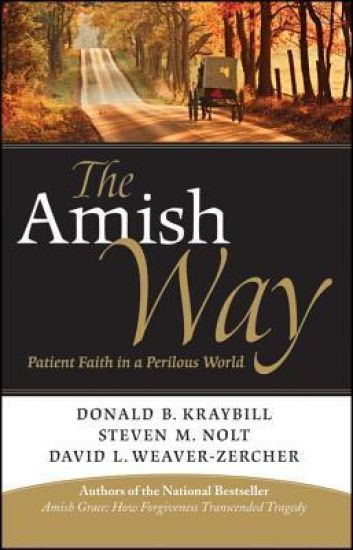
The Amish Way

The Amish Way

Donald B. Kraybill; Steven M. Nolt; David L. Weaver-Zercher

John Wiley Sons Inc
2012
nidottu
A sensitive and realistic look at the spiritual life and practices of the Amish This second book by the authors of the award-winning Amish Grace sheds further light on the Amish, this time on their faith, spirituality, and spiritual practices. They interpret the distinctive practices of the Amish way of life and spirituality in their cultural context and explore their applicability for the wider world. Using a holistic perspective, the book tells the story of Amish religious experience in the words of the Amish themselves. Due to their long-standing friendships and relationships with Amish people, this author team may be the only set of interpreters able to provide an outsider-insider perspective. Provides a behind-the-scenes examination of Amish spiritual lifeShows how the Amish practices can be applied to the wider worldWritten by authors with unprecedented access to the Amish community Written in a lively and engaging style, The Amish Way holds appeal for anyone who has wanted to know more about the inner workings of the Amish way of life.
Concise Encyclopedia of Amish, Brethren, Hutterites, and Mennonites

Concise Encyclopedia of Amish, Brethren, Hutterites, and Mennonites

Donald B. Kraybill

Johns Hopkins University Press
2010
sidottu
Donald B. Kraybill has spent his career among Anabaptist groups, gaining an unparalleled understanding of these traditionally private people. Kraybill shares that deep knowledge in this succinct overview of the beliefs and cultural practices of Amish, Brethren, Hutterites, and Mennonites in North America. Found throughout Canada, Central America, Mexico, and the United States, these religious communities include more than 200 different groups with 800,000 members in 17 countries. Through 340 short entries, Kraybill offers readers information on a wide range of topics related to religious views and social practices. With thoughtful consideration of how these diverse communities are related, this compact reference provides a brief and accurate synopsis of these groups in the twenty-first century. No other single volume provides such a broad overview of Amish, Brethren, Hutterites, and Mennonites in North America. Organized for ease of searching-with a list of entries, a topic finder, an index of names, and ample cross-references-the volume also includes abundant resources for accessing additional information. Wide in scope, succinct in content, and with directional markers along the way, the Concise Encyclopedia of Amish, Brethren, Hutterites, and Mennonites is a must-have reference for anyone interested in Anabaptist groups.
Amish Grace

Amish Grace

Donald B. Kraybill; Steven M. Nolt; David L. Weaver-Zercher

John Wiley Sons Inc
2010
nidottu
Praise for Amish Grace "A story our polarized country needs to hear: It is still grace that saves." ?BILL MOYERS, Public Affairs Television "In a world where repaying evil with evil is almost second nature, the Amish remind us there's a better way. In plain and beautiful prose, Amish Grace recounts the Amish witness and connects it to the heart of their spirituality." ?SISTER HELEN PREJEAN, author, Dead Man Walking "Faced with the notorious Amish aversion to publicity, reporter after reporter turned to the authors...to answer one question: How could the Nickel Mines Amish so readily, so completely, forgive ? While the text provides a detailed account of the tragedy, its beauty lies in its discovery of forgiveness as the crux of Amish culture. Never preachy or treacly, it suggests a larger meditation more than apt in our time." ?Philadelphia Magazine "This balanced presentation . . .blends history, current evaluation of American society, and an examination of what builds community into a seamless story that details the shootings while it probes the religious beliefs that led to such quick forgiving. Recommended." ?Library Journal "Professors Kraybill, Nolt, and Weaver-Zercher have written a superb book?a model of clear, forceful writing about a tragedy and its aftermath. They have an obvious affection for the Amish yet ask tough questions, weigh contradictions, and explore conundrums such as how a loving God could permit schoolgirls to be massacred." ?National Catholic Reporter Visit the authors' Web site at www.amishgrace.com
Success Made Simple

Success Made Simple

Erik Wesner; Donald B. Kraybill

John Wiley Sons Inc
2010
sidottu
The keys to better business from a thriving group of business owners-the Amish Business can be discouraging. According to US Department of Labor figures, only 44 percent of newly-opened firms will last four years. Amish firms, on the other hand, have registered a 95% survival rate over a five-year period. And in many cases, those businesses do remarkably well-as Donald Kraybill writes: "the phrase 'Amish millionaire' is no longer an oxymoron." Success Made Simple is the first practical book of Amish business success principles for the non-Amish reader. The work provides a platform of transferable principles--simple and universal enough to be applied in the non-Amish world, in a wide variety of business and management settings. Learn how to develop profitable and fulfilling enterprises as Amish explain how to build fruitful relationships with customers and employees, prosper by playing to strengths, and create an effective marketing storyIncludes interviews with over 50 Amish business owners outline the role of relationships in business and the importance of the big picture-taking in long-term goals, the welfare of others, and personal integrityOffers ideas on practical application of Amish business practices to non-Amish businesses, with bullet summaries at the end of each chapter reviewing the most important take-away points With a focus on relationship-building and the big picture, Success Made Simple offers business owners everywhere the tools for better, smarter, more successful enterprises.
Horse-and-Buggy Mennonites

Horse-and-Buggy Mennonites

Donald B. Kraybill; James P. Hurd

Pennsylvania State University Press
2006
pokkari
On a May Sunday in 1927, progress and tradition collided at the Groffdale Old Order Mennonite Church in eastern Pennsylvania when half the congregation shunned the cup of wine offered by Bishop Moses Horning. The boycott of this holiest of Mennonite customs was in direct response to Horning’s decision to endorse the automobile after years of debate within the church. The resulting schism over opposing views of technology produced the group known as the Wenger Mennonites. In the nearly eighty years since the establishment of this church, the initial group of fifty dissenters has grown to a community of 16,000 Wenger Mennonites. They have large families and typically retain 95 percent or more of their youth. For many years their main community was based in Lancaster County, but in recent decades they have expanded into eight other states, with new communities most recently established in Iowa and Michigan. Despite their continued rejection of modern technology, the Wengers—popularly known as horse-and-buggy Mennonites—continue to thrive on their own terms.In this first-of-its-kind study of the Wenger Mennonites, Kraybill and Hurd—a sociologist and an anthropologist—use cultural analysis to interpret the Wengers both in and outside Pennsylvania. They systematically compare the Wengers with other Mennonite groups as well as with the Amish, showing how relationships with these other groups have had a powerful impact on shaping the identity of the Wenger Mennonites in the Anabaptist world. As Kraybill and Hurd show, the Wengers have learned that it is impossible to maintain a truly static culture, and so examining the ways in which the Wengers cautiously and incrementally adapt to the ever-changing world around them is an invaluable case study of the gradual evolution of religious ritual in the face of modernity.
Horse-and-Buggy Mennonites

Horse-and-Buggy Mennonites

Donald B. Kraybill; James P. Hurd

Pennsylvania State University Press
2006
sidottu
On a May Sunday in 1927, progress and tradition collided at the Groffdale Old Order Mennonite Church in eastern Pennsylvania when half the congregation shunned the cup of wine offered by Bishop Moses Horning. The boycott of this holiest of Mennonite customs was in direct response to Horning’s decision to endorse the automobile after years of debate within the church. The resulting schism over opposing views of technology produced the group known as the Wenger Mennonites. In the nearly eighty years since the establishment of this church, the initial group of fifty dissenters has grown to a community of 16,000 Wenger Mennonites. They have large families and typically retain 95 percent or more of their youth. For many years their main community was based in Lancaster County, but in recent decades they have expanded into eight other states, with new communities most recently established in Iowa and Michigan. Despite their continued rejection of modern technology, the Wengers—popularly known as horse-and-buggy Mennonites—continue to thrive on their own terms.In this first-of-its-kind study of the Wenger Mennonites, Kraybill and Hurd—a sociologist and an anthropologist—use cultural analysis to interpret the Wengers both in and outside Pennsylvania. They systematically compare the Wengers with other Mennonite groups as well as with the Amish, showing how relationships with these other groups have had a powerful impact on shaping the identity of the Wenger Mennonites in the Anabaptist world. As Kraybill and Hurd show, the Wengers have learned that it is impossible to maintain a truly static culture, and so examining the ways in which the Wengers cautiously and incrementally adapt to the ever-changing world around them is an invaluable case study of the gradual evolution of religious ritual in the face of modernity.
Amish Enterprise

Amish Enterprise

Donald B. Kraybill; Steven M. Nolt

Johns Hopkins University Press
2004
pokkari
Amish culture has been rooted in the soil since its beginnings in 1693. But what happens when members of America's oldest Amish community enter non-farm work in one generation? How will hundreds of cottage industries and micro-enterprises reshape the heart of Amish life? Will traditional eighth grade education still prove adequate? What about gender roles, child-rearing practices, leisure activities, and growing ties with outsiders? Amish Enterprise was the first book to discuss these dramatic changes that are transforming Amish communities across North America. Based on interviews with more than 150 Amish entrepreneurs, the authors trace the rise and impact of businesses in Lancaster's Amish settlement in recent decades. In this new edition, the authors update demographic and technological changes, and also describe Amish enterprises outside of Pennsylvania in a new chapter.
Amish Enterprise

Amish Enterprise

Donald B. Kraybill; Steven M. Nolt

Johns Hopkins University Press
2004
sidottu
Amish culture has been rooted in the soil since its beginnings in 1693. But what happens when members of America's oldest Amish community enter non-farm work in one generation? How will hundreds of cottage industries and micro-enterprises reshape the heart of Amish life? Will traditional eighth grade education still prove adequate? What about gender roles, child-rearing practices, leisure activities, and growing ties with outsiders? Amish Enterprise was the first book to discuss these dramatic changes that are transforming Amish communities across North America. Based on interviews with more than 150 Amish entrepreneurs, the authors trace the rise and impact of businesses in Lancaster's Amish settlement in recent decades. In this new edition, the authors update demographic and technological changes, and also describe Amish enterprises outside of Pennsylvania in a new chapter.
On the Backroad to Heaven

On the Backroad to Heaven

Donald B. Kraybill; Carl F. Bowman

Johns Hopkins University Press
2002
pokkari
On the Backroad to Heaven is a unique guidebook to the world of Old Order Anabaptist groups. Focusing on four Old Order communities-the Hutterites, Mennonites, Amish, and Brethren-Donald B. Kraybill and Carl Desportes Bowman provide a fascinating overview of their culture, growth, and distinctive way of life. Following a general introduction to Old Order culture, they show how each group uses a different strategy to create and sustain its identity. The Hutterites, for example, keep themselves geographically segregated from the larger society, whereas the Brethren interact more freely with it. The Amish and Mennonites are more alike in how they engage the outside world, adopting a complex but flexible strategy of compromise that produces an evolving canon of social and religious rules. This first comparative study sketches the differences as well as the common threads that bind these groups together.
The Riddle of Amish Culture

The Riddle of Amish Culture

Donald B. Kraybill

Johns Hopkins University Press
2001
pokkari
Since its publication in 1989, The Riddle of Amish Culture has become recognized as a classic work on one of America's most distinctive religious communities. But many changes have occurred within Amish society over the past decade, from westward migrations and a greater familiarity with technology to the dramatic shift away from farming into small business which is transforming Amish culture. For this revised edition, Donald B. Kraybill has taken these recent changes into account, incorporating new demographic research and new interviews he has conducted among the Amish. In addition, he includes a new chapter describing Amish recreation and social gatherings, and he applies the concept of "social capital" to his sensitive and penetrating interpretation of how the Amish have preserved their social networks and the solidarity of their community.