Kirjojen hintavertailu. Mukana 12 390 323 kirjaa ja 12 kauppaa.
Kirjailija
Donald Dewey
Kirjat ja teokset yhdessä paikassa: 18 kirjaa, julkaisuja vuosilta 1965-2021, suosituimpien joukossa Ray Arcel. Vertaile teosten hintoja ja tarkista saatavuus suomalaisista kirjakaupoista.
Without Ray Arcel (1899-1994), the 20th century world of boxing would have been markedly different. The credibility of it as a sport would have been greatly lessened. Arcel's prominence is all the more interesting because he made his mark not as a fighter, promoter, or manager, but as a trainer. From Benny Leonard to Roberto Duran and Larry Holmes, Arcel stood in the corner for champions of every weight division that existed in his lifetime, a record that remains unequalled. This biography chronicles Arcel's life inside the ring--and outside, where he was a highly secretive man who maintained relationships with some of the chief mob figures of his day. Through a wealth of information from Arcel's unpublished memoir, this work offers an extraordinary portrait of one of boxing's most influential and enigmatic figures.
Ars Breve Vita Longa follows the author's decades-long odyssey through orchestras in the United States and Europe to describe the indelible characters he encountered on and off the screen and that, not just by coincidence, had a strong influence in developing his own character.
A reporter for a New York daily, Danny receives a deus ex machina for his frazzled life when a bureaucratic snafu sends the wrong coffin from Italy. Soon, he finds himself assigned to Rome to escort the sister of the man who should have been in the coffin.As he accompanies her dance through Italian red tape, he realizes two things -- that he is in love with her and that he is far more interested in the story of the Italian whose body had been sent to New York than in that of her deceased brother. The dilemma becomes only more complicated when a third body is found to have been misplaced and when one of the three turns out not to be very dead.
How to Make it YoursHumankind has spent centuries searching for ways to resolve its existential malaise and sense of futility. We have rushed to one organized corpus of thought after another-from philosophy to numerology to astrology and beyond-in our vain search to find joy. And yet, we continue to grasp for that "team feeling" about life; we continue to feel disenfranchised. Until now.When Dr. Alan Gibb passes a young boy on the street wearing a pair of Mets shorts, a Red Sox t-shirt, and a Yankees cap, the theory of human relationships called "Franchisement" is born. Franchisement: The Alan Gibb Story is the revolutionary story and guidebook to humankind's most inclusive corpus of thought. It is your outlet to finally discovering the truths of one influential man's race toward maximizing the possibility and profitability of human interconnection.As Gibb likes to say, "If you listen to people, the world is divided between the Yankees and the Red Sox. Tell that to those with a crush on the Minnesota Twins." This satirical novel will have you laughing out loud, scratching your head, and as long as Gibb has something to say about it, buying the answer to your true identity.
Anybody can star in a motion picture, write a Tony-Award-winning play, gain fame as a great jazz pianist, promote a Sudanese rock singer, supply the words for one of America's greatest songwriters, and cause an international crisis among the United States, Soviet Union, and China. Well, ... maybe not anybody. CONTENTS: Mosquitoes and Tortoises -- How to become 15-feet tall without leaving your orchestra seat.Blind Newsy Sees -- Running a newsstand can be show business, too.The Jazz Pianist and the Misanthrope -- Not every good boy does fine.The New Jugglers -- Ed Sullivan, Arthur Godfrey, and prime time modesty.On the Road to Big City Politics -- Jack Kerouac defeats Soviet tanks.Skin Deeper -- Naked nights with Ingmar Bergman.Balloon Man -- Sometimes short subjects aren't short enough.The Guy and the Doll -- Louie and Lorna put on a show.The Missing Times Square -- When the New York hub wasn't theater, porno houses, or Disneyland.At Sea -- Crossing the Atlantic for new anonymity.To Be and Not to Be -- Ben Webster, Roy Eldridge, Sudanese rockers, and other swingers in Denmark.Bed and Board -- Waiting anxiously for Bette Davis.Provocative Sources -- All the non-news that's fit to print.CIA-The Secret Story -- Exposing Italy's foreign ties.Agents, Double Agents, and Just Double-crossers -- Expect nothing and you may be lucky enough to get it.Finding Direction -- When the play isn't the thing.
"Still Life" is a 2018 poetry, flash fiction, prose, and artwork collection book from Scars Publications (http: //scars.tv), one of three 2018 collection books of selected acceptances of 2018 issues of cc&d magazine (http: //scars.tv/ccd) and down in the dirt magazine (http: //scars.tv/dirt) from Scars Publications (http: //scars.tv).Writers and artists included in this book are also listed with their writing at the Scars Publications book link (search for the book title in the books section at http: //scars.tv). Writers and artists in this issue collection book include Aaron Wilder, Abbey Faith Serena, Alan Catlin, Allan Onik, Allen F. McNair, Ana Vidosavljevic, Andrea Wilson, Arpit Rohilla, Ashley Layco, Beau Sherman, Bob Johnston, Carlos Frigo, Carolyn Poindexter, CEE, Cheryl A. Townsend, Daniel de Culla, David J. Thompson, David Michael Jackson, Demond J Blake, Donald Dewey, Doug Hawley, Douglas J. Ogurek, Dr. (Ms.) Michael S. Whitt, Drew Marshall, Edna C. Horning, Edward Michael O Durr Supranowicz, Eleanor Leonne Bennett, Eric Bonholtzer, Eric Burbridge, Erren Kelly, Fabrice Poussin, Fizza Sohail, Frederick Pollack, Greg G. Zaino, Hareendran Kallinkeel, Helen Bird, I.B. Rad, J. Ray Paradiso, J.G. Follansbee, J.T. Siemens, James Mulhern, Jane Stuart, Janet Kuypers, Jeffrey Briskin, Jenean McBrearty, John Carter, John Zedolik, John Zurn, Jojo Rodgers, Joshua Copeland, Julie Weiss, Kilmo, Kyle Hemmings, Lamont Luther, Laura Hudson, Liam Spencer, Linda M. Crate, Lisa Gray, M.C. Rydel, Marc McMahon, Mark J. Mitchell, Mark Joseph Kevlock, Mark Towse, Matthew McAyeal, Michael Ceraolo, Mike Schneider, Mitchel Montagna, Olivier Schopfer, Pavol Janik, PhD., Peter LaBerge, R. N. Taber, Retta Lewis, Robert Levin, Roger G. Singer, Ronald Charles Epstein, Rose E. Grier, Salvatore Difalco, Teddy Duncan Jr., the HA Man of South Africa, Thom Woodruff, Tim Dadswell, Tom Ball, Travis Green, Uzeyir Lokman Cayci, Vincent Barry, Wes Heine, William Ogden Haynes, and Xanadu.
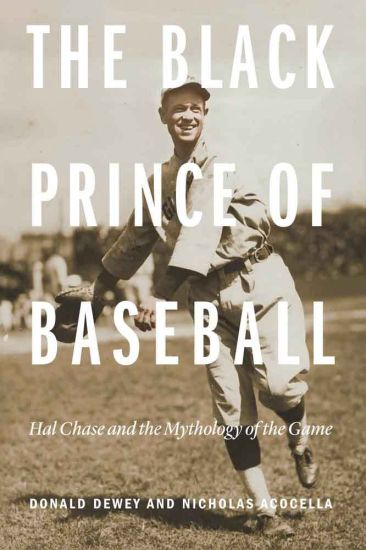
As America lurched into the twentieth century, its national pastime was afflicted with the same moral malaise that was enveloping the rest of the nation. Players regularly bet on games, games were routinely fixed, and league politics were as dirty as the base paths. Against this backdrop, Hal Chase emerged as one of the game’s greatest players and also as one of its most scandalous characters. With charisma and bravado that earned him the nickname The Prince, Chase charmed his way across America, spinning lies in the afternoon, dealing high-stakes poker at night, and gambling with beautiful women until dawn. Most notoriously of all, he undermined his stature as the era’s greatest first baseman by conniving with gamblers to fix games and draw teammates into his diamond conspiracies. But as Donald Dewey and Nicholas Acocella reveal in their groundbreaking biography, The Black Prince of Baseball, Chase was also a scapegoat for baseball notables with hands even dirtier than his. These included league officials who ignored facts in an attempt to pin the 1919 Black Sox scandal on him and-a previously unknown twist-the fabled John McGraw, who perjured himself on a witness stand against the first baseman. Although Chase, contrary to popular belief, was never banned from the major leagues, meticulous research by the authors implicates him in other shady enterprises as well, not least an attempt to blackmail revivalist Aimee Semple McPherson. As The Black Prince of Baseball makes clear, in his protean talents and larcenies, Hal Chase personified all the excesses of Ragtime.
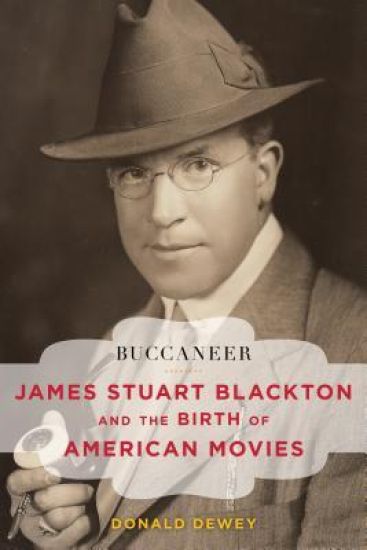
A man of many film firsts, James Stuart Blackton promoted motion pictures as a mass commercial medium by creating the first true movie studio, adopting the star system, pioneering film animation, and publishing Motion Picture Magazine, one of the first film periodicals. As much of a seminal figure to the film industry as Thomas Edison and D.W. Griffith, James Stuart Blackton nonetheless remains unknown to most film enthusiasts and even many cinema scholars. In Buccaneer: James Stuart Blackton and the Birth of American Movies Donald Dewey recounts the drama, intrigue, and romance of this motion picture trailblazer. A gifted director, producer, and founder of Vitagraph studios, Blackton’s personal escapades were nearly as dramatic as his contributions to the medium he helped establish. Decades ahead of his time, Blackton also played a critical role in propagating war-time sentiment during both the Spanish-American War and World War I and was an influence on such key historical figures as Theodore Roosevelt. A fascinating look into the life of a truly distinguished filmmaker, Buccaneer narrates the volatile world of the early motion picture industry, as influenced by a man whose own story rivaled anything on screen. A must read for film lovers, this book will also prove to be invaluable to readers with an interest in American history.
For many of his theater contemporaries, Lee J. Cobb (1911–1976) was the greatest actor of his generation. In Hollywood he became the definitive embodiment of gangsters, psychiatrists, and roaring lunatics. From 1939 until his death, Cobb contributed riveting performances to a number of films, including Boomerang, On the Waterfront, The Brothers Karamazov, 12 Angry Men, and The Exorcist. But for all of his conspicuous achievements in motion pictures, Cobb’s name is most identified with the character Willy Loman in the original stage production of Arthur Miller’s Death of a Salesman (1949). Directed by Elia Kazan, Cobb’s Broadway performance proved to be a benchmark for American theater. In Lee J. Cobb: Characters of an Actor, Donald Dewey looks at the life and career of this versatile performer. From his Lower East Side roots in New York City—where he was born Leo Jacob—to multiple accolades on stage and the big and small screens, Cobb’s life proved to be a tumultuous rollercoaster of highs and lows. As a leading man of the theater, he gave a number of compelling performances in such plays as Golden Boy and King Lear. For the Hollywood studios, Cobb fit the description of the “character actor.” No one better epitomized the performer who suddenly appears on the screen and immediately grabs the audience’s attention. During his forty-five-year career, there wasn’t a significant star—from Humphrey Bogart and James Stewart to Paul Newman and Clint Eastwood—with whom he didn’t work. Cobb was also followed by controversy: he appeared before the House Un-American Activities Committee in the 1950s and was a witness to a movie-set murder case in the 1970s. Through it all, he never lost his taste for fast cars and gin rummy. A bear of a man with a voice that equally accommodated growls and sibilant sympathies, Cobb was undeniably an actor to be reckoned with. In this fascinating book, Dewey captures all of the drama that surrounded Cobb, both on screen and off.
Monopoly in Economics and Law is a comprehensive book written by Donald Dewey that explores the concept of monopoly in both economic and legal contexts. The book provides an in-depth analysis of the history, nature, and effects of monopoly, as well as the various legal and economic theories that have developed around it. The book begins by examining the history of monopoly, from its origins in ancient times to its modern-day manifestations. It then delves into the economic and legal theories that have been developed to explain and regulate monopoly, including the neoclassical, institutional, and game-theoretic approaches. Throughout the book, Dewey provides numerous examples of monopolies in various industries, such as the telecommunications industry, the pharmaceutical industry, and the airline industry. He also discusses the role of government in regulating monopolies, including antitrust laws and regulations. The book concludes with a discussion of the future of monopoly in the global economy, including the impact of technological advancements and globalization on the prevalence and regulation of monopolies. Overall, Monopoly in Economics and Law is a thorough and thought-provoking exploration of one of the most important concepts in economics and law. It is an essential read for anyone interested in understanding the nature and effects of monopoly, as well as the legal and economic theories that have developed around it.This scarce antiquarian book is a facsimile reprint of the old original and may contain some imperfections such as library marks and notations. Because we believe this work is culturally important, we have made it available as part of our commitment for protecting, preserving, and promoting the world's literature in affordable, high quality, modern editions, that are true to their original work.
This book follows the life of James Madison, our 4th president, who at the tender age of twenty-five was thrust into significant politics as an elected member of the Virginia House of Burgesses. Even in his first venture into statesmanship. Madison took notes on constitutional deliberations, a practice that he would continue in the Federal Convention that proposed the United States Constitution and throughout much of his legislative career whether in Philadelphia, New York City, or Williamsburg, Virginia. Just as most of our knowledge of the framing of the U.S. Constitution is provided by Madison's painstaking notes of the Constitutional Convention of 1787, much of our knowledge of George Mason's many contributions to the Virginia Constitution of 1776 are also known through Madison's efforts. His major personal contribution to that seminal state constitution is a brief but key phrase in the Virginia Declaration of Rights that would in many respects become a pattern for the Bill of Rights that Madison was later largely responsible for addition to the United States Constitution. His addition of a simple clause converted Mason's proposed language from religious toleration, where an official church would permit citizens to attend other churches, to religious freedom with its clear implication that it was one of the Rights of Man that were so important to that revolutionary generation. Throughout his career he remained committed to religious freedom and he is still considered one of its greatest contributors. During the brief time between his terms in Congress he would prevail in battles against the re-establishment of the Episcopal Church in Virginia and would win legislative approval for the Statute for Religious Freedom that Jefferson wrote and in which he took enormous pride, but which required the legislative management of James Madison to become law. Madison is best and justifiably known as "Father of the Constitution" because of his heroic role in bringing together the Federal Convention in 1787, influencing its outcomes through the Virginia Plan, maintaining records of the debates, winning its ratification in the largest state and influencing several other states.
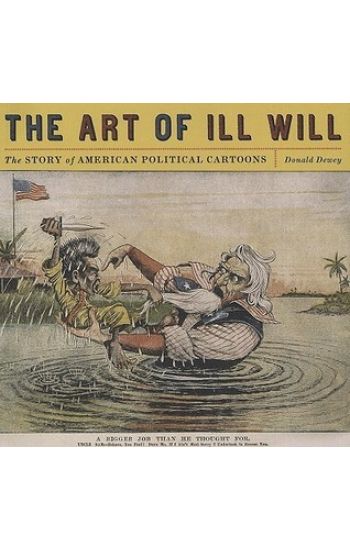
2008 Association of American University Presses Award for Jacket Design A comprehensive history of American political cartooning, complete with over 200 illustrations The Art of Ill Will is a comprehensive history of American political cartooning, featuring over two hundred illustrations. From the colonial period to contemporary cartoonists like Pat Oliphant and Jimmy Margulies, Donald Dewey highlights these artists uncanny ability to encapsulate the essence of a situation and to steer the public mood with a single drawing and caption. Taking advantage of unlimited access to The Granger Collection, which holds thousands of the most significant works of Thomas Nast and the other early American cartoonists, The Art of Ill Will provides a survey of American history writ large, capturing the voice of the people—hopeful, angry, patriotic, frustrated—in times of peace and war, prosperity and depression. Dewey tracks the cartoonists role as a jester with a serious brief. Ulysses S. Grant credited cartoonists with helping him win his election and was not the only president to feel that way; political bosses and even state legislatures have sought to ban cartoons when they endangered entrenched interests; General George Patton once promised to throw beloved wartime cartoonist Bill Mauldin in jail if he continued to spread dissent. (Mauldin later won the Pulitzer Prize.) Despite the increasing threats they face as daily newspapers merge or vanish, cartoonists have given us some of our most memorable images, from Theodore Roosevelt's pince-nez and mustache to Richard Nixon's Pinocchio nose to Jimmy Carters Chiclet teeth. At a time when domestic and foreign political developments have made these artists more necessary than ever, The Art of Ill Will is a rich collection of the wickedly clever images that puncture pomposity and personalize American history. Cartoonists include: Benjamin Franklin (whose Join, or Die was the first modern American political cartoon), the astoundingly prolific Thomas Nast, Puck magazine founder Joseph Keppler, Adalbert Volck, suffragist Laura Foster, Uncle Sam creator James Montgomery Flagg, Theodore Geisel departing from his Dr. Seuss persona to tackle World War II, Herbert Herblock Block (who so enraged Richard Nixon that the president canceled his subscription to the Washington Post), Daniel Fitzpatrick, Jules Feiffer, Paul Conrad, Gary Trudeau, and the controversial Ted Rall.
This book examines economic analysis relevant to monopoly policy and traces the growth of monopoly policy in the U.S. from its common-law origins to the present as it relates to cartels, market tactics, oligopoly, and labor unions.