
Kirjailija
Donald L. Gelpi
Kirjat ja teokset yhdessä paikassa: 9 kirjaa, julkaisuja vuosilta 1984-2009, suosituimpien joukossa Endless Seeker. Vertaile teosten hintoja ja tarkista saatavuus suomalaisista kirjakaupoista.
9 kirjaa
Kirjojen julkaisuhaarukka 1984-2009.
This theological autobiography presents the experiences and events that shaped the systematic theology, which author Donald Gelpi has been crafting since 1973. Gelpi's normative theology of conversion discusses five kinds of conversion: affective, intellectual, personal moral, political, and religious. Beginning with his boyhood in New Orleans, Closer Walk describes the early development of his religious perceptions, how his formation as a Jesuit taught him how to think and instilled a passion for the U.S. philosophical tradition, his major philosophical influences, and the influence of charismatic piety on his thought. This passionate, detailed, and humorous memoir also explores the history of the John Courtney Murray Group—a research seminar in inculturated philosophical and theological thinking—and how participation in the group helped him lay the systematic foundations for his theology that was crafted during his years at the Jesuit School of Theology at Berkeley.
The author of this study invokes Peirce's logic in order to clarify the operational procedures of dialectic, foundational, and doctrinal theology. He argues that Peirce's theory of the normative sciences casts light on three forms of conversion: affective, intellectual, and moral conversion. From a normative account of the dynamics of five forms of conversion, he derives specific criteria for authenticating and calling into question both doctrinal statements about the content of religious faith and different theories of theological method. The third and final chapter tests the adequacy of the suggested criteria by applying them to the symbolic Christology of Roger Haight.


Offers the first systematic study of Emerson as a religious thinker and analyzes him as a case study in expressive religious individualism. By filling an important gap in Emersonian criticism, it not only throws new light on Emerson's thought but also offers a critique of the individualistic ideology he first formulated. Contents: Spiritual Discernment; The Saturnalia of Faith; The Philosophy of Bias; The Higher Civility; The Natural History of Intellect; The Endless Seeker: A Cas in Expressive Religious Individualism; and The World of the Transparent Eyeball (diagram).

Offers the first systematic study of Emerson as a religious thinker and analyzes him as a case study in expressive religious individualism. By filling an important gap in Emersonian criticism, it not only throws new light on Emerson's thought but also offers a critique of the individualistic ideology he first formulated. Contents: Spiritual Discernment; The Saturnalia of Faith; The Philosophy of Bias; The Higher Civility; The Natural History of Intellect; The Endless Seeker: A Cas in Expressive Religious Individualism; and The World of the Transparent Eyeball (diagram).
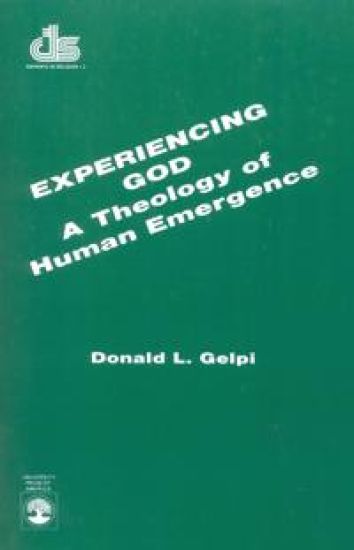
Originally published by the Paulist Press in 1978, this book attempts to elaborate a foundational theology that could interpret the experience of Christian life in all of its social complexity. Father Gelpi reflects both on his personal experience as well as the principal texts of the Christian religion. He examines the American philosophical contributions of Edwards, Peirce, James, Dewey, Santayana, and Whitehead and their contribution to our Christian heritage. Co-published with the College Theology Society as part of its Reprints in Religion Series.

To find more information about Rowman and Littlefield titles, please visit www.rowmanlittlefield.com.