Kirjailija
Donald MacKenzie
Kirjat ja teokset yhdessä paikassa: 63 kirjaa, julkaisuja vuosilta 1986-2025, suosituimpien joukossa Cool Sleeps Balaban. Vertaile teosten hintoja ja tarkista saatavuus suomalaisista kirjakaupoista.
63 kirjaa
Kirjojen julkaisuhaarukka 1986-2025.
Scott and Usher both need money, and they need it badly. One to save his farm, the other his future. Usher is an experienced criminal and housebreaker, but Scott is a rookie - he's desperate for cash, but petrified of the implications that his actions might have.To make enough money for their purposes, the pair must commit at least two burglaries - but when things go wrong they discover themselves capable of a degree of violence and level of treachery that lead to a climax of nightmarish proportions.
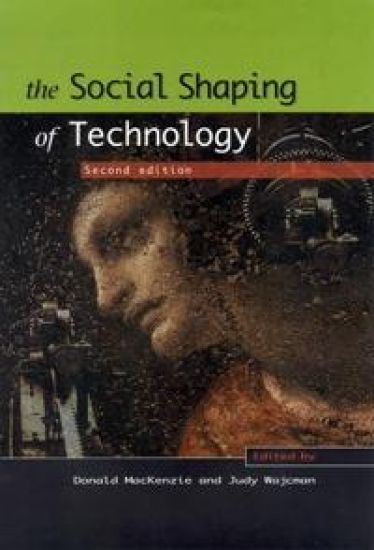
Reviews of the 1st Edition:"....This book is a welcome addition to the sociology of technology, a field whose importance is increasingly recognised." - Sociology"....sets a remarkably high standard in breadth of coverage, in scholarship, and in readability and can be recommended to the general reader and to the specialist alike." - Science and Society"....This remarkably readable and well-edited anthology focuses, in a wide variety of concrete examples, not on the impacts of technologies on societies but in the reverse: how different social contexts shaped the emergence of particular technologies." - Technology and Culture How does social context affect the development of technology? What is the relationship between technology and genderIs production technology shaped by efficiency or by social control?Technological change is often seen as something that follows its own logic - something we may welcome, or about which we may protest, but which we are unable to alter fundamentally. This reader challenges that assumption and its distinguished contributors demonstrate that technology is affected at a fundamental level by the social context in which it develops. General arguments are introduced about the relation of technology to society and different types of technology are examined: the technology of production; domestic and reproductive technology; and military technology.The book draws on authors from Karl Marx to Cynthia Cockburn to show that production technology is shaped by social relations in the workplace. It moves on to the technologies of the household and biological reproduction, which are topics that male-dominated social science has tended to ignore or trivialise - though these are actually of crucial significance where powerful shaping factors are at work, normally unnoticed. The final section asks what shapes the most frightening technology of all - the technology of weaponry, especially nuclear weapons.The editors argue that social scientists have devoted disproportionate attention to the effects of technology on society, and tended to ignore the more fundamental question of what shapes technology in the first place. They have drawn both on established work in the history and sociology of technology and on newer feminist perspectives to show just how important and fruitful it is to try to answer that deeper question. The first edition of this reader, published in 1985, had a considerable influence on thinking about the relationship between technology and society. This second edition has been thoroughly revised and expanded to take into account new research and the emergence of new theoretical perspectives.
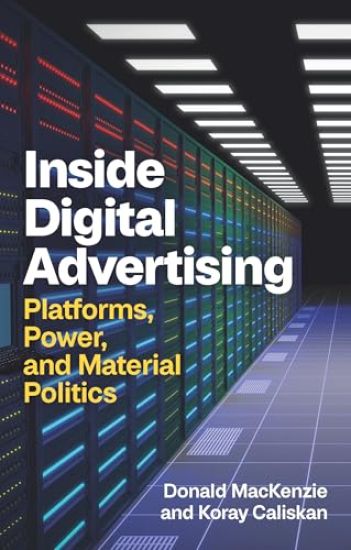
Dozens of times daily, access to your screen is auctioned to advertisers, sometimes by your own phone or laptop without your knowledge. In the background are huge, electricity-hungry, carbon emitting systems that conduct roughly two trillion near-instantaneous, automated auctions every day.This book takes you into the heart of this mysterious world. It describes how Google built its astonishing global system of warehouse-scale computing and turned that system into an unprecedented, multi-billion dollar, money-earning machine, and how Facebook – almost by accident – also became an advertising leviathan. It examines the tensions between those giants and the smaller firms that populate digital advertising’s open marketplace. Those tensions, as well as conflicts over user privacy, give rise to a new kind of politics that plays out in material systems, in the form of crucial clashes between different ways of designing those systems. Building on work in the emerging interdisciplinary field of market studies, MacKenzie and Caliskan examine digital advertising’s material politics, its giant megamachines, and the foundations of platform power.Inside Digital Advertising lays bare the processes that underpin today’s global advertising industry. It will be a key book for students and academics in the social sciences, humanities and business studies and it will appeal to anyone interested in the forces that are shaping our everyday digital world.
The Seymour Cray Era of Supercomputers
Boelie Elzen; Donald MacKenzie
Association of Computing Machinery,U.S.
2025
nidottu
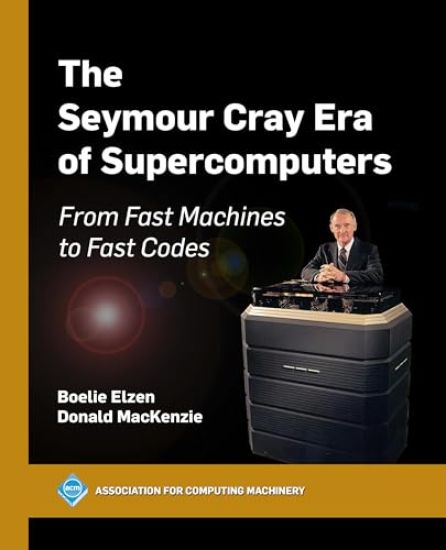
This book describes the development and use of supercomputers in the period 1960 - 1996, a time that can be called the Seymour Cray Era. For more than three decades, Cray's computer designs were seen as the yardstick against which all other efforts were measured. Initially, this yardstick was sheer computing speed. However, the supercomputer world gradually became more complex and other factors became equally important. The initial development of supercomputers was commissioned and financed by the Los Alamos and Lawrence Livermore National Laboratories, which had huge computational needs in connection with nuclear weapons development. The computers designed by Cray satisfied those needs, while these computers were also sold to a few dozen other big research organizations and weather agencies. From the 98 s, a variety of companies started to compete with the Cray designs by offering supercomputers that used a new architectural approach, MPP: massively parallel processing. This new architecture, based on using tens of thousands of relatively simple microprocessors, subsequently began to dominate high-performance computing and marked the end of the Seymour Cray Era. This book is important reading for anyone working in the area of high-performance computing, providing essential historical context for the work of a legendary pioneer and the computers he became famous for designing. It will also be valuable to students of computing history and, more generally, to readers interested in the history of science and technology. For advanced students, the book illustrates how innovation in its very essence is a socio-technical process: not just a matter of developing the "best technology," but also of making appropriate choices concerning the interaction of human and technical factors in product design.
The Seymour Cray Era of Supercomputers
Boelie Elzen; Donald MacKenzie
Association of Computing Machinery,U.S.
2025
sidottu
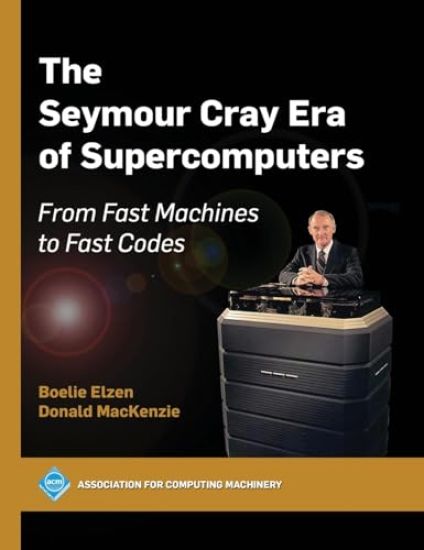
This book describes the development and use of supercomputers in the period 1960 - 1996, a time that can be called the Seymour Cray Era. For more than three decades, Cray's computer designs were seen as the yardstick against which all other efforts were measured. Initially, this yardstick was sheer computing speed. However, the supercomputer world gradually became more complex and other factors became equally important. The initial development of supercomputers was commissioned and financed by the Los Alamos and Lawrence Livermore National Laboratories, which had huge computational needs in connection with nuclear weapons development. The computers designed by Cray satisfied those needs, while these computers were also sold to a few dozen other big research organizations and weather agencies. From the 98 s, a variety of companies started to compete with the Cray designs by offering supercomputers that used a new architectural approach, MPP: massively parallel processing. This new architecture, based on using tens of thousands of relatively simple microprocessors, subsequently began to dominate high-performance computing and marked the end of the Seymour Cray Era. This book is important reading for anyone working in the area of high-performance computing, providing essential historical context for the work of a legendary pioneer and the computers he became famous for designing. It will also be valuable to students of computing history and, more generally, to readers interested in the history of science and technology. For advanced students, the book illustrates how innovation in its very essence is a socio-technical process: not just a matter of developing the "best technology," but also of making appropriate choices concerning the interaction of human and technical factors in product design.
A remarkable look at how the growth, technology, and politics of high-frequency trading have altered global financial marketsIn today’s financial markets, trading floors on which brokers buy and sell shares face-to-face have increasingly been replaced by lightning-fast electronic systems that use algorithms to execute astounding volumes of transactions. Trading at the Speed of Light tells the story of this epic transformation. Donald MacKenzie shows how in the 1990s, in what were then the disreputable margins of the US financial system, a new approach to trading—automated high-frequency trading or HFT—began and then spread throughout the world. HFT has brought new efficiency to global trading, but has also created an unrelenting race for speed, leading to a systematic, subterranean battle among HFT algorithms.In HFT, time is measured in nanoseconds (billionths of a second), and in a nanosecond the fastest possible signal—light in a vacuum—can travel only thirty centimeters, or roughly a foot. That makes HFT exquisitely sensitive to the length and transmission capacity of the cables connecting computer servers to the exchanges’ systems and to the location of the microwave towers that carry signals between computer datacenters. Drawing from more than 300 interviews with high-frequency traders, the people who supply them with technological and communication capabilities, exchange staff, regulators, and many others, MacKenzie reveals the extraordinary efforts expended to speed up every aspect of trading. He looks at how in some markets big banks have fought off the challenge from HFT firms, and how exchanges sometimes engineer technical systems to favor certain types of algorithms over others.Focusing on the material, political, and economic characteristics of high-frequency trading, Trading at the Speed of Light offers a unique glimpse into its influence on global finance and where it could lead us in the future.

This book has been considered by academicians and scholars of great significance and value to literature. This forms a part of the knowledge base for future generations. We have represented this book in the same form as it was first published. Hence any marks seen are left intentionally to preserve its true nature.
Financial markets, processes, and instruments are often difficult to fathom; the credit crisis highlights both their importance and their fragility. Donald MacKenzie is one of the most perceptive analysts of the workings of the financial world. In this book, he argues that economic agents and markets need to be analyzed in their full materiality: their physicality, their corporeality, their technicality. Markets are populated not by disembodied, abstract agents, but by embodied human beings and technical systems. Concepts and systematic ways of thinking that simplify market processes and make them mentally tractable are essential to how markets function. In putting forward this material sociology of markets, the book synthesizes and contributes to the field of social studies of finance; the application to financial markets not just of economics but of wider social-science disciplines, in particular science and technology studies. The topics covered include the development of financial derivatives exchanges; arbitrage; how corporate profit figures are constructed; the crucial new markets in carbon emissions; and a case-study of a hedge fund (based, unusually, on direct observation of its trading). The book will appeal to research students and academics across the social sciences, and the general reader will enjoy the book's explanations and analyses of some of the most important phenomena of today's turbulent markets.
Chains of Finance
Diane-Laure Arjalies; Philip Grant; Iain Hardie; Donald MacKenzie; Ekaterina Svetlova
Oxford University Press
2017
sidottu
Investment is no longer a matter of individual savers directly choosing which shares or bonds to buy. Rather, most of their money flows through a 'chain': an often extended sequence of intermediaries. What goes on in that chain is of huge importance: The world's investment managers, who are now almost as well paid as top bankers, control assets equivalent in value to around a year of total global economic output. In Chains of Finance, five social scientists discuss the ways in which the intermediaries in the chain influence each other, channel the flows of savers' money, enhance investment decisions, and form audiences for each other's performances of financially competent selves. The central argument of the book is that investment management is fashioned profoundly by the opportunities and constraints this chain creates. Whether chains constrain or enable, however, they always entangle, tying intermediaries to each other - silently and profoundly shaping the investment management industry. Chains of Finance is a novel analysis that will make students, social scientists, financial professionals, and regulators looking at the workings of financial markets in a new light. A must-read for anyone looking for insights into the decision-making processes of investment managers and those influenced by and working for them.
Egyptian mythology is of highly complex character, and cannot be considered apart from its racial andhistorical aspects. The Egyptians were, as a Hebrew prophet has declared, a "mingled people", and this viewhas been confirmed by recent ethnological research: "the process; of racial fusion begun in the Delta at thedawn of history", says Professor Elliot Smith, "spread through the whole land of Egypt". In localities theearly Nilotic inhabitants accepted the religious beliefs of settlers, and fused these with their own. They alsoclung tenaciously to the crude and primitive tribal beliefs of their remote ancestors, and never abandoned anarchaic conception even when they acquired new and more enlightened ideas; they accepted myths literally, and regarded with great sanctity ancient ceremonies and usages. They even showed a tendency to multiplyrather than to reduce the number of their gods and goddesses, by symbolizing their attributes. As a result, wefind it necessary to deal with a bewildering number of deities and a confused mass of beliefs, many of whichare obscure and contradictory. But the average Egyptian was never dismayed by inconsistencies in religiousmatters: he seemed rather to be fascinated by them. There was, strictly speaking, no orthodox creed in Egypt;each provincial centre had its own distinctive theological system, and the religion of an individual appears tohave depended mainly on his habits of life. "The Egyptian", as Professor Wiedemann has said, "neverattempted to systematize his conceptions of the different divinities into a homogeneous religion. It is open tous to speak of the religious ideas of the Egyptians, but not of an Egyptian religion.
The charge against Shane Stafford was assault occasioning actual bodily harm. Stafford had attacked gossip columnist Gavin Legge. Legge had been engaged to Shane's twin sister. In Shane's view Legge had not just let down his sister, but had hounded her to suicide.It was the custom of the Stafford clan to stick together. Shane's attack on Legge had been public and conspicuous. The police believed they had an open-and-shut case. But did they?
Ross Macintyre is a tough Canadian journalist in Paris on a routine mission when he finds himself deeply involved in the consequences of the wrongful imprisonment of Radnor Brown; Radnor is charged with rape, for which the scenario and the evidence have been carefully set up by people who want him out of the way.
Kit Hendry has several criminal convictions, but now he is given the choice of a twelve-year sentence or a government mission to trace the security leakage from a Dusseldorf installation. Kit can crack safes - he can also speak German.Under the vigilant surveillance of Gaunt and also of Bernadette, with whom he is infatuated, he crosses the channel and is exposed to a smallpox victim, but the film he secures becomes the final double take . . .
Ritchie Duncan, a convict, is released from prison and decides to go clean. But when he is handed some top secret film containing electronic data by a girl in a bar there ensues mayhem and murder. The film is the property of her communist agent boyfriend, and when she refuses to surrender it her connection is killed and she is kept quietly alive in a nursing home until Duncan can save her.'Donald MacKenzie is a born storyteller' Guardian
'Donald MacKenzie is a born storyteller' GuardianEvery thief dreams of committing the perfect crime. Cameron, Thorne and Gun are convinced that the jewel robbery they have planned cannot possibly go wrong, but jealousy mistrust and fear doom the enterprise from the start.One of them dies a slow, hideous death; the other two find they have walked into hell. Soon, a beautiful woman and two desperate men find themselves trapped by their own actions. And when the thread of tension snaps they learn that death can indeed be a friend.
Paul Henderson is a big time jewel thief on a run of bad luck. He has a seven-year-old daughter to support, so when he's offered a partnership in the biggest heist of all time he decides to try to take the baubles and run.He reaches Switzerland, where the crime is to take place, and wangles an invitation to a gala only to be confronted by a double threat, a double cross and a kidnapping. And all this is before the night of the burglary arrives . . .'Donald MacKenzie is a born storyteller' Guardian
Paul Gregory, a Canadian confidence trickster operating in London, targets a wealthy Canadian woman in Britain to sell her collection of valuable coins. When she agrees to give him legal control over the sale, he completes the deal without her knowledge, stashes the proceeds in a safe deposit box, and then deliberately waits to be caught by the police. Gregory plans on getting a five-year sentence, with time off for good behaviour, and then collecting his loot when he is released.But when the judge hands Gregory a ten-year term, his only way out is escape...