Kirjojen hintavertailu. Mukana 12 657 676 kirjaa ja 12 kauppaa.

Kirjailija

Donald P. Moynihan

Kirjat ja teokset yhdessä paikassa: 3 kirjaa, julkaisuja vuosilta 2008-2020, suosituimpien joukossa The Dynamics of Performance Management. Vertaile teosten hintoja ja tarkista saatavuus suomalaisista kirjakaupoista.

3 kirjaa

Kirjojen julkaisuhaarukka 2008-2020.

Behavioral Public Performance

Behavioral Public Performance

Oliver James; Asmus Leth Olsen; Donald P. Moynihan; Gregg G. Van Ryzin

Cambridge University Press
2020
pokkari
A revolution in the measurement and reporting of government performance through the use of published metrics, rankings and reports has swept the globe at all levels of government. Performance metrics now inform important decisions by politicians, public managers and citizens. However, this performance movement has neglected a second revolution in behavioral science that has revealed cognitive limitations and biases in people's identification, perception, understanding and use of information. This Element introduces a new approach - behavioral public performance - that connects these two revolutions. Drawing especially on evidence from experiments, this approach examines the influence of characteristics of numbers, subtle framing of information, choice of benchmarks or comparisons, human motivation and information sources. These factors combine with the characteristics of information users and the political context to shape perceptions, judgment and decisions. Behavioral public performance suggests lessons to improve design and use of performance metrics in public management and democratic accountability.

Administrative Burden: Policymaking by Other Means

Administrative Burden: Policymaking by Other Means

Pamela Herd; Donald P. Moynihan

RUSSELL SAGE FOUNDATION
2019
nidottu
Winner of the 2020 Outstanding Book Award Presented by the Public and Nonprofit Section of the National Academy of ManagementWinner of the 2019 Louis Brownlow Book Award from the National Academy of Public Administration Bureaucracy, confusing paperwork, and complex regulations--or what public policy scholars Pamela Herd and Donald Moynihan call administrative burdens--often introduce delay and frustration into our experiences with government agencies. Administrative burdens diminish the effectiveness of public programs and can even block individuals from fundamental rights like voting. In AdministrativeBurden, Herd and Moynihan document that the administrative burdens citizens regularly encounter in their interactions with the state are not simply unintended byproducts of governance, but the result of deliberate policy choices. Because burdens affect people's perceptions of government and often perpetuate long-standing inequalities, understanding why administrative burdens exist and how they can be reduced is essential for maintaining a healthy public sector. Through in-depth case studies of federal programs and controversial legislation, the authors show that administrative burdens are the nuts-and-bolts of policy design. Regarding controversial issues such as voter enfranchisement or abortion rights, lawmakers often use administrative burdens to limit access to rights or services they oppose. For instance, legislators have implemented administrative burdens such as complicated registration requirements and strict voter-identification laws to suppress turnout of African American voters. Similarly, the right to an abortion is legally protected, but many states require women seeking abortions to comply with burdens such as mandatory waiting periods, ultrasounds, and scripted counseling. As Herd and Moynihan demonstrate, administrative burdens often disproportionately affect the disadvantaged who lack the resources to deal with the financial and psychological costs of navigating these obstacles. However, policymakers have sometimes reduced administrative burdens or shifted them away from citizens and onto the government. One example is Social Security, which early administrators of the program implemented in the 1930s with the goal of minimizing burdens for beneficiaries. As a result, the take-up rate is about 100 percent because the Social Security Administration keeps track of peoples' earnings for them, automatically calculates benefits and eligibility, and simply requires an easy online enrollment or visiting one of 1,200 field offices. Making more programs and public services operate this efficiently, the authors argue, requires adoption of a nonpartisan, evidence-based metric for determining when and how to institute administrative burdens, with a bias toward reducing them. By ensuring that the public's interaction with government is no more onerous than it need be, policymakers and administrators can reduce inequality, boost civic engagement, and build an efficient state that works for all citizens.
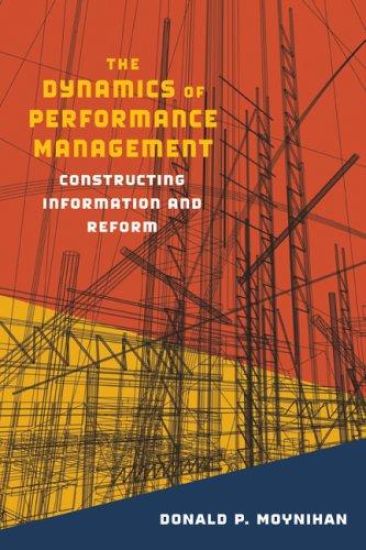
The Dynamics of Performance Management

The Dynamics of Performance Management

Donald P. Moynihan

Georgetown University Press
2008
pokkari
Efficiency, Innovation, Results, and Accountability - These, advocates claim, are the fruits of performance management. In recent decades government organizations have eagerly embraced the performance model - but the rush to reform has not delivered as promised. Drawing on research from state and federal levels, Moynihan illustrates how governments have emphasized some aspects of performance management - such as building measurement systems to acquire more performance data - but have neglected wider organizational change that would facilitate the use of such information.In his analysis of why and how governments in the United States have made the move to performance systems, Moynihan identifies agency leadership, culture, and resources as keys to better implementation, goal-based learning, and improved outcomes. How do governments use the performance information generated under performance systems? Moynihan develops a model of interactive dialogue to highlight how performance data, which promised to optimize decision making and policy change for the public's benefit, has often been used selectively to serve the interests of particular agencies and individuals, undermining attempts at interagency problem solving and reform. A valuable resource for public administration scholars and administrators, "The Dynamics of Performance Management" offers fresh insight into how government organizations can better achieve their public service goals.