Kirjojen hintavertailu. Mukana 12 595 353 kirjaa ja 12 kauppaa.

Kirjailija

Donald R. Hickey

Kirjat ja teokset yhdessä paikassa: 12 kirjaa, julkaisuja vuosilta 2007-2023, suosituimpien joukossa Don't Give Up the Ship!. Vertaile teosten hintoja ja tarkista saatavuus suomalaisista kirjakaupoista.

Mukana myös kirjoitusasut: Donald R Hickey

12 kirjaa

Kirjojen julkaisuhaarukka 2007-2023.

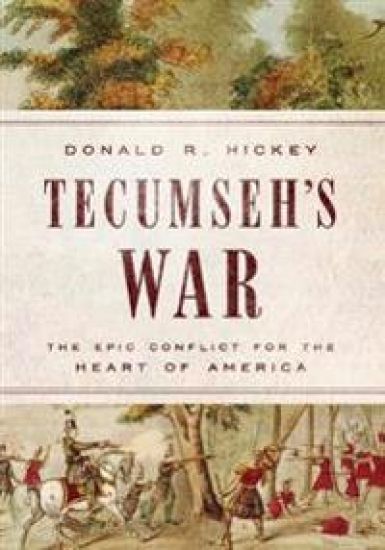
Tecumseh's War: The Epic Conflict for the Heart of America
A Comprehensive History of the Most Important Native American Resistance Movement The Shawnee leader Tecumseh came to prominence in a war against the United States waged from 1811 to 1815. In 1805, Tecumseh's younger brother Lalawethika (soon to be known as "the Prophet") had a vision for an Indian revitalization movement that would restore Native culture and resist American expansion. Tecumseh organized the growing support for this movement, which came from Indigenous peoples across the Old Northwest and parts of the Great Plains, into a loose but powerful military alliance. In late 1811, while Tecumseh was away on a recruiting mission in the South, General William Henry Harrison led an army to the center of Native resistance at Prophetstown in present-day Indiana. In the early morning hours of November 7, in what came to be known as the Battle of Tippecanoe, Harrison's men fought off an Indian attack, which marked the beginning of Tecumseh's War. Seven months later, when the United States declared war on Britain, thus initiating the War of 1812, the British and Tecumseh forged an alliance against the United States. Initially, the Anglo-Indian alliance enjoyed considerable success at Detroit, Chicago, Mackinac, and elsewhere, exposing much of the Old Northwest to border warfare, but the tide turned in 1813 when Harrison invaded Canada. On October 5 the American army defeated a much smaller Anglo-Indian force in the climactic Battle of the Thames. Tecumseh was killed in this battle, and although his confederacy disintegrated, British support ensured that the Indian war would continue for another two years with the Sauk chief Black Hawk now providing the inspiration and leadership. Tecumseh's War ended only in late 1815 after the British made peace with the United States and abandoned their native allies. Tecumseh's War: The Epic Conflict for the Heart of America is the first complete story of this major conflict. Distinguished historian Donald R. Hickey detaches it from the War of 1812, moving Tecumseh's confederation to center stage to tell the sweeping and engrossing story of this last great Indian War--the last time that Indigenous Peoples had a powerful European ally to oppose United States expansion and thus the lastchance they had of shaping the future of the continent.
Tecumseh's War

Tecumseh's War

Donald R. Hickey

Georgetown University Press
2021
sidottu
A history of the last great Native American war in North America. At the dawn of the nineteenth century, Native American dominance of the Northwest Territory was threatened by a series of treaties designed to open the land to US settlement. In response, a coalition of tribes launched what would come to be known as Tecumseh’s War, named after the charismatic Shawnee war chief who was the guiding force behind the Native confederacy. Often treated today as an adjunct to the War of 1812, Tecumseh’s War deserves to be disentangled from that conflict and studied in its own right. As author Donald R. Hickey shows, at stake was nothing short of the future of Native Americans in the heart of North America. With the might of the British behind them, it was the last time that Native Americans stood any realistic chance of defending their lands and their freedom. The history of this pivotal conflict features larger-than-life figures including Tecumseh, Tenskwatawa "the Prophet," and Black Hawk on the Native side; and Thomas Jefferson, William Henry Harrison, and Richard M. Johnson on the US side. The defeat of the American Indians coupled with the British decision to abandon them in peace negotiations with the United States had catastrophic consequences for the Indian nations by opening the Old Northwest to a flood of white settlers. Tecumseh’s War is military history at its finest, placing the Native American struggle against white settlement in North America front and center.
Glorious Victory

Glorious Victory

Donald R. Hickey

Johns Hopkins University Press
2015
pokkari
Whether or not the United States "won" the war of 1812, two engagements that occurred toward the end of the conflict had an enormous influence on the development of American identity: the successful defenses of the cities of Baltimore and New Orleans. Both engagements bolstered national confidence and spoke to the elan of citizen soldiers and their militia officers. The Battle of New Orleans-perhaps because it punctuated the war, lent itself to frontier mythology, and involved the larger-than-life figure of Andrew Jackson-became especially important in popular memory. In Glorious Victory, leading War of 1812 scholar Donald R. Hickey recounts the New Orleans campaign and Jackson's key role in the battle. Drawing on a lifetime of research, Hickey tells the story of America's "forgotten conflict." He explains why the fragile young republic chose to challenge Great Britain, then a global power with a formidable navy. He also recounts the early campaigns of the war-William Hull's ignominious surrender at Detroit in 1812; Oliver H. Perry's remarkable victory on Lake Erie; and the demoralizing British raids in the Chesapeake that culminated in the burning of Washington. Tracing Jackson's emergence as a leader in Tennessee and his extraordinary success as a military commander in the field, Hickey finds in Jackson a bundle of contradictions: an enemy of privilege who belonged to Tennessee's ruling elite, a slaveholder who welcomed free blacks into his army, an Indian-hater who adopted a native orphan, and a general who lectured his superiors and sometimes ignored their orders while simultaneously demanding unquestioning obedience from his men. Aimed at students and the general public, Glorious Victory will reward readers with a clear understanding of Andrew Jackson's role in the War of 1812 and his iconic place in the postwar era.
Glorious Victory

Glorious Victory

Donald R. Hickey

Johns Hopkins University Press
2015
sidottu
Whether or not the United States "won" the war of 1812, two engagements that occurred toward the end of the conflict had an enormous influence on the development of American identity: the successful defenses of the cities of Baltimore and New Orleans. Both engagements bolstered national confidence and spoke to the elan of citizen soldiers and their militia officers. The Battle of New Orleans-perhaps because it punctuated the war, lent itself to frontier mythology, and involved the larger-than-life figure of Andrew Jackson-became especially important in popular memory. In Glorious Victory, leading War of 1812 scholar Donald R. Hickey recounts the New Orleans campaign and Jackson's key role in the battle. Drawing on a lifetime of research, Hickey tells the story of America's "forgotten conflict." He explains why the fragile young republic chose to challenge Great Britain, then a global power with a formidable navy. He also recounts the early campaigns of the war-William Hull's ignominious surrender at Detroit in 1812; Oliver H. Perry's remarkable victory on Lake Erie; and the demoralizing British raids in the Chesapeake that culminated in the burning of Washington. Tracing Jackson's emergence as a leader in Tennessee and his extraordinary success as a military commander in the field, Hickey finds in Jackson a bundle of contradictions: an enemy of privilege who belonged to Tennessee's ruling elite, a slaveholder who welcomed free blacks into his army, an Indian-hater who adopted a native orphan, and a general who lectured his superiors and sometimes ignored their orders while simultaneously demanding unquestioning obedience from his men. Aimed at students and the general public, Glorious Victory will reward readers with a clear understanding of Andrew Jackson's role in the War of 1812 and his iconic place in the postwar era.
The War of 1812, A Short History

The War of 1812, A Short History

Donald R. Hickey

University of Illinois Press
2012
nidottu
This abridged edition of Donald R. Hickey's comprehensive and authoritative The War of 1812: A Forgotten Conflict has been thoroughly revised for the 200th anniversary of the historic conflict. A myth-shattering study that will inform and entertain students and general readers alike, The War of 1812: A Short History explores the military, diplomatic, and domestic history of our second war with Great Britain, bringing the study up to date with recent scholarship on all aspects of the war, from the Gulf of Mexico to Canada. With new information on military operations, logistics, and the use and capabilities of weaponry, The War of 1812: A Short History explains how the war promoted American nationalism, reinforced the notion of manifest destiny, stimulated peacetime defense spending, and enhanced America's reputation abroad. Hickey also concludes that the war sparked bloody conflicts between pro-war Republican and anti-war Federalist neighbors, dealt a crippling blow to the independence and treaty rights of American Indians, and solidified the United States' antipathy toward the British. Ideal for students and history buffs, this special edition includes selected illustrations, maps, a chronology of major events during the war, and a list of suggested further reading.
187 Things You Should Know About the War of 1812 –  An Easy Question–and–Answer Guide
Long overshadowed by the American Revolution and the Civil War, the War of 1812 remains a largely forgotten conflict. Its origins as part of the larger Napoleonic wars layered complex issues that to this day make the conflict difficult to understand. The bicentennial of the War of 1812 is now upon us. With an engaging question-and-answer format, this book offers a concise and informative introduction to the War of 1812, clearing much of the fog that surrounds it.
187 Things You Should Know about the War of 1812

187 Things You Should Know about the War of 1812

Donald R. Hickey

Johns Hopkins University Press
2012
pokkari
Long overshadowed by the American Revolution and the Civil War, the War of 1812 remains a largely forgotten conflict. Its origins as part of the larger Napoleonic wars layered complex issues that to this day make the conflict difficult to understand. The bicentennial of the War of 1812 is now upon us. With an engaging question-and-answer format, this book offers a concise and informative introduction to the War of 1812, clearing much of the fog that surrounds it.
The War of 1812

The War of 1812

Donald R Hickey

University of Illinois Press
2012
nidottu
This comprehensive and authoritative history of the War of 1812, thoroughly revised for the 200th anniversary of the historic conflict, is a myth-shattering study that will inform and entertain students, historians, and general readers alike. Donald R. Hickey explores the military, diplomatic, and domestic history of our second war with Great Britain, bringing the study up to date with recent scholarship on all aspects of the war, from the Gulf of Mexico to Canada. The newly expanded The War of 1812: A Forgotten Conflict, Bicentennial Edition includes additional information on the British forces, American Indians, and military operations such as the importance of logistics and the use and capabilities of weaponry. Hickey explains how the war promoted American nationalism and manifest destiny, stimulated peacetime defense spending, and enhanced America's reputation abroad. He also shows that the war sparked bloody conflicts between pro-war Republican and anti-war Federalist neighbors, dealt a crippling blow to American Indians, and solidified the United States's antipathy toward the British. Book-of-the-Month Club and History Book Club selections and received one of the two 1990 "Best Book Awards" from the American Military Institute.
The Rockets' Red Glare

The Rockets' Red Glare

Donald R. Hickey; Connie D. Clark

Johns Hopkins University Press
2011
sidottu
This engagingly told and richly illustrated history invites readers to travel back in time and imagine what it would have been like to live through the War of 1812, America's forgotten conflict. Offering readers an impressive array of images-some rarely before seen-and a crisp narrative, the book recounts the war's main battles and campaigns, from William Hull's ignominious surrender at Detroit in 1812 to Andrew Jackson's spectacular victory at New Orleans in 1815. Learn about Oliver H. Perry's remarkable victory on Lake Erie and the ensuing death of the great Shawnee leader Tecumseh. Witness the devastation on the Niagara Front as the balance of power shifted back and forth. Watch as Thomas Macdonough executes a masterstroke on Lake Champlain, winning a great naval battle and saving upper New York from occupation. Experience the demoralizing British raids in the Chesapeake that culminated in the burning of Washington, D.C., and the successful defense of Baltimore that inspired Francis Scott Key to pen "The Star-Spangled Banner." The Rockets' Red Glare recaptures in vivid detail not only the military history of the war but also its domestic and diplomatic history. Authors Donald R. Hickey and Connie D. Clark show why the fragile young republic, which was still a second-rate power, declared war against Great Britain, an established global power. They also explain why Americans remember the conflict as an unalloyed success, even though by the war's end, the United States faced military uncertainty, financial stress, a punishing British naval blockade, and the intractable opposition of Federalists in New England. The thrilling stories and stunning illustrations of The Rockets' Red Glare are sure to capture the imagination of anyone interested in the fascinating history of the War of 1812.
The War of 1812 in the Chesapeake

The War of 1812 in the Chesapeake

Ralph E. Eshelman; Scott S. Sheads; Donald R. Hickey

Johns Hopkins University Press
2010
sidottu
The War of 1812 between the United States and Great Britain was fought throughout nearly all of the country, from the waters of the Atlantic Ocean to the vast frontier between the U.S. and Canada. No theater of war suffered more than the Chesapeake Bay region, where 11 battles-including Craney Island, Hampton, Bladensburg, and Baltimore-63 skirmishes, and 86 raids took place. Featuring a comprehensive list of more than 800 of the war's historical sites in the region, this book is an indispensable reference to the second great war for independence. One chapter each covers Maryland, Virginia, and Washington, D.C. The authors draw on both American and British accounts in describing battlefields and the locations of skirmishes. The book includes historic maps and drawings, descriptive overview essays, the most complete chronology of the War in the Chesapeake ever assembled, and a thorough bibliographic essay. Supported by such primary documents as diaries, journals, and newspaper articles, the material compiled in this encyclopedia surpasses any collection thus far brought together on the subject. Local librarians, historians, tour guides, history buffs, school teachers, and genealogists will find this guide to be informative and enlightening.
Nebraska Moments

Nebraska Moments

Donald R. Hickey; Susan A. Wunder; John R. Wunder

Bison Books
2007
pokkari
Nebraska author Mari Sandoz remarked that most people see Nebraska as "that long flat state that sets between me and any place I want to go." If so, they're missing plenty, as this entertaining volume makes abundantly clear. Susan A. Wunder and John R. Wunder's new, expanded, and updated edition of Donald R. Hickey's classic account of defining Nebraska moments showcases triumph, tragedy, comedy, and accomplishments that could have happened nowhere else and that reveal the rich culture and history under the state's deceptively quiet surface. There are moments that shine—surviving the Oregon and Mormon trails; completing the Union Pacific Railroad; and winning national football championships, Nobel and Pulitzer prizes, and presidential nominations. There are also moments of darkness such as the murders of Crazy Horse, Malcolm X, and Brandon Teena; the lynchings of Will Brown and Juan Gonzalez; and the Blizzard of 1888. Together they evoke a dramatic history populated with the likes of Pedro Villasur, Willa Cather, and William Jennings Bryan. This new edition also mines Nebraska's most recent history, adding to the ever-changing, ever-intriguing picture of this Great Plains state.
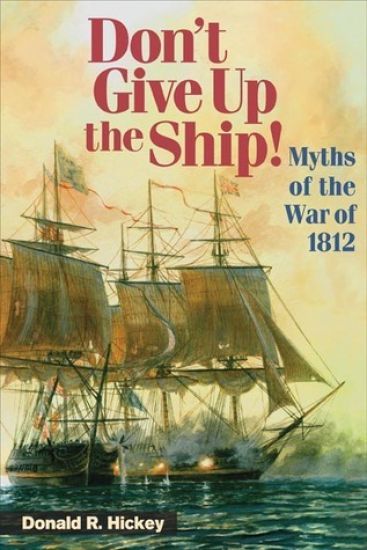
Don't Give Up the Ship!

Don't Give Up the Ship!

Donald R. Hickey; Donald E Graves

University of Illinois Press
2007
nidottu
No longer willing to accept naval blockades, the impressment of American seamen, and seizures of American ships and cargos, the United States declared war on Great Britain. The aim was to frighten Britain into concessions and, if that failed, to bring the war to a swift conclusion with a quick strike at Canada. But the British refused to cave in to American demands, the Canadian campaign ended in disaster, and the U.S. government had to flee Washington, D.C., when it was invaded and burned by a British army. By all objective measures, the War of 1812 was a debacle for the young republic, and yet it was celebrated as a great military triumph. The American people believed they had won the war and expelled the invader. Oliver H. Perry became a military hero, Francis Scott Key composed what became the national anthem and commenced a national reverence for the flag, and the U.S.S. Constitution, "Old Ironsides," became a symbol of American invincibility. Every aspect of the war, from its causes to its conclusion, was refashioned to heighten the successes, obscure the mistakes, and blur embarrassing distinctions, long before there were mass media or public relations officers in the Pentagon. In this entertaining and meticulously researched book by America's leading authority on the War of 1812, Donald R. Hickey dispels the many misconcep-tions that distort our view of America's second war with Great Britain. Embracing military, naval, political, economic, and diplomatic analyses, Hickey looks carefully at how the war was fought between 1812 and 1815, and how it was remembered thereafter. Was the original declaration of war a bluff? What were the real roles of Canadian traitor Joseph Willcocks, Mohawk leader John Norton, pirate Jean Laffite, and American naval hero Lucy Baker? Who killed the Shawnee chief Tecumseh and who shot the British general Isaac Brock? Who actually won the war, and what is its lasting legacy? Hickey peels away fantasies and embellishments to explore why cer-tain myths gained currency and how they contributed to the way that the United States and Canada view themselves and each other.