Kirjojen hintavertailu. Mukana 12 542 714 kirjaa ja 12 kauppaa.

Kirjailija

Donald S. Lopez Jr.

Kirjat ja teokset yhdessä paikassa: 14 kirjaa, julkaisuja vuosilta 1987-2019, suosituimpien joukossa Seeing the Sacred in Samsara. Vertaile teosten hintoja ja tarkista saatavuus suomalaisista kirjakaupoista.

Mukana myös kirjoitusasut: Donald S. Lopez Jr

14 kirjaa

Kirjojen julkaisuhaarukka 1987-2019.

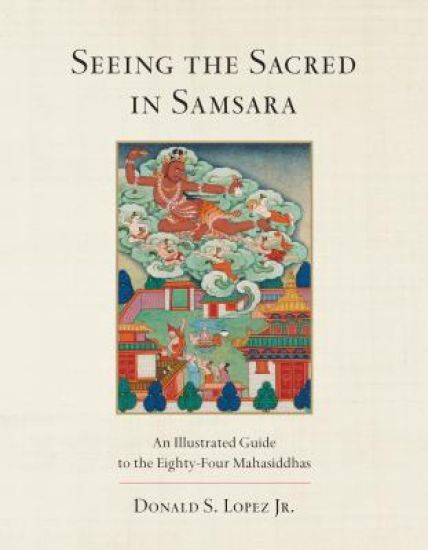
Seeing the Sacred in Samsara

Seeing the Sacred in Samsara

Donald S. Lopez Jr

Shambhala Publications Inc
2019
sidottu
Rare paintings set aside life stories of each of the eighty-four wild Buddhist saints of ancient India. This fresh and beautiful presentation of the lives of the eighty-four mahasiddhas, or "great accomplished ones," offers a unique glimpse into the world of the famous tantric Buddhist yogis of India. This book includes elegant four-color paintings of each of the mahasiddhas by a master painter from Tibet. The set of paintings is published here for the first time in its entirety and includes translated descriptions of the paintings along with the life stories of the mahasiddas based on traditional Tibetan Buddhist sources. Donald Lopez provides yet another magnificent contribution to our better understanding of Buddhist history and traditions. The lives of these tantric saints have captured the imaginations of Buddhists throughout the world for almost a millennia. The common theme among their stories is one of pursuing a spiritual path through uncommon and even subversive means. While some pursue their path of spiritual realization while maintaining their simple occupations as farmers or peasants, others leave behind their lives as householders, scholars, or even royalty, trading in worldly comfort for seclusion, danger, and transgression. These "saints" also include among them pimps, alcoholics, gamblers, and hunters. Many of these bad-boy yogis were known for fornicating in charnel grounds, wearing bone ornaments, and even eating human flesh. Every act, from crushing sesame seeds to meditating in high mountain retreats to drinking alcohol and fornicating, was performed in order to realize the Buddhist teachings of nonduality, compassion, and wisdom. In this context, there is no true difference between samsara and nirvana, thus what is profane is also sacred, the ultimate view of tantric Buddhism.
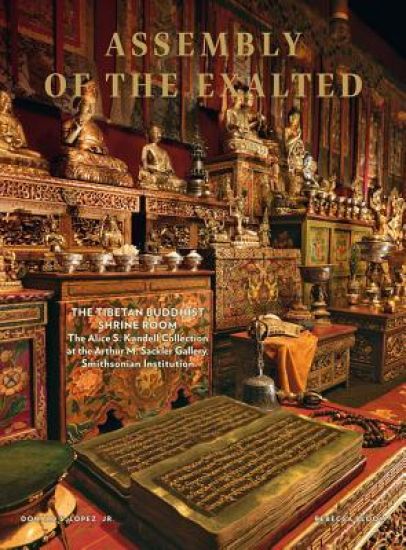
Assembly of the Exalted

Assembly of the Exalted

Donald S. Lopez Jr; Rebecca Bloom

Officina Libraria
2018
sidottu
Assembly of the Exalted presents some 50 pieces from the remarkable collection of Alice S. Kandell. The works, dating from the late 13th century to the early 20th, include great masterpieces and emblematic examples of Tibetan Buddhist art. They are all presented here as the constituents of a Tibetan Buddhist shrine. Shrines, both modest and grand, are the primary sites of Tibetan Buddhist practice, whether it be reciting scriptures, performing rituals, saying prayers, or engaging in meditation. The introductory essays thus focus on the Tibetan Buddhist shrine, describing its evolution over the history of Buddhism, its special role in Tibet, and how the pieces in the Kandell Collection came to be assembled and displayed in shrines at institutions across America. Illustrated with vivid photography, forty short essays, each centered on a single work or set of objects, describe the pieces in terms of their importance for the practice of Buddhism, highlighting the many essential functions of Tibetan Buddhist art within the space of a shrine.
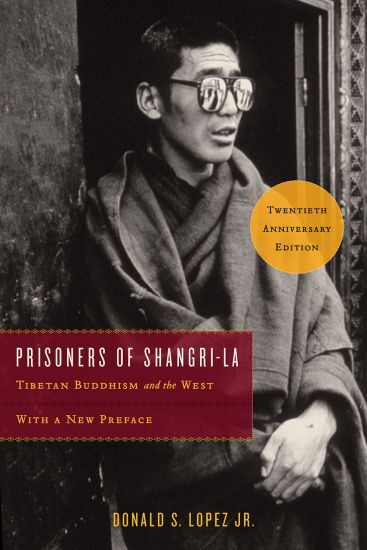
Prisoners of Shangri-La

Prisoners of Shangri-La

Donald S. Lopez Jr

University of Chicago Press
2018
pokkari
To the Western imagination, Tibet evokes exoticism, mysticism, and wonder: a fabled land removed from the grinding onslaught of modernity, spiritually endowed with all that the West has lost. Originally published in 1998, Prisoners of Shangri-La provided the first cultural history of the strange encounter between Tibetan Buddhism and the West. Donald Lopez reveals here fanciful misconceptions of Tibetan life and religion. He examines, among much else, the politics of the term "Lamaism," a pejorative synonym for Tibetan Buddhism; the various theosophical, psychedelic, and New Age purposes served by the so-called Tibetan Book of the Dead; and the unexpected history of the most famous of all Tibetan mantras, om mani padme hum. More than pop-culture anomalies, these versions of Tibet are often embedded in scholarly sources, constituting an odd union of the popular and the academic, of fancy and fact. Upon its original publication, Prisoners of Shangri-La sent shockwaves through the field of Tibetan studies--hailed as a timely, provocative, and courageous critique. Twenty years hence, the situation in Tibet has only grown more troubled and complex--with the unrest of 2008, the demolition of the dwellings of thousands of monks and nuns at Larung Gar in 2016, and the scores of self-immolations committed by Tibetans to protest the Dalai Lama's exile. In his new preface to this anniversary edition, Lopez returns to the metaphors of prison and paradise to illuminate the state of Tibetan Buddhism--both in exile and in Tibet--as monks and nuns still seek to find a way home. Prisoners of Shangri-La remains a timely and vital inquiry into Western fantasies of Tibet.
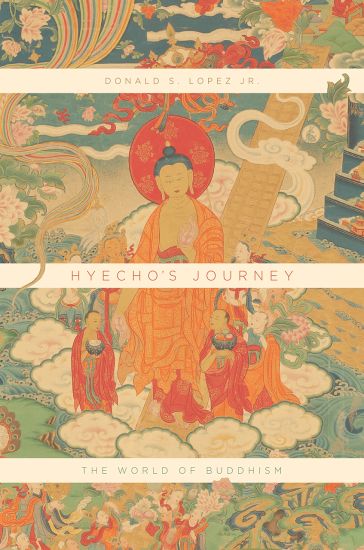
Hyecho's Journey

Hyecho's Journey

Donald S. Lopez Jr.

University of Chicago Press
2017
sidottu
In the year 721, a young Buddhist monk named Hyecho set out from the kingdom of Silla, on the Korean peninsula, on what would become one of the most extraordinary journeys in history. Sailing first to China, Hyecho continued to what is today Vietnam, Indonesia, Myanmar, India, Pakistan, Afghanistan, and Iran, before taking the Silk Road and heading back east, where he ended his days on the sacred mountain of Wutaishan in China. With Hyecho's Journey, eminent scholar of Buddhism Donald S. Lopez Jr. re-creates Hyecho's trek. Using the surviving fragments of Hyecho's travel memoir, along with numerous other textual and visual sources, Lopez imagines the thriving Buddhist world the monk explored. Along the way, Lopez introduces key elements of Buddhism, including its basic doctrines, monastic institutions, works of art, and the many stories that have inspired Buddhist pilgrimage. Through the eyes of one remarkable Korean monk, we discover a vibrant tradition flourishing across a vast stretch of Asia. Hyecho's Journey is simultaneously a rediscovery of a forgotten pilgrim, an accessible primer on Buddhist history and doctrine, and a gripping, beautifully illustrated account of travel in a world long lost.
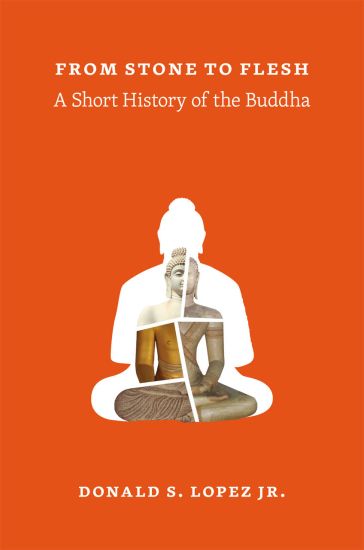
From Stone to Flesh

From Stone to Flesh

Donald S. Lopez Jr.

University of Chicago Press
2016
nidottu
We have come to admire Buddhism for being profound but accessible, as much a lifestyle as a religion. The credit for creating Buddhism goes to the Buddha, a figure widely respected across the Western world for his philosophical insight, his teachings of nonviolence, and his practice of meditation. But who was this Buddha, and how did he become the Buddha we know and love today? Leading historian of Buddhism Donald S. Lopez Jr. tells the story of how various idols carved in stone variously named Beddou, Codam, Xaca, and Fo - became the man of flesh and blood that we know simply as the Buddha. He reveals that the positive view of the Buddha in Europe and America is rather recent, originating a little more than a hundred and fifty years ago. For centuries, the Buddha was condemned by Western writers as the most dangerous idol of the Orient. He was a demon, the murderer of his mother, a purveyor of idolatry. Lopez provides an engaging history of depictions of the Buddha from classical accounts and medieval stories to the testimonies of European travelers, diplomats, soldiers, and missionaries. He shows that centuries of hostility toward the Buddha changed dramatically in the nineteenth century, when the teachings of the Buddha, having disappeared from India by the fourteenth century, were read by European scholars newly proficient in Asian languages. At the same time, the traditional view of the Buddha persisted in Asia, where he was revered as much for his supernatural powers as for his philosophical insights. From Stone to Flesh follows the twists and turns of these Eastern and Western notions of the Buddha, leading finally to his triumph as the founder of a world religion.
From Stone to Flesh

From Stone to Flesh

Donald S. Lopez Jr.

University of Chicago Press
2013
sidottu
We have come to admire Buddhism for being profound but accessible, as much a lifestyle as a religion. The credit for creating Buddhism goes to the Buddha, a figure widely respected across the Western world for his philosophical insight, his teachings of nonviolence, and his practice of meditation. But who was this Buddha, and how did he become the Buddha we know and love today? Leading historian of Buddhism Donald S. Lopez Jr. tells the story of how various idols carved in stone - variously named Beddou, Codam, Xaca, and Fo - became the man of flesh and blood that we know simply as the Buddha. He reveals that the positive view of the Buddha in Europe and America is rather recent, originating a little more than 150 years ago. For centuries, the Buddha was condemned by Western writers as the most dangerous idol of the Orient. He was a demon, the murderer of his mother, a purveyor of idolatry. Lopez provides an engaging history of depictions of the Buddha from classical accounts and medieval stories to the testimonies of European travelers, diplomats, soldiers, and missionaries. Lopez shows that centuries of hostility toward the Buddha changed dramatically in the nineteenth century, when the teachings of the Buddha, having disappeared from India by the fourteenth century, were read by European scholars newly proficient in Asian languages. At the same time, the traditional view of the Buddha persisted in Asia, where he was revered as much for his supernatural powers as for his philosophical insights. "From Stone to Flesh" follows the twists and turns of these Eastern and Western notions of the Buddha, leading finally to his triumph as the founder of a world religion.
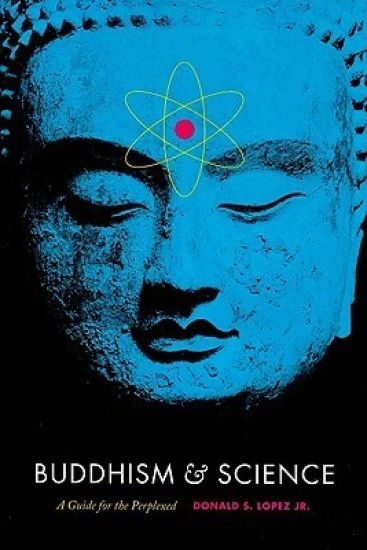
Buddhism and Science

Buddhism and Science

Donald S. Lopez Jr.

University of Chicago Press
2010
nidottu
Beginning in the nineteenth century and continuing to the present day, both practitioners and admirers of Buddhism have proclaimed its compatibility with science. In "Buddhism and Science", Donald S. Lopez Jr. explores how and why these two seemingly disparate modes of understanding the inner and outer universe have been so persistently linked. He argues that by presenting an ancient Asian tradition as compatible with - and even anticipating - scientific discoveries, European enthusiasts and Asian elites have sidestepped debates on the relevance of religion in the modern world that began in the nineteenth century and that still flare today. As new discoveries continue to reshape our understanding of mind and matter, "Buddhism and Science" will be indispensable reading for those fascinated by religion, science, and their often vexed relation.
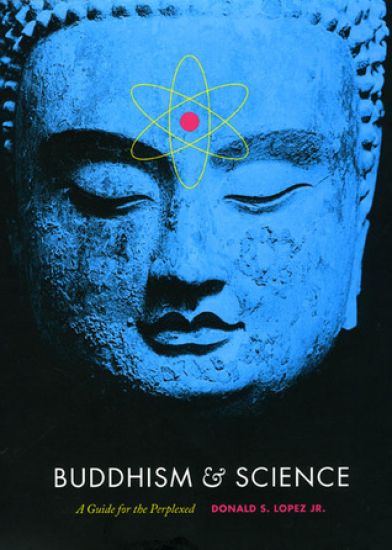
Buddhism and Science

Buddhism and Science

Donald S. Lopez Jr.

University of Chicago Press
2008
sidottu
Beginning in the nineteenth century and continuing to the present day, both practitioners and admirers of Buddhism have proclaimed its compatibility with science. In "Buddhism and Science", Donald S. Lopez Jr. explores how and why these two seemingly disparate modes of understanding the inner and outer universe have been so persistently linked. He argues that by presenting an ancient Asian tradition as compatible with - and even anticipating - scientific discoveries, European enthusiasts and Asian elites have sidestepped debates on the relevance of religion in the modern world that began in the nineteenth century and that still flare today. As new discoveries continue to reshape our understanding of mind and matter, "Buddhism and Science" will be indispensable reading for those fascinated by religion, science, and their often vexed relation.
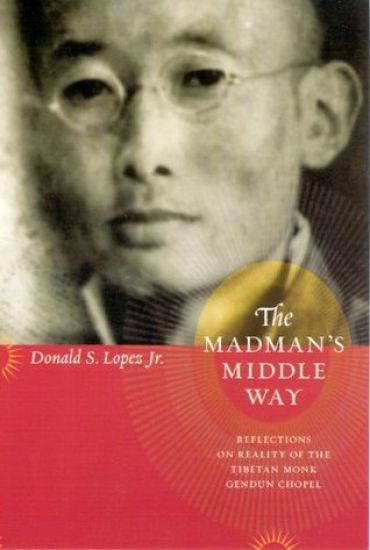
The Madman's Middle Way

The Madman's Middle Way

Donald S. Lopez Jr.

University of Chicago Press
2007
nidottu
Gendun Chopel is considered the most important Tibetan intellectual of the twentieth century. His life spanned the two defining moments in modern Tibetan history: the entries into Lhasa by British troops in 1904 and by Chinese troops in 1951. Recognized as an incarnate lama while he was a child, Gendun Chopel excelled in the traditional monastic curriculum and went on to become expert in fields as diverse as philosophy, history, linguistics, geography, and tantric Buddhism. Near the end of his life, before he was persecuted and imprisoned by the government of the young Dalai Lama, he would dictate the "Adornment for Nagarjuna's Thought", a work on Madhyamaka, or "Middle Way," philosophy. It sparked controversy immediately upon its publication and continues to do so today. "The Madman's Middle Way" presents the first English translation of this major work, accompanied by an essay on Gendun Chopel's life liberally interspersed with passages from his writings. Donald S. Lopez Jr. also provides a commentary that sheds light on the doctrinal context of the Adornment and summarizes its key arguments. Ultimately, Lopez examines the long-standing debate over whether Gendun Chopel in fact is the author of the "Adornment"; the heated critical response to the work by Tibetan monks of the Dalai Lama's sect; and what the "Adornment" tells us about Tibetan Buddhism's encounter with modernity. The result is an insightful glimpse into a provocative and enigmatic work that will intrigue anyone interested in Buddhism or Asian religions.
The Madman's Middle Way

The Madman's Middle Way

Donald S. Lopez Jr.

University of Chicago Press
2005
sidottu
Gendun Chopel is considered the most important Tibetan intellectual of the twentieth century. His life spanned the two defining moments in modern Tibetan history: the entries into Lhasa by British troops in 1904 and by Chinese troops in 1951. Chopel excelled in the traditional monastic curriculum in his youth and went on to become an expert in fields as diverse as philosophy, history, linguistics, geography, and tantric Buddhism. Near the end of his life, before he was persecuted and imprisoned by the government of the young Dalai Lama, he would dictate the "Adornment" for Nagarjuna's Thought, recognized today as a controversial work of Madhyamaka or "Middle Way" philosophy. "The Madman's Middle Way" presents the first English translation of this major Tibetan work, accompanied by an essay on Chopel's life that is liberally interspersed with passages from his writings. Donald S. Lopez Jr. also provides commentary that sheds light on the doctrinal context of the "Adornment" and summarizes its key arguments. Ultimately, Lopez examines the long-standing debate over whether Chopel in fact wrote the "Adornment"; the heated critical response to the work by Tibetan monks of the Dalai Lama's sect; and what the "Adornment" tells us about Tibetan Buddhism's encounter with modernity. The result is an insightful glimpse into a provocative and enigmatic work that will be of value to anyone seriously interested in Buddhism or Asian religions.
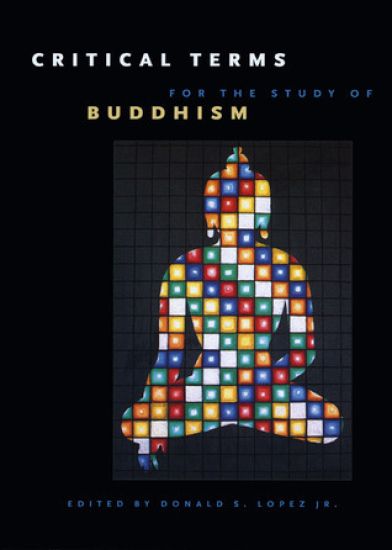
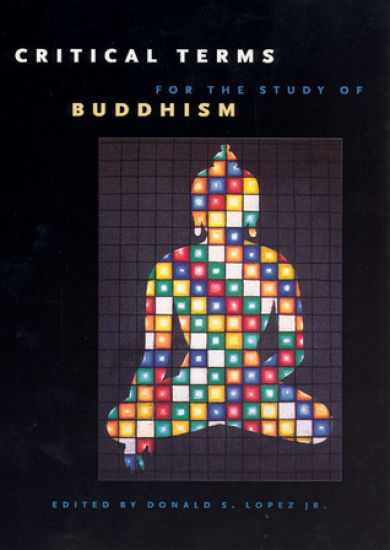
Critical Terms for the Study of Buddhism

Critical Terms for the Study of Buddhism

Donald S. Lopez Jr.

University of Chicago Press
2005
sidottu
Over the past century Buddhism has come to be seen as a world religion, exceeding Christianity in longevity and, according to many, philosophical wisdom. Buddhism has also increasingly been described as strongly ethical, devoted to nonviolence, and dedicated to bringing an end to human suffering. And because it places such a strong emphasis on rational analysis, Buddhism is considered more compatible with science than the other great religions. As such, Buddhism has been embraced in the West, both as an alternative religion and as an alternative to religion. This volume provides a unique introduction to Buddhism by examining categories essential for a nuanced understanding of its traditions. Each of the fifteen essays here shows students how a fundamental term - from art to word - illuminates the practice of Buddhism, both in traditional Buddhist societies and in the realms of modernity. Apart from Buddha, the list of terms in this collection deliberately includes none that are intrinsic to the religion. Instead, the contributors explore terms that are important for many fields and that invite interdisciplinary reflection. Through incisive discussions of topics ranging from practice, power, and pedagogy to ritual, history, sex, and death, the authors offer new directions for the understanding of Buddhism, taking constructive and sometimes polemical positions in an effort both to demonstrate the shortcomings of assumptions about the religion and the potential power of revisionary approaches. Following the tradition of Critical Terms for Religious Studies, this volume is not only an invaluable resource for the classroom but one that belongs on the short list of essential books for anyone seriously interested in Buddhism and Asian religions.
Critical Terms for the Study of Buddhism

Critical Terms for the Study of Buddhism

Donald S. Lopez Jr.

University of Chicago Press
2005
nidottu
Over the past century Buddhism has come to be seen as a world religion, exceeding Christianity in longevity and, according to many, philosophical wisdom. Buddhism has also increasingly been described as strongly ethical, devoted to nonviolence, and dedicated to bringing an end to human suffering. And because it places such a strong emphasis on rational analysis, Buddhism is considered more compatible with science than the other great religions. As such, Buddhism has been embraced in the West, both as an alternative religion and as an alternative to religion. This volume provides a unique introduction to Buddhism by examining categories essential for a nuanced understanding of its traditions. Each of the fifteen essays here shows students how a fundamental term - from art to word - illuminates the practice of Buddhism, both in traditional Buddhist societies and in the realms of modernity. Apart from Buddha, the list of terms in this collection deliberately includes none that are intrinsic to the religion. Instead, the contributors explore terms that are important for many fields and that invite interdisciplinary reflection. Through incisive discussions of topics ranging from practice, power, and pedagogy to ritual, history, sex, and death, the authors offer new directions for the understanding of Buddhism, taking constructive and sometimes polemical positions in an effort both to demonstrate the shortcomings of assumptions about the religion and the potential power of revisionary approaches. Following the tradition of Critical Terms for Religious Studies, this volume is not only an invaluable resource for the classroom but one that belongs on the short list of essential books for anyone seriously interested in Buddhism and Asian religions.
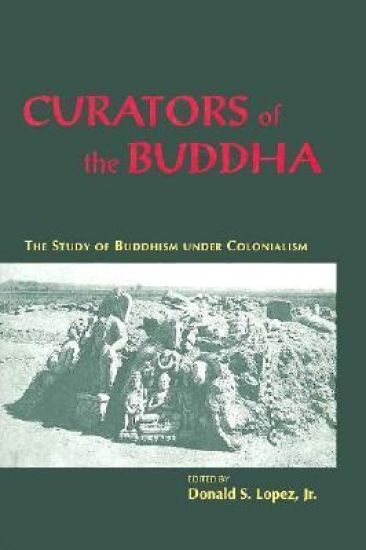
Curators of the Buddha – The Study of Buddhism under Colonialism

Curators of the Buddha – The Study of Buddhism under Colonialism

Donald S. Lopez Jr.

University of Chicago Press
1995
nidottu
This is a critical history of the study of Buddhism in the West, bringing the insights of colonial and post-colonial cultural studies to bear on this field. After an overview of the origins of Buddhist studies in the early 19th century, the essays focus on important "curators of the Buddha," such as Aurel Stein, D.T. Suzuki and Carl Jung. The essays discuss many of the important social, political and cultural conditions that have shaped the course of Buddhist studies for more than a century. Contributors Charles Hallisey, Gustavo Benavides, Stanley Abe, Luis Gomez, Robert Sharf and Donald Lopez challenge some of the most enduring ideas in Buddhist studies: that Zen Buddhism is, above all, an experience; that Tibetan Buddhism is polluted, or pristine; that the Buddha image is of Greek or Roman origin; and that the classical text supersedes the vernacular, as the manuscript supersedes the informant.
The Heart Sutra Explained

The Heart Sutra Explained

Donald S. Lopez Jr.

State University of New York Press
1987
pokkari
Renowned for its terse declaration of the perfection of wisdom, the Heart Sutra is the most famous of Buddhist scriptures. The author draws on previously unexamined commentaries, preserved only in Tibetan, to investigate the meanings derived from and invested into the sutra during the later period of Indian Buddhism.The Heart Sutra Explained offers new insights on "form is emptiness, emptiness is form," on the mantra "gate gate paragate parasamgate bodhi svaha," and on the synthesis of Madhyamika, Yogacara, and tantric thought that characterized the final period of Buddhism in India. It also includes complete translations of two nineteenth century Tibetan commentaries demonstrating the selective appropriation of Indian sources.