Kirjojen hintavertailu. Mukana 12 390 323 kirjaa ja 12 kauppaa.

Kirjailija

Donald Stoker

Kirjat ja teokset yhdessä paikassa: 12 kirjaa, julkaisuja vuosilta 2004-2025, suosituimpien joukossa Expeditionary Police Advising and Militarization. Vertaile teosten hintoja ja tarkista saatavuus suomalaisista kirjakaupoista.

12 kirjaa

Kirjojen julkaisuhaarukka 2004-2025.

Expeditionary Police Advising and Militarization

Expeditionary Police Advising and Militarization

Donald Stoker; Edward B. Westermann

Helion Company
2018
sidottu
This original edited volume draws upon the latest work of a global cast of scholars and practitioners in several fields to examine the history, evolution and lessons of previous expeditionary police advising missions. Since the end of the Cold War, there has been an explosion of efforts to build modern police forces in other lands via dispatching police advisory missions. There is much to be learned from these recent efforts, but there are equally valuable lessons to be gathered by examining the breadth of a practice that, surprisingly to most, dates to the end of the 19th century.
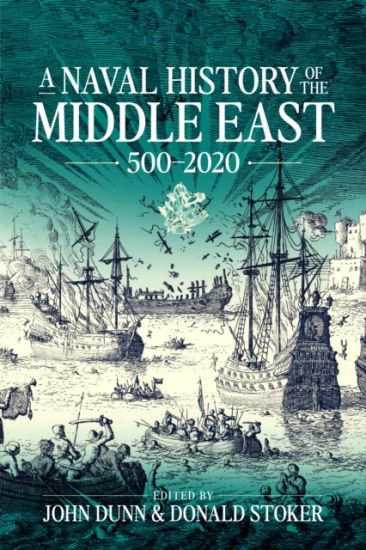
A Naval History of the Middle East

A Naval History of the Middle East

John P Dunn; Donald Stoker

HELION COMPANY
2025
pokkari
A Naval History of the Middle East, 500-2020 examines how sea power impacted on a wide range of nations. But just what is "the Middle East?" The editors' definition is broad, ranging from Morocco to Iran, and the Black Sea to the Indian Ocean. Our start point connects readers to the last war between the Byzantine Empire and Sassanid Iran, results of which benefit the rapid expansion of Islam.Naval force originally came from warships propelled via oars and sails. These protected sailing ships used to transport soldiers or supplies. Combat mainly involved missile fire and boarding actions. As human rowers pulled the oars, strategy focused on securing food and water. Ships did not carry much of either, and needed frequent resupply.Ports were prizes of great value, their control allowing admirals to advance, or halt an opponent whose crews seldom had more than a few days of water. Galley warfare had been this way since ancient times, but changed as new technologies like "Greek Fire" added new military options, or larger sailing ships extended storage capabilities, thus expanding an admiral's reach.Although early Muslim fleets did not have the naval traditions of the Byzantines, their leaders recognized the value of sea power. One might remember that "admiral" comes from Arabic. Muslims fought each other, along with their traditional Byzantine opponents and European volunteers serving during the Crusades.Fighting ranged from fleet actions to amphibious operations, and piracy. Both Muslim and Christian pirates operated across the Mediterranean and Red Seas, plus the Persian Gulf and Indian Ocean. Pirates continue to operate in the 21st Century.Major change comes from Ottoman naval expansion in the 1500s. This was also a period of technological innovations with gunpowder weapons and larger sailing vessels supplanting boarding actions and galleys. Steam power, ironclads, torpedoes, aircraft, and missiles speed up these trends during the 19th and 20th Centuries.We tell this story with a historical overview, supported by specific case studies. Our goal is to show Middle Eastern powers successfully employed navies to enforce national goals, and that powerful traditions support a continuation of naval forces in the 21st Century.
Purpose and Power

Purpose and Power

Donald Stoker

Cambridge University Press
2024
sidottu
Across the full span of the nation's history, Donald Stoker challenges our understanding of the purposes and uses of American power. From the struggle for independence to the era of renewed competition with China and Russia, he reveals the grand strategies underpinning the nation's pursuit of sovereignty, security, expansion, and democracy abroad. He shows how successive administrations have projected diplomatic, military, and economic power, and mobilized ideas and information to preserve American freedoms at home and secure US aims abroad. He exposes the myth of American isolationism, the good and ill of America's quest for democracy overseas, and how too often its administrations have lacked clear political aims or a concrete vision for where they want to go. Understanding this history is vital if America is to relearn how to use its power to meet the challenges ahead and to think more clearly about political aims and grand strategy.
Why America Loses Wars

Why America Loses Wars

Donald Stoker

Cambridge University Press
2022
pokkari
How can you achieve victory in war if you don't have a clear idea of your political aims and a vision of what victory means? In this provocative challenge to US political aims and strategy, Donald Stoker argues that America endures endless wars because its leaders no longer know how to think about war, particularly wars fought for limited aims, taking the nation to war without understanding what they want or valuing victory and thus the ending of the war. He reveals how flawed ideas on so-called 'limited war' and war in general evolved against the backdrop of American conflicts in Korea, Vietnam, Iraq, and Afghanistan. These ideas, he shows, undermined America's ability to understand, wage, and win its wars, and to secure peace. Now fully updated to incorporate the American withdrawal from Afghanistan, Why America Loses Wars dismantles seventy years of misguided thinking and lays the foundations for a new approach to the wars of tomorrow.
Why America Loses Wars

Why America Loses Wars

Donald Stoker

Cambridge University Press
2019
sidottu
How can you achieve victory in war if you don't have a clear idea of your political objectives and a vision of what victory means? In this provocative challenge to US policy and strategy, Donald Stoker argues that America endures endless wars because its leaders no longer know how to think about war, particularly limited wars. He reveals how ideas on limited war and war in general evolved against the backdrop of American conflicts in Korea, Vietnam, and Iraq. These ideas, he shows, were flawed and have undermined America's ability to understand, wage, and win its wars, and to secure peace afterwards. America's leaders have too often taken the nation to war without understanding what they want or valuing victory, leading to the 'forever wars' of today. Why America Loses Wars dismantles seventy years of misguided thinking and lays the foundations for a new approach to the wars of tomorrow.
Air Force Advising and Assistance

Air Force Advising and Assistance

Donald Stoker; Edward B. Westermann

Helion Company
2018
sidottu
The increased focus on counterinsurgency warfare and US nation building efforts after the attacks of 11 September 2001 reignited interest in military advising within military and other government organizations, private think tanks, and defense related contractors. Most studies on the subject, based on the chronological scope and numerical preponderance of ground advising missions, has quite naturally focused on these past efforts. Less attention has been given to air or naval advisory missions. This work seeks in part to help redress this current imbalance by examining a number of historical case studies dealing with air advisory efforts. By examining a number of historical case studies, this volume analyzes the challenges and opportunities inherent in aerial advisory efforts and offers insights into the methods by which such missions succeed or fail. Air advisory missions date almost to the first days of powered flight. Air advisory efforts have a number of unique elements based on the fundamental role of advanced technology and the extensive resource requirements associated with aviation operations. For example, air advisory efforts are profoundly influenced by the types of aircraft involved and the types of mission flown. Likewise, the issues of maintenance support and the infrastructure needed for these missions plays a key role in determining capabilities available to the host nation. In the case of infrastructure, airfields, fuelling depots, maintenance and repair facilities, and radar and communications equipment offer a few of the most obvious requirements to support flight operations. The early history of advisory efforts reveal issues that remain relevant today, including questions related to the nature of aerial technology to be shared, the type of training to be provided, and the potential economic benefits that might accrue to the donor nation as a result of the sale of aviation technology to the host country. In many respects, air advisory efforts raise a number of profound strategic questions for the donor nation. Among others, these questions relate to the type of technology to be shared, the nature of training to be given, the role of foreign advisors in operations, the issue of infrastructure development and auxiliary training programs, the preparation of foreign advisors for their duties, and perhaps most significantly the development of the type of capabilities required to address the host nation’s security environment. Via a series of historical case studies, this volume explores these questions and others.
Naval Advising and Assistance

Naval Advising and Assistance

Donald Stoker; Michael T. McMaster

Helion Company
2017
sidottu
This original edited volume is the only book on naval advising. Drawing upon the work of scholars and practitioners from all over the world, it takes a comparative and global approach to examining the history, theory and evolution of naval advising and assistance. Starting with a brief history of the evolution of naval advising, the book then moves to late-19th century naval advising efforts. These generally involved individuals such as the American adventurer in China, Philo McGiffin, but also included State-sponsored formal missions such as the first such US effort: Colonel John Lay’s 1870s mission to Egypt. A comparative multi-national examination of the ability of non-European States such as China, Turkey and Japan to adopt Western naval methods and doctrine - and an examination of the French naval advising mission to Peru - round out the book's pre-First World War offerings. The trends in naval advising between the World Wars—particularly their use as tools of economic and political penetration—are revealed through chapters on the British naval aviation mission to Japan; the British and French naval missions to Poland; the US mission to Peru; and a comparative study of Italian naval missions in Persia, China and Spain. The latter also reveals early ideological motivations for dispatching advising missions. The Cold War saw an intensification of military advising—including naval advising—as both the Communist and the Western Powers used advising as ideological tools. The US naval missions to Nationalist China and South Vietnam are assessed, as are the Soviet naval advising efforts in East Germany and China. Together, through a wealth of original research, the studies in this book provide numerous lessons for future naval advising efforts and constitute a unique contribution to the field.
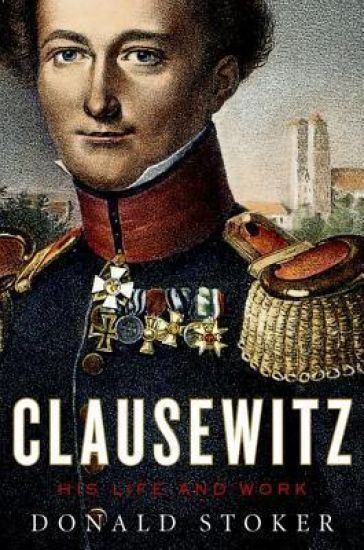
Clausewitz

Clausewitz

Donald Stoker

Oxford University Press Inc
2014
sidottu
The classical distinctions between "strategy," "operations," and "tactics" in warfare derive from two basic sources--Carl von Clausewitz and Antoine-Henri de Jomini, both veterans of the Napoleonic wars who translated their experiences into books outlining general precepts about the nature and rules of military engagement. Nearly two centuries after the publication of these works, Jomini has been all but forgotten, but Clausewitz's On War remains perhaps the most significant work of military theory ever written. He has become a global brand, one constantly refreshed by a flow of books and articles debating his ideas and arguing what he truly meant in various passages of On War. The masterwork appears in an array of translations sweeping from Arabic to Vietnamese. Military staff colleges the world over use Clausewitz's text, largely to prepare their officers for staff positions and higher command. Military historian Donald Stoker here offers an incisive biography of Carl von Clausewitz, sketching out his life and career and exploring the various causes that led to the formulation of his theories about war. Though On War remained unfinished at the time of his death in 1831, Clausewitz's devoted wife, Marie, organized the papers he had left behind and arranged for their publication. The ten volumes of Clausewitz's collected works appeared from 1832-1837, with On War encompassing the first three volumes. Stoker considers both the merits and detriments of the works, but also pays careful attention to the life and experiences of Clausewitz himself. In doing so, he notes that those discussing Clausewitz's legacy as a theorist today have largely forgotten what was most important to him: being a soldier, and one of renown. Clausewitz is often remembered merely as staff officer, someone pushing papers and not in the midst of battle. Though Stoker notes that Clausewitz certainly spilled his share of ink, he also spilled blood -- his as well as that of the enemy. He experienced the mass warfare of his age at its most intense and visceral. He knew what it was like to be wounded, to be a prisoner, to have friends killed and wounded, to suffer hunger and thirst, and to have the heat and cold try to kill him after the enemy's best efforts had failed. Success on the field of battle-success meaning victory as well as distinguishing one's self above one's comrades, who are also brave and daring men -- this, Stoker shows, is what drove Clausewitz. Stoker also considers the continuing relevance of Clausewitz's work today, particularly focusing on its effect on strategic thinking in American foreign policy. The result is a brilliant reassessment of both the man and his legacy, one that adds to our understanding of Clausewitz and his place in today's military and political landscape.
Britain, France and the Naval Arms Trade in the Baltic, 1919 -1939
The strategy of the British and French prior to World War II was to preserve the status quo after the disaster of World War I. Donald Stoker's book examines British and French involvement from 1919 to 1939 in the creation and development of the naval forces of Poland, Finland and the three Baltic states of Estonia, Latvia and Lithuania. This is an in-depth scholarly study of a subject that should appeal to students of international history, strategy, international relations and naval history in general.
The Grand Design

The Grand Design

Donald Stoker

Oxford University Press Inc
2012
nidottu
Despite the abundance of books on the Civil War, not one has focused exclusively on what was in fact the determining factor in the outcome of the conflict: differences in Union and Southern strategy. In The Grand Design, Donald Stoker provides for the first time a comprehensive and often surprising account of strategy as it evolved between Fort Sumter and Appomattox. Reminding us that strategy is different from tactics (battlefield deployments) and operations (campaigns conducted in pursuit of a strategy), Stoker examines how Abraham Lincoln and Jefferson Davis identified their political goals and worked with their generals to craft the military means to achieve them--or how they often failed to do so. Stoker shows that Davis, despite a West Point education and experience as Secretary of War, ultimately failed as a strategist by losing control of the political side of the war. Lincoln, in contrast, evolved a clear strategic vision, but he failed for years to make his generals implement it. And while Robert E. Lee was unerring in his ability to determine the Union's strategic heart--its center of gravity--he proved mistaken in his assessment of how to destroy it. Historians have often argued that the North's advantages in population and industry ensured certain victory. In The Grand Design, Stoker reasserts the centrality of the overarching plan on each side, arguing convincingly that it was strategy that determined the result of America's great national conflict.
The Grand Design

The Grand Design

Donald Stoker

Oxford University Press Inc
2010
sidottu
Of the tens of thousands of books exploring virtually every aspect of the Civil War, surprisingly little has been said about what was in fact the determining factor in the outcome of the conflict: differences in Union and Southern strategy. In The Grand Design, Donald Stoker provides a comprehensive and often surprising account of strategy as it evolved between Fort Sumter and Appomattox. Reminding us that strategy is different from tactics (battlefield deployments) and operations (campaigns conducted in pursuit of a strategy), Stoker examines how Abraham Lincoln and Jefferson Davis identified their political goals and worked with their generals to craft the military means to achieve them--or how they often failed to do so. Stoker shows that Davis, despite a West Point education and experience as Secretary of War, failed as a strategist by losing control of the political side of the war. His invasion of Kentucky was a turning point that shifted the loyalties and vast resources of the border states to the Union. Lincoln, in contrast, evolved a clear strategic vision, but he failed for years to make his generals implement it. At the level of generalship, Stoker notes that Robert E. Lee correctly determined the Union's center of gravity, but proved mistaken in his assessment of how to destroy it. Stoker also presents evidence that the Union could have won the war in 1862, had it followed the grand plan of the much-derided general, George B. McClellan. Historians have often argued that the North's advantages in population and industry ensured certain victory. In The Grand Design, Stoker reasserts the centrality of the overarching military ideas--the strategy--on each side, arguing convincingly that it was strategy that determined the war's outcome.
Britain, France and the Naval Arms Trade in the Baltic, 1919 -1939
The strategy of the British and French prior to World War II was to preserve the status quo after the disaster of World War I. Donald Stoker's book examines British and French involvement from 1919 to 1939 in the creation and development of the naval forces of Poland, Finland and the three Baltic states of Estonia, Latvia and Lithuania. This is an in-depth scholarly study of a subject that should appeal to students of international history, strategy, international relations and naval history in general.