Kirjojen hintavertailu. Mukana 12 595 353 kirjaa ja 12 kauppaa.
Kirjailija
Dong Li
Kirjat ja teokset yhdessä paikassa: 6 kirjaa, julkaisuja vuosilta 2016-2023, suosituimpien joukossa Competing on Supply Chain Quality. Vertaile teosten hintoja ja tarkista saatavuus suomalaisista kirjakaupoista.
Debut collection of poems that weaves stories of family history, war, and migration. Dong Li’s The Orange Tree is a collection of narrative poems that braids forgotten legends, personal sorrows, and political upheavals into a cinematic account of Chinese history as experienced by one family. Amid chaos and catastrophe, the child narrator examines a yellowed family photo to find resemblances and learns a new language, inventing compound words to conjure and connect family stories. These invented words and the calligraphy of untranslated Chinese characters appear in lists separating the book’s narrative sections. Li’s lyrical and experimental collection transcends the individual, placing generations of family members and anonymous others together in a single moment that surpasses chronological time. Weaving through stories of people with little means, between wars and celebrations, over bridges and walls, and between trees and gardens, Li’s poems offer intimate perspectives on times that resonate with our own. The result is an unflinching meditation on family history, collective trauma, and imaginative recovery. The Orange Tree is the recipient of the inaugural Phoenix Emerging Poet Book Prize for 2023.
This open access book introduces how to manage important tasks in industrial wireless networks. Important tasks must be completed on time and with guaranteed quality; that is the consensus reached by system designers and users. However, for too long, important tasks have often been given unnecessary urgency, and people intuitively believe that important tasks should be executedfirst so that their performance can be guaranteed. Actually, in most cases, their performance can be guaranteed even if they are executed later, and the “early” resources can be utilized for other, more urgent tasks. Therefore, confusing importance with urgency hinders the proper use of system resources. In 2007, mixed criticality was proposed to indicate that a system may contain tasks of various importance levels. Since then, system designers and users have distinguished between importance and urgency. In the industrial field, due to the harsh environment they operate in, industrial wireless networks’ quality of service (QoS) has always been a bottleneck restricting their applications. Therefore, this book introduces criticality to label important data, which is then allocated more transmission resources, ensuring that important data’s QoS requirements can be met to the extent possible. To help readers understand how to apply mixed-criticality data to industrial wireless networks, the content is divided into three parts. First, we introduce how to integrate the model of mixed-criticality data into industrial wireless networks. Second, we explain how to analyze the schedulability of mixed-criticality data under existing scheduling algorithms. Third, we present a range of novel scheduling algorithms for mixed-criticality data. If you want to improve the QoS of industrial wireless networks, this book is for you.
This open access book introduces how to manage important tasks in industrial wireless networks. Important tasks must be completed on time and with guaranteed quality; that is the consensus reached by system designers and users. However, for too long, important tasks have often been given unnecessary urgency, and people intuitively believe that important tasks should be executedfirst so that their performance can be guaranteed. Actually, in most cases, their performance can be guaranteed even if they are executed later, and the “early” resources can be utilized for other, more urgent tasks. Therefore, confusing importance with urgency hinders the proper use of system resources. In 2007, mixed criticality was proposed to indicate that a system may contain tasks of various importance levels. Since then, system designers and users have distinguished between importance and urgency. In the industrial field, due to the harsh environment they operate in, industrial wireless networks’ quality of service (QoS) has always been a bottleneck restricting their applications. Therefore, this book introduces criticality to label important data, which is then allocated more transmission resources, ensuring that important data’s QoS requirements can be met to the extent possible. To help readers understand how to apply mixed-criticality data to industrial wireless networks, the content is divided into three parts. First, we introduce how to integrate the model of mixed-criticality data into industrial wireless networks. Second, we explain how to analyze the schedulability of mixed-criticality data under existing scheduling algorithms. Third, we present a range of novel scheduling algorithms for mixed-criticality data. If you want to improve the QoS of industrial wireless networks, this book is for you.
Implementing a food safety management system (FSMS) is a regulatory requirement for every firm in global food supply chains. At any scale, it could be influenced by many factors since the global food supply chains consist of a large number of stakeholders involved with an enormous variety of structures, the logistics of which will undoubtedly change rapidly, scale-up and diversify continuously. This book contains five chapters that aim to give an in-depth exploration of critical success factors (CSF) for food safety management in global supply chains. To fill the identified research gaps, the authors present empirical evidence from their research to verify critical success factors and their relationships with FSMS. Furthermore, the impact of supplier selection and supply chain relationships on food safety management in global supply chains are explored to identify Best Practice in FSMS implementation. This book will appeal to scholars working in food safety management,supply chain management and the impact of globalisation.
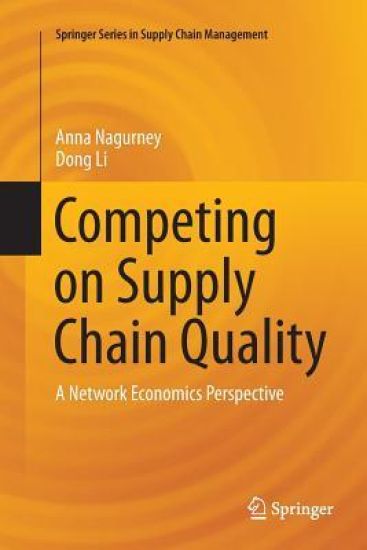
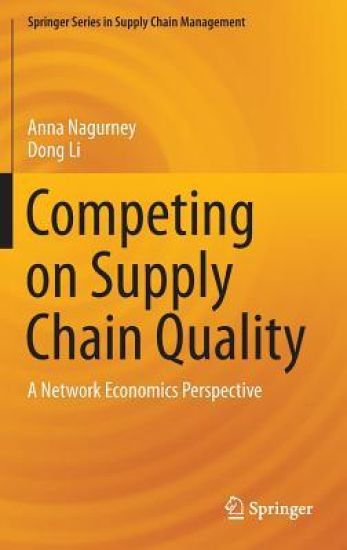
This book lays the foundations for quality modeling and analysis in the context of supply chains through a synthesis of the economics, operations management, as well as operations research/management science literature on quality. The reality of today's supply chain networks, given their global reach from sourcing locations to points of demand, is further challenged by such issues as the growth in outsourcing as well as the information asymmetry associated with what producers know about the quality of their products and what consumers know. Although much of the related literature has focused on the micro aspects of supply chain networks, considering two or three decision-makers, it is essential to capture the scale of supply chain networks in a holistic manner that occurs in practice in order to be able to evaluate and analyze the competition and the impacts on supply chain quality in a quantifiable manner.This volume provides an overview of the fundamental methodologies utilized in this book, including optimization theory, game theory, variational inequality theory, and projected dynamical systems theory. It then focuses on major issues in today's supply chains with respect to quality, beginning with information asymmetry, followed by product differentiation and branding, the outsourcing of production, from components to final products, to quality in freight service provision. The book is filled with numerous real-life examples in order to emphasize the generality and pragmatism of the models and tools. The novelty of the framework lies in a network economics perspective through which the authors identify the underlying network structure of the various supply chains, coupled with the behavior of the decision-makers, ranging from suppliers and manufacturers to freight service providers. What is meant by quality is rigorously defined and quantified. The authors explore the underlying dynamics associated with the competitive processes along with the equilibrium solutions. As appropriate, the supply chain decision-makers compete in terms of quantity and quality, or in price and quality. The relevance of the various models that are developed to specific industrial sectors, including pharmaceuticals and high technology products, is clearly made. Qualitative analyses are provided, along with effective, and, easy to implement, computational procedures. Finally, the impacts of policy interventions, in the form of minimum quality standards, and their ramifications, in terms of product prices, quality levels, as well as profits are explored. The book is filled with many network figures, graphs, and tables with data.
This book lays the foundations for quality modeling and analysis in the context of supply chains through a synthesis of the economics, operations management, as well as operations research/management science literature on quality. The reality of today's supply chain networks, given their global reach from sourcing locations to points of demand, is further challenged by such issues as the growth in outsourcing as well as the information asymmetry associated with what producers know about the quality of their products and what consumers know. Although much of the related literature has focused on the micro aspects of supply chain networks, considering two or three decision-makers, it is essential to capture the scale of supply chain networks in a holistic manner that occurs in practice in order to be able to evaluate and analyze the competition and the impacts on supply chain quality in a quantifiable manner.This volume provides an overview of the fundamental methodologies utilized in this book, including optimization theory, game theory, variational inequality theory, and projected dynamical systems theory. It then focuses on major issues in today's supply chains with respect to quality, beginning with information asymmetry, followed by product differentiation and branding, the outsourcing of production, from components to final products, to quality in freight service provision. The book is filled with numerous real-life examples in order to emphasize the generality and pragmatism of the models and tools. The novelty of the framework lies in a network economics perspective through which the authors identify the underlying network structure of the various supply chains, coupled with the behavior of the decision-makers, ranging from suppliers and manufacturers to freight service providers. What is meant by quality is rigorously defined and quantified. The authors explore the underlying dynamics associated with the competitive processes along with the equilibrium solutions. As appropriate, the supply chain decision-makers compete in terms of quantity and quality, or in price and quality. The relevance of the various models that are developed to specific industrial sectors, including pharmaceuticals and high technology products, is clearly made. Qualitative analyses are provided, along with effective, and, easy to implement, computational procedures. Finally, the impacts of policy interventions, in the form of minimum quality standards, and their ramifications, in terms of product prices, quality levels, as well as profits are explored. The book is filled with many network figures, graphs, and tables with data.