Kirjailija
Donna Haraway
Kirjat ja teokset yhdessä paikassa: 18 kirjaa, julkaisuja vuosilta 1991-2024, suosituimpien joukossa Die Neuerfindung der Natur. Vertaile teosten hintoja ja tarkista saatavuus suomalaisista kirjakaupoista.
18 kirjaa
Kirjojen julkaisuhaarukka 1991-2024.
“Situeret viden” (1988) er – ved siden af “A Cyborg Manifesto” (1984) – Donna Haraways bedst kendte og mest udbredte værk. Artiklen har haft stor betydning for diskussionen af, hvad vidensproduktion, videnskab og objektivitet er, og ikke mindst kan være. – Fra Lis Højgaards forord til den danske oversættelse Gennem en kritik af objektivitetsbegrebet – videnskabens gudetrick, hvor alt ses intetstedsfra, uden krop og kontekst – vil Haraway generobre synet som sanse- og erkendelsessystem, nu genindlejret i specifikke praksisser, situeret. Haraway vil vise os, at der ikke eksisterer noget uskyldigt perspektiv, at hvad vi ved, er bestemt af kontekst og situation. I stedet opfordres vi til at lære at tage ansvar for vores viden ved at forholde os åbent (ikke-beherskende og i accept af det modsætningsfyldte og paradoksale) over for, hvordan den produceres. Situeret viden er en del af bogserien AFTRYK, der samler korte og vedkommende filosofiske tekster med væsentlig virkningshistorie. Lis Højgaard har skrevet introduktionen til teksten, der gør den relevant for studerende såvel som læsere med interesse for videnskab, objektivitet og feminisme.
Forbundne arters manifest er en hyldest til hundene og til den fælles historie, som mennesker og hunde har. Igennem en udforskning af fællesskabet mellem vores arter bliver det tydeligt, hvordan gensidighed, kærlighed og ansvar er størrelser, der binder os tæt til vores pjuskede ledsagere og makkere. Forbundethed er et gennemgående tema i Donna Haraways forfatterskab, og i denne tekst udfoldes det til fulde gennem analysen af de blomstrende relationer mellemforbundne arter. ”Forbundne arters manifest er et personligt dokument, en videnskabelig ekspedition ind i for mange delvist ukendte territorier, en politisk håbshandling i en verden på kanten af global krig, og et arbejde der i princippet er i bestandig fremgang. Jeg tilbyder hundegennemtyggede rekvisitter og halvt afrettede argumenter for at videreudvikle nogle fortællinger, jeg holder rigtig meget af, som akademiker og som en person i min tid og på mit sted. Denne historie handler hovedsageligt om hunde. Som brændende engageret i disse fortællinger, håber jeg at føre mine læsere ind i kennelen på livstid. (…) Færdighederne og aktørerne i hundeverdenerne, både menneskelige og ikke-menneskelige, burde være et vigtigt anliggende for teknovidenskabelige studier. Det ligger mig endnu mere på sinde, at mine læsere ved, hvorfor jeg betragter det at skrive om hunde som en gren af feministisk teori, eller omvendt.” Forbundne arters manifest er en hjertelig og sjov gentænkning af Haraways tidligere arbejde, der tegner nye retninger i forfatterskabet.
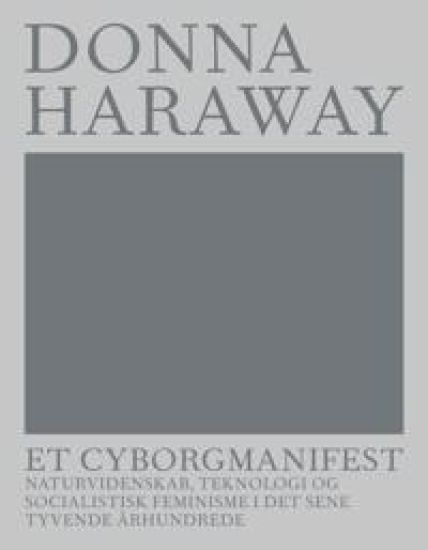
Donna Haraways Et cyborgmanifest indledte et helt nyt kapitel i nyere feministisk teori. Det er et forunderligt ubestemmeligt forsøg på at finde en ansvarlig måde, hvorpå vi kan kritisere betydningen af kategorier som race, køn, seksualitet og klasse ved at omfavne teknologi. Cyborgen introduceres her for første gang som en figur, en metafor, der kan illustrere, hvor uholdbare en lang række af vores grænsedragninger er. Natur/kultur, dyr/maskine, virkelighed/fiktion og krop/ånd er eksempler på skel i virkeligheden, som cyborgen udfordrer. Den lever i grænselandet mellem dem, den er både krypteret fiktion og social virkelighed, og den har ikke en oprindelseshistorie, som dens væren kan føres tilbage til. Dens verden er af en helt ny slags, åben og forbundet.Et cyborgmanifest er en del af bogserien AFTRYK, der samler korte og vedkommende filosofiske tekster med væsentlig virkningshistorie. Den har haft stor betydning for feminisme, kunst og posthumanisme og kan læses af enhver med interesse for videnskab, teknologi, kulturkritik og feminisme.
Making Kin not Population – Reconceiving Generations
Adele Clarke; Donna J. Haraway; Donna Haraway
Prickly Paradigm Press, LLC
2018
nidottu
As the planet’s human numbers grow and environmental concerns proliferate, natural scientists, economists, and policy-makers are increasingly turning to new and old questions about families and kinship as matters of concern. From government programs designed to fight declining birth rates in Europe and East Asia, to controversial policies seeking to curb population growth in countries where birth rates remain high, to increasing income inequality transnationally, issues of reproduction introduce new and complicated moral and political quandaries.Making Kin Not Population ends the silence on these issues with essays from leading anti-racist, ecologically-concerned, feminist scholars. Though not always in accord, these contributors provide bold analyses of complex issues of intimacy and kinship, from reproductive justice to environmental justice, and from human and nonhuman genocides to new practices for making families and kin. This timely work offers vital proposals for forging innovative personal and public connections in the contemporary world.
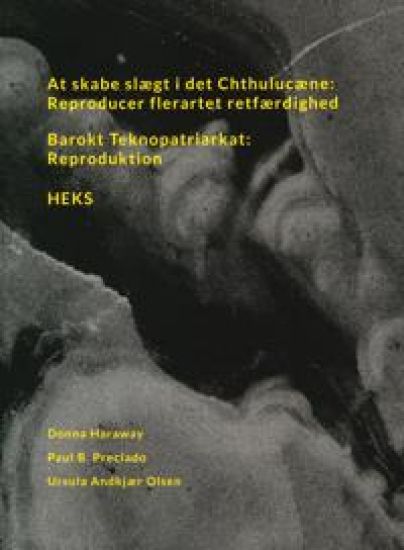
At skabe slægt i det Chthulucæne: Reproducer flerartet retfærdighed
Donna Haraway; Paul B. Preciado; Ursula Andkjær Olsen
-
2018
nidottu
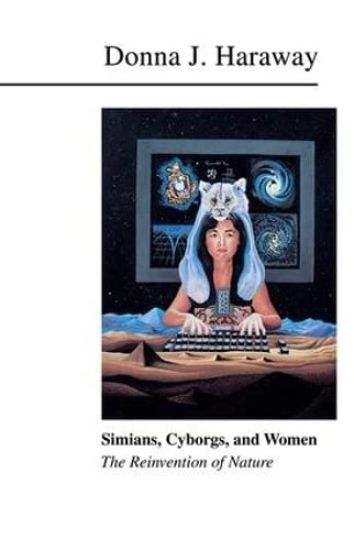
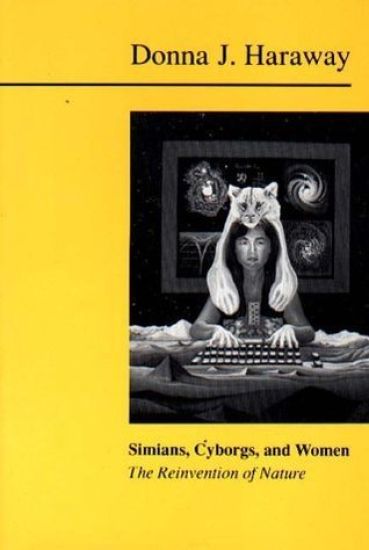
Simians, Cyborgs and Women is a powerful collection of ten essays written between 1978 and 1989. Although on the surface, simians, cyborgs and women may seem an odd threesome, Haraway describes their profound link as "creatures" which have had a great destabilizing place in Western evolutionary technology and biology. Throughout this book, Haraway analyzes accounts, narratives, and stories of the creation of nature, living organisms, and cyborgs. At once a social reality and a science fiction, the cyborg--a hybrid of organism and machine--represents transgressed boundaries and intense fusions of the nature/culture split. By providing an escape from rigid dualisms, the cyborg exists in a post-gender world, and as such holds immense possibilities for modern feminists. Haraway's recent book, Primate Visions, has been called "outstanding," "original," and "brilliant," by leading scholars in the field. (First published in 1991.)
Beyond the Cyborg
Margret Grebowicz; Helen Merrick; Donna Haraway
Columbia University Press
2013
pokkari
Feminist theorist and philosopher Donna Haraway has substantially impacted thought on science, cyberculture, the environment, animals, and social relations. This long-overdue volume explores her influence on feminist theory and philosophy, paying particular attention to her more recent work on companion species, rather than her "Manifesto for Cyborgs." Margret Grebowicz and Helen Merrick argue that the ongoing fascination with, and re-production of, the cyborg has overshadowed Haraway's extensive body of work in ways that run counter to her own transdisciplinary practices. Sparked by their own personal "adventures" with Haraway's work, the authors offer readings of her texts framed by a series of theoretical and political perspectives: feminist materialism, standpoint epistemology, radical democratic theory, queer theory, and even science fiction. They situate Haraway's critical storytelling and "risky reading" practices as forms of feminist methodology and recognize her passionate engagement with "naturecultures" as the theoretical core driving her work. Chapters situate Haraway as critic, theorist, biologist, feminist, historian, and humorist, exploring the full range of her identities and reflecting her commitment to embodying all of these modes simultaneously.
Beyond the Cyborg
Margret Grebowicz; Helen Merrick; Donna Haraway
Columbia University Press
2013
sidottu
Feminist theorist and philosopher Donna Haraway has substantially impacted thought on science, cyberculture, the environment, animals, and social relations. This long-overdue volume explores her influence on feminist theory and philosophy, paying particular attention to her more recent work on companion species, rather than her "Manifesto for Cyborgs." Margret Grebowicz and Helen Merrick argue that the ongoing fascination with, and re-production of, the cyborg has overshadowed Haraway's extensive body of work in ways that run counter to her own transdisciplinary practices. Sparked by their own personal "adventures" with Haraway's work, the authors offer readings of her texts framed by a series of theoretical and political perspectives: feminist materialism, standpoint epistemology, radical democratic theory, queer theory, and even science fiction. They situate Haraway's critical storytelling and "risky reading" practices as forms of feminist methodology and recognize her passionate engagement with "naturecultures" as the theoretical core driving her work. Chapters situate Haraway as critic, theorist, biologist, feminist, historian, and humorist, exploring the full range of her identities and reflecting her commitment to embodying all of these modes simultaneously.
The Haraway Reader brings together a generous selection of Donna Haraway's work, she is one of our keenest observers of nature, science, and the social world and this volume is ideal introduction to her thought.
The author of four seminal works on science and culture, Donna Haraway here speaks for the first time in a direct and non-academic voice. How Like a Leaf will be a welcome inside view of the author's thought.
In diesem Band werden zentrale Aufsätze Donna Haraways - eine der bedeutendsten und innovativsten feministischen Naturwissenschaft- lerinnen in den USA - erstmals einem deutschsprachigen Publikum zugänglich gemacht. In ihren Texten teilt die Autorin nicht die Sehnsucht vieler Feministinnen nach der Rückkehr zur reinen, unversehrten Natur, sondern sieht in deren Auflösung auch eine Chance zur Änderung bestehender Herrschaftsbeziehungen.
What counts as nature in the late twentieth century? How do we create scientific disciplines and histories of science? How are the issues of race and gender written into the ways we imagine the natural world? Why do we study animals? These fundamental questions are at the heart of primatology - the study of monkeys and apes - in the twentieth century. In Primate Visions historian of biology Donna Haraway builds the primate story - our scientific understanding of apes, monkeys, and humans - and explains its multi-cultural roots, its myths, its relation to gender and race.
Simians, Cyborgs and Women is a powerful collection of ten essays written between 1978 and 1989. Although on the surface, simians, cyborgs and women may seem an odd threesome, Haraway describes their profound link as "creatures" which have had a great destabilizing place in Western evolutionary technology and biology. Throughout this book, Haraway analyzes accounts, narratives, and stories of the creation of nature, living organisms, and cyborgs. At once a social reality and a science fiction, the cyborg--a hybrid of organism and machine--represents transgressed boundaries and intense fusions of the nature/culture split. By providing an escape from rigid dualisms, the cyborg exists in a post-gender world, and as such holds immense possibilities for modern feminists. Haraway's recent book, Primate Visions, has been called "outstanding," "original," and "brilliant," by leading scholars in the field. (First published in 1991.)
Donna Haraway analyses accounts, narratives, and stories of the creation of nature, living organisms, and cyborgs (cybernetic components); showing how deeply cultural assumptions penetrate into allegedly value-neutral medical research.