Kirjojen hintavertailu. Mukana 12 152 606 kirjaa ja 12 kauppaa.

Kirjailija

Donna L. Dickenson

Kirjat ja teokset yhdessä paikassa: 5 kirjaa, julkaisuja vuosilta 1997-2002, suosituimpien joukossa In Two Minds. Vertaile teosten hintoja ja tarkista saatavuus suomalaisista kirjakaupoista.

5 kirjaa

Kirjojen julkaisuhaarukka 1997-2002.

In Two Minds

In Two Minds

Donna L. Dickenson; Bill Fulford

Oxford University Press
2001
nidottu
In Two Minds is a practical casebook of problem solving in psychiatric ethics. Written in a lively and accessible style, it builds on a series of detailed case histories to illustrate the central place of ethical reasoning as a key competency for clinical work and research in psychiatry. Topics include risk, dangerousness and confidentiality; judgements of responsibility; involuntary treatment and mental health legislation; consent to genetic screening; dual role issues in child and adolescent psychiatry; needs assessment; cross-cultural and gender issues; rational and irrational suicide; shared decision making in multi-agency teams, and the growing role of the user's voice in psychiatry. Key ethical concepts are carefully introduced and explained. The text is richly supported by detailed guides for further reading. There are separate chapters on teaching psychiatric ethics, including a sample seminar, and on writing a research ethics application. Each case history and discussion is followed by a critical commentary from a practitioner with relevant experience. Jim Birley adds a comparative international perspective on psychiatric ethics. Cartoons by Johnny Cowee provide punchy counterpoint! In Two Minds is the sister volume to the third edition of Sidney, Paul Chodoff and Steven Green's highly successful Psychiatric Ethics. In providing a bridge between theory and practice, it will be essential reading for everyone concerned with improving standards in mental health care.
Risk and Luck in Medical Ethics

Risk and Luck in Medical Ethics

Donna L. Dickenson

Polity Press
2002
sidottu
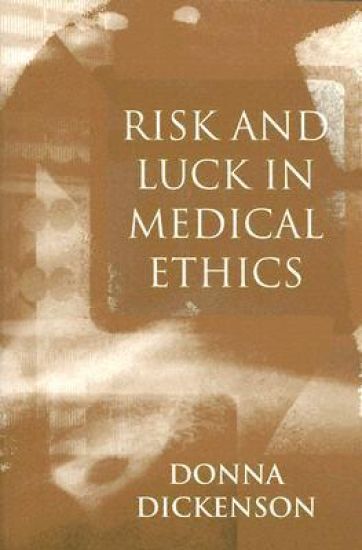
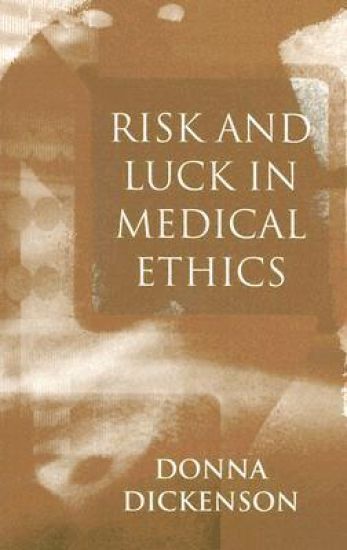
Ethics is commonly assumed to be the one realm in which luck and risk do not intrude. It has been said that 'While one can be lucky in one's business, in one's married life, and in one's health, one cannot, so it is commonly assumed, be subject to luck as far as one's moral worth is concerned.' But although we do not normally hold people responsible for outcomes beyond their control, a serious examination of the role of luck and risk may lead us to conclude that very few outcomes are really within people's control. This is the paradox of 'moral luck'. Risk and Luck in Medical Ethics examines the 'moral luck' paradox in greater detail, relating it to Kantian, consequentialist, and virtue-based approaches to ethics. Dickenson applies the paradoxes of risk and luck to medical ethics, including timely discussion of risk and luck in the allocation of scarce health care resources, informed consent to treatment, decisions about withholding life-sustaining treatment, psychiatry, reproductive ethics, genetic testing, and medical research and evidence-based medicine. The book concludes with an examination of the relevance of risk and luck in a medical context to the study of global ethics. If risk and luck are taken seriously, it would seem to follow that we cannot develop any definite moral standards at all, that we are doomed to moral relativism. However, Dickenson offers strong counter-arguments to this view that enable us to think in terms of universal standards for judging ethical systems. This claim has direct practical relevance for practitioners as well as philosophers.
Risk and Luck in Medical Ethics

Risk and Luck in Medical Ethics

Donna L. Dickenson

Polity Press
2002
nidottu
Ethics is commonly assumed to be the one realm in which luck and risk do not intrude. It has been said that 'While one can be lucky in one's business, in one's married life, and in one's health, one cannot, so it is commonly assumed, be subject to luck as far as one's moral worth is concerned.' But although we do not normally hold people responsible for outcomes beyond their control, a serious examination of the role of luck and risk may lead us to conclude that very few outcomes are really within people's control. This is the paradox of 'moral luck'. Risk and Luck in Medical Ethics examines the 'moral luck' paradox in greater detail, relating it to Kantian, consequentialist, and virtue-based approaches to ethics. Dickenson applies the paradoxes of risk and luck to medical ethics, including timely discussion of risk and luck in the allocation of scarce health care resources, informed consent to treatment, decisions about withholding life-sustaining treatment, psychiatry, reproductive ethics, genetic testing, and medical research and evidence-based medicine. The book concludes with an examination of the relevance of risk and luck in a medical context to the study of global ethics. If risk and luck are taken seriously, it would seem to follow that we cannot develop any definite moral standards at all, that we are doomed to moral relativism. However, Dickenson offers strong counter-arguments to this view that enable us to think in terms of universal standards for judging ethical systems. This claim has direct practical relevance for practitioners as well as philosophers.
Property, Women and Politics

Property, Women and Politics

Donna L. Dickenson

Polity Press
1997
nidottu
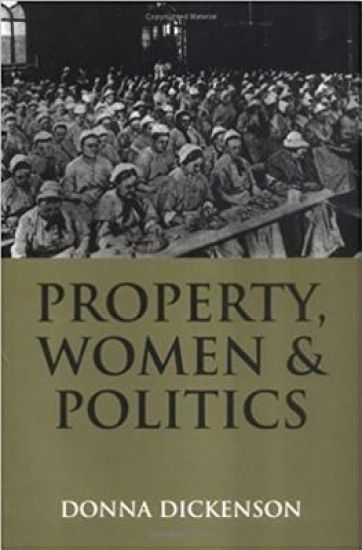
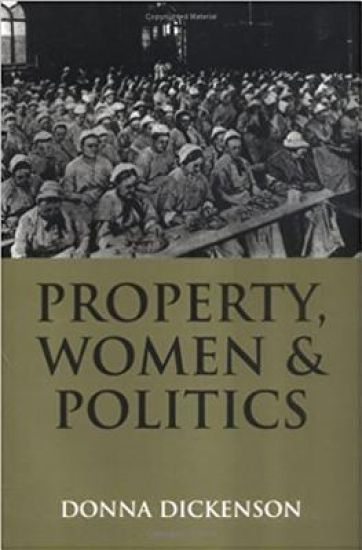
Although many feminist authors have pointed out the ways in which women have been property, they have been less successful in suggesting how women might become the subjects rather than the objects of property-holding. Property, Women and Politics: Subjects or Objects? considers the relationship between women and property from a novel viewpoint, synthesizing political theory from liberal and non-liberal traditions, feminist critiques, history and social policy. The volume ranges across a series of historical and anthropological studies which include the property position of women in classical Greece, the Anglo-American doctrine of coverture, nineteenth-century prostitution, and structural adjustment programmes in sub-Saharan Africa. It includes a comprehensive critique of the treatment of property by both mainstream political theorists and such important second-wave feminists as Irigaray, MacKinnon and Pateman. Property, Women and Politics deconstructs and contests the concept of property. But it also uses important insights in recent feminist thought to suggest productive directions for a reconstructed theory of property, one in which women's work counts. The reconstructed model is applied to such pressing areas of medical ethics as egg and sperm donation, contract motherhood, abortion, and the sale of foetal tissue. In addition, it shows how we can revise our assumptions about the 'marriage contract'. This book is intended for a wide readership in women's studies, political theory, medical ethics, law and social policy, and for both academic and a lay reader, combining as it does current topics of public policy with a sound theoretical discussion.
Property, Women and Politics

Property, Women and Politics

Donna L. Dickenson

Polity Press
1997
sidottu
Although many feminist authors have pointed out the ways in which women have been property, they have been less successful in suggesting how women might become the subjects rather than the objects of property-holding. Property, Women and Politics: Subjects or Objects? considers the relationship between women and property from a novel viewpoint, synthesizing political theory from liberal and non-liberal traditions, feminist critiques, history and social policy. The volume ranges across a series of historical and anthropological studies which include the property position of women in classical Greece, the Anglo-American doctrine of coverture, nineteenth-century prostitution, and structural adjustment programmes in sub-Saharan Africa. It includes a comprehensive critique of the treatment of property by both mainstream political theorists and such important second-wave feminists as Irigaray, MacKinnon and Pateman. Property, Women and Politics deconstructs and contests the concept of property. But it also uses important insights in recent feminist thought to suggest productive directions for a reconstructed theory of property, one in which women's work counts. The reconstructed model is applied to such pressing areas of medical ethics as egg and sperm donation, contract motherhood, abortion, and the sale of foetal tissue. In addition, it shows how we can revise our assumptions about the 'marriage contract'. This book is intended for a wide readership in women's studies, political theory, medical ethics, law and social policy, and for both academic and a lay reader, combining as it does current topics of public policy with a sound theoretical discussion.