Kirjojen hintavertailu. Mukana 12 595 353 kirjaa ja 12 kauppaa.

Kirjailija

Donna Pierce

Kirjat ja teokset yhdessä paikassa: 3 kirjaa, julkaisuja vuosilta 2006-2016, suosituimpien joukossa Companion to Glitterati. Vertaile teosten hintoja ja tarkista saatavuus suomalaisista kirjakaupoista.

3 kirjaa

Kirjojen julkaisuhaarukka 2006-2016.

Companion to Glitterati

Companion to Glitterati

Donna Pierce; Julie Wilson Frick

Denver Art Museum
2016
nidottu
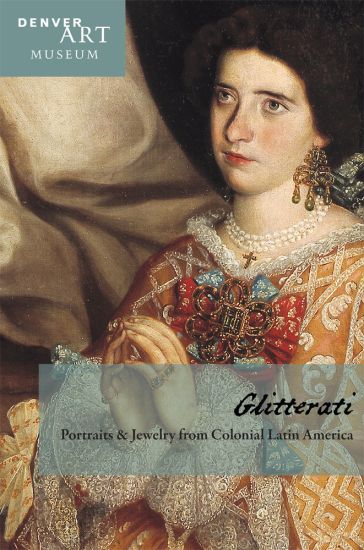
During the Spanish Colonial period in Latin America (1521-1850), precious gold and silver were crafted into elegant jewelry, then embellished with emeralds from Colombia, coral from Mexico, and pearls from Venezuela. To demonstrate their wealth and status, people were painted wearing their finest dress and elaborate jewelry. Selecting from its permanent collection, the Denver Art Museum installed the long-running exhibition Glitterati: Portraits and Jewelry in Colonial Latin America in its Spanish Colonial galleries in December 2014. This lavishly illustrated publication serves as a companion to the Glitterati exhibition and, on a larger scale, to the collection of Spanish Colonial jewelry and portraiture at the museum. The Spanish Colonial collection at the Denver Art Museum is the most comprehensive of its kind in the United States and one of the best in the world with outstanding examples of painting, sculpture, furniture, decorative arts, silver and goldwork, and jewelry from all over Latin America during the time of the Spanish colonies. The Stapleton Foundation of Latin American Colonial Art, made possible by the Renchard family, gifted art acquired by the intrepid Daniel C. Stapleton between 1895 and 1914, when he worked in Ecuador, Colombia, and Venezuela overseeing plantations and emerald mines. Frederick and Jan Mayer worked closely with museum curators to build a collection of Mexican colonial art rich in many subjects and media, notably portrait paintings. Examples from both of these major collections are augmented by other pieces of jewelry and portraiture from the museum's permanent collection in the Glitterati exhibition and in this volume.
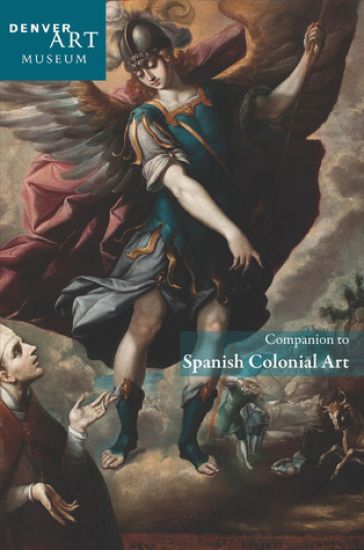
Companion to Spanish Colonial Art at the Denver Art Museum
The Denver Art Museum counts among its greatest resources a world-renowned Spanish Colonial collection rich in art from all over Latin America. Initiated in 1936, the Spanish Colonial collection has grown dramatically over the years to include more than 3,000 objects. It is the best collection of its type in the United States, and in many areas, it is the most comprehensive collection outside the country of origin. The museum's Spanish Colonial galleries include significant paintings, sculpture, furniture, silver, and decorative arts from the period.This lavishly illustrated volume - the first ever devoted to the museum's Spanish Colonial collection as a whole - serves as a primer to this stellar art collection, framing it within the historical context of the early modern world and the first era of global trade. Organized by theme rather than chronology, it features photographs of more than 100 objects from all areas of Spanish America and the southwestern United States. Subjects discussed include, but are not limited to, the continuity of native traditions, church and mission art, hybrid art forms, regional styles, and the art of everyday life.
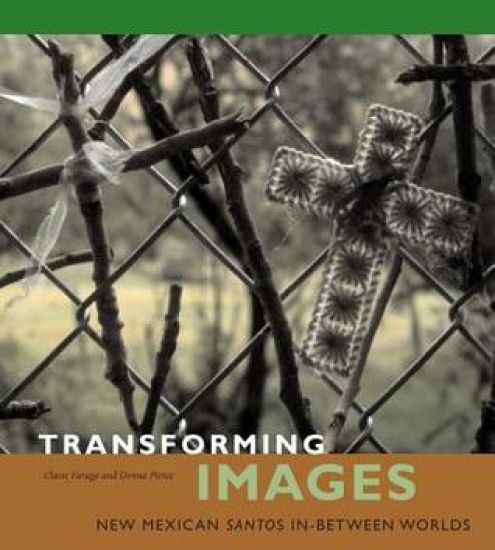
Transforming Images

Transforming Images

Claire Farago; Donna Pierce

Pennsylvania State University Press
2006
sidottu
“Style” has been one of the cornerstones not only of the modern discipline of art history but also of social and cultural history. In this volume, the writers consider the inadequacy of the concept of style as essential to a person, people, place, or period. While the subject matter of this book is specific to religious practices and artifacts from New Mexico between the eighteenth and twentieth centuries, the implications of these investigations are far reaching historically, methodologically, and theoretically.The essays collected here explore the Catholic instruments of religious devotion produced in New Mexico from around 1760 until the radical transformation of the tradition in the twentieth century. The writers in this volume make three key arguments. First, they make a case for bringing new theoretical perspectives and research strategies to bear on the New Mexican materials and other colonial contexts. Second, they demonstrate that the New Mexican materials provide an excellent case study for rethinking many of the most fundamental questions in art-historical and anthropological study. Third, the authors collectively argue that the New Mexican images had, and still have, importance to diverse audiences and makers. The distinctiveness of New Mexican santos consists not only in their subjects (which conformed to Catholic Reformation tastes) but also in elements that may appear to have been “merely decorative”: graphically striking and frequently elaborate abstract design motifs and landscape references. Despite their anonymity, the images are, as a group, readily distinguished from local products anywhere else in the Spanish colonial world. This distinctiveness suggests that we should inquire not so much about the individual identities of their makers as about the collective identity of the society and place that produced and used them.