

Kirjailija
Dorit Rabinyan
Kirjat ja teokset yhdessä paikassa: 6 kirjaa, julkaisuja vuosilta 2000-2024, suosituimpien joukossa Persian Brides. Vertaile teosten hintoja ja tarkista saatavuus suomalaisista kirjakaupoista.
6 kirjaa
Kirjojen julkaisuhaarukka 2000-2024.
A controversial, award-winning story about the passionate but untenable affair between an Israeli woman and a Palestinian man, from one of Israel's most acclaimed novelists When Liat meets Hilmi on a blustery autumn afternoon in Greenwich Village, she finds herself unwillingly drawn to him. Charismatic and handsome, Hilmi is a talented young artist from Palestine. Liat, an aspiring translation student, plans to return to Israel the following summer. Despite knowing that their love can be only temporary, that it can exist only away from their conflicted homeland, Liat lets herself be enraptured by Hilmi: by his lively imagination, by his beautiful hands and wise eyes, by his sweetness and devotion. Together they explore the city, sharing laughs and fantasies and pangs of homesickness. But the unfettered joy they awaken in each other cannot overcome the guilt Liat feels for hiding him from her family in Israel and her Jewish friends in New York. As her departure date looms and her love for Hilmi deepens, Liat must decide whether she is willing to risk alienating her family, her community, and her sense of self for the love of one man. Banned from classrooms by Israel's Ministry of Education, Dorit Rabinyan's remarkable novel contains multitudes. A bold portrayal of the strains--and delights--of a forbidden relationship, All the Rivers (published in Israel as Borderlife) is a love story and a war story, a New York story and a Middle East story, an unflinching foray into the forces that bind us and divide us. "The land is the same land," Hilmi reminds Liat. "In the end all the rivers flow into the same sea." Praise for All the Rivers "Rabinyan's book is a sort of Romeo and Juliet, a forbidden love affair between a Jewish girl from Tel Aviv and a Palestinian boy from Hebron. . . . A] beautiful novel."--The Guardian "A fine, subtle, and disturbing study of the ways in which public events encroach upon the private lives of those who attempt to live and love in peace with each other, and, impossibly, with a riven and irreconcilable world."--John Banville, Man Booker Prize-winning author of The Sea "I'm with Dorit Rabinyan. Love, not hate, will save us. Hatred sows hatred, but love can break down barriers."--Svetlana Alexievich, winner of the Nobel Prize for Literature "Astonishing . . . a] precise and elegant love story, drawn with the finest of lines."--Amos Oz "Rabinyan's writing reflects the honesty and modesty of a true artisan."--Haaretz "Because the novel strikes the right balance between the personal and the political, and because of her ability to tell a suspenseful and satisfying story, we decided to award Dorit Rabinyan's All the Rivers] the 2015 Bernstein Prize."--From the 2015 Bernstein Prize judges' decision " All the Rivers] ought to be read like J. M. Coetzee or Toni Morrison--from a distance in order to get close."--Walla "Beautiful and sensitive . . . a human tale of rapprochement and separation . . . a noteworthy human and literary achievement."--Makor Rishon "A captivating (and heartbreaking) gem, written in a spectacular style, with a rich, flowing, colorful and addictive language."--Motke "A great novel of love and peace."--La Stampa "A novel that truly speaks to the heart."--Corriere della Sera
A chance encounter in New York brings two strangers together: Liat is an idealistic translation student, Hilmi a talented young painter. Together they explore the city, share fantasies, jokes and homemade meals, and fall in love. There is only one problem: Liat is from Israel, Hilmi from Palestine. Keeping their deepening relationship secret, the two lovers build an intimate universe for two in this city far from home. But outside reality can only be kept at bay for so long. After a tempestuous visit from Hilmi's brother, cracks begin to form in the relationship, and their points of difference - Liat's military service, Hilmi's hopes for Palestine's future - threaten to overwhelm their shared present. When they return separately to their divided countries, Liat and Hilmi must decide whether to keep going, or let go. A prizewinning bestseller, but banned in Israeli schools for its frank and tender depiction of a taboo relationship, this is the deeply affecting story of two people trying to bridge one of the most deeply riven borders in the world.
Redolent with the scent of lilac and oleander blossoms, and bursting with the flavors of quinces and overripe plums, Strand of a Thousand Pearls is the story of the imagined and actual marriages of the Azizyan girls, their years of yearning, restless and impatient, and the truth of their engagements, miles away from the enchanted realm and imaginary heroes of their dreams. Six years ago, Dorit Rabinyan burst onto the scene with Persian Brides, a novel that established her as a writer of incandescent spirit with a gift for spinning wry, magical tales about the vagaries of love and marriage. In Strand of a Thousand Pearls, she has given us a bitter-sweet fable about desires fulfilled and denied--about married love and carnal love, about mother's love and the kind of love that vanishes one night without warning, like an evaporated dream.
By the time Matty is born, Iran and Solly's four older children are longing to fall in love. But the simplicity of their parent's romance seems as distant to them as a fairy tale. Each finds a life rich in unhappiness, filling Iran's home with whispers and wails, none more piercing than her own.
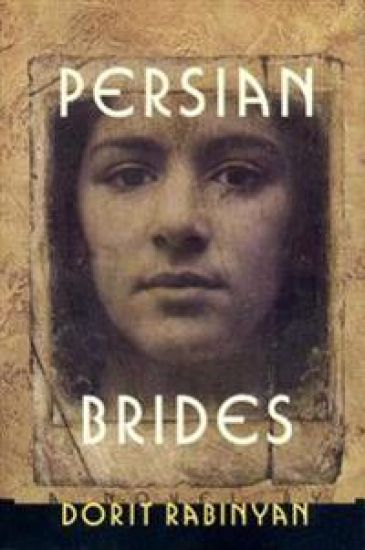
Persian Brides is a novel of rare beauty and extraordinary accomplishment. Set at the turn of the century in the fictional Persian village of Omerijan, it tells the magical story of two young girls--Flora and Nazie Ratoryan--and their many neighbors in the almond tree alley in Omerijan where they live. Fifteen-years-old, pregnant, and recently abandoned by her cloth-merchant husband, Flora longs desperately for the return of her unborn baby's father. Nazie consoles and pities her, and though she is still a child of eleven, she yearns--just as desperately--for her own future marriage. Although the narrative spans only two days, it branches out and back, encompassing the lives and histories of many of Omerijan's inhabitants. Rabinyan's vivid depiction of the village is a sensual feast, recreating the odors and flavors, the colors, sounds, and textures of everyday life. A masterful blend of fantasy and reality, the narrative forcefully conveys the shocking cruelties endured by many of the characters while at the same time weaving a modern-day Arabic legend where snakes offer jewels in exchange for milk and death is thwarted by appeasing the village demons. Written with passion and elegance, Persian Brides brings a rich array of characters to life--telling of their hardships without ever losing the magic and wonder that is so much a part of their lives.