Kirjojen hintavertailu. Mukana 12 183 059 kirjaa ja 12 kauppaa.
Kirjailija
Dorothy Price
Kirjat ja teokset yhdessä paikassa: 8 kirjaa, julkaisuja vuosilta 2012-2025, suosituimpien joukossa Chantal Joffe. Vertaile teosten hintoja ja tarkista saatavuus suomalaisista kirjakaupoista.
Personal Feeling Is the Main Thing sees the acclaimed British artist Chantal Joffe setting out on a journey with art historian Dorothy Price in the footsteps of the pioneering German painter Paula Modersohn-Becker (1876 – 1907), the first female artist to paint a naked self-portrait. Returning to London, Joffe undertakes new paintings of her friends, the novelist and writer Olivia Laing and art historian Gemma Blackshaw, heavily pregnant. Richly illustrated with works from throughout Joffe’s career – depicting her daughter Esme, friends, artists and writers – alongside works by Modersohn-Becker and Polaroids by Joffe of the artist’s home in Worpswede, this book offers a rare window into Joffe’s practice through the prism of Modersohn-Becker, working a century earlier. Revealing texts by Dorothy Price, Gemma Blackshaw and Olivia Laing further illuminate the integrity, as well as the psychological and emotional force Joffe brings to figurative painting. ‘Though separated in time and place, Modersohn-Becker’s intensity of vision still speaks directly to Chantal Joffe; both artists are invested in an unflinching approach to their subject matter. They are at once fierce and tender in their acuity.’ – Dorothy Price Personal Feeling Is the Main Thing is published by Elephant in association with Victoria Miro Gallery.
An outstanding voice in American art Mark Bradford: Keep Walking is the exhibition catalogue of the artist's retrospective at Amorepacific Museum of Art. Bradford uses everyday urban materials for his monumental abstract compositions. These works poignantly reflect the sociopolitical challenges faced by vulnerable populations. The exhibition features a key selection of his large-scale paintings, video works, and installations, including Spoiled Foot, the monumental centerpiece of his US Pavilion presentation at the 2017 Venice Biennale, and Float, a walkable floor painting that calls for physical engagement with the work. Art historical essays and a comprehensive interview with the artist provide a seminal overview of important aspects of his practice.
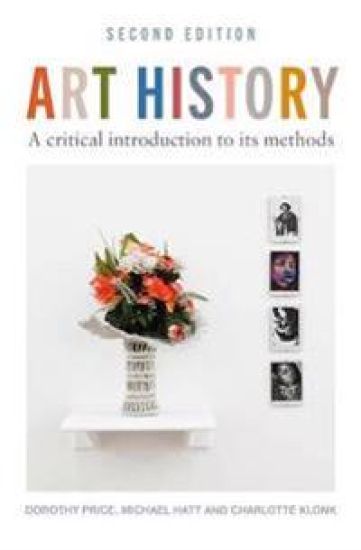
This popular textbook serves as a lively and stimulating introduction to methodological debates in art history. Offering a lucid account of approaches from Hegel to postcolonialism and decolonialism, it provides a sense of art history’s own history as a discipline, from its emergence in the late-eighteenth century to the present day.By explaining the underlying philosophical and political assumptions behind each method and providing clear examples of how these are brought to bear on visual and historical analysis, the authors show that adherence to a certain method is, in effect, a commitment to a set of beliefs and values. The book makes a strong case for the vitality of the discipline and its methodological centrality to new fields such as visual culture. This second edition has been updated to cover the latest developments in gender studies, decolonialism and global art.
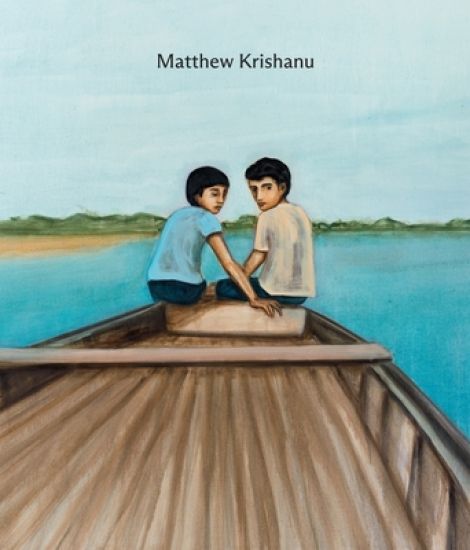
Matthew Krishanu’s paintings explore topics including childhood, race, religion, art history, family, grief and love. His subjects – frequently Brown people, especially children – are realised with a shallow pictorial depth, delicate washes of colour, and with a sense of interior life. Through this, Krishanu questions the positions of his painterly subjects and depictions of landscapes in relation to the legacy of European colonialism and the art historical canon. Krishanu’s practice is heavily informed by his early childhood spent in Dhaka where his parents moved in order to work for the Church of Bangladesh.This, his first trade monograph, presents a number of series of Krishanu’s works: Another Country, Expatriates, Mission, House of God, Religious Workers and In Sickness and In Health. The paintings included have been made in oil and/or acrylic on canvas, linen or board, with the earliest produced in 2007 and most recent completed in 2022.The publication features essays by Mark Rappolt and Dorothy Price, alongside an interview with the artist by Ben Luke. Rappolt, Editor-in-Chief at ArtReview magazine, details the various worlds present within Krishanu’s paintings. He draws out key themes within Krishanu’s oeuvre such as power, religion, identity and memory, while highlighting its distance from didacticism, and at times, its carefully constructed ambivalence, through examination of key works such as Mission School (2017), Mountain Tent (Two Boys) (2020) and Playground (2020). Price, Professor of Modern and Contemporary Art and Visual Culture at The Courtauld, writes sensitively about solitude, memory and emotion which are palpable within Krishanu’s work. In particular, the series In Sickness and In Health, which traces a life path of Uschi Gatward, the artist’s late wife, over sixteen years to her untimely death from cancer in late 2021. The series is foregrounded as a significant and intimate body of work that subtly shifts over the time period it depicts. In a new interview with Luke, a critic and editor at The Art Newspaper, Krishanu discusses his practice in relation to ideas of religion, race, global art history, photography, health and personal experiences. Krishanu’s work explores, in the artist’s own words, ‘the puzzle of painting’.The publication has been edited by Georgia Griffiths and Matt Price. It has been designed by Joe Gilmore, printed and bound by EBS, Verona, and produced by Anomie Publishing and Niru Ratnam, London. The publication has been supported by Guy Halamish; Jhaveri Contemporary, Mumbai; Niru Ratnam, London; Taimur Hassan; and Tanya Leighton, Berlin and Los Angeles.Matthew Krishanu (b.1980) was born in Bradford and is based in London. He completed an MA in Fine Art at Central Saint Martins in 2009. Recent solo exhibitions include ‘Playground’, Niru Ratnam (2022), ‘Undercurrents’, LGDR, New York (2022), ‘Picture Plane’, Niru Ratnam, London (2020), ‘Arrow and Pulpit’, Tanya Leighton, Berlin (2021), ‘Corvus’, Iniva, London (2019), ‘House of Crows’, Matt’s Gallery, London (2019), ‘A Murder of Crows’, Ikon Gallery, Birmingham (2019), ‘The Sun Never Sets’, Midlands Arts Centre, Birmingham, (2019) and ‘The Sun Never Sets’, Huddersfield Art Gallery, Huddersfield (2018). He has recently been in the group exhibitions ‘The Kingfisher’s Wing’, GRIMM, New York (2022), ‘Prophecy’, Mead Gallery, Warwick Arts Centre (2022), ‘Mixing It Up: Painting Today’, Hayward Gallery, London (2021), ‘Coventry Biennial’, Leamington Spa Art Gallery & Museum, Leamington Spa and Herbert Art Gallery & Museum (2021), ‘John Moores Painting Prize’, Walker Art Gallery, Liverpool (2021), ‘Everyday Heroes’, Hayward Gallery/Southbank Centre (2020) and ‘A Rich Tapestry’, Lahore Biennale (2020).
The old man's sons don't get along. What can their father teach them so they can get along?Your purchase of this book supports Library For All in its mission to make knowledge available to all, equally.
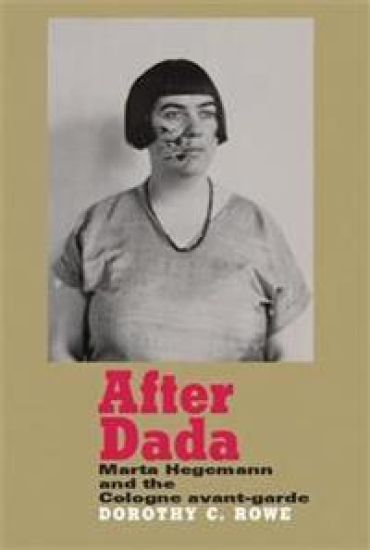
What happened in 1920s Cologne ‘after Dada’? Whilst most standard accounts of Cologne Dada simply stop with Max Ernst’s departure from the city for a new life as a surrealist in Paris, this book reveals the untold stories of the Cologne avant-garde that prospered after Dada but whose legacies have been largely forgotten or neglected. It focuses on the little-known Magical Realist painter Marta Hegemann (1894–1970). By re-inserting her into the histories of avant-garde modernism, a fuller picture of the gendered networks of artistic and cultural exchange within Weimar Germany can be revealed. This book embeds her activities as an artist within a gendered network of artistic exchange and influence in which Ernst continues to play a vital role amongst many others including his first wife, art critic Lou Straus-Ernst; photographers August Sander and Hannes Flach; artists Angelika Fick, Heinrich Hoerle, Willy Fick and the Cologne Progressives and visitors such as Kurt Schwitters and Katherine Dreier.The book offers a significant addition to research on Weimar visual culture and will be invaluable to students and specialists in the field.