Kirjojen hintavertailu. Mukana 12 595 353 kirjaa ja 12 kauppaa.

Kirjailija

Dorothy V. M. Bishop

Kirjat ja teokset yhdessä paikassa: 5 kirjaa, julkaisuja vuosilta 1998-2023, suosituimpien joukossa Uncommon Understanding (Classic Edition). Vertaile teosten hintoja ja tarkista saatavuus suomalaisista kirjakaupoista.

Mukana myös kirjoitusasut: Dorothy V.M. Bishop

5 kirjaa

Kirjojen julkaisuhaarukka 1998-2023.

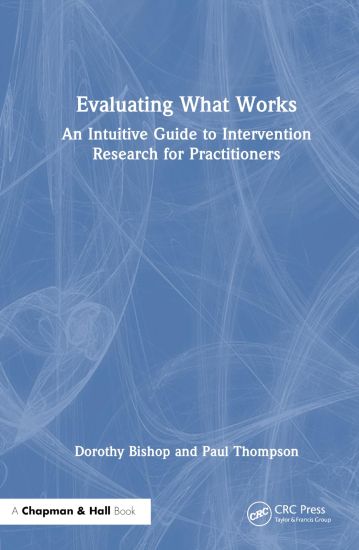
Evaluating What Works

Evaluating What Works

Dorothy V. M. Bishop; Paul Thompson

TAYLOR FRANCIS LTD
2023
sidottu
Those who work in allied health professions and education aim to make people’s lives better. Often, however, it is hard to know how effective this work has been: would change have occurred if there was no intervention? Is it possible we are doing more harm than good? To answer these questions and develop a body of knowledge about what works, we need to evaluate interventions. Objective intervention research is vital to improve outcomes, but this is a complex area, where it is all too easy to misinterpret evidence. This book uses practical examples to increase awareness of the numerous sources of bias that can lead to mistaken conclusions when evaluating interventions. The focus is on quantitative research methods, and exploration of the reasons why those both receiving and implementing intervention behave in the ways they do. Evaluating What Works: Intuitive Guide to Intervention Research for Practitioners illustrates how different research designs can overcome these issues, and points the reader to sources with more in-depth information. This book is intended for those with little or no background in statistics, to give them the confidence to approach statistics in published literature with a more critical eye, recognise when more specialist advice is needed, and give them the ability to communicate more effectively with statisticians.Key Features:Strong focus on quantitative research methodsComplements more technical introductions to statisticsProvides a good explanation of how quantitative studies are designed, and what biases and pitfalls they can involve

Evaluating What Works

Evaluating What Works

Dorothy V. M. Bishop; Paul Thompson

TAYLOR FRANCIS LTD
2023
nidottu
Those who work in allied health professions and education aim to make people’s lives better. Often, however, it is hard to know how effective this work has been: would change have occurred if there was no intervention? Is it possible we are doing more harm than good? To answer these questions and develop a body of knowledge about what works, we need to evaluate interventions. Objective intervention research is vital to improve outcomes, but this is a complex area, where it is all too easy to misinterpret evidence. This book uses practical examples to increase awareness of the numerous sources of bias that can lead to mistaken conclusions when evaluating interventions. The focus is on quantitative research methods, and exploration of the reasons why those both receiving and implementing intervention behave in the ways they do. Evaluating What Works: Intuitive Guide to Intervention Research for Practitioners illustrates how different research designs can overcome these issues, and points the reader to sources with more in-depth information. This book is intended for those with little or no background in statistics, to give them the confidence to approach statistics in published literature with a more critical eye, recognise when more specialist advice is needed, and give them the ability to communicate more effectively with statisticians.Key Features:Strong focus on quantitative research methodsComplements more technical introductions to statisticsProvides a good explanation of how quantitative studies are designed, and what biases and pitfalls they can involve
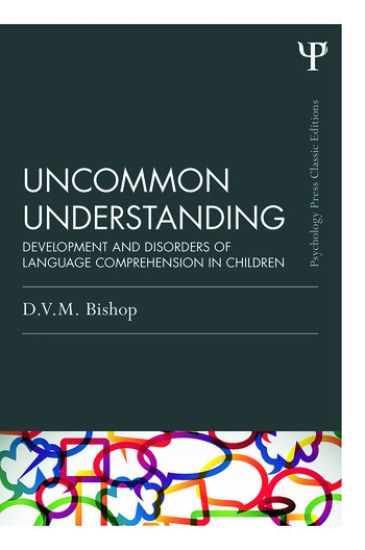
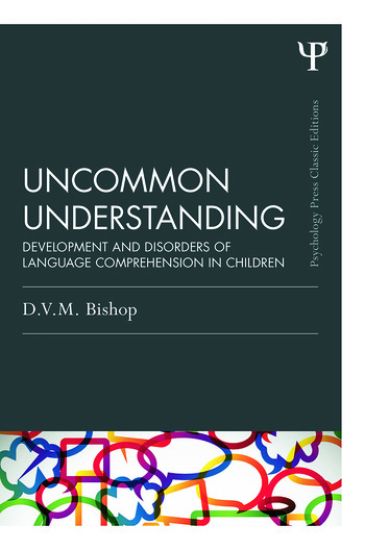
Uncommon Understanding (Classic Edition)

Uncommon Understanding (Classic Edition)

Dorothy V. M. Bishop

Psychology Press Ltd
2013
sidottu
This is a Classic Edition of Dorothy Bishop's award-winning textbook on the development of language comprehension, which has been in print since 1997, and now includes a new introduction from the author. The book won the British Psychological Society book award in 1999, and is now widely seen as a classic in the field of developmental language disorders.Uncommon Understanding provides a comprehensive account of the process of comprehension, from the reception of an acoustic signal, to the interpretation of communicative intentions, and integrates a vast field of research on language acquisition, psycholinguistics and neuropsychology. In the new introduction Dorothy Bishop reflects on the organization of the book, and developments in the field since the book was first published.A major theme in the book is that comprehension should not be viewed as a unitary skill – to understand spoken language one needs the ability to classify incoming speech sounds, to relate them to a "mental lexicon," to interpret the propositions encoded by word order and grammatical inflections, and to use information from the environmental and social context to grasp an intended meaning. Another important theme is that although neuropsychological and experimental research on adult comprehension provides useful concepts and methods for assessing comprehension, it should be applied with caution, because a sequential, bottom-up information processing model of comprehension is ill-suited to the developmental context. Although the main focus of the book is on research and theory, rather than practical matters of assessment and intervention, the theoretical framework presented in the book will continue to help clinicians develop a clearer understanding of what comprehension involves, and how different types of difficulty may be pin-pointed.
Uncommon Understanding (Classic Edition)

Uncommon Understanding (Classic Edition)

Dorothy V. M. Bishop

Psychology Press Ltd
2013
nidottu
This is a Classic Edition of Dorothy Bishop's award-winning textbook on the development of language comprehension, which has been in print since 1997, and now includes a new introduction from the author. The book won the British Psychological Society book award in 1999, and is now widely seen as a classic in the field of developmental language disorders.Uncommon Understanding provides a comprehensive account of the process of comprehension, from the reception of an acoustic signal, to the interpretation of communicative intentions, and integrates a vast field of research on language acquisition, psycholinguistics and neuropsychology. In the new introduction Dorothy Bishop reflects on the organization of the book, and developments in the field since the book was first published.A major theme in the book is that comprehension should not be viewed as a unitary skill – to understand spoken language one needs the ability to classify incoming speech sounds, to relate them to a "mental lexicon," to interpret the propositions encoded by word order and grammatical inflections, and to use information from the environmental and social context to grasp an intended meaning. Another important theme is that although neuropsychological and experimental research on adult comprehension provides useful concepts and methods for assessing comprehension, it should be applied with caution, because a sequential, bottom-up information processing model of comprehension is ill-suited to the developmental context. Although the main focus of the book is on research and theory, rather than practical matters of assessment and intervention, the theoretical framework presented in the book will continue to help clinicians develop a clearer understanding of what comprehension involves, and how different types of difficulty may be pin-pointed.
Uncommon Understanding

Uncommon Understanding

Dorothy V.M. Bishop

Psychology Press Ltd
1998
nidottu
A great deal has been written on how children learn to speak, but development of language comprehension has been a relatively neglected topic. This book is unique in integrating research in language acquisition, psycholinguistics and neuropsychology to give a comprehensive picture of the process we call "comprehension", right from the reception of an acoustic stimulus at the ear, up to the point where we interpret the message the speaker intended to convey by the utterance. A major theme of the book is that "comprehension" is not a unitary skill: to understand spoken language, one needs the ability to classify incoming speech sounds, to relate them to a "mental lexicon", to interpret the propositions encoded by word order and grammatical inflections, and to use information from the environmental and social context to select, from a wide range of possible interpretations, the one that was intended by the speaker. Furthermore, although neuropsychological and experimental research on adult comprehension can provide useful concepts and methods for assessing comprehension, they should be applied with caution, because a sequential, bottom-up information processing model of comprehension is ill-suited to the developmental context. The emphasis of the book is on children with specific language impairments, but normal development is also given extensive coverage. The focus is on research and theory, rather than practical matters of assessment and intervention. Nevertheless, while this book is not intended as a clinical guide to assessment, it does aim to provide a theoretical framework that can help clinicians develop a clearer understanding of what comprehension involves, and how different types of difficulty may be pinpointed.