Kirjojen hintavertailu. Mukana 12 657 676 kirjaa ja 12 kauppaa.
Kirjailija
Dorval Brunelle
Kirjat ja teokset yhdessä paikassa: 6 kirjaa, julkaisuja vuosilta 2007-2026, suosituimpien joukossa Gateways to Trade. Vertaile teosten hintoja ja tarkista saatavuus suomalaisista kirjakaupoista.
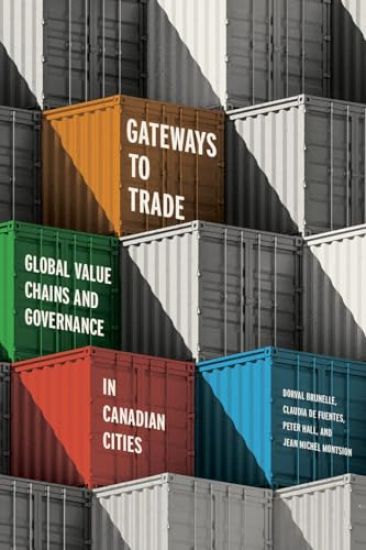
Vancouver, Toronto, Montreal, Halifax: How do Canada's gateway city-regions position themselves within global value chains? How does their transportation infrastructure facilitate trade? And why do their strategies raise democratic concerns? Gateways to Trade compares the approaches to trade-enabling transportation investment in these four urban centres to provide a clear-eyed perspective on trade policy. The authors investigate local urban governance relating to global production networks, value chains, and trade. They reach the conclusion that in planning transportation infrastructure for international trade, urban regimes operate as executive democracies, consulting private actors and senior governments but bypassing citizen organizations. Gateways to Trade underscores the important role of local governments, which are often regarded as bystanders in questions of trade. Its key insights into Canadian policies on trade and infrastructure are deeply relevant in a changing global economic environment.
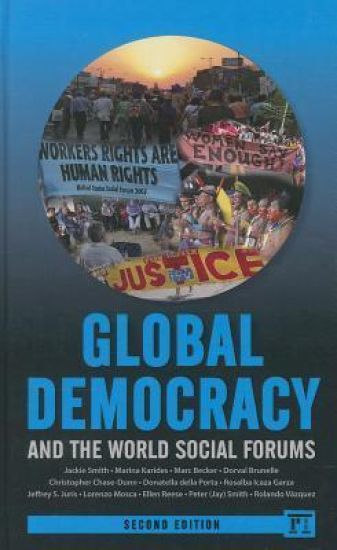
The World Social Forum quickly became the largest political gathering in human history and continues to offer a direct challenge to the extreme inequities of corporate-led globalisation. It has expanded its presence and continues to be an exciting experiment in global and participatory democracy. The book's contributors have participated in World Social Forums around the globe. Recounting dozens of dramatic firsthand experiences, they draw on their knowledge of global politics to introduce the process, its foundations and relevance to ongoing transnational efforts toward democracy. This second edition of Global Democracy shows how the Forums have developed since their inception in 2001 and how they are now connected with other global movements including Occupy, the Arab Spring and beyond.
The World Social Forum quickly became the largest political gathering in human history and continues to offer a direct challenge to the extreme inequities of corporate-led globalisation. It has expanded its presence and continues to be an exciting experiment in global and participatory democracy. The book's contributors have participated in World Social Forums around the globe. Recounting dozens of dramatic firsthand experiences, they draw on their knowledge of global politics to introduce the process, its foundations and relevance to ongoing transnational efforts toward democracy. This second edition of Global Democracy shows how the Forums have developed since their inception in 2001 and how they are now connected with other global movements including Occupy, the Arab Spring and beyond.
Anti-globalization activism world-wide attests to the tensionsbetween globalization and civil society. To better understand thisfraught relationship, Dorval Brunelle compares two social ordersseparated by a half-century. The post-World War II order entailed abroad vision uniting three complementary objectives – security,justice, and welfare – which were entrusted to a network ofinternational and national institutions. In contrast, globalization,with wealth as its only objective, is undermining and overhauling thevalues and institutions of the previous order, including the UnitedNations and the welfare state. From World Order to Global Disorder demonstrates theprofound effect of globalization on relations between the state, civilsociety, and markets, as well as on collective and individual rights.As neo-liberalism evolves into globalization, governments are eschewingtheir role as public guardians and are instead bartering the veryassets and resources their citizens' labour and activism createdand preserved. However, no constitution makes governments owners ofcollective assets: governments are merely trustees. In this context,the world's citizens have a tremendous task before them: in thewake of the welfare state, their social forums are indispensable in thequest for a more just and equitable world.
Anti-globalization activism world-wide attests to the tensionsbetween globalization and civil society. To better understand thisfraught relationship, Dorval Brunelle compares two social ordersseparated by a half-century. The post-World War II order entailed abroad vision uniting three complementary objectives – security,justice, and welfare – which were entrusted to a network ofinternational and national institutions. In contrast, globalization,with wealth as its only objective, is undermining and overhauling thevalues and institutions of the previous order, including the UnitedNations and the welfare state. From World Order to Global Disorder demonstrates theprofound effect of globalization on relations between the state, civilsociety, and markets, as well as on collective and individual rights.As neo-liberalism evolves into globalization, governments are eschewingtheir role as public guardians and are instead bartering the veryassets and resources their citizens' labour and activism createdand preserved. However, no constitution makes governments owners ofcollective assets: governments are merely trustees. In this context,the world's citizens have a tremendous task before them: in thewake of the welfare state, their social forums are indispensable in thequest for a more just and equitable world.