Kirjojen hintavertailu. Mukana 12 595 353 kirjaa ja 12 kauppaa.

Kirjailija

Doug Macdougall

Kirjat ja teokset yhdessä paikassa: 5 kirjaa, julkaisuja vuosilta 2008-2019, suosituimpien joukossa Nature's Clocks. Vertaile teosten hintoja ja tarkista saatavuus suomalaisista kirjakaupoista.

5 kirjaa

Kirjojen julkaisuhaarukka 2008-2019.

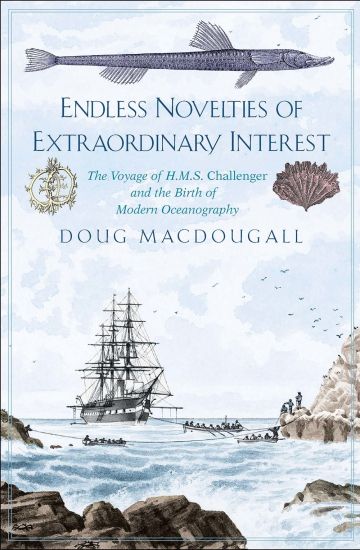
Endless Novelties of Extraordinary Interest

Endless Novelties of Extraordinary Interest

Doug Macdougall

Yale University Press
2019
sidottu
A gripping tale of exploration aboard H.M.S. Challenger, an expedition that laid the foundations for modern oceanography From late 1872 to 1876, H.M.S. Challenger explored the world’s oceans. Conducting deep sea soundings, dredging the ocean floor, recording temperatures, observing weather, and collecting biological samples, the expedition laid the foundations for modern oceanography. Following the ship’s naturalists and their discoveries, earth scientist Doug Macdougall engagingly tells a story of Victorian-era adventure and ties these early explorations to the growth of modern scientific fields. In this lively story of discovery, hardship, and humor, Macdougall examines the work of the expedition’s scientists, especially the naturalist Henry Moseley, who rigorously categorized the flora and fauna of the islands the ship visited, and the legacy of John Murray, considered the father of modern oceanography. Macdougall explores not just the expedition itself but also the iconic place that H.M.S. Challenger has achieved in the annals of ocean exploration and science.
Frozen Earth

Frozen Earth

Doug Macdougall

University of California Press
2013
pokkari
In this engrossing and accessible book, Doug Macdougall explores the causes and effects of ice ages that have gripped our planet throughout its history, from the earliest known glaciation - nearly three billion years ago - to the present. Following the development of scientific ideas about these dramatic events, Macdougall traces the lives of many of the brilliant and intriguing characters who have contributed to the evolving understanding of how ice ages come about. As it explains how the great Pleistocene Ice Age has shaped the earth's landscape and influenced the course of human evolution, "Frozen Earth" also provides a fascinating look at how science is done, how the excitement of discovery drives scientists to explore and investigate, and how timing and chance play a part in the acceptance of new scientific ideas. Macdougall describes the awesome power of cataclysmic floods that marked the melting of the glaciers of the Pleistocene Ice Age. He probes the chilling evidence for "Snowball Earth," an episode far back in the earth's past that may have seen our planet encased in ice from pole to pole. He discusses the accumulating evidence from deep-sea sediment cores, as well as ice cores from Greenland and the Antarctic, that suggests fast-changing ice age climates may have directly impacted the evolution of our species and the course of human migration and civilization. "Frozen Earth" also chronicles how the concept of the ice age has gripped the imagination of scientists for almost two centuries. It offers an absorbing consideration of how current studies of Pleistocene climate may help us understand earth's future climate changes, including the question of when the next glacial interval will occur.
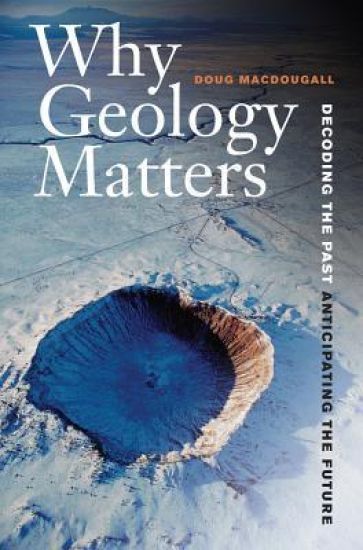
Why Geology Matters

Why Geology Matters

Doug Macdougall

University of California Press
2011
pokkari
Volcanic dust, climate change, tsunamis, earthquakes - geoscience explores phenomena that profoundly affect our lives. But more than that, as Doug Macdougall makes clear, the science also provides important clues to the future of the planet. In an entertaining and accessibly written narrative, Macdougall gives an overview of Earth's astonishing history based on information extracted from rocks, ice cores, and other natural archives. He explores such questions as: What is the risk of an asteroid striking Earth? Why does the temperature of the ocean millions of years ago matter today? How are efforts to predict earthquakes progressing? Macdougall also explains the legacy of greenhouse gases from Earth's past and shows how that legacy shapes our understanding of today's human-caused climate change. We find that geoscience in fact illuminates many of today's most pressing issues - the availability of energy, access to fresh water, sustainable agriculture, maintaining biodiversity - and we discover how, by applying new technologies and ideas, we can use it to prepare for the future.
Nature’s Clocks

Nature’s Clocks

Doug Macdougall

University of California Press
2009
pokkari
'Radioactivity is like a clock that never needs adjusting,' writes Doug Macdougall. 'It would be hard to design a more reliable timekeeper.' In "Nature's Clocks", Macdougall tells how scientists who were seeking to understand the past arrived at the ingenious techniques they now use to determine the age of objects and organisms. By examining radiocarbon (C-14) dating - the best known of these methods - and several other techniques that geologists use to decode the distant past, Macdougall unwraps the last century's advances, explaining how they reveal the age of our fossil ancestors such as 'Lucy,' the timing of the dinosaurs' extinction, and the precise ages of tiny mineral grains that date from the beginning of the earth's history. In lively and accessible prose, he describes how the science of geochronology has developed and flourished. Relating these advances through the stories of the scientists themselves - James Hutton, William Smith, Arthur Holmes, Ernest Rutherford, Willard Libby, and Clair Patterson - Macdougall shows how they used ingenuity and inspiration to construct one of modern science's most significant accomplishments: a timescale for the earth's evolution and human prehistory.
Nature's Clocks

Nature's Clocks

Doug Macdougall

University of California Press
2008
sidottu
"Radioactivity is like a clock that never needs adjusting," writes Doug Macdougall. "It would be hard to design a more reliable timekeeper." In Nature's Clocks, Macdougall tells how scientists who were seeking to understand the past arrived at the ingenious techniques they now use to determine the age of objects and organisms. By examining radiocarbon (C-14) dating—the best known of these methods—and several other techniques that geologists use to decode the distant past, Macdougall unwraps the last century's advances, explaining how they reveal the age of our fossil ancestors such as "Lucy," the timing of the dinosaurs' extinction, and the precise ages of tiny mineral grains that date from the beginning of the earth's history. In lively and accessible prose, he describes how the science of geochronology has developed and flourished. Relating these advances through the stories of the scientists themselves—James Hutton, William Smith, Arthur Holmes, Ernest Rutherford, Willard Libby, and Clair Patterson—Macdougall shows how they used ingenuity and inspiration to construct one of modern science's most significant accomplishments: a timescale for the earth's evolution and human prehistory. Doug Macdougall is Professor Emeritus of Earth Sciences at Scripps Institution of Oceanography, University of California, San Diego, and currently resides in Edinburgh, Scotland. He is the author of Frozen Earth: The Once and Future Story of Ice Ages (UC Press, 2004) and A Short History of Planet Earth.