Kirjojen hintavertailu. Mukana 12 152 606 kirjaa ja 12 kauppaa.

Kirjailija

Doug Meyer

Kirjat ja teokset yhdessä paikassa: 6 kirjaa, julkaisuja vuosilta 2015-2022, suosituimpien joukossa Selling in Your Town. Vertaile teosten hintoja ja tarkista saatavuus suomalaisista kirjakaupoista.

6 kirjaa

Kirjojen julkaisuhaarukka 2015-2022.

Violent Differences

Violent Differences

Doug Meyer

University of California Press
2022
sidottu
2023 Honorable Mention for Outstanding Book Award from the Society for the Study of Social Problems Despite rising attention to sexual assault and sexual violence, queer men have been largely excluded from the discussion. Violent Differences is the first book of its kind to focus specifically on queer male survivors and to devote particular attention to Black queer men. Whereas previous scholarship on male survivors has emphasized the role of masculinity, Doug Meyer shows that race and sexuality should be regarded as equally foundational as gender. Instead of analyzing sexual assault against queer men in the abstract, this book draws attention to survivors’ lived experiences. Meyer examines interview data from sixty queer men who have suffered sexual assault, highlighting their interactions with the police and their encounters with victim blaming. Violent Differences expands approaches to studying sexual assault by considering a new group of survivors and by revealing that race, gender, and sexuality all remain essential for understanding how this violence is experienced.

Violent Differences

Violent Differences

Doug Meyer

University of California Press
2022
pokkari
2023 Honorable Mention for Outstanding Book Award from the Society for the Study of Social Problems Despite rising attention to sexual assault and sexual violence, queer men have been largely excluded from the discussion. Violent Differences is the first book of its kind to focus specifically on queer male survivors and to devote particular attention to Black queer men. Whereas previous scholarship on male survivors has emphasized the role of masculinity, Doug Meyer shows that race and sexuality should be regarded as equally foundational as gender. Instead of analyzing sexual assault against queer men in the abstract, this book draws attention to survivors’ lived experiences. Meyer examines interview data from sixty queer men who have suffered sexual assault, highlighting their interactions with the police and their encounters with victim blaming. Violent Differences expands approaches to studying sexual assault by considering a new group of survivors and by revealing that race, gender, and sexuality all remain essential for understanding how this violence is experienced.
Heroes: A Tribute

Heroes: A Tribute

Doug Meyer

TRA Publishing
2019
sidottu
Heroes: A Tribute celebrates the lives and contributions of 49 brilliant creative figures who were early victims of HIV/AIDS--unique portraits by artist Doug Meyer reflect the core of each individual and are paired with insightful obituaries. In Heroes: A Tribute, artist Doug Meyer celebrates the lives and accomplishments of creative pioneers who were victims of HIV/AIDS in the early years of the epidemic. Brilliant figures from the worlds of art, design, film, and dance are honored in this art book--people such as Robert Mapplethorpe, Keith Haring, Rudolph Nureyev, Freddie Mercury, Rock Hudson, John Duka, Tina Chow, Klaus Nomi, Halston, and Angelo Donghia. Heroes began as an installation at a DIFFA (Design Industry Foundation to Fight AIDS) event, and grew into a traveling exhibition. The portraits vary significantly in form, material, and style, and incorporate drawing, painting, sculpture, and photography. In his multi-dimensional artwork, Meyer often blends techniques and media, such as terracotta, glomis , papier-m ch , and computer-generated collage. The text includes essays by Meyer and contributing writer Beth Dunlop as well as brief biographies of each hero that highlight the important contributions these figures made to the worlds of art, design, and culture. This beautifully designed book features sophisticated graphic design and includes pages from Doug Meyer's sketchbooks showing his artistic process. A true celebration, Heroes: A Tribute both pays homage to these visionary creatives who died too soon, and it teaches younger generations about these important figures. This book will appeal to all who have an interest in art, design, fashion, creativity, gay and LGBTQ issues and history, and more.
Violence against Queer People

Violence against Queer People

Doug Meyer

Rutgers University Press
2015
sidottu
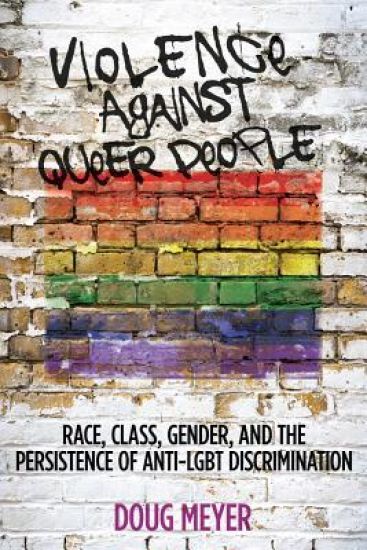
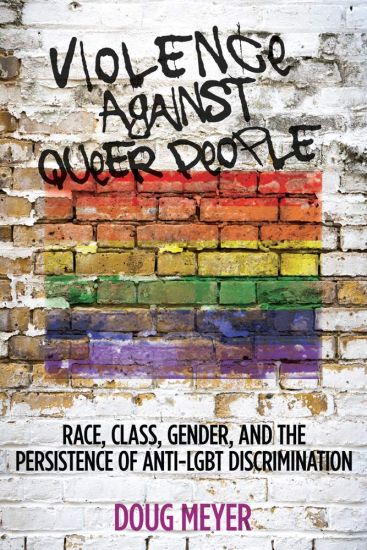
Received a 2016 Stonewall Book Award – Israel Fishman Non-Fiction Award Honor Book from the American Library Association Selected as one of “The Best of the Best from the University Presses: Books You Should Know About” at the 2016 ALA Annual Conference Violence against lesbians and gay men has increasingly captured media and scholarly attention. But these reports tend to focus on one segment of the LGBT community—white, middle class men—and largely ignore that part of the community that arguably suffers a larger share of the violence—racial minorities, the poor, and women. In Violence against Queer People, sociologist Doug Meyer offers the first investigation of anti-queer violence that focuses on the role played by race, class, and gender. Drawing on interviews with forty-seven victims of violence, Meyer shows that LGBT people encounter significantly different forms of violence—and perceive that violence quite differently—based on their race, class, and gender. His research highlights the extent to which other forms of discrimination—including racism and sexism—shape LGBT people’s experience of abuse. He reports, for instance, that lesbian and transgender women often described violent incidents in which a sexual or a misogynistic component was introduced, and that LGBT people of color sometimes weren’t sure if anti-queer violence was based solely on their sexuality or whether racism or sexism had also played a role. Meyer observes that given the many differences in how anti-queer violence is experienced, the present media focus on white, middle-class victims greatly oversimplifies and distorts the nature of anti-queer violence. In fact, attempts to reduce anti-queer violence that ignore race, class, and gender run the risk of helping only the most privileged gay subjects. Many feel that the struggle for gay rights has largely been accomplished and the tide of history has swung in favor of LGBT equality. Violence against Queer People, on the contrary, argues that the lives of many LGBT people—particularly the most vulnerable—have improved very little, if at all, over the past thirty years.
Violence against Queer People

Violence against Queer People

Doug Meyer

Rutgers University Press
2015
nidottu
Received a 2016 Stonewall Book Award – Israel Fishman Non-Fiction Award Honor Book from the American Library Association Selected as one of “The Best of the Best from the University Presses: Books You Should Know About” at the 2016 ALA Annual Conference Violence against lesbians and gay men has increasingly captured media and scholarly attention. But these reports tend to focus on one segment of the LGBT community—white, middle class men—and largely ignore that part of the community that arguably suffers a larger share of the violence—racial minorities, the poor, and women. In Violence against Queer People, sociologist Doug Meyer offers the first investigation of anti-queer violence that focuses on the role played by race, class, and gender. Drawing on interviews with forty-seven victims of violence, Meyer shows that LGBT people encounter significantly different forms of violence—and perceive that violence quite differently—based on their race, class, and gender. His research highlights the extent to which other forms of discrimination—including racism and sexism—shape LGBT people’s experience of abuse. He reports, for instance, that lesbian and transgender women often described violent incidents in which a sexual or a misogynistic component was introduced, and that LGBT people of color sometimes weren’t sure if anti-queer violence was based solely on their sexuality or whether racism or sexism had also played a role. Meyer observes that given the many differences in how anti-queer violence is experienced, the present media focus on white, middle-class victims greatly oversimplifies and distorts the nature of anti-queer violence. In fact, attempts to reduce anti-queer violence that ignore race, class, and gender run the risk of helping only the most privileged gay subjects. Many feel that the struggle for gay rights has largely been accomplished and the tide of history has swung in favor of LGBT equality. Violence against Queer People, on the contrary, argues that the lives of many LGBT people—particularly the most vulnerable—have improved very little, if at all, over the past thirty years.