Kirjojen hintavertailu. Mukana 12 585 127 kirjaa ja 12 kauppaa.

Kirjailija

Doug Phillips

Kirjat ja teokset yhdessä paikassa: 3 kirjaa, julkaisuja vuosilta 2002-2019, suosituimpien joukossa Dynamic Positioning Control Systems: A Technical Companion to 'anchors Are for Wankers' and Poetic Lessons in Life'. Vertaile teosten hintoja ja tarkista saatavuus suomalaisista kirjakaupoista.

3 kirjaa

Kirjojen julkaisuhaarukka 2002-2019.

Dynamic Positioning Control Systems: A Technical Companion to 'anchors Are for Wankers' and Poetic Lessons in Life'
"Hi Doug, this is brilliant. This should be taught in all DP Centres. Engineer-Poet is a difficult and rare combination. Thanks for the contribution to DP community."- Capt. K C Shukla"Think your DP poem has got legs. It should be required reading for all DPOs on their training courses. Rhyme is always a great way of communicating the complexities of life "- Joe HughesOF DOUG'S COMPANION VOLUMES: "Great funny book."- Book review"A fun read, with great humour, humanity and bravado - found the book refreshingly open and insightful. One wish however... that I had heard about the various management styles earlier It would have made some boring meetings much more interesting."- Lyndsay Rees-Jones"It's a dose of levity for our industry, which we definitely need from time to time "- Sean HogueBy the same author, also available on Amazon: POETIC LESSONS IN LIFE: Pithy Verse - A Blend of Rhyme Maps, Poemedy and EpigramsANCHORS ARE FOR WANKERS
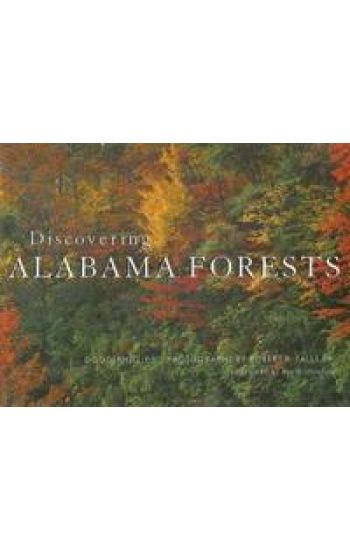
Discovering Alabama Forests

Discovering Alabama Forests

Doug Phillips; Rhett Johnson

The University of Alabama Press
2006
sidottu
Green woodlands dress more than 22 million acres of the Alabama landscape, roughly two-thirds of the state. (Only Oregon and Georgia have a comparable abundance of forested acreage). Moreover, forest diversity in Alabama is greater than in any other region in the United States, with more than 200 kinds of native trees. These mixed forests consist of a great many hardwoods often thought of as emblematic of other regions: oaks, maples, hollies, elms and five species of buckeyes (Ohio has just two). Also abundant are softwoods and conifers - juniper, hemlock, cypress, and eight distinctive species of pine. As the official state tree, the longleaf pine was once among the most widespread species but decades of over-harvesting have reduced this graceful, fire-resistant tree to a mere remnant of its historical range. In ""Discovering Alabama Forests"", ecologist-educator Doug Phillips and photographer Robert Falls celebrate the current health and diversity of Alabama woodlands while sounding a call for their wise management and protection in the future. As population growth and urban development place new demands on forest communities, Phillips warns, advocates will succeed only if joined by a public spirit of appreciation for the state's rich forest heritage. With 100 beautiful color photographs illustrating the meticulous text, ""Discovering Alabama Forests"" provides an informed and accessible introduction to the ecological, geological, and biological richness of Alabama's forests, their evolution through history, their contribution to the state's economy, and the modern perils they face.
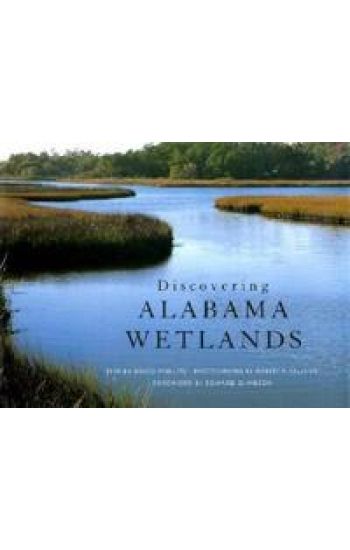
Discovering Alabama Wetlands

Discovering Alabama Wetlands

Doug Phillips; Edward O. Wilson

The University of Alabama Press
2002
sidottu
This visually stunning portrait of Alabama's many diverse wetland habitats and their associated plants and animals is a passionate plea for their thoughtful care and protection. Alabama could easily be called the ""Aquatic State,"" It has an abundant supply of rain with countless streams, rivers, lakes, swamps, bogs, bottomlands, and bays that capture and channel this freshwater. An estimated 20 percent of the nation's total freshwater works its way through this small physical land area that ranges from the temperate foothills of the Appalachians to the semitropical Gulf coast. Alabama's varied watery realms have harbored and continue to sustain a rich diversity of plant and animal species virtually unequaled on the continent. With Discovering Alabama Wetlands, ecologist-educator Doug Phillips and photographer Robert Falls celebrate these productive natural habitats. One hundred color photographs and a data-rich text illustrate the natural beauty and serenity of these special places while explaining their vital role in filtering toxins and sediment from groundwater, nourishing a quifers, and preventing flooding. Special focus is given to key areas - Little River Canyon National Preserve a top Lookout Mountain; Wheeler National Wildlife Refuge in the backwater of the Tennessee River, a major attraction for wintering waterfowl; the 100-mile-long Sipsey River and Swamp, slowly wending its way through the central part of the state; and the vast Mobile Tensaw Delta, a remarkable inland estuary that has been designated a World Wildlife Biosphere. But the authors also explore lesser coastal estuaries, pitcher-plant bogs, limestone seeps, and prairie marshes as important mini-habitats supporting rare and sometimes endemic species. This book sounds a strong warning for fragile, dwindling wetlarids. Phillips explains that more tha half of the original area of Alabama wetlands - 4 million acres - has already been lost to two centuries of excessive timbering practices, agricultural drainage, suburban sprawl, and siltation. In reasoned, direct prose, he encourages readers to adopt a proactive attitude in protecting their nearby wetland areas, areas that will be essential to economic stability and the quality of life in Alabama for generations. With this beautifully illustrated album, Phillips and Falls offer their eloquent statement for wetlands protection.