Kirjojen hintavertailu. Mukana 12 595 353 kirjaa ja 12 kauppaa.

Kirjailija

Dougald Hine

Kirjat ja teokset yhdessä paikassa: 5 kirjaa, julkaisuja vuosilta 2022-2025, suosituimpien joukossa Våra nya gudar. Vertaile teosten hintoja ja tarkista saatavuus suomalaisista kirjakaupoista.

5 kirjaa

Kirjojen julkaisuhaarukka 2022-2025.

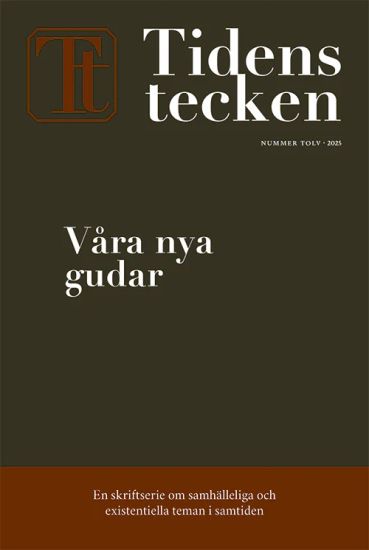
Våra nya gudar

Våra nya gudar

Ingrid Malm Lindberg; Per Magnus Johansson; Maja Fjaestad; Daniel Bodén; Mats Alvesson; Henrik Eriksson; Fanny Willman; Dougald Hine

Artos Norma Bokförlag
2025
nidottu
Sekularisering innebär inte att gudarna försvinner utan att de ersätts av sådana som vi själva har skapat institutioner, traditioner och teknologier. Det handlar därför inte om en avveckling utan om en omlokalisering av en gudomlig sfär. Vem betjänar vem? Är systemen till för människan eller människan för systemen? Till vem eller vilka sätter vi vårt hopp eller vänder vi oss till i bön? Årets nummer av Tidens tecken utforskar de makter som aspirerar på att ta gudarnas plats i en postsekulär samtid.
At Work in the Ruins

At Work in the Ruins

Dougald Hine

CHELSEA GREEN PUBLISHING CO
2024
pokkari
'One of the most perceptive and thought-provoking books …Essential reading for these turbulent times.' Amitav Ghosh, author of The Great Derangement 'Dougald Hine’s brilliant book demands we stare into that abyss and rethink our securest certainties about what is actually going on in the climate crisis. It’s lucidly unsettling and yet in the end empowering. There is something we can do, and it starts with where we look, how we see and what we choose to change.’ Brian Eno, Musician ‘[A] rich book, which like a poetic or religious text deserves multiple readings’ Richard Smith, British Medical Journal ‘I consider this book a must-read for all those activists feeling lost, desperate and perhaps subject to ‘press-on-itis'.’ Gail Bradbrook, cofounder, Extinction Rebellion Dougald Hine, world-renowned environmental thinker, has spent most of his life talking to people about climate change. And then one afternoon in the second year of the pandemic, he found he had nothing left to say. Why would someone who cares so deeply about ecological destruction want to stop talking about climate change now? At Work in the Ruins explores that question. ‘Climate change asks us questions that climate science cannot answer,’ Dougald says. Questions like, how did we end up in this mess? Is it just a piece of bad luck with atmospheric chemistry – or is it the result of a way of approaching the world that would always have brought us to such a pass? How we answer such questions also has consequences. Through our over-reliance on the single lens of science, Dougald writes that we are blinded to the nature of the crises around and ahead of us, leading to ‘solutions’ that can only make things worse. At Work in the Ruins is his reckoning with the strange years we have been living through and our long history of asking too much of science. He offers guidance by standing firmly forward and facing the depth of the trouble we are in, to ultimately, helps us find the work that is worth doing, even in the ruins.
At Work in the Ruins: Finding Our Place in the Time of Climate Crises and Other Emergencies
"Hine's brilliant book demands we stare into the] abyss and rethink our securest certainties about what is actually going on in the climate crisis."--Brian Eno, musician "Maybe it's time to stop talking about climate change?" For two decades, the writer and social thinker Dougald Hine has been among the most influential voices in the environmental debate. Then one day, he heard these words come out of his mouth--and realized that he would have to explain himself. At Work in the Ruins tells the story of how our ways of talking about the world's troubles end up making everything worse. In eloquent, deeply researched prose, Hine traces the consequences of our over-reliance on the single lens of science and opens a window onto other ways of seeing the crises around and ahead of us. This is an invitation to find the paths that lead beyond panic and polarization, to take up the work that is worth doing in the ruins. "One of the most perceptive and thought-provoking books yet written about the multiple intersecting crises that are now upending our once-familiar world. . . . Essential reading for these turbulent times."--Amitav Ghosh, author of The Great Derangement " A] rich book, which like a poetic or religious text deserves multiple readings."--British Medical Journal "A deep reflection on the foundations of the destructive path humanity has been pushed on."--Dr. Vandana Shiva, author of Terra Viva "Let Hine's] song of loss and longing, his call to fugitivity, dispossess you of your steady gait and poise. Perhaps then we, collectively infected, might together witness the incomprehensible."--Bayo Akomolafe, author of These Wilds Beyond Our Fences
At Work in the Ruins

At Work in the Ruins

Dougald Hine

CHELSEA GREEN PUBLISHING CO
2023
sidottu
'One of the most perceptive and thought-provoking books …Essential reading for these turbulent times.' Amitav Ghosh, author of The Great Derangement 'Dougald Hine’s brilliant book demands we stare into that abyss and rethink our securest certainties about what is actually going on in the climate crisis. It’s lucidly unsettling and yet in the end empowering. There is something we can do, and it starts with where we look, how we see and what we choose to change.’ Brian Eno, Musician ‘[A] rich book, which like a poetic or religious text deserves multiple readings’ Richard Smith, British Medical Journal ‘I consider this book a must-read for all those activists feeling lost, desperate and perhaps subject to ‘press-on-itis'.’ Gail Bradbrook, cofounder, Extinction Rebellion Dougald Hine, world-renowned environmental thinker, has spent most of his life talking to people about climate change. And then one afternoon in the second year of the pandemic, he found he had nothing left to say. Why would someone who cares so deeply about ecological destruction want to stop talking about climate change now? At Work in the Ruins explores that question. ‘Climate change asks us questions that climate science cannot answer,’ Dougald says. Questions like, how did we end up in this mess? Is it just a piece of bad luck with atmospheric chemistry – or is it the result of a way of approaching the world that would always have brought us to such a pass? How we answer such questions also has consequences. Through our over-reliance on the single lens of science, Dougald writes that we are blinded to the nature of the crises around and ahead of us, leading to ‘solutions’ that can only make things worse. At Work in the Ruins is his reckoning with the strange years we have been living through and our long history of asking too much of science. He offers guidance by standing firmly forward and facing the depth of the trouble we are in, to ultimately, helps us find the work that is worth doing, even in the ruins.
The crossing of two lines

The crossing of two lines

Dougald Hine; Geska Helena Brecevic; Robert Brecevic; Performing pictures

Elemental Editions
2022
sidottu
’Sometimes we use the term religious art or sacred art, but I really prefer venerative art. Because, as I see it, the upper middle class, the good-taste people, they do venerate like hell…’The Virgin of Guadalupe appears before a camera crew on a Mexican hillside. A wooden shrine is hammered to a watchtower on a deserted Soviet army base. A stonemason fixes a cross to the roof of a roadside chapel in his family’s village. Since 2008, the work of Stockholm-based artist duo Performing Pictures (Geska & Robert Brecevic) has taken an unexpected turn towards themes of Catholic devotion. The results are still sometimes shown in galleries, but their primary function is within the religious lives of the communities with whom they are made.The Crossing of Two Lines is a collaboration between the artists and the writer Dougald Hine. It is both a document of this work and an investigation into the discomfort that it has caused among their art world contemporaries. From the Croatian island of Rab to the pueblo of Zegache in Oaxaca, Mexico, hundreds of colour photographs chart the making and use of these venerative artefacts. Meanwhile, in a series of texts - one essay, four interviews, ten short poems - we trace the intersecting lines of personal and collective experience which meet in this work.‘We are used to art that employs the symbols of religion in ways seemingly intended to unsettle or provoke many of those to whom these symbols matter,’ writes Hine. ‘Yet to the consumers of contemporary art, those who actually visit galleries, it is more uncomfortable to be confronted with work in which such symbols are used without the frame of provocation.’