Kirjojen hintavertailu. Mukana 12 558 076 kirjaa ja 12 kauppaa.
Kirjailija
Douglas Allen
Kirjat ja teokset yhdessä paikassa: 14 kirjaa, julkaisuja vuosilta 1992-2026, suosituimpien joukossa Reconstructing William Allen 1711-1799 (Revised). Vertaile teosten hintoja ja tarkista saatavuus suomalaisista kirjakaupoista.
Reconstructing William Allen 1711-1799 is a combination history, biography, and genealogy of this immigrant from Northern Ireland who came to America in 1729. It explores not only the facts of his life, but places them within the context of the historical events of his time. It also attempts to build a picture of the communities within which he lived. In order to provide as broad a picture as possible, the book includes a social history of the Scots-Irish people, who spent a century or so in Northern Ireland before coming to America en masse during the 18th century. Also included: appendices with research notes, bibliography, and index. 518 pages, hardback.
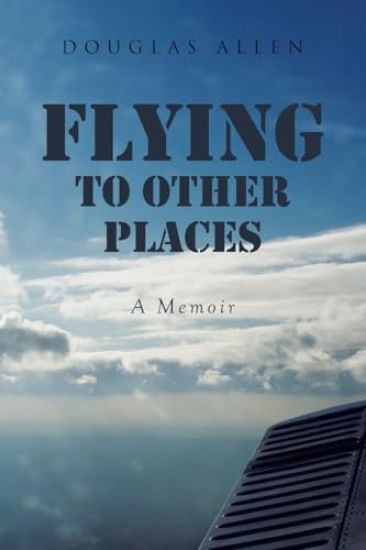
Flying to Other Places is a memoir where a teenage soldier comes home with various issues not immediately recognizable, causing him to spend the better part of his life trying to understand what happened. Noticing something in midlife, he begins a journey of reflections, revisiting his youth, the Vietnam War, the effect it had on how he lived his life, and in the end finally coming to an understanding of post-traumatic stress disorder and sacrifice.
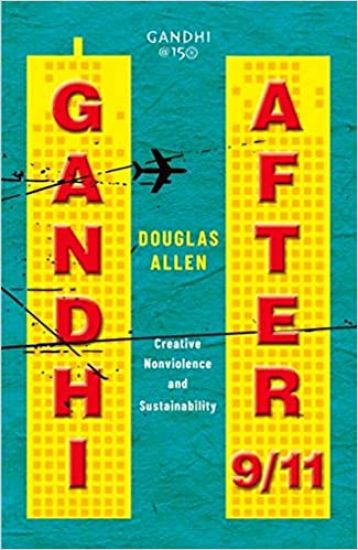
Douglas Allen argues that Gandhi offers to us the most profound and influential theory, philosophy, and engaged practices of ahimsa or nonviolence. Embracing Gandhi's insightful critiques of modernity, the book sees his approach as a creative and challenging catalyst to rethink our positions today. We live in a post-9/11 world that is defined by widespread physical, psychological, economic, political, cultural, religious, technological, and environmental violence and that is increasingly unsustainable. The author's central claim is Gandhi, when selectively appropriated and creatively reformulated and applied, is essential for formulating new positions that are more nonviolent and more sustainable. These provide resources and hope for dealing with our contemporary crises. The author analyzes what a Gandhi-informed, valuable but humanly limited swaraj technology looks like and what a Gandhi-informed, more egalitarian, interconnected, bottom-up, decentralized world of globalization looks like. The book focuses on key themes in Gandhi's thought, such as violence and nonviolence, Absolute Truth and relative truth, ethical and spiritual living. Challenging us to consider nonviolent, moral, and truthful transformative alternatives today, the author moves through essays on Gandhi in the age of technology; Gandhi after 9/11 and 26/11 terrorism; Gandhi's controversial views on the Bhagavad-Gita and Hind Swaraj; Gandhi and Vedanta; Gandhi on socialism; Gandhi and marginality, caste, class, race, and oppressed others.
The Complete Book of Hunting: Game Animals, Waterfowl, Upland Birds by Clyde Ormond is a comprehensive guide to hunting for both beginners and experienced hunters. The book covers a wide range of topics related to hunting, including game animals, waterfowl, and upland birds. It provides a detailed overview of each species, their behavior, habitat, and hunting techniques. The book is divided into three main sections, each focusing on a different type of hunting. The first section covers game animals such as deer, elk, moose, and bear. It provides information on their behavior, habitat, and hunting tactics, as well as tips on how to track and hunt them successfully. The second section of the book focuses on waterfowl, including ducks, geese, and swans. It covers their migration patterns, feeding habits, and the best hunting techniques for each species. The book also includes information on decoys, calls, and blinds, which are essential tools for waterfowl hunting. The third section of the book is dedicated to upland birds such as pheasants, quail, grouse, and turkeys. It provides information on their behavior, habitat, and hunting techniques, including how to use dogs for hunting. The book also includes tips on how to identify different species of upland birds and how to choose the right gun and ammunition for each type of bird. In addition to the comprehensive information on hunting techniques and species, the book also includes beautiful photographs and illustrations that help readers visualize the different animals and their habitats. Overall, The Complete Book of Hunting: Game Animals, Waterfowl, Upland Birds is an essential guide for anyone interested in hunting, whether they are just starting out or have years of experience.With An Illustrated Section On Estimating Big-Game Trophies And A Hunter's Field Guide To Waterfowl And Upland Birds.This scarce antiquarian book is a facsimile reprint of the old original and may contain some imperfections such as library marks and notations. Because we believe this work is culturally important, we have made it available as part of our commitment for protecting, preserving, and promoting the world's literature in affordable, high quality, modern editions, that are true to their original work.
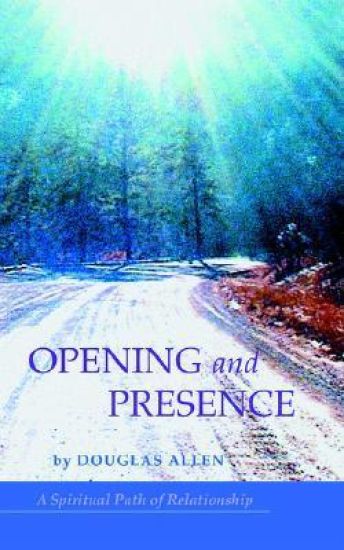
Love only grows and deepens by knowing how to nurture it. To delve deeply into relationship and draw from it the greatest treasures, we have to live the core qualities that bring us into contact with vibrant intimacy. The dynamic created by feminine opening coupled with masculine presence is offered here as a means to deepening love, respect and trust. Through this dynamic couples come into possession of their innate and primal masculine and feminine natures.
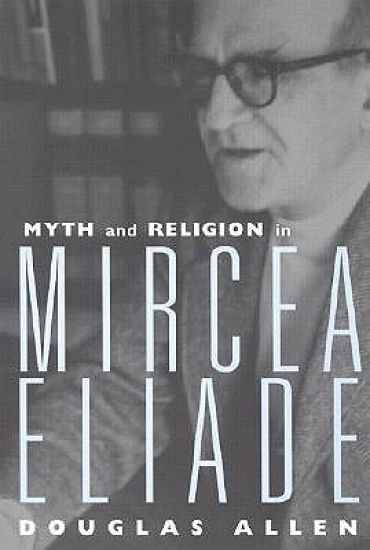
This multidisciplinary study is the first book devoted entirely to the critical interpretation of the writings of Mircea Eliade on myth. One of the most popular and influential historians and theorists of myth, Eliade argued that all myth is religious. Douglas Allen critically interprets Eliade's theories of religion, myth, and symbolism and analyses many of the controversial issues in Eliade's treatment of myth including whether Eliade's approach deals adequately with the relationship between myth and history and how Eliade's anti-modern perspective makes sense of myth in modern culture. A valuable resource for scholars in religious studies, philosophy, anthropology, and history, this book enables readers not only to understand "archaic" and "traditional" religious phenomena, but also to make sense of repressed and sublimated myth dimensions in modern secular life.
This multidisciplinary study is the first book devoted entirely to the critical interpretation of the writings of Mircea Eliade on myth. One of the most popular and influential historians and theorists of myth, Eliade argued that all myth is religious. Douglas Allen critically interprets Eliade's theories of religion, myth, and symbolism and analyses many of the controversial issues in Eliade's treatment of myth including whether Eliade's approach deals adequately with the relationship between myth and history and how Eliade's anti-modern perspective makes sense of myth in modern culture. A valuable resource for scholars in religious studies, philosophy, anthropology, and history, this book enables readers not only to understand "archaic" and "traditional" religious phenomena, but also to make sense of repressed and sublimated myth dimensions in modern secular life.
One of the most dramatic and surprising developments of the last twenty years was the proliferation of aggressive political movements linked to religion. This book examines the interplay of religion and politics in predominantly Hindu India, Islamic Pakistan, and Buddhist Sri Lanka. This collection of studies by internationally known scholars challenges traditional stereotypes and interpretations of South Asian religion and politics and provides a multidisciplinary perspective on contemporary conflicts. While the focus of the work is on Pakistan, India, and Sri Lanka, the arguments advanced by the authors are useful for understanding recent developments in religion and politics around the world.An informative introduction overviews the link between religion and political conflict in South Asia and offers a framework and synopsis of the chapters that follow. These are grouped into three parts by nationality. The chapters on India examine recent elections and the growth of militant Hinduism, the impact of caste relations on socio-economic conditions, and the problems of Muslims as the largest religious minority in India. The chapters on Pakistan explore how political and economic changes led to the rise of Islamic fundamentalism; the historical relationship among gender, nationalism, and the Islamic state; and the evolution of a capitalist social system in an Islamic nation. The chapters on Sri Lanka explain the role of Buddhist myth in justifying political oppression, the conflict between the ideal of Buddhist pacifism and the reality of political violence, and the impact of race, class, and gender on political conflict. Political scientists, historians, and religion scholars will find this study a timely and valuable addition to their libraries.