Kirjojen hintavertailu. Mukana 12 390 323 kirjaa ja 12 kauppaa.

Kirjailija

Douglas Brinkley

Kirjat ja teokset yhdessä paikassa: 29 kirjaa, julkaisuja vuosilta 1994-2025, suosituimpien joukossa Dean Acheson. Vertaile teosten hintoja ja tarkista saatavuus suomalaisista kirjakaupoista.

29 kirjaa

Kirjojen julkaisuhaarukka 1994-2025.

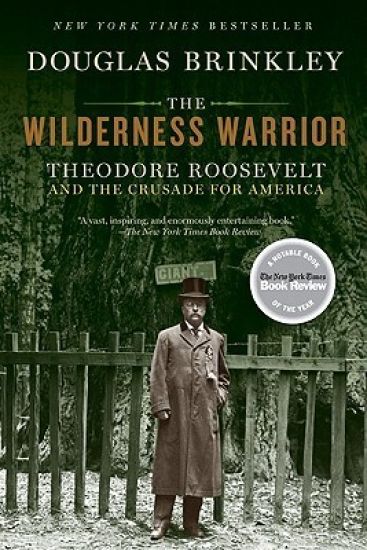
The Wilderness Warrior: Theodore Roosevelt and the Crusade for America
From New York Times bestselling historian Douglas Brinkley comes a sweeping historical narrative and eye-opening look at the pioneering environmental policies of President Theodore Roosevelt, avid bird-watcher, naturalist, and the founding father of America's conservation movement.In this groundbreaking epic biography, Douglas Brinkley draws on never-before-published materials to examine the life and achievements of our "naturalist president." By setting aside more than 230 million acres of wild America for posterity between 1901 and 1909, Theodore Roosevelt made conservation a universal endeavor. This crusade for the American wilderness was perhaps the greatest U.S. presidential initiative between the Civil War and World War I. Roosevelt's most important legacies led to the creation of the U.S. Fish and Wildlife Service and passage of the Antiquities Act in 1906. His executive orders saved such treasures as Devils Tower, the Grand Canyon, and the Petrified Forest.
The Great Deluge: Hurricane Katrina, New Orleans, and the Mississippi Gulf Coast
In the span of five violent hours on August 29, 2005, Hurricane Katrina destroyed major Gulf Coast cities and flattened 150 miles of coastline. But it was only the first stage of a shocking triple tragedy. On the heels of one of the three strongest hurricanes ever to make landfall in the United States came the storm-surge flooding, which submerged a half-million homes--followed by the human tragedy of government mismanagement, which proved as cruel as the natural disaster itself. In The Great Deluge, bestselling author Douglas Brinkley finds the true heroes of this unparalleled catastrophe, and lets the survivors tell their own stories, masterly allowing them to record the nightmare that was Katrina.
Parish Priest

Parish Priest

Douglas Brinkley; Julie M Fenster

HARPERCOLLINS PUBLISHERS INC
2007
pokkari
The first commercial, in-depth biography of the American-born Roman Catholic priest who may well be declared a saint. . . . &#8220Delightful. . . . No magisterial biography emanating a suffocating aura of pomp and self-importance, this book is as low-key and as uplifting as Father Michael McGivney himself.&#8221--Calgary Herald &#8220Father McGivney's vision remains as relevant as ever in the changed circumstances of today's Church and society.&#8221--Pope John Paul II In a time of discrimination and poverty for Catholics across America, Father Michael McGivney (1852-1890), began a legacy of hope that continues to this day. Called to action in 1882 by his sympathy for these suffering people, this dynamic yet tenderhearted man--the son of Irish immigrants-- founded the Knights of Columbus, an organization that has saved countless families from destitution. At heart, Father McGivney was the model of an American parish priest: Beloved by children, trusted by adults, and regarded as a &#8220positive saint&#8221 by the elderly in his New Haven, CT, parish--a truly holy man whose life and works are still celebrated today.
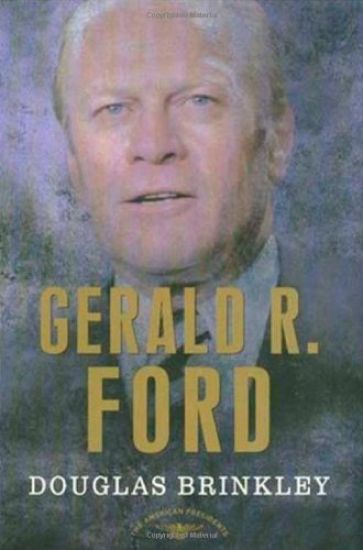
Gerald R. Ford

Gerald R. Ford

Douglas Brinkley

Times Books
2007
sidottu
The "accidental" president whose innate decency and steady hand restored the presidency after its greatest crisisWhen Gerald R. Ford entered the White House in August 1974, he inherited a presidency tarnished by the Watergate scandal, the economy was in a recession, the Vietnam War was drawing to a close, and he had taken office without having been elected. Most observers gave him little chance of success, especially after he pardoned Richard Nixon just a month into his presidency, an action that outraged many Americans, but which Ford thought was necessary to move the nation forward. Many people today think of Ford as a man who stumbled a lot--clumsy on his feet and in politics--but acclaimed historian Douglas Brinkley shows him to be a man of independent thought and conscience, who never allowed party loyalty to prevail over his sense of right and wrong. As a young congressman, he stood up to the isolationists in the Republican leadership, promoting a vigorous role for America in the world. Later, as House minority leader and as president, he challenged the right wing of his party, refusing to bend to their vision of confrontation with the Communist world. And after the fall of Saigon, Ford also overruled his advisers by allowing Vietnamese refugees to enter the United States, arguing that to do so was the humane thing to do. Brinkley draws on exclusive interviews with Ford and on previously unpublished documents (including a remarkable correspondence between Ford and Nixon stretching over four decades), fashioning a masterful reassessment of Gerald R. Ford's presidency and his underappreciated legacy to the nation.
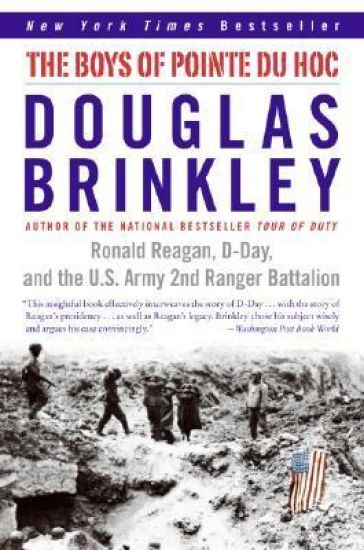
The Boys of Pointe Du Hoc: Ronald Reagan, D-Day, and the U.S. Army 2nd Ranger Battalion
Draws on recently released documents from the Reagan Library archive to provide an in-depth account of the D-Day activities of the elite U.S. Army 2nd Rangers, recounting how they defended themselves for two days against Nazi counterattacks, in a volume that then describes President Reagan's fortieth-anniversary speech that commended their achievements. Reprint.
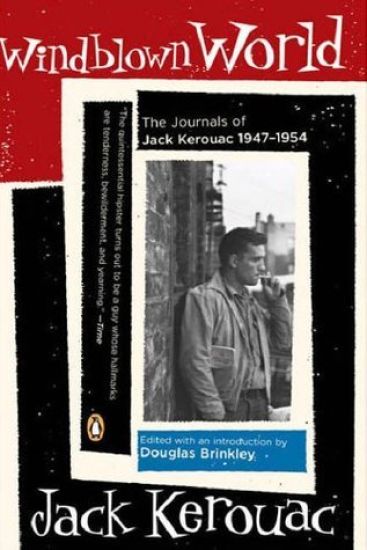
Windblown World

Windblown World

Douglas Brinkley

Penguin USA
2006
nidottu
Excerpts and passages from the personal diaries of the great Beat writer chronicle a pivotal era in Kerouac's life, describing the creation of his first novel, The Town and City; his special friendships with Allen Ginsberg, William S. Burroughs, and Neal Cassady; and his own take on the events described in On the Road. Reprint.
Tiburcio Carias

Tiburcio Carias

Thomas J. Dodd; Douglas Brinkley

Louisiana State University Press
2005
sidottu
Honduras's longest-serving head of government, Tiburcio Carías (1876--1969) was a larger-than-life figure who had the air of an ordinary, approachable person. During his rule from 1933 to 1949, he variously employed the tactics of a liberal, a conservative, a constitutionalist, and a dictator. Modern Honduras cannot be understood without comprehending his influence. In the -- amazingly -- first biography of this powerful Latin American caudillo, Thomas J. Dodd, a former ambassador to Uruguay and to Costa Rica, offers a vital, riveting account of Carías's life and career.Dodd shows Carías to have been a pragmatist and political survivor. His regime, unique in Central American and Caribbean history, was neither a brutal military government nor draconian and despotic. Unlike Somoza, Batista, Trujillo, and other contemporary dictators, Carías was not assassinated, driven from office, or exiled. He completed his term, stepped down, and remained active in Honduran politics until his death. The National Party he created remains a major political force to this day. Through extensive research into his subject, including correspondence with harsh critics as well as admirers, Dodd achieves a balanced assessment of Carías. The leader created domestic order and political and social stability when he unified his country. At the same time, he allowed local political chieftains and militias to remain in place. His reign was part of a larger sweep of Honduran history from the 1870s to 1949 that witnessed the rise of agrarian capitalism and U.S. domination of the nation's primary economic resource, banana exports. After Carías's death, thousands of Hondurans from across the ideological spectrum turned out to praise the former dictator as a ""restorer of peace"" and ""benefactor of the nation."" Dodd's superb combination of biography and political history explains Carías's rise to power and shows how the trajectory of his public career reflected the life of his country.
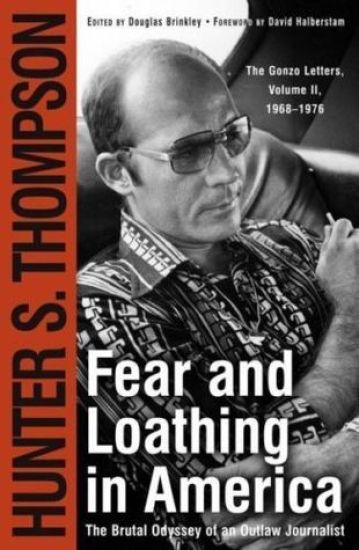
Fear and Loathing in America

Fear and Loathing in America

Hunter S. Thompson; Douglas Brinkley

Simon Schuster
2001
pokkari
From the king of "Gonzo" journalism and bestselling author who brought you "Fear and Loathing in Las Vegas" comes another astonishing volume of letters by Hunter S. Thompson. Brazen, incisive, and outrageous as ever, this second volume of Thompson's private correspondence is the highly anticipated follow-up to "The Proud Highway." When that first book of letters appeared in 1997, Time pronounced it "deliriously entertaining"; Rolling Stone called it "brilliant beyond description"; and "The New York Times" celebrated its "wicked humor and bracing political conviction." Spanning the years between 1968 and 1976, these never-before-published letters show Thompson building his legend: running for sheriff in Aspen, Colorado; creating the seminal road book "Fear and Loathing in Las Vegas"; twisting political reporting to new heights for "Rolling Stone"; and making sense of it all in the landmark "Fear and Loathing on the Campaign Trail '72." To read Thompson's dispatches from these years--addressed to the author's friends, enemies, editors, and creditors, and such notables as Jimmy Carter, Tom Wolfe, and Kurt Vonnegut--is to read a raw, revolutionary eyewitness account of one of the most exciting and pivotal eras in American history.
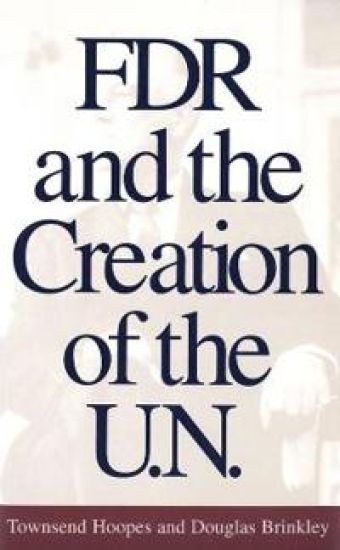
FDR and the Creation of the U.N.

FDR and the Creation of the U.N.

Townsend Hoopes; Douglas Brinkley

Yale University Press
2000
pokkari
In recent years the United Nations has become more active in—and more generally respected for—its peacekeeping efforts than at any other period in its fifty-year history. During the same period, the United States has been engaged in a debate about the place of the U.N. in the conduct of its foreign policy. This book, the first account of the American role in creating the United Nations, tells an engrossing story and also provides a useful historical perspective on the controversy.Prize-winning historians Townsend Hoopes and Douglas Brinkley explain how the idea of the United Nations was conceived, debated, and revised, first within the U.S. government and then by negotiation with its major allies in World War II. The experience of the war generated increasing support for the new organization throughout American society, and the U.N. Charter was finally endorsed by the community of nations in 1945. The story largely belongs to President Franklin Roosevelt, who was determined to form an organization that would break the vicious cycle of ever more destructive wars (in contrast to the failed League of Nations), and who therefore assigned collective responsibility for keeping the peace to the five leading U.N. powers—the major wartime Allies. Hoopes and Brinkley focus on Roosevelt but also present vivid portraits of others who played significant roles in bringing the U.N. into being: these include Cordell Hull, Sumner Welles, Dean Acheson, Harry Hopkins, Wendell Willkie, Edward Stettinius, Arthur Vandenberg, Thomas Dewey, William Fulbright, and Walter Lippmann. In an epilogue, the authors discuss the checkered history of the United Nations and consider its future prospects.