Kirjojen hintavertailu. Mukana 12 390 323 kirjaa ja 12 kauppaa.
Kirjailija
Douglas Burnham
Kirjat ja teokset yhdessä paikassa: 23 kirjaa, julkaisuja vuosilta 2000-2024, suosituimpien joukossa Stora boken om filosofi. Vertaile teosten hintoja ja tarkista saatavuus suomalaisista kirjakaupoista.
Marx's early work is well known and widely available, but it usually interpreted as at best a kind of stepping-stone to the Marx of Capital. This book offers something completely different; it reconstructs, from his first writings spanning from 1835 to 1846, a coherent and well-rounded political philosophy. The influence of Engels upon the development of that philosophy is discussed. This, it is argued, was a philosophy that Marx could have presented had he put the ideas together, as he hinted was his eventual intention. Had he done so, this first Marx would have made an even greater contribution to social and political philosophy than is generally acknowledged today.Arguments regarding revolutionary change, contradiction and other topics such as production, alienation and emancipation contribute to a powerful analysis in the early works of Marx, one which is worthy of discussion on its own merits. This analysis is distributed among a range of books, papers, letters and other writings, and is gathered here for the first time. Marx's work of the period was driven by his commitment to emancipation. Moreover, as is discussed in the conclusion to this book, his emancipatory philosophy continues to have resonance today. This new book presents Marx in a unique, new light and will be indispensable reading for all studying and following his work.
Marx's early work is well known and widely available, but it usually interpreted as at best a kind of stepping-stone to the Marx of Capital. This book offers something completely different; it reconstructs, from his first writings spanning from 1835 to 1846, a coherent and well-rounded political philosophy. The influence of Engels upon the development of that philosophy is discussed. This, it is argued, was a philosophy that Marx could have presented had he put the ideas together, as he hinted was his eventual intention. Had he done so, this first Marx would have made an even greater contribution to social and political philosophy than is generally acknowledged today.Arguments regarding revolutionary change, contradiction and other topics such as production, alienation and emancipation contribute to a powerful analysis in the early works of Marx, one which is worthy of discussion on its own merits. This analysis is distributed among a range of books, papers, letters and other writings, and is gathered here for the first time. Marx's work of the period was driven by his commitment to emancipation. Moreover, as is discussed in the conclusion to this book, his emancipatory philosophy continues to have resonance today. This new book presents Marx in a unique, new light and will be indispensable reading for all studying and following his work.
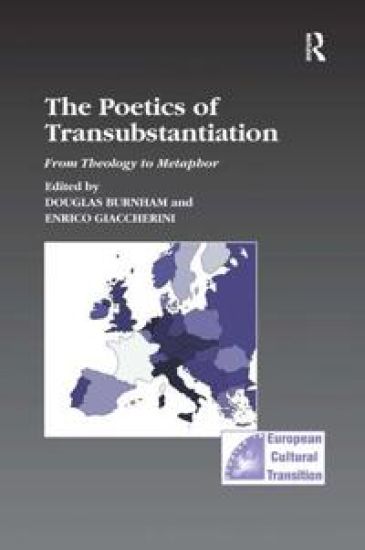
The essays in this collection explore the concept of 'transubstantiation', its adaptations and transformations in English and European culture from the Elizabethans to the twentieth century. Favoring an interartistic and comparative perspective, a wide range of critical approaches, from the philosophical to the semiological, from cultural materialism to gender and queer studies, are brought to bear on authors ranging from Descartes, Shakespeare and Joyce, to Macpherson, Madox Ford, and Winterson, as well as on contemporary sculpture and an Italian adaptation of Conrad for the screen in an unusually comic vein. The volume, edited by Douglas Burnham of Staffordshire University and by Enrico Giaccherini of Pisa University, will be of interest to those concerned with the cultural history of Christianity and with the remarkable critical and theoretical insights generated by contemporary approaches to this traditional theme.
At the end of the late 1970s, art theorist and critic Rosalind Krauss had written a seminal text entitled "Sculpture in the Expanded Field," in an attempt to both locate and analyze vanguard sculptural practices of the time such as the work of Richard Serra, Robert Smithson, Mary Miss, and Donald Judd whose practices crossed outside of the limits of traditional sculpture and entered into the realms of architecture and landscape through the production of works that she classified as site constructions, marked sites, earthworks and axiomatic structures. Over the past three decades, the boundaries between art and architecture have continued to blur, giving rise to a series of works known as installations whose conceptual, spatial and material trajectories have generated a new and expanding network of relations between the domains of architecture, interiors, sculpture and landscape. At the same time, the range of institutional venues advancing architectural installation practices, such as the PS1 program spawned by the MoMA in New York, the Serpentine Gallery's annual architectural pavilion in London and the Art and Architectural Biennale's in Venice, have provided platforms to intensify the production and reach of contemporary installations. Installations have not only contributed to the advancement of architectural research but have also enabled the redefinition and progressive development of architecture's disciplinary territory allowing architects to explore spatial and tectonic ideas, experiment with emerging technological strategies, and distill perceptual and experiential conditions without the limitations traditionally imposed by the permanence and utility of building. Following the legacy of Rosalind Krauss, EXPANDED FIELD: Installation Architecture Beyond Art by Ila Berman and Douglas Burnham explores the realm of art and architecture across a broad terrain of installation practices, revealing a critical territory that, despite its exuberant proliferation, has been historically defined as a negativity: the progeny of that which is both not-architecture and not-art. Within this book, a wide range of art and architectural works are positioned and mapped as constellations within a newly expanded field suspended between Architecture, Interiors, Sculpture, and Landscape. These four terms are the initial reference points used to elaborate a more extensive taxonomical framework defining twelve distinct territories where the analytical drawings and photographic indexes of seventy-five installation projects are situated. The expanded field diagram is a conceptual framework that operates on many levels. It acts as a lens through which to theorize and classify the trajectories of current installation practices and serves as an infrastructure to organize the content of the book. Along the trajectory from interiors to sculpture, for example, one finds the immersive chromatic environments of Carlos Cruz-Diez, the thermal and radiant atmospheres of Philippe Rahm, the intensely graphic patterned surfaces of Jrgen Mayer and Yayoi Kusama, and the interactive mediated light landscapes of Ryoji Ikeda and Julio Le Parc. These are installations intent on foregrounding immersive atmospheric spaces rather than sculptural objects and that collectively define Chromatic/Graphic Immersion, one of the twelve typologies through which the book is organized. Along the path from interiors toward landscape, are situated a different series of installation projects including the undulating orange strata of Bamscape and the pink spongy terrain of Mute Room, two works by Thom Faulders both of which redefine ground as a programmed surface and occupiable topography. These qualities of landscape then merge with the architectonic in the thickened geology of Rip Curl Canyon by Ball-Nogues, the artificial Dunescape by SHoP and the cellular topography of Voromuro developed for the ICA in Boston by Office dA. Based on an exhibition at the Wattis Institute of Contemporary Art, the book EXPANDED FIELD guides one through the world of contemporary installation practice through drawings, images and text that simultaneously expose the techniques through which architects describe and analyze spatial production while providing a context for installation art and architecture that supports both its didactic understanding and immersive experience.
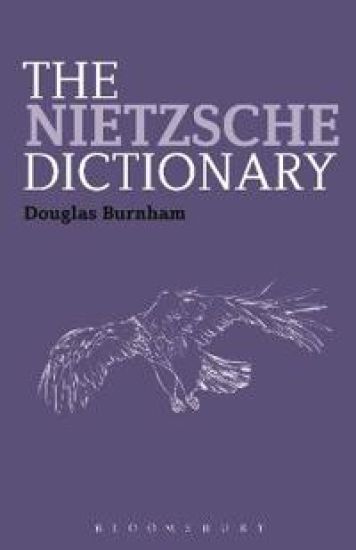
Nietzsche is not difficult to read, but he is famously difficult to understand. This is because of the bewildering array of words, phrases or metaphors that he uses. The Nietzsche Dictionary aims to help, by giving readers a road map to Nietzsche's language, and how his terminology and images relate together, forming an overall philosophical picture. The Dictionary also includes synopses of Nietzsche's key works, and short articles on the main philosophical and cultural influences leading up to, and resulting from, Nietzsche.Easy to use and navigate, the book treats all entries thematically and arranges them into seven types: Influences on, or the contemporary context of, Nietzsche; Major influences of Nietzsche; Key concepts; Key metaphors or images; Alternative translations; Other words or phrases found in Nietzsche that are cross-referenced to a main entry; Synopses of major works by Nietzsche.Designed to be a resource that all readers of Nietzsche will find invaluable, this text is an essential tool for everyone, from beginners to the more advanced.
Nietzsche is not difficult to read, but he is famously difficult to understand. This is because of the bewildering array of words, phrases or metaphors that he uses. The Nietzsche Dictionary aims to help, by giving readers a road map to Nietzsche's language, and how his terminology and images relate together, forming an overall philosophical picture. The Dictionary also includes synopses of Nietzsche's key works, and short articles on the main philosophical and cultural influences leading up to, and resulting from, Nietzsche.Easy to use and navigate, the book treats all entries thematically and arranges them into seven types: Influences on, or the contemporary context of, Nietzsche; Major influences of Nietzsche; Key concepts; Key metaphors or images; Alternative translations; Other words or phrases found in Nietzsche that are cross-referenced to a main entry; Synopses of major works by Nietzsche.Designed to be a resource that all readers of Nietzsche will find invaluable, this text is an essential tool for everyone, from beginners to the more advanced.
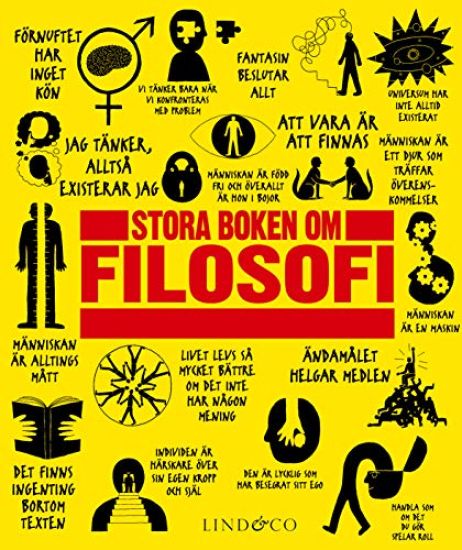
Oavsett om du är ny inför ämnet, filosofistudent eller självutnämnd expert, är Stora boken om filosofi den perfekta guiden till över 2 000 år av tänkande. I kronologisk ordning får du läsa om hur olika problem och frågeställningar uppkommit och hur de besvarats genom historien. Här presenteras även människorna bakom de stora idéerna, från antikens naturfilosofer till dagens moderna tänkare, placerade i sitt sammanhang och med referenser till tidigare och senare idéer och personligheter. Med hjälp av tidslinjer, diagram och illustrationer, kortfattade citat och begripliga förklaringar av abstrakta begrepp utgör Stora boken om filosofi ett överskådligt verk om tänkandets historia.
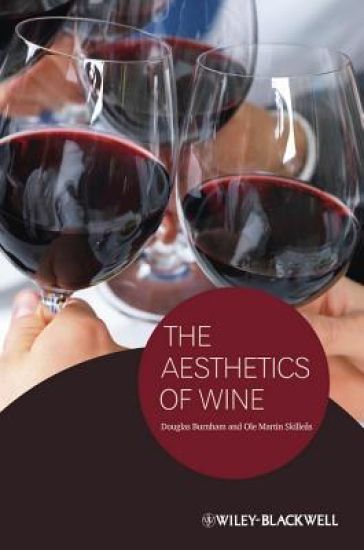
The Aesthetics of Wine shows that discussing wine within the framework of aesthetics both benefits our understanding of wine as a phenomenon, while also challenging some of the basic assumptions of the tradition of aesthetics. * Analyzes the appreciation of wine as an aesthetic practice. * Tackles prejudices against bodily senses, showing how they distort traditional aesthetic theory * Represents the beginnings of a reformulation of general aesthetics
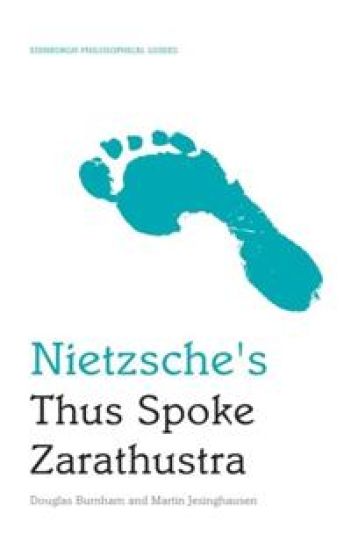
A step-by-step guide to Nietzsche's Thus Spoke Zarathustra. Thus Spoke Zarathustra is one of Nietzsche's greatest books, a cross-over text that combines philosophical innovation with literary experimentation. With Zarathustra Nietzsche has attempted a redefinition of the form-content correlation in philosophical writing and as such the text is considered an experiment in philosophical style. It therefore represents a large hurdle for undergraduate students. This projected commentary works on the assumption that access to the philosophical core of the text can only be gained through taking its literary ambitions seriously and that, moreover, these literary ambitions can only be understood as an attempt to realise philosophical ideas. This is a book that is designed to be read alongside Nietzsche and will therefore make the reading and appreciation of the primary material achievable. This approach will be welcomed by students and lecturers alike.
A step-by-step guide to Nietzsche's Thus Spoke Zarathustra. Thus Spoke Zarathustra is one of Nietzsche's greatest books, a cross-over text that combines philosophical innovation with literary experimentation. With Zarathustra Nietzsche has attempted a redefinition of the form-content correlation in philosophical writing and as such the text is considered an experiment in philosophical style. It therefore represents a large hurdle for undergraduate students. This projected commentary works on the assumption that access to the philosophical core of the text can only be gained through taking its literary ambitions seriously and that, moreover, these literary ambitions can only be understood as an attempt to realise philosophical ideas. This is a book that is designed to be read alongside Nietzsche and will therefore make the reading and appreciation of the primary material achievable. This approach will be welcomed by students and lecturers alike.
This is an introduction to one of Nietzsche's most important works - a key text in nineteenth-century philosophy. Friedrich Nietzsche was arguably the most important and influential thinker of the nineteenth century. "The Birth of Tragedy", his first published work, is a classic text that remains an essential read for those seeking to understand the development of Nietzsche's ideas. Indeed, it is difficult to make sense of Nietzsche as a philosopher and writer without a thorough understanding of "The Birth of Tragedy", without doubt one of his most influential texts. "Nietzsche's 'The Birth of Tragedy': A Reader's Guide" offers a concise and accessible introduction to this hugely important and yet challenging work. Written specifically to meet the needs of students coming to Nietzsche for the first time, the book offers guidance on: philosophical and historical context; key themes; reading the text; reception and influence; and, further reading. "Continuum Reader's Guides" are clear, concise and accessible introductions to key texts in literature and philosophy. Each book explores the themes, context, criticism and influence of key works, providing a practical introduction to close reading, guiding students towards a thorough understanding of the text. They provide an essential, up-to-date resource, ideal for undergraduate students.
This is an introduction to one of Nietzsche's most important works - a key text in nineteenth-century philosophy. Friedrich Nietzsche was arguably the most important and influential thinker of the nineteenth century. "The Birth of Tragedy", his first published work, is a classic text that remains an essential read for those seeking to understand the development of Nietzsche's ideas. Indeed, it is difficult to make sense of Nietzsche as a philosopher and writer without a thorough understanding of "The Birth of Tragedy", without doubt one of his most influential texts. "Nietzsche's 'The Birth of Tragedy': A Reader's Guide" offers a concise and accessible introduction to this hugely important and yet challenging work. Written specifically to meet the needs of students coming to Nietzsche for the first time, the book offers guidance on: philosophical and historical context; key themes; reading the text; reception and influence; and, further reading. "Continuum Reader's Guides" are clear, concise and accessible introductions to key texts in literature and philosophy. Each book explores the themes, context, criticism and influence of key works, providing a practical introduction to close reading, guiding students towards a thorough understanding of the text. They provide an essential, up-to-date resource, ideal for undergraduate students.
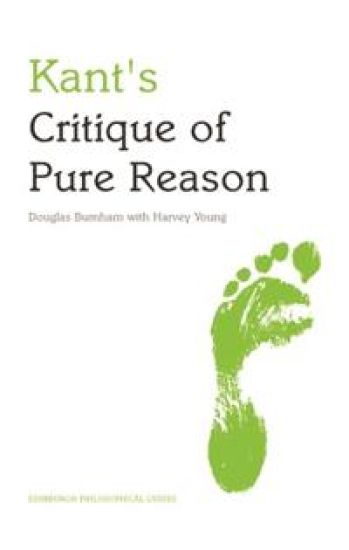
Emanuel Kant's Critique of Pure Reason is one of the most widely read texts in the history of philosophy. Douglas Burnham and Harvey Young unravel this difficult text, passage by passage, making reading and appreciating this work achievable and enjoyable. Designed to be read alongside the original, this guide is essential for students and scholars at all levels.
Everything you need to know about Kant's Critique of Pure Reason in one volume. The Critique is one of the most written-about texts in the history of philosophy, however, it is also notoriously difficult to read. Burnham and Young unravel Kant's text passage-by-passage, making the reading and appreciation of the primary work achievable. Designed to be read alongside Kant, this approach will be helpful for students and lecturers alike.
Everything you need to know about Kant's Critique of Pure Reason in one volume. The Critique is one of the most written-about texts in the history of philosophy, however, it is also notoriously difficult to read. Burnham and Young unravel Kant's text passage-by-passage, making the reading and appreciation of the primary work achievable. Designed to be read alongside Kant, this approach will be helpful for students and lecturers alike.
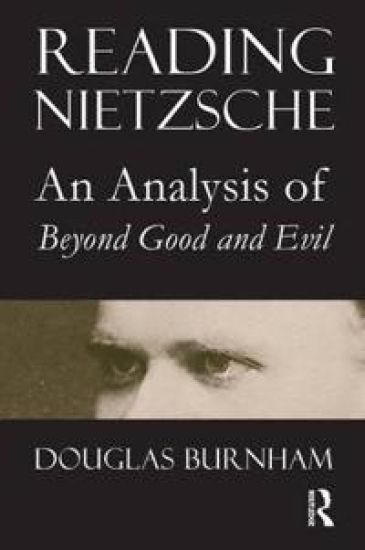
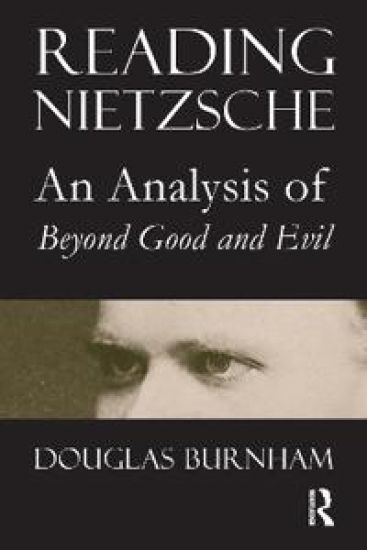
"Beyond Good and Evil" is a concise and comprehensive statement of Nietzsche's mature philosophy and is an ideal entry point into Nietzsche's work as a whole. Pithy, lyrical and densely complex, "Beyond Good and Evil" demands that its readers are already familiar with key Nietzschean concepts - such as the will-to-power, perspectivism or eternal recurrence - and are able to leap with Nietzschean agility from topic to topic, across metaphysics, psychology, religion, morality and politics. "Reading Nietzsche" explains the key concepts, the range of Nietzsche's concerns, and highlights Nietzsche's writing strategies that are the key to understanding his work and processes of thought. In its close analysis of the text, "Reading Nietzsche" reassesses this most creative of philosophers and presents a significant contribution to the study of his thought. In setting this analysis within a comprehensive survey of Nietzsche's ideas, the book is a guide both to this key work and to Nietzsche's philosophy more generally.
"Beyond Good and Evil" is a concise and comprehensive statement of Nietzsche's mature philosophy and is an ideal entry point into Nietzsche's work as a whole. Pithy, lyrical and densely complex, "Beyond Good and Evil" demands that its readers are already familiar with key Nietzschean concepts - such as the will-to-power, perspectivism or eternal recurrence - and are able to leap with Nietzschean agility from topic to topic, across metaphysics, psychology, religion, morality and politics. "Reading Nietzsche" explains the key concepts, the range of Nietzsche's concerns, and highlights Nietzsche's writing strategies that are the key to understanding his work and processes of thought. In its close analysis of the text, "Reading Nietzsche" reassesses this most creative of philosophers and presents a significant contribution to the study of his thought. In setting this analysis within a comprehensive survey of Nietzsche's ideas, the book is a guide both to this key work and to Nietzsche's philosophy more generally.
The essays in this collection explore the concept of 'transubstantiation', its adaptations and transformations in English and European culture from the Elizabethans to the twentieth century. Favoring an interartistic and comparative perspective, a wide range of critical approaches, from the philosophical to the semiological, from cultural materialism to gender and queer studies, are brought to bear on authors ranging from Descartes, Shakespeare and Joyce, to Macpherson, Madox Ford, and Winterson, as well as on contemporary sculpture and an Italian adaptation of Conrad for the screen in an unusually comic vein. The volume, edited by Douglas Burnham of Staffordshire University and by Enrico Giaccherini of Pisa University, will be of interest to those concerned with the cultural history of Christianity and with the remarkable critical and theoretical insights generated by contemporary approaches to this traditional theme.