Kirjojen hintavertailu. Mukana 12 595 353 kirjaa ja 12 kauppaa.

Kirjailija

Douglas C. Montgomery

Kirjat ja teokset yhdessä paikassa: 24 kirjaa, julkaisuja vuosilta 2005-2024, suosituimpien joukossa Design of Experiments. Vertaile teosten hintoja ja tarkista saatavuus suomalaisista kirjakaupoista.

24 kirjaa

Kirjojen julkaisuhaarukka 2005-2024.

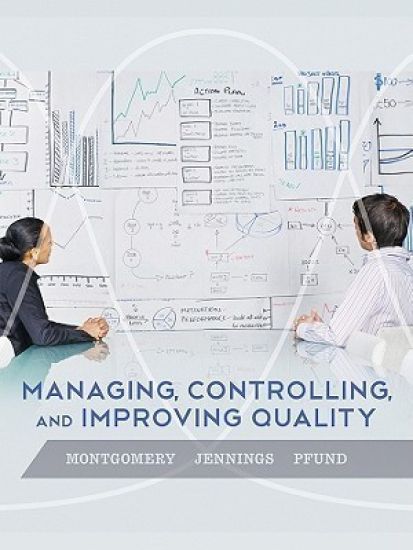
Managing, Controlling, and Improving Quality

Managing, Controlling, and Improving Quality

Douglas C. Montgomery; Cheryl L. Jennings; Michele E. Pfund

John Wiley Sons Inc
2010
sidottu
Managing, controlling and improving quality is a critical activity in modern business organizations. Quality is directly linked to productivity, competitiveness, customer satisfaction, business growth, elimination of waste and other non-value added activities, and overall business success. Cycle time and throughput is just as important in a hospital emergency room as it is in a semiconductor factory. Defects and errors don't occur just in factories, they occur in transactional and service business such as banks, insurance companies, and hospitals. Even your local and state governments have a keen interest in improving service quality in operations such as issuing drivers licenses and motor vehicle registration. The U.S. Navy has had an intensive quality improvement program for many years. This book presents an organized approach to quality management, control, and improvement. Quality problems usually are the outcome of uncontrolled or excessive variability in product or service characteristics that are critical to the customer and statistical tools and other analytical methods play an important role in solving these problems. However, these techniques need to be implemented within a management structure that will ensure success. We focus on both the management structure and the statistical and analytical tools. Our approach to organizing and presenting this material is based on many years of teaching, research, and professional practice across a wide range of business and industrial settings.
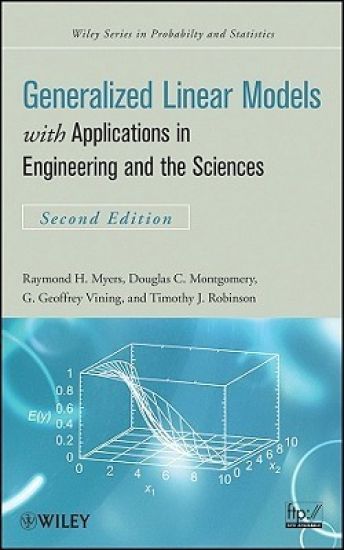
Generalized Linear Models

Generalized Linear Models

Raymond H. Myers; Douglas C. Montgomery; G. Geoffrey Vining; Timothy J. Robinson

John Wiley Sons Inc
2010
sidottu
Praise for the First Edition "The obvious enthusiasm of Myers, Montgomery, and Vining and their reliance on their many examples as a major focus of their pedagogy make Generalized Linear Models a joy to read. Every statistician working in any area of applied science should buy it and experience the excitement of these new approaches to familiar activities." —Technometrics Generalized Linear Models: With Applications in Engineering and the Sciences, Second Edition continues to provide a clear introduction to the theoretical foundations and key applications of generalized linear models (GLMs). Maintaining the same nontechnical approach as its predecessor, this update has been thoroughly extended to include the latest developments, relevant computational approaches, and modern examples from the fields of engineering and physical sciences. This new edition maintains its accessible approach to the topic by reviewing the various types of problems that support the use of GLMs and providing an overview of the basic, related concepts such as multiple linear regression, nonlinear regression, least squares, and the maximum likelihood estimation procedure. Incorporating the latest developments, new features of this Second Edition include: A new chapter on random effects and designs for GLMs A thoroughly revised chapter on logistic and Poisson regression, now with additional results on goodness of fit testing, nominal and ordinal responses, and overdispersion A new emphasis on GLM design, with added sections on designs for regression models and optimal designs for nonlinear regression models Expanded discussion of weighted least squares, including examples that illustrate how to estimate the weights Illustrations of R code to perform GLM analysis The authors demonstrate the diverse applications of GLMs through numerous examples, from classical applications in the fields of biology and biopharmaceuticals to more modern examples related to engineering and quality assurance. The Second Edition has been designed to demonstrate the growing computational nature of GLMs, as SAS®, Minitab®, JMP®, and R software packages are used throughout the book to demonstrate fitting and analysis of generalized linear models, perform inference, and conduct diagnostic checking. Numerous figures and screen shots illustrating computer output are provided, and a related FTP site houses supplementary material, including computer commands and additional data sets. Generalized Linear Models, Second Edition is an excellent book for courses on regression analysis and regression modeling at the upper-undergraduate and graduate level. It also serves as a valuable reference for engineers, scientists, and statisticians who must understand and apply GLMs in their work.
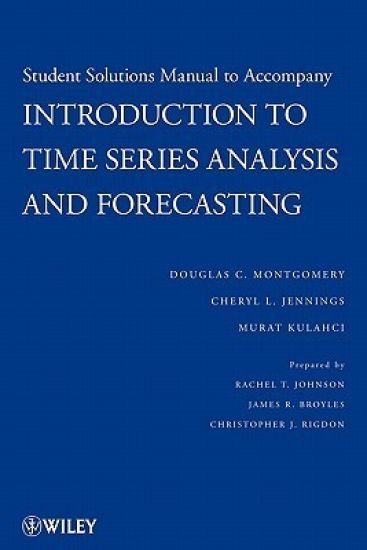
Introduction to Time Series Analysis and Forecasting, 1e Student Solutions Manual

Introduction to Time Series Analysis and Forecasting, 1e Student Solutions Manual

Douglas C. Montgomery; Cheryl L. Jennings; Murat Kulahci

John Wiley Sons Inc
2009
nidottu
An accessible introduction to the most current thinking in and practicality of forecasting techniques in the context of time-oriented data Analyzing time-oriented data and forecasting are among the most important problems that analysts face across many fields, ranging from finance and economics to production operations and the natural sciences. As a result, there is a widespread need for large groups of people in a variety of fields to understand the basic concepts of time series analysis and forecasting. Introduction to Time Series Analysis and Forecasting presents the time series analysis branch of applied statistics as the underlying methodology for developing practical forecasts, and it also bridges the gap between theory and practice by equipping readers with the tools needed to analyze time-oriented data and construct useful, short- to medium-term, statistically based forecasts. Seven easy-to-follow chapters provide intuitive explanations and in-depth coverage of key forecasting topics, including: Regression-based methods, heuristic smoothing methods, and general time series models Basic statistical tools used in analyzing time series data Metrics for evaluating forecast errors and methods for evaluating and tracking forecasting performanceover time Cross-section and time series regression data, least squares and maximum likelihood model fitting, model adequacy checking, prediction intervals, and weighted and generalized least squares Exponential smoothing techniques for time series with polynomial components and seasonal data Forecasting and prediction interval construction with a discussion on transfer function models as well as intervention modeling and analysis Multivariate time series problems, ARCH and GARCH models, and combinations of forecasts The ARIMA model approach with a discussion on how to identify and fit these models for non-seasonal and seasonal time series The intricate role of computer software in successful time series analysis is acknowledged with the use of Minitab, JMP, and SAS software applications, which illustrate how the methods are imple-mented in practice. An extensive FTP site is available for readers to obtain data sets, Microsoft Office PowerPoint slides, and selected answers to problems in the book. Requiring only a basic working knowledge of statistics and complete with exercises at the end of each chapter as well as examples from a wide array of fields, Introduction to Time Series Analysis and Forecasting is an ideal text for forecasting and time series coursesat the advanced undergraduate and beginning graduate levels. The book also serves as an indispensablereference for practitioners in business, economics, engineering, statistics, mathematics, and the social, environmental, and life sciences.
Design And Analysis of Gauge R&R Studies

Design And Analysis of Gauge R&R Studies

Richard K. Burdick; Connie M. Borror; Douglas C. Montgomery

Society for Industrial Applied Mathematics,U.S.
2005
pokkari
Provides a protocol for conducting gauge repeatability and reproducibility (R&R) experiments, which are required whenever a new test system is developed to monitor a manufacturing process. This protocol - not currently available in other books or technical reports - is used to determine whether the testing system is capable of monitoring the manufacturing process with the desired level of accuracy and precision. With an up-to-date summary of methods used to construct confidence intervals in normal-based random and mixed analysis of variance (ANOVA) models, this comprehensive book will be useful to scientists in all fields of application who wish to construct interval estimates for ANOVA model parameters. It includes approaches that can be applied to any ANOVA model, and because it contains detailed examples of all computations, practitioners will be able to apply the methods easily. The book describes methods for constructing two types of confidence intervals: modified large-sample (MLS) and generalized confidence intervals. Computer codes written in SAS and Excel are provided to perform the computations.Appendices are included for readers who are unfamiliar with confidence intervals or lack a basic understanding of random and mixed ANOVA models.