Kirjojen hintavertailu. Mukana 12 595 353 kirjaa ja 12 kauppaa.

Kirjailija

Douglas Crimp

Kirjat ja teokset yhdessä paikassa: 3 kirjaa, julkaisuja vuosilta 2006-2016, suosituimpien joukossa Parachute. Vertaile teosten hintoja ja tarkista saatavuus suomalaisista kirjakaupoista.

3 kirjaa

Kirjojen julkaisuhaarukka 2006-2016.

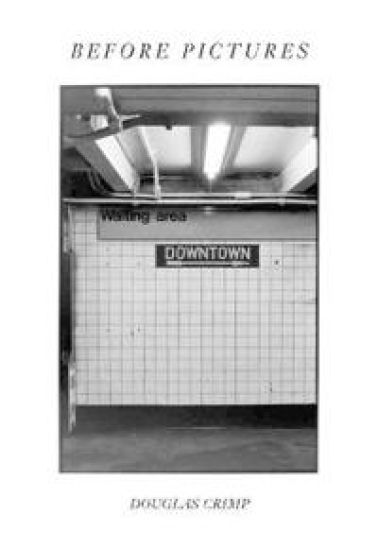
Before Pictures

Before Pictures

Douglas Crimp

University of Chicago Press
2016
sidottu
Douglas Crimp is the rare art critic whose work profoundly influenced a generation of artists. He is best known for his work with the "Pictures Generation" the very name of which Crimp coined to define the work of artists like Robert Longo and Cindy Sherman who appropriated images from mass culture to carry out a subversive critique. But while his influence is widely recognized, we know little about Crimp's own formative experiences before "Pictures."Before Pictures tells the story of Crimp's life as a young gay man and art critic in New York City during the late 1960s through the turbulent 1970s. Crimp participated in all of what made the city so stimulating in that vibrant decade. The details of his professional and personal life are interwoven with this the particularly rich history of New York City at that time, producing a vivid portrait of both the critic and his adopted city. The book begins with his escape from his hometown in Idaho, and we quickly find Crimp writing criticism for ArtNews while working at the Guggenheim where, as a young curatorial assistant, he was one of the few to see Daniel Buren's Peinture-Sculpture before it was removed amid cries of institutional censorship. We also travel to the Chelsea Hotel (where Crimp helped the down-on-his-luck couturier Charles James organize his papers) through to his days as a cinephile and balletomane to the founding of the art journal October, where he remained a central figure for many years. As he was developing his reputation as a critic, he was also partaking of the New York night life, from drugs and late nights alongside the Warhol crowd at the Max's Kansas City to discos, roller-skating, and casual sex with famous (and not-so-famous) men. As AIDS began to ravage the closely linked art and gay communities, Crimp eventually turned his attention to activism dedicated to rethinking AIDS. Part biography and part cultural history, Before Pictures is a courageous account of an exceptional period in both Crimp's life and the life of New York City. At the same time, it offers a deeply personal and engaging point of entry into important issues in contemporary art.
Parachute

Parachute

Guy Bellavance; Douglas Crimp; Georges Didi-Huberman

JRP Ringier
2014
nidottu
Following two precious volumes of writings from the 1970s-90s Canadian magazine Parachute-- Museums, Art History, and Theory and Performance & Performativity--the essays collected in this third volume focus on photography, film, video and new media. These genres were discussed in some of the earliest volumes of Parachute. Photography received particular attention in the early 1980s, film and video later in that decade and through the beginning of the 1990s. Discussing what were then still relatively new and overlooked artistic fields, these texts are particularly useful as signposts to how these new media and works were approached. The essays discuss works by artists such as Eija-Liisa Ahtila, James Coleman, Nan Goldin, Bill Viola and Rodney Graham. The texts by Georges Didi-Huberman, Douglas Crimp and Laura Mulvey, written in the early 1980s, are among their most seminal.
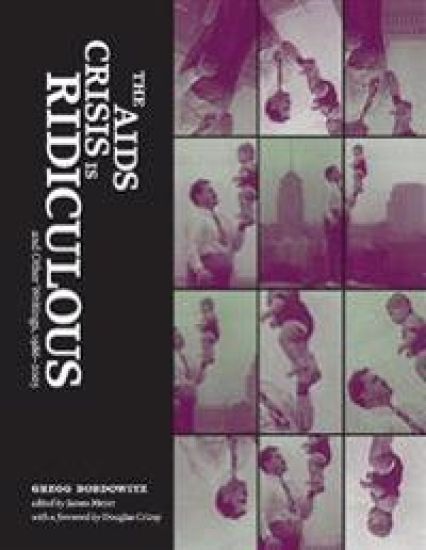
The AIDS Crisis Is Ridiculous and Other Writings, 1986–2003
The first collection of writings by a noted artist and activist whose work has focused on the AIDS epidemic.The HIV epidemic animates this collection of essays by a noted artist, writer, and activist. "So total was the burden of illness-mine and others'-that the only viable response, other than to cease making art entirely, was to adjust to the gravity of the predicament by using the crisis as a lens," writes Gregg Bordowitz, a film- and video-maker whose best-known works, Fast Trip Long Drop (1993) and Habit (2001), address AIDS globally and personally. In The AIDS Crisis Is Ridiculous-the title essay is inspired by Charles Ludlam, founder of the Ridiculous Theater Company-Bordowitz follows in the tradition of artist-writers Robert Smithson and Yvonne Rainer by making writing an integral part of an artistic practice.Bordowitz has left his earliest writings for the most part unchanged-to preserve, he says, "both the youthful exuberance and the palpable sense of fear" created by the early days of the AIDS crisis. After these early essays, the writing becomes more experimental, sometimes mixing fiction and fact; included here is a selection of Bordowitz's columns from the journal Documents, "New York Was Yesterday." Finally, in his newest essays he reformulates early themes, and, in "My Postmodernism" (written for Artforum's fortieth anniversary issue) and "More Operative Assumptions" (written especially for this book), he reexamines the underlying ideas of his practice and sums up his theoretical concerns.In his mature work, Bordowitz seeks to join the subjective-the experience of having a disease-and the objective-the fact of the disease as a global problem. He believes that this conjunction is necessary for understanding and fighting the crisis. "If it can be written," he says, "then it can be realized."