Kirjojen hintavertailu. Mukana 12 595 353 kirjaa ja 12 kauppaa.

Kirjailija

Douglas Farah

Kirjat ja teokset yhdessä paikassa: 12 kirjaa, julkaisuja vuosilta 2008-2025, suosituimpien joukossa Analisis de las repercusiones del Socialismo del siglo XXI en la región. Vertaile teosten hintoja ja tarkista saatavuus suomalaisista kirjakaupoista.

12 kirjaa

Kirjojen julkaisuhaarukka 2008-2025.

Analisis de las repercusiones del Socialismo del siglo XXI en la región

Analisis de las repercusiones del Socialismo del siglo XXI en la región

Mario R. Pazmino Silva; Douglas Farah; Luis Herreria

Createspace Independent Publishing Platform
2015
nidottu
Una visi n desde la regi n sobre la regi n acerca del Socialismo del siglo XXI. Este es un trabajo que re ne talentosos escritores y analistas para explicar desde sus pa ses c mo se ve y se aplica esta forma de gobierno que se implant en Am rica Latina. Es un aporte al debate no solo de lo que ocurre en Venezuela, Ecuador, Bolivia, Argentina en estos primeros a os de este siglo, sino una reflexi n apasionada y cr tica a liderazgos caudillistas.
Cuba's role in the Bolivarian radical populist movement's dismantling of democra: El papel de Cuba en el movimiento populista y radical bolivariano pa
Douglas Farah is an American journalist, author and national security consultant. Farah served as United Press International bureau chief in El Salvador from 1985 to 1987, and a freelance journalist for The Washington Post, Newsweek, and other publications until being hired as a staff correspondent for The Washington Post in 1992. While working for the Post, Farah served as bureau chief of Central American and the Caribbean until 1997, international investigative reporter between 1998 and 2000, and of West Africa between 2000 and 2003. He left the Post in 2004, and has since authored two books and served as a contributor to peer reviewed publications such as the Journal of International Affairs and analysis pieces for Foreign Policy and the Center for Strategic and International Studies (CSIS). He is currently President of IBI Consultants LLC. -oOo- Douglas Farah es un periodista estadounidense, autor y consultor de seguridad nacional. Farah se desempe como jefe de la oficina de United Press International en El Salvador de 1985 a 1987, y periodista independiente para The Washington Post, Newsweek y otras publicaciones hasta que fue contratado como corresponsal de The Washington Post en 1992. Mientras trabajaba para el Post, Farah fue jefe de la oficina de Centroam rica y el Caribe hasta 1997, periodista de investigaci n internacional entre 1998 y 2000, y de frica occidental entre 2000 y 2003. Dej el Post en 2004. Es autor de dos libros y ha contribuido con publicaciones tales como el Journal of International Affairs y realizado an lisis para Foreign Policy y el Center for Strategic and International Studies (CSIS). Actualmente es presidente de IBI Consultants LLC.
Cuba's role in the Bolivarian radical populist movement's dismantling of democracy: El papel de Cuba en el movimiento populista y radical bolivariano
ENGLISHHow a once moribund revolution fueled by petro dollars remade Latin America and the strategic challenge posed to the united statesWhile Venezuela is generally viewed as the architect of the Bolivarian movement, the Cuban role transformed the radical populist movement into a tier-one challenge to the United States.THE AUTHORDouglas Farah is an American journalist, author and national security consultant. Farah served as United Press International bureau chief in El Salvador from 1985 to 1987, and a freelance journalist for The Washington Post, Newsweek, and other publications until being hired as a staff correspondent for The Washington Post in 1992. While working for the Post, Farah served as bureau chief of Central American and the Caribbean until 1997, international investigative reporter between 1998 and 2000, and of West Africa between 2000 and 2003. He left the Post in 2004, and has since authored two books and served as a contributor to peer reviewed publications such as the Journal of International Affairs and analysis pieces for Foreign Policy and the Center for Strategic and International Studies (CSIS). He is currently President of IBI Consultants LLC. EN ESPA OLC mo una revoluci n moribunda alimentada por petrod lares intenta rehacer Am rica Latina y el desaf o estrat gico que esto plantea para Estados UnidosMientras que Venezuela generalmente se ve como el arquitecto del movimiento Bolivariano, el papel de Cuba realmente ha transformado el movimiento populista radical en un desaf o de primer nivel para los Estados Unidos.SOBRE EL AUTORDouglas Farah es un periodista estadounidense, autor y consultor de seguridad nacional. Farah se desempe como jefe de la oficina de United Press International en El Salvador de 1985 a 1987, y periodista independiente para The Washington Post, Newsweek y otras publicaciones hasta que fue contratado como corresponsal de The Washington Post en 1992. Mientras trabajaba para el Post, Farah fue jefe de la oficina de Centroam rica y el Caribe hasta 1997, periodista de investigaci n internacional entre 1998 y 2000, y de frica occidental entre 2000 y 2003. Dej el Post en 2004. Es autor de dos libros y ha contribuido con publicaciones tales como el Journal of International Affairs y realizado an lisis para Foreign Policy y el Center for Strategic and International Studies (CSIS). Actualmente es presidente de IBI Consultants LLC.
Counternetwork

Counternetwork

Angel Rabasa; Christopher M. Schnaubelt; Peter Chalk; Douglas Farah; Gregory Midgette; Howard J. Shatz

RAND
2017
pokkari
Through an analysis of transnational criminal networks originating in South America, this report presents operational characteristics of these networks, strategic alliances they have established, and the multiple threats that they pose to U.S. interests and to the stability of the countries where they operate. It also identifies U.S. government policies and programs to counter these networks and examines the military's role in that context.
Alternative Governance in the Northern Triangle and Implications for U.S. Foreign Policy

Alternative Governance in the Northern Triangle and Implications for U.S. Foreign Policy

Douglas Farah; Carl Meacham

Centre for Strategic International Studies,U.S.
2015
nidottu
This study examines different forms of alternative governance in the absence of a strong state presence in the Northern Triangle of Central America—along part of the Guatemala-Honduras border—a region notorious for its soaring homicide rates, corruption, violence, and emigration to the United States. The purpose of the study is to shed light on the complex and interwoven issues that drive the current crisis of governance in the region and spill over with increasing frequency into strategic issues for the United States.
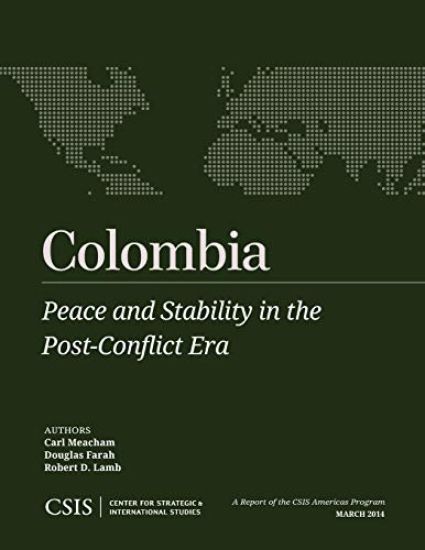
Colombia

Colombia

Carl Meacham; Douglas Farah; Robert D. Lamb

Centre for Strategic International Studies,U.S.
2014
nidottu
This report from the CSIS Americas Program provides a detailed look at the challenges the Colombian government confronts as it moves from providing security to developing rural areas that were previously conflict zones. In particular, the report examines such issues as remaining security needs; land tenure; needed infrastructure improvements; and better governance. In addition, the report offers recommendations on how the Colombian government can move forward in consolidating gains in its countryside—and how the United States can help.
Inside Argentina

Inside Argentina

Douglas Farah

Createspace Independent Publishing Platform
2013
nidottu
Argentina, strictly speaking, does not belong to the XXI century socialism. However, participates and displays the characteristics of the populist governments. But two elements separated Argentina from other countries enrolled in the flow, the socialism of the XXI century, which are the safeguard of the institutions in that society. The first, the attitude of the Supreme Court, which has put a limit to the power of Kirchner, either in terms of trying to silence critical voices and to introduce a reform the judiciary, for the sake of a supposed "democratization ". The second is that the recent election or pre-election acts, show that the current government can no longer claim to speak for the majority, as in Bolivia, Ecuador and, in a more debatable, Venezuela. It is no longer possible, even more closed to its apologists, to talk about populism, if there is no majority. Douglas Farah, in these two works presented, provides two key elements to understand the government of Cristina Kirchner. Back to the future, showing how, under government corruption, the country is on a road to ruin. The other, the description of La Campora, is an analysis of a group of young people trying to take over the Argentine government and the economy has collapsed and created a system of authoritarian rule.
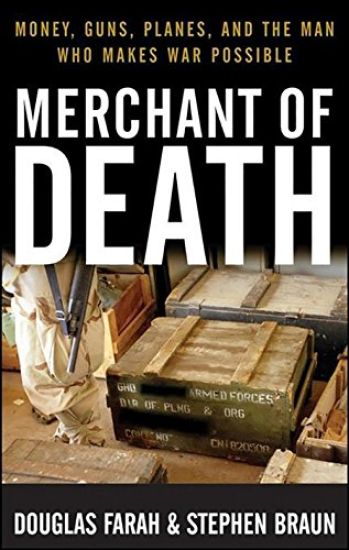
Merchant of Death

Merchant of Death

Douglas Farah; Stephen Braun

Wiley
2008
sidottu
Praise for Merchant of Death""A riveting investigation of the world's most notorious arms dealer--a page-turner that digs deep into the amazing, murky story of Viktor Bout. Farah and Braun have exposed the inner workings of one of the world's most secretive businesses--the international arms trade.""--Peter L. Bergen, author of The Osama bin Laden I Know""Viktor Bout is like Osama bin Laden: a major target of U.S. intelligence officials who time and again gets away. Farah and Braun have skillfully documented how this notorious arms dealer has stoked violence around the world and thwarted international sanctions. Even more appalling, they show how Bout ended up getting millions of dollars in U.S. government money to assist the war in Iraq. A truly impressive piece of investigative reporting.""--Michael Isikoff, coauthor of Hubris: The Inside Story of Spin, Scandal, and the Selling of the Iraq War""Douglas Farah and Stephen Braun are two of the toughest investigative reporters in the country. This is an important book about a hidden world of gunrunning and profiteering in some of the world's poorest countries.""--Steve Coll, author of Ghost Wars: The Secret History of the CIA, Afghanistan, and bin Laden, from the Soviet Invasion to September 10, 2001""In Merchant of Death, two of America's finest reporters have performed a major public service, turning over the right rocks that reveal the brutal international arms business at the dawn of the twenty-first century. In Viktor Bout, they have given us a new Lord of War, a man who knows no side but his own, and who has a knack for turning up in every war zone just in time to turn a profit. As Farah and Braun uncover and document his troubling role in the Bush Administration's Global War on Terror, his ties to Washington almost seem inevitable.""--James Risen, author of State of War: The Secret History of the CIA and the Bush Administration""An extraordinary and timely piece of investigative reporting, Merchant of Death is also a vividly compelling read. The true story of Viktor Bout, a sociopathic Russian gunrunner who has supplied weapons for use in some of the most gruesome conflicts of modern times--and who can count amongst his clients both the former Taliban regime in Afghanistan and the U.S. military in Iraq--is a stomach-churning indictment of the policy failures and moral contradictions of the world's most powerful governments, including that of the United States.""--Jon Lee Anderson, author of The Fall of BaghdadTwo respected journalists tell the incredible story of Viktor Bout, the Russian weapons supplier whose global network has changed the way modern warfare is fought. Bout's vast enterprise of guns, planes, and money has fueled internecine slaughter in Africa and aided both militant Islamic fanatics in Afghanistan and the American military in Iraq. This book combines spy thrills with crucial insights on the shortcomings of a U.S. foreign policy that fails to confront the lucrative and lethal arms trade that erodes global security.
Merchant of Death

Merchant of Death

Douglas Farah; Stephen Braun

John Wiley Sons Ltd
2008
nidottu
Respected journalists Douglas Farah and Stephen Braun tell the incredible story of Viktor Bout, the Russian weapons supplier whose global network has changed the way modern warfare is fought. Bout's vast enterprise of guns, planes, and money has fueled internecine slaughter in Africa and aided both militant Islamic fanatics in Afghanistan and the American military in Iraq.