Kirjojen hintavertailu. Mukana 12 390 323 kirjaa ja 12 kauppaa.

Kirjailija

Douglas Gwyn

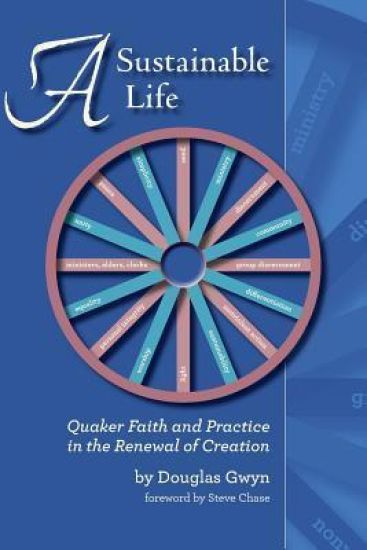
Kirjat ja teokset yhdessä paikassa: 11 kirjaa, julkaisuja vuosilta 2004-2020, suosituimpien joukossa A Sustainable Life. Vertaile teosten hintoja ja tarkista saatavuus suomalaisista kirjakaupoista.

11 kirjaa

Kirjojen julkaisuhaarukka 2004-2020.

Life in Gospel-Space: A Testimony

Life in Gospel-Space: A Testimony

Douglas Gwyn

Independently Published
2020
nidottu
A minister and writer in Quaker history and theology looks back at the Christian faith that has sustained his ministry among Friends for over forty years. Gwyn writes of "gospel-space" as that realm where he finds his story in the gospel story and the gospel story in his own. This is not a linear memoir but a series of reflections on different aspects of his journey in faith. Each chapter includes the lyric from one of his songs from over the years, highlighting the ironic and often humorous experience of God's grace. The arc of the chapters covers not only personal experience but a reading of the past half-century of American history, detecting resonances with the social history around the ancient gospel narratives. An "Itinerary" at the end summarizes the various geographical and theological terrains of "gospel-space" this seeker-found has traversed. A related essay is included in this volume: "Tomb with a View: The History of the World as Told to Me by Mary Magdalene." It is a "chiastic" overview of history, with its turning-point at the empty tomb of Jesus. God's covenantal purposes interact with social history in surprising ways. A "Background" piece at the end explains how this project began in 1988 and eventually found its present form. Life in Gospel-Space also introduces the concept of the common(s), which Gwyn explores further in subsequent books, Into the Common (2022) and Further into the Common (2023).
Towards Tragedy/Reclaiming Hope

Towards Tragedy/Reclaiming Hope

Pink Dandelion; Douglas Gwyn; Rachel Muers; Brian Phillips

Routledge
2018
nidottu
The 'death of tragedy' in the modern era has been proposed and debated in recent years, largely in terms of literature and western culture in general. Today, any catastrophe or misadventure is likely to be labeled a 'tragedy', without any inference of a larger, transcendent horizon or providential design that the word once conveyed. This book offers new perspectives on the idea of the 'death of tragedy', taking England and the Religious Society of Friends (Quakers) in particular as a case study. Chapters focus on the origins of tragedy in ancient Greece, gospel and tragedy, the beginnings of the Quaker movement in seventeenth-century England, apocalyptic versus secularized experiences of time, Edwardian Quaker triumphalism, the search for English identity in postcolonial Britain, liberal Quakerism at the end of the twentieth century, and the promise and dilemma of postmodernity. The different disciplinary perspectives of the contributing authors bring literature, history, theology and sociology into a creative and revealing conversation. A Foreword by Richard Fenn introduces the book with an original and provocative meditation on tragedy and time.
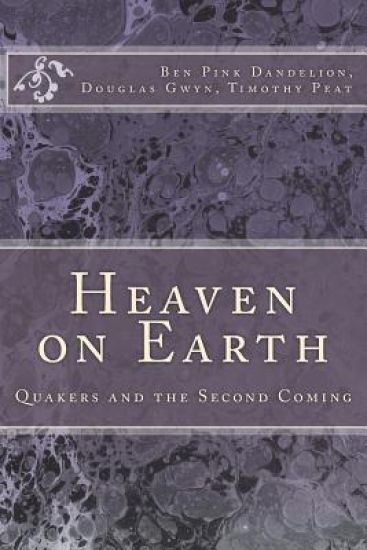
Heaven on Earth: Quakers and the Second Coming

Heaven on Earth: Quakers and the Second Coming

Ben Pink Dandelion; Timothy Peat; Douglas Gwyn

Createspace Independent Publishing Platform
2018
nidottu
Central to the faith of early Friends was the present sense of the Second Coming of Christ and the bringing of heaven on earth. Friends around the world may still be able to unite around this vision of a transformed society but how and when heaven will be fully realized are questions which have underpinned three centuries of change and division. This book looks again at the letters of Paul, the experience of early Friends, and the history of Quakerism through the lens of the Second Coming and draws radical new connections which the authors believe have the potential to give Friend and others a clarity about the Quaker tradition and the power to offer a key component in the revitalisation of Quaker faith.
A Gathering of Spirits: The Friends General Conferences 1896-1950
This sweeping book tells about the development of Friends General Conference up to 1950, primarily through the lens of the Conferences.One central motif is that these biennial gatherings renewed the courage and resolve of Friends to face the daunting disappointments of the first half of the 20th century. Modernity promised great advances in human society and no group was more confident of progress than FGC Friends at the end of the 19th and beginning of the 20th centuries.Through the conferences, the melancholy of two world wars, the capitalist debacle of the Great Depression, and the stubborn blights of American racism were turned into the spleen of renewed hope and activism, as Friends gathered together to learn, network, and find new reasons for hope.Gwyn characterizes the first fifty years of the conferences as FGC's "heroic era." A Gathering of Spirits will help FGC Friends discover the deeper roots of a tradition they continue to this day and to will draw renewed courage
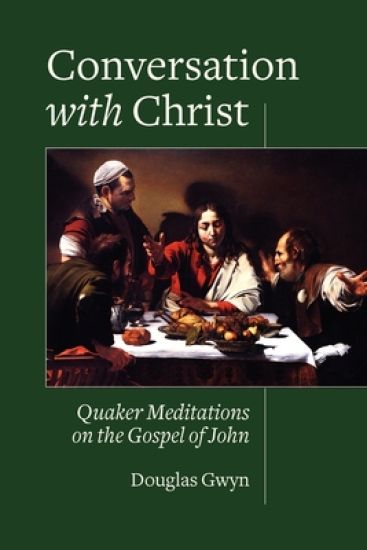
Conversation with Christ: Quaker Meditations on the Gospel of John

Conversation with Christ: Quaker Meditations on the Gospel of John

Douglas Gwyn

Quakerpress of Friends General Conference
2011
nidottu
Explores the here-and-now experience of eternal reality in Christ through a close reading of thirteen conversations in the Gospel of John, in which the history and mystery of Jesus are revealed. Each of these readings is followed by examples of ways Quakers have grappled with its message and by a guided meditation inviting readers to experience the form Christ takes in our lives.
Towards Tragedy/Reclaiming Hope

Towards Tragedy/Reclaiming Hope

Pink Dandelion; Douglas Gwyn; Rachel Muers; Brian Phillips

Ashgate Publishing Limited
2004
sidottu
The 'death of tragedy' in the modern era has been proposed and debated in recent years, largely in terms of literature and western culture in general. Today, any catastrophe or misadventure is likely to be labeled a 'tragedy', without any inference of a larger, transcendent horizon or providential design that the word once conveyed. This book offers new perspectives on the idea of the 'death of tragedy', taking England and the Religious Society of Friends (Quakers) in particular as a case study. Chapters focus on the origins of tragedy in ancient Greece, gospel and tragedy, the beginnings of the Quaker movement in seventeenth-century England, apocalyptic versus secularized experiences of time, Edwardian Quaker triumphalism, the search for English identity in postcolonial Britain, liberal Quakerism at the end of the twentieth century, and the promise and dilemma of postmodernity. The different disciplinary perspectives of the contributing authors bring literature, history, theology and sociology into a creative and revealing conversation. A Foreword by Richard Fenn introduces the book with an original and provocative meditation on tragedy and time.