Kirjojen hintavertailu. Mukana 12 657 676 kirjaa ja 12 kauppaa.

Kirjailija

Douglas Harper

Kirjat ja teokset yhdessä paikassa: 9 kirjaa, julkaisuja vuosilta 2006-2023, suosituimpien joukossa Hong Kong. Vertaile teosten hintoja ja tarkista saatavuus suomalaisista kirjakaupoista.

9 kirjaa

Kirjojen julkaisuhaarukka 2006-2023.

Hong Kong

Hong Kong

Caroline Knowles; Douglas Harper

University of Chicago Press
2010
sidottu
In 1997 the United Kingdom returned control of Hong Kong to China, ending the city's status as one of the last remnants of the British Empire and initiating a new phase for it as both a modern city and a hub for global migrations. "Hong Kong" is a tour of the city's post colonial urban landscape, innovatively told through fieldwork and photography. Caroline Knowles and Douglas Harper's point of entry into Hong Kong is the unusual position of the British expatriates who chose to remain in the city after the transition. Now a relatively insignificant presence, British migrants in Hong Kong have become intimately connected with another small minority group there: immigrants from Southeast Asia. The lives, journeys, and stories of these two groups bring to life a place where the past continues to resonate for all its residents, even as the city hurtles forward into a future marked by transience and transition. By skillfully blending ethnographic and visual approaches, "Hong Kong" offers a fascinating guide to a city that is at once unique in its recent history and exemplary of our globalized present.

Hong Kong

Hong Kong

Caroline Knowles; Douglas Harper

University of Chicago Press
2010
nidottu
In 1997 the United Kingdom returned control of Hong Kong to China, ending the city's status as one of the last remnants of the British Empire and initiating a new phase for it as both a modern city and a hub for global migrations. "Hong Kong" is a tour of the city's post colonial urban landscape, innovatively told through fieldwork and photography. Caroline Knowles and Douglas Harper's point of entry into Hong Kong is the unusual position of the British expatriates who chose to remain in the city after the transition. Now a relatively insignificant presence, British migrants in Hong Kong have become intimately connected with another small minority group there: immigrants from Southeast Asia. The lives, journeys, and stories of these two groups bring to life a place where the past continues to resonate for all its residents, even as the city hurtles forward into a future marked by transience and transition. By skillfully blending ethnographic and visual approaches, "Hong Kong" offers a fascinating guide to a city that is at once unique in its recent history and exemplary of our globalized present.

Visual Sociology

Visual Sociology

Douglas Harper

TAYLOR FRANCIS LTD
2023
nidottu
This new version of the authoritative textbook in the field of visual sociology focuses on the key topics of documentary photography, visual ethnography, collaborative visual research, visual empiricism, the study of the visual symbol and teaching sociology visually. This updated and expanded edition includes nearly twice as many images and incorporates new in-depth case studies, drawing upon the author’s lifetime of pioneering research and teaching as well as the often neglected experiences of women and people of color.The book examines how documentary photography can be useful to sociologists, both because of the topics examined by documentarians and as an example of how seeing is socially constructed. Harper describes the exclusion of women through much of the history of documentary photography and the distinctiveness of the female eye in recent documentary, a phenomenon he calls "the gendered lens". The author examines how a visual approach allows sociologists to study conventional topics differently, while offering new perspectives, topics and insights. For example, photography shows us how perspective itself affects what we see and know, how abstractions such as "ideal types" can be represented visually, how social change can be studied visually and how the study of symbols can lead us to interpret public art, architecture and person-made landscapes. There is an extended study of how images can lead to cooperative research and learning; how images can serve as bridges of understanding, blurring the lines between researcher and researched. The important topic of reflexivity is examined by close study of Harper’s own research experiences. Finally, the author focusses on teaching, offering templates for full courses, assignments and projects, and guides for teachers imagining how to approach visual sociology as a new practice.This definitive yet accessible textbook will be indispensable to teachers, researchers and professionals with an interest in visual sociology, research methods, cultural theory and visual anthropology.
Visual Sociology

Visual Sociology

Douglas Harper

TAYLOR FRANCIS LTD
2023
sidottu
This new version of the authoritative textbook in the field of visual sociology focuses on the key topics of documentary photography, visual ethnography, collaborative visual research, visual empiricism, the study of the visual symbol and teaching sociology visually. This updated and expanded edition includes nearly twice as many images and incorporates new in-depth case studies, drawing upon the author’s lifetime of pioneering research and teaching as well as the often neglected experiences of women and people of color.The book examines how documentary photography can be useful to sociologists, both because of the topics examined by documentarians and as an example of how seeing is socially constructed. Harper describes the exclusion of women through much of the history of documentary photography and the distinctiveness of the female eye in recent documentary, a phenomenon he calls "the gendered lens". The author examines how a visual approach allows sociologists to study conventional topics differently, while offering new perspectives, topics and insights. For example, photography shows us how perspective itself affects what we see and know, how abstractions such as "ideal types" can be represented visually, how social change can be studied visually and how the study of symbols can lead us to interpret public art, architecture and person-made landscapes. There is an extended study of how images can lead to cooperative research and learning; how images can serve as bridges of understanding, blurring the lines between researcher and researched. The important topic of reflexivity is examined by close study of Harper’s own research experiences. Finally, the author focusses on teaching, offering templates for full courses, assignments and projects, and guides for teachers imagining how to approach visual sociology as a new practice.This definitive yet accessible textbook will be indispensable to teachers, researchers and professionals with an interest in visual sociology, research methods, cultural theory and visual anthropology.
Good Company

Good Company

Douglas Harper

Routledge
2016
sidottu
This sociological classic shows how the railroad tramp’s status as a deviant changed from frontier itinerant to post settlement vagrant; from class conscious proletariat in the Depression to the damaged post WWII vet. The third edition (with new photos) discusses how today the freights have become the milieu of violent gangs who transport drugs, human traffickers, and serial killers. Beating the odds against increased post 9/11 surveillance are yuppie adventure seekers, young travelers, crust punks and oogles. In the background is the same freight train—unforgiving and lethal—and cultures policed at times by honorable tramps and at times by sadistic enforcers of violent gangs. Features of the new edition:Eight previously unpublished photos that reflect new directions in visual ethnography. (90 photos altogether)A fuller integration of photos made during the author’s participant research with tramps over thousands of miles on the freights and while living homeless in urban America.New, nuanced edit of a narrative describing author’s five week immersion with the quintessential tramp of the era, Carl.
Good Company

Good Company

Douglas Harper

Routledge
2016
nidottu
This sociological classic shows how the railroad tramp’s status as a deviant changed from frontier itinerant to post settlement vagrant; from class conscious proletariat in the Depression to the damaged post WWII vet. The third edition (with new photos) discusses how today the freights have become the milieu of violent gangs who transport drugs, human traffickers, and serial killers. Beating the odds against increased post 9/11 surveillance are yuppie adventure seekers, young travelers, crust punks and oogles. In the background is the same freight train—unforgiving and lethal—and cultures policed at times by honorable tramps and at times by sadistic enforcers of violent gangs. Features of the new edition:Eight previously unpublished photos that reflect new directions in visual ethnography. (90 photos altogether)A fuller integration of photos made during the author’s participant research with tramps over thousands of miles on the freights and while living homeless in urban America.New, nuanced edit of a narrative describing author’s five week immersion with the quintessential tramp of the era, Carl.
River, Railway and Ravine

River, Railway and Ravine

Douglas Harper

The History Press Ltd
2015
sidottu
From their mid-nineteenth-century fencing business the Harpers of Aberdeen developed a unique system of suspension that allowed their light foot suspension bridges to be relatively rigid. John Harper was one of the first to employ steel wire rope, now universally used. The Harpers’ innovative work overcame the disadvantages of this type of bridge and was of considerable benefit to those who relied upon them. Harpers built over sixty such bridges throughout the UK and the British Empire between 1870 and 1910, but until now they have been little documented. The author, John Harper’s great-grandson, searched the globe to find and cross those still in use. Here he tells the story of his ancestors, his journeys and the communities the bridges served.
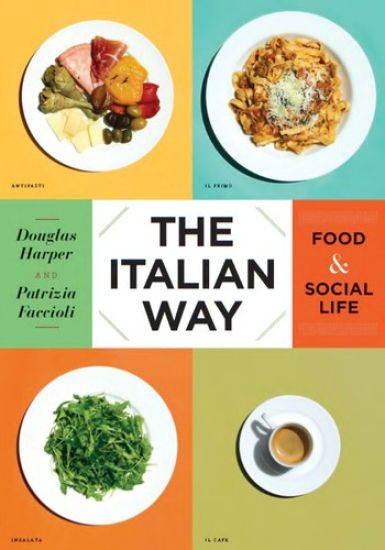
The Italian Way

The Italian Way

Douglas Harper; Patrizia Faccioli

University of Chicago Press
2010
sidottu
Outside of Italy, the country's culture and its food appear to be essentially synonymous. And indeed, as "The Italian Way" makes clear, preparing, cooking, and eating food play a central role in the daily activities of Italians from all walks of life. In this beautifully illustrated book, Douglas Harper and Patrizia Faccioli present a fascinating and colorful look at the Italian table. "The Italian Way" focuses on two dozen families in the city of Bologna, elegantly weaving together Harper's outsider perspective with Faccioli's intimate knowledge of the local customs. The authors interview and observe these families as they go shopping for ingredients, cook together, and argue over who has to wash the dishes. Throughout, the authors elucidate the guiding principle of the Italian table - a delicate balance between the structure of tradition and the joy of improvisation. With its bite-sized history of food in Italy, including the five-hundred-year-old story of the country's cookbooks, and Harper's mouth-watering photographs, "The Italian Way" is a rich repast - insightful, informative, and inviting.
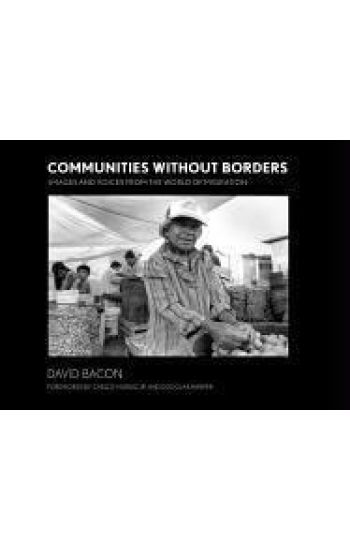
Communities Without Borders

Communities Without Borders

David Bacon; Douglas Harper; Carlos Muñoz

ILR Press
2006
pokkari
When we finally arrived at my brother's house in the United States, I thought about how far I was from home in Mexico. I looked back, saw the sun setting, and thought about my father and what he might be doing. I thought, 'Why did I come so far, and how am I going to return?' Before I left my father asked me why I wanted to leave. He said he thought we would never see each other again. My brother told him not to worry and that he would return me in a year.... He was right, because we never did.—Irma Luna recalls her experience of migration, from Communities without BordersIn his stunning work of photojournalism and oral history, David Bacon documents the new reality of migrant experience: the creation of transnational communities. Today's indigenous migrants don't simply move from one point to another but create new communities all along the northern road from Guatemala through Mexico into the United States, connected by common culture and history. Drawing on his experience as a photographer and a journalist and also as a former labor organizer, Bacon portrays the lives of the people who migrate between Guatemala and Mexico and the United States. He takes us inside these communities and illuminates the ties that bind them together, the influence of their working conditions on their families and health, and their struggle for better lives. Bacon portrays in photographs and their own words Mixtec and Triqui migrants in Oaxaca, Baja California, and California; Guatemalan migrants in Huehuetenango and Nebraska; miners and indigenous communities in Sonora and Arizona; and veterans of the bracero program of the 1940s and 1950s. Bacon's interviews with this first wave of guest workers are especially relevant in light of the current political focus on guest-worker programs as a model for reforming immigration, an approach with which Bacon strongly disagrees.Throughout Communities without Borders, Bacon emphasizes the social movements migrants organize to improve their own working conditions and the well-being of their enclaves. U.S. border policy treats undocumented immigrants as an aggregation of individuals, ignoring the social pressures that force whole communities to move and the networks of families and hometowns that sustain them on their journeys. Communities without Borders makes an urgent appeal for understanding the human reality that should inform our national debate over immigration.