Kirjailija
Douglas Hofstadter
Kirjat ja teokset yhdessä paikassa: 17 kirjaa, julkaisuja vuosilta 1996-2025, suosituimpien joukossa I Am a Strange Loop. Vertaile teosten hintoja ja tarkista saatavuus suomalaisista kirjakaupoista.
17 kirjaa
Kirjojen julkaisuhaarukka 1996-2025.
On the history and creation of ambigrams, by a pioneer of the practice In the 1960s and 1970s, a trio of imaginative individuals independently discovered that ordinary words and phrases could be given double readings by playfully distorting the letters composing them. These doubly readable words and phrases, if designed by an artistic eye and hand, could possess great visual beauty. Douglas Hofstadter named such calligraphic creations “ambigrams,” and over the decades he has designed thousands of them, as have his friends Scott Kim and John Langdon, the other main pioneers of the subtle art form he calls ambigrammia. ABCD (Hofstadter’s informal title for this book) offers a sampler of hundreds of Hofstadter’s ambigrams, along with a few dozen by Kim, Langdon, and others. With deep links to cognitive science, ABCD exhibits ambigrams of many types and shows how ambigrammia can be extended in surprising directions. All along the way, Hofstadter discusses creativity and its alter ego, “discoverativity,” revealing how the “pocket sized creativity puzzles” that constitute the art form are pervaded by these complementary qualities. ABCD is also notably autobiographical: Hofstadter vividly recounts how his life has been intimately intertwined with the creation/discovery of ambigrams in many countries and in many languages.
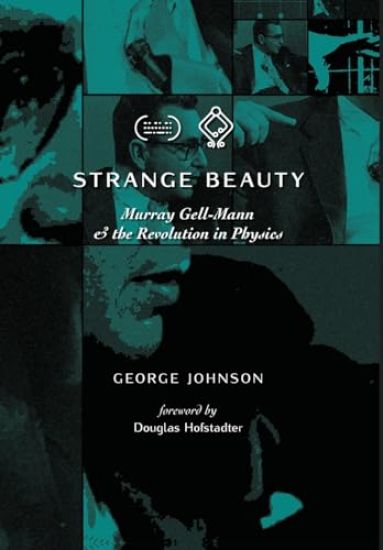
Acclaimed science writer George Johnson brings his formidable reporting skills to the first biography of Nobel Prize-winner Murray Gell-Mann, the brilliant, irascible man who revolutionized modern particle physics with his models of the quark and the Eightfold Way.Beautifully balanced in its portrayal of an extraordinary and difficult man, interpreting the concepts of advanced physics with scrupulous clarity and simplicity, Strange Beauty is a tour de force of both science writing and biography. This updated edition, with a new foreword by Douglas Hofstadter, includes reflections on the final years of Gell-Mann's life and his influence on the Santa Fe Institute.
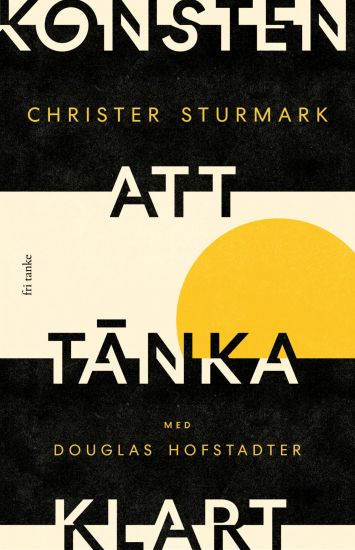
Människan har en unik superkraft: förnuftet. Hon är förmögen att både förstå, förklara och förändra världen. Men när tankelättja breder ut sig tenderar hon att halka sig fram till sina slutsatser. Behovet av att tro på förnuftet och att åter blåsa liv i upplysningens ideal är större idag än på många år.I Konsten att tänka klart presenterar Christer Sturmark och Douglas Hofstadter en uppsättning enkla tankeverktyg för alla som vill bemästra konsten att tänka klart och få en djupare förståelse för sanning, vetenskap, förnuft och moral.Boken är ett samarbete mellan två tänkande vänner och kan läsas som en vidareutveckling av Christer Sturmarks Upplysning i det 21:a århundradet. Douglas Hofstadter är författare till kultboken Gödel, Escher, Bach: an Eternal Golden Braid (1979).
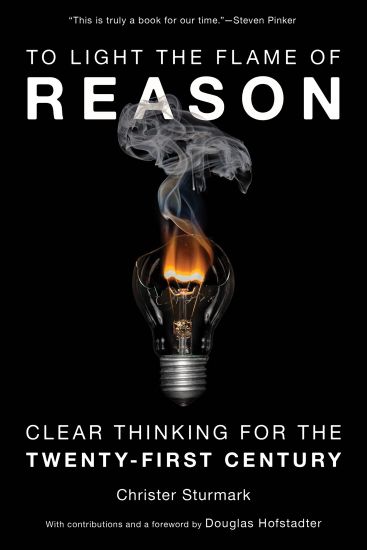
To Light the Flame of Reason is all about the art of clear thinking, an art that is needed now more than ever in the world we now live in. Written for anyone who wants to navigate better in this world filled with populist dogmas, anti-science attitudes, and pseudo-philosophy, authors Christer Sturmark and Douglas Hofstadter provide a set of simple tools for clear thinking, as well as a deeper understanding of science, truth, naturalism, and morality. It also offers insights into the rampant problems of extremism and fundamentalism – and suggestions for how the world can move towards a new enlightenment. The book argues that we need to reawaken the basic values and ideals that defined the original age of enlightenment. We need to accept the idea that the world we inhabit is part of nature, and that it has no trace of supernatural or magical forces. Ethical questions should be detached from religion. This doesn’t mean that the questions become any easier— just that ideas are tested and judged without being profoundly tainted and constrained by religious dogmas.Such a form of secular humanism builds on the power of free thought — the power to investigate and understand the natural world. Although not everything can be investigated or understood, the sincere quest for knowledge and understanding establishes a flexible, nondogmatic attitude toward the world. Curiosity and openness lie at the core of such an attitude. The scientific method of careful and open- minded testing, as well as science’s creative and reflective ways of thinking, provides key tools. What clear, science-inspired thinking helps us to understand, among many other things, is that a person can be good and can be motivated to carry out morally good actions without ever bowing to, or being limited by, supposedly divine forces.To Light the Flame of Reason will appeal to adults who are trying to figure out how to deal with the ever-increasing daily bombardment of conflicting messages about what is right, true, sensible, or good, and it should appeal even more to teenagers and university students who are struggling to find a believable and reliable philosophy of life that can help guide them in their choices of what and whom to trust, and how to act, both on the personal and the social level.Today, more people have greater access to information and knowledge than ever was dreamt of before, and more people are concerned about the world situation. More people have the chance, through their own actions, to make a difference.Each one of us, as an individual, matters. It is thus vitally important that each of us should choose, in a conscious and reflective manner, our own views of reality, of the world, and of humanity. And this means that it is crucial for us all to train ourselves in the art of thinking clearly.Christer Sturmark along with Pulizer Prize winning author Douglas Hofstdter argue that we must refocus our efforts on cultivting a secular society, and in doing so, we will rediscover the values and ethics that are so foreign in today’s society.
Människan har en unik superkraft: förnuftet. Hon är förmögen att både förstå, förklara och förändra världen. Men när tankelättja breder ut sig tenderar hon att halka sig fram till sina slutsatser. Behovet av att tro på förnuftet och att åter blåsa liv i upplysningens ideal är större idag än på många år.I Konsten att tänka klart presenterar Christer Sturmark och Douglas Hofstadter en uppsättning enkla tankeverktyg för alla som vill bemästra konsten att tänka klart och få en djupare förståelse för sanning, vetenskap, förnuft och moral.Boken är ett samarbete mellan två tänkande vänner och kan läsas som en vidareutveckling av Christer Sturmarks Upplysning i det 21:a århundradet. Douglas Hofstadter är författare till kultboken Gödel, Escher, Bach: an Eternal Golden Braid (1979).
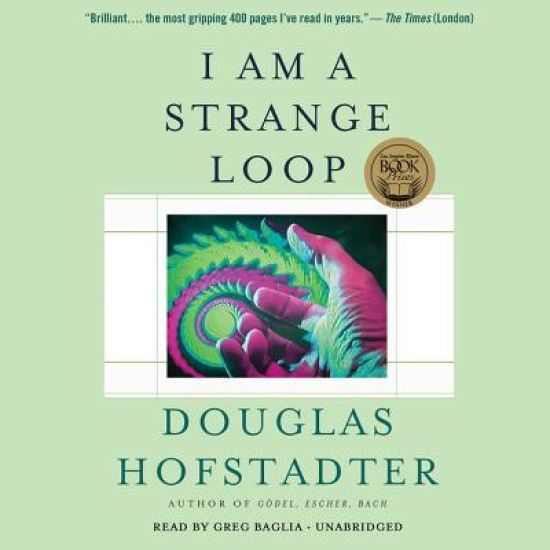
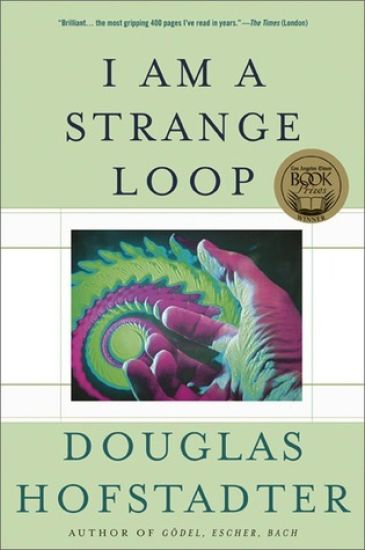
One of our greatest philosophers and scientists of the mind asks, where does the self come from -- and how our selves can exist in the minds of others. Can thought arise out of matter? Can self, soul, consciousness, "I" arise out of mere matter? If it cannot, then how can you or I be here? I Am a Strange Loop argues that the key to understanding selves and consciousness is the "strange loop"-a special kind of abstract feedback loop inhabiting our brains. The most central and complex symbol in your brain is the one called "I." The "I" is the nexus in our brain, one of many symbols seeming to have free will and to have gained the paradoxical ability to push particles around, rather than the reverse. How can a mysterious abstraction be real-or is our "I" merely a convenient fiction? Does an "I" exert genuine power over the particles in our brain, or is it helplessly pushed around by the laws of physics? These are the mysteries tackled in I Am a Strange Loop, Douglas Hofstadter's first book-length journey into philosophy since G del, Escher, Bach. Compulsively readable and endlessly thought-provoking, this is a moving and profound inquiry into the nature of mind.
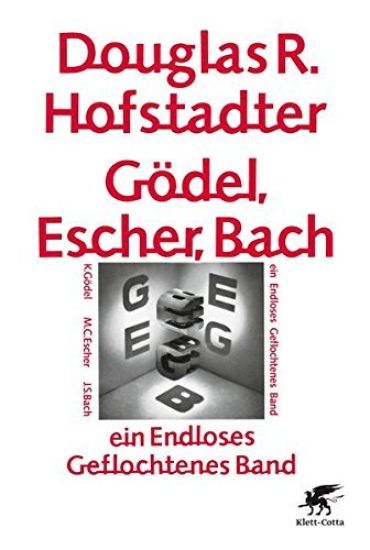
Gödel, Escher, Bach - ein Endloses Geflochtenes Band
Douglas Hofstadter
Klett-Cotta Verlag
2016
pokkari
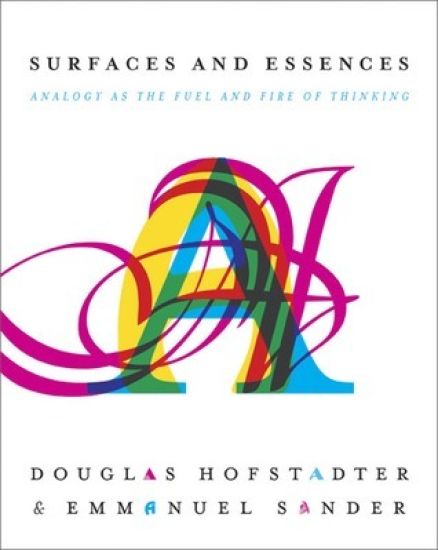
Analogy is the core of all thinking. This is the simple but unorthodox premise that Pulitzer Prize-winning author Douglas Hofstadter and French psychologist Emmanuel Sander defend in their new work. Hofstadter has been grappling with the mysteries of human thought for over thirty years. Now, with his trademark wit and special talent for making complex ideas vivid, he has partnered with Sander to put forth a highly novel perspective on cognition.We are constantly faced with a swirling and intermingling multitude of ill-defined situations. Our brain's job is to try to make sense of this unpredictable, swarming chaos of stimuli. How does it do so? The ceaseless hail of input triggers analogies galore, helping us to pinpoint the essence of what is going on. Often this means the spontaneous evocation of words, sometimes idioms, sometimes the triggering of nameless, long-buried memories.Why did two-year-old Camille proudly exclaim, I undressed the banana!"? Why do people who hear a story often blurt out, Exactly the same thing happened to me!" when it was a completely different event? How do we recognize an aggressive driver from a split-second glance in our rearview mirror? What in a friend's remark triggers the offhand reply, That's just sour grapes"? What did Albert Einstein see that made him suspect that light consists of particles when a century of research had driven the final nail in the coffin of that long-dead idea?The answer to all these questions, of course, is analogy-making ,the meat and potatoes, the heart and soul, the fuel and fire, the gist and the crux, the lifeblood and the wellsprings of thought. Analogy-making, far from happening at rare intervals, occurs at all moments, defining thinking from top to toe, from the tiniest and most fleeting thoughts to the most creative scientific insights.Like Godel, Escher, Bach before it, Surfaces and Essences will profoundly enrich our understanding of our own minds. By plunging the reader into an extraordinary variety of colourful situations involving language, thought, and memory, by revealing bit by bit the constantly churning cognitive mechanisms normally completely hidden from view, and by discovering in them one central, invariant core,the incessant, unconscious quest for strong analogical links to past experiences,this book puts forth a radical and deeply surprising new vision of the act of thinking.
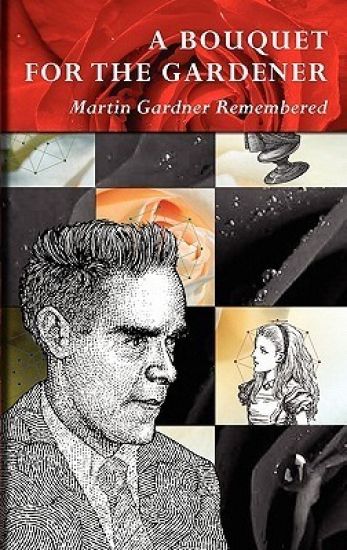
Martin Gardner, the "Mathematical Games" columnist for Scientific American from 1956 to 1981, was also a philosopher, polymath, magician, religious thinker, and the author of more than 70 books, including The Annotated Alice, The Ambidextrous Universe, and Visitors from Oz. Here his life and works are celebrated in a bouquet of essays about him or in his honor. Introduced by his son Jim, the book includes reminiscences by Douglas Hofstadter, Morton N. Cohen, Scott Kim, David Singmaster, Michael Patrick Hearn, and many others; a festschrift contains essays by such writers as Raymond Smullyan and Robin Wilson. This volume also contains the final annotations Gardner made to the Alice books post-"Definitive Edition," and a definitive bibliography of his Carroll-related writings. While put together under the aegis of the Lewis Carroll Society of North America, it takes a far broader look at this remarkable man and his many interests and accomplishments.
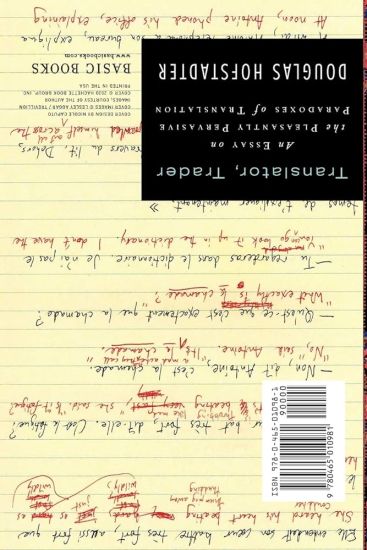
That Mad Ache , set in high-society Paris in the mid-1960's, recounts the emotional battle unleashed in the heart of Lucile, a sensitive but rootless young woman who finds herself caught between her carefree, tranquil love for 50-year-old Charles, a gentle, reflective, and well-off businessman, and her sudden wild passion for 30-year-old Antoine, a hot-blooded, impulsive, and struggling editor. As Lucile explores these two versions of love, she vacillates in confusion, but in the end she must choose, and her heart's instinct is surprising and poignant. Originally published under the title La Chamade , this new translation by Douglas Hofstadter returns a forgotten classic to English. In Translator, Trader , Douglas Hofstadter reflects on his personal act of devotion in rewriting Françoise Sagan's novel La Chamade in English, and on the paradoxes that constantly plague any literary translator on all scales, ranging from the humblest of commas to entire chapters. Flatly rejecting the common wisdom that translators are inevitably traitors, Hofstadter proposes instead that translators are traders, and that translation, like musical performance, deserves high respect as a creative act. In his view, literary translation is the art of making subtle trades in which one sometimes loses and sometimes gains, often both losing and gaining at the same time. This view implies that there is no reason a translation cannot be as good as the original work, and that the result inevitably bears the stamp of the translator, much as a musical performance inevitably bears the stamp of its artists. Both a companion to the beloved Sagan novel and a singular meditation on translation, Translator, Trader is a witty and intimate exploration of words, ideas, communication, creation, and faithfulness.
One of our greatest philosophers and scientists of the mind asks, where does the self come from -- and how our selves can exist in the minds of others. Can thought arise out of matter? Can self, soul, consciousness, "I" arise out of mere matter? If it cannot, then how can you or I be here? I Am a Strange Loop argues that the key to understanding selves and consciousness is the "strange loop"-a special kind of abstract feedback loop inhabiting our brains. The most central and complex symbol in your brain is the one called "I." The "I" is the nexus in our brain, one of many symbols seeming to have free will and to have gained the paradoxical ability to push particles around, rather than the reverse. How can a mysterious abstraction be real-or is our "I" merely a convenient fiction? Does an "I" exert genuine power over the particles in our brain, or is it helplessly pushed around by the laws of physics? These are the mysteries tackled in I Am a Strange Loop, Douglas Hofstadter's first book-length journey into philosophy since Gödel, Escher, Bach. Compulsively readable and endlessly thought-provoking, this is a moving and profound inquiry into the nature of mind.
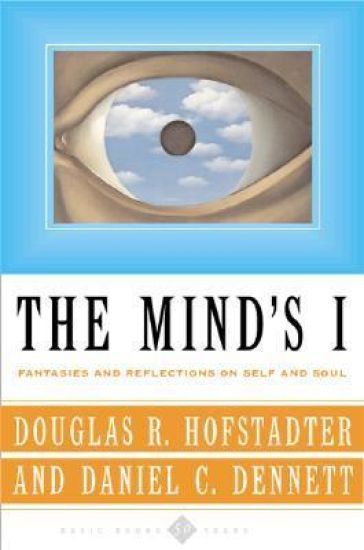
With contributions from Jorge Luis Borges, Richard Dawkins, John Searle, and Robert Nozick, The Mind's I explores the meaning of self and consciousness through the perspectives of literature, artificial intelligence, psychology, and other disciplines. In selections that range from fiction to scientific speculations about thinking machines, artificial intelligence, and the nature of the brain, Hofstadter and Dennett present a variety of conflicting visions of the self and the soul as explored through the writings of some of the twentieth century's most renowned thinkers.
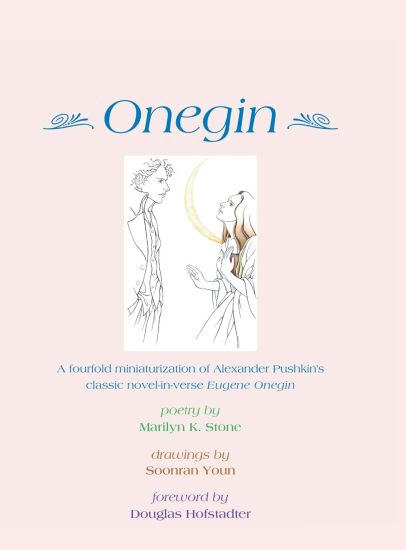
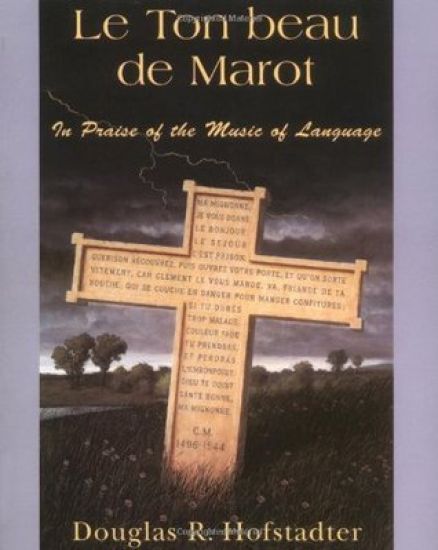
Lost in an art,the art of translation. Thus, in an elegant anagram (translation = lost in an art), Pulitzer Prize-winning author and pioneering cognitive scientist Douglas Hofstadter hints at what led him to pen a deep personal homage to the witty sixteenth-century French poet Clément Marot." Le ton beau de Marot " literally means "The sweet tone of Marot", but to a French ear it suggests "Le tombeau de Marot",that is, "The tomb of Marot". That double entendre foreshadows the linguistic exuberance of this book, which was sparked a decade ago when Hofstadter, under the spell of an exquisite French miniature by Marot, got hooked on the challenge of recreating both its sweet message and its tight rhymes in English,jumping through two tough hoops at once.In the next few years, he not only did many of his own translations of Marot's poem, but also enlisted friends, students, colleagues, family, noted poets, and translators,even three state-of-the-art translation programs!,to try their hand at this subtle challenge.The rich harvest is represented here by 88 wildly diverse variations on Marot's little theme. Yet this barely scratches the surface of Le Ton beau de Marot , for small groups of these poems alternate with chapters that run all over the map of language and thought.Not merely a set of translations of one poem, Le Ton beau de Marot is an autobiographical essay, a love letter to the French language, a series of musings on life, loss, and death, a sweet bouquet of stirring poetry,but most of all, it celebrates the limitless creativity fired by a passion for the music of words.Dozens of literary themes and creations are woven into the picture, including Pushkin's Eugene Onegin , Dante's Inferno, Salinger's Catcher in the Rye , Villon's Ballades, Nabokov's essays, Georges Perec's La Disparition, Vikram Seth's Golden Gate, Horace's odes, and more.Rife with stunning form-content interplay, crammed with creative linguistic experiments yet always crystal-clear, this book is meant not only for lovers of literature, but also for people who wish to be brought into contact with current ideas about how creativity works, and who wish to see how today's computational models of language and thought stack up next to the human mind. Le Ton beau de Marot is a sparkling, personal, and poetic exploration aimed at both the literary and the scientific world, and is sure to provoke great excitement and heated controversy among poets and translators, critics and writers, and those involved in the study of creativity and its elusive wellsprings.
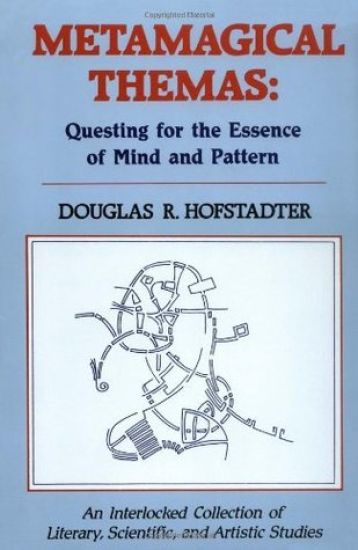
Hofstadter's collection of quirky essays is unified by its primary concern: to examine the way people perceive and think.
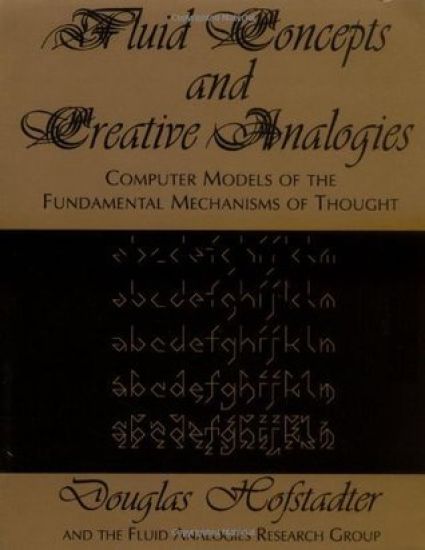
Readers of earlier works by Douglas Hofstadter will find this book a natural extension of his style and his ideas about creativity and analogy in addition, psychologists, philosophers, and artificial-intelligence researchers will find in this elabourate web of ingenious ideas a deep and challenging new view of mind.