Kirjailija
Douglas J. Davies
Kirjat ja teokset yhdessä paikassa: 20 kirjaa, julkaisuja vuosilta 2000-2023, suosituimpien joukossa Mors Britannica. Vertaile teosten hintoja ja tarkista saatavuus suomalaisista kirjakaupoista.
Mukana myös kirjoitusasut: Douglas J Davies
20 kirjaa
Kirjojen julkaisuhaarukka 2000-2023.
Worldview Religious Studies brings the study of religion, spirituality, secularism, and other mixed attitudes of life under the overarching scheme of worldview studies. This book introduces and defines worldviews more generally before establishing a framework specific to religious studies.The drive for meaning-making is explored through ritual-symbolic activities, ideas of ‘play’, and the power of emotions to transform simple ideas into values and beliefs that frame identity and signpost destiny. Identity and its sacralisation are discussed alongside gift/reciprocity theory in their relation to ideas of merit, karma, and salvation in Eastern and Western traditions. This theoretical background is used to introduce a new classification of worldviews - natural, scientific, ancestral, karmic, prophetic-sectarian, mystical, and ideological.Organised thematically by chapter, this book brings together familiar and unfamiliar authors, theories, and sources to challenge students and teachers of Religious Studies, Theology, and Ethics. It introduces worldview religious studies as a framework through which to re-think human endeavours to identify, cope and even transcend life’s flaws and perils.
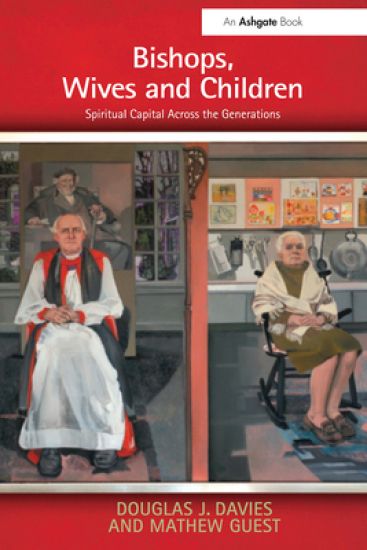
Christianity as a cultural force, whether rising or falling, has seldom been analysed through the actual processes by which tradition is transmitted, modified, embraced or rejected. This book achieves that end through a study of bishops of the Church of England, their wives and their children, to show how values fostered in the vicarage and palace shape family, work and civic life in a supposedly secular age. Davies and Guest integrate, for the first time, sociological concepts of spiritual capital with anthropological ideas of gift-theory and, alongside theological themes, use these to illuminate how the religious professional functions in mediating tradition and fostering change. Motifs of distant prelates, managerially-minded fathers in God and rebellious clergy children are reconsidered in a critical light as new empirical evidence offers unique insights into how the clergy family functions as an axis of social power in an age incredulous to ecclesiastical hierarchy. Bishops, Wives and Children marks an important advance in the analysis of the spirituality of Catholic, Evangelical and Liberal leaders and their social significance within a distinctive Christian tradition and all it represents in wider British society.
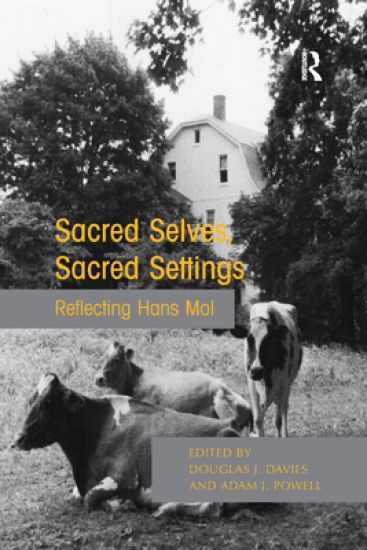
Significantly influencing the sociological study of religion, Hans Mol developed ideas of identity which remain thought-provoking for analyses of how religion operates within contemporary societies. Sacred Selves, Sacred Settings brings current social-religious topics into sharp focus: international scholars analyse, challenge, and apply Mol’s theoretical assertions. This book introduces the unique story of Hans Mol, who survived Nazi imprisonment and proceeded to brush shoulders with formidable intellectuals of the twentieth century, such as Robert Merton, Talcott Parsons, and Reinhold Niebuhr. Offering a fresh perspective on popular subjects such as secularization, pluralism, and the place of religion in the public sphere, this book sets case studies within an intellectual biography which describes Mol’s key influences and reveals the continuing import of Hans Mol’s work applied to recent data and within a contemporary context.
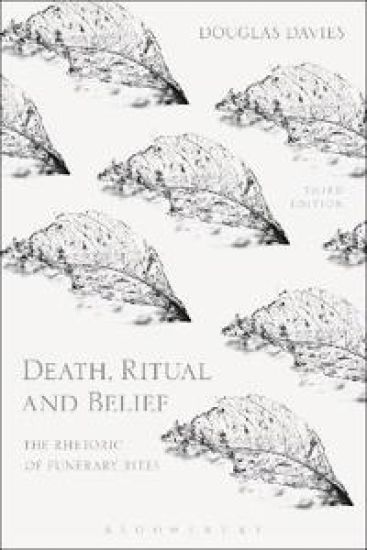
Death, Ritual and Belief, now in its third edition, explores many important issues related to death and dying, from a religious studies perspective, including anthropology and sociology. Using the motif of 'words against death' it depicts human responses to grief by surveying the many ways in which people have not let death have the last word, not simply in terms of funeral rites but also in memorials, graves, and in ideas of ancestors, souls, gods, reincarnation and resurrection, whether in the great religious traditions of the world or in more local customs. He also examines bereavement and grief, experiences of the presence of dead, near-death experiences, pet-death and the symbolic death played out in religious rites. Updated chapters have taken into account new research and include additional topics in this new edition, notably assisted dying, terrorism, green burial, material culture, death online, and the emergence of Death Studies as a distinctive field. Case studies range from Anders Breivik in Norway, to the Princess of Wales, and to the Rapture in the USA. A new perspective is also brought to his account of grief theories. Providing an introduction to key authors and authorities on death beliefs, bereavement, grief and ritual-symbolism, Death, Ritual and Belief is an authoritative guide to the perspectives of major religious and secular worldviews.
Significantly influencing the sociological study of religion, Hans Mol developed ideas of identity which remain thought-provoking for analyses of how religion operates within contemporary societies. Sacred Selves, Sacred Settings brings current social-religious topics into sharp focus: international scholars analyse, challenge, and apply Mol’s theoretical assertions. This book introduces the unique story of Hans Mol, who survived Nazi imprisonment and proceeded to brush shoulders with formidable intellectuals of the twentieth century, such as Robert Merton, Talcott Parsons, and Reinhold Niebuhr. Offering a fresh perspective on popular subjects such as secularization, pluralism, and the place of religion in the public sphere, this book sets case studies within an intellectual biography which describes Mol’s key influences and reveals the continuing import of Hans Mol’s work applied to recent data and within a contemporary context.
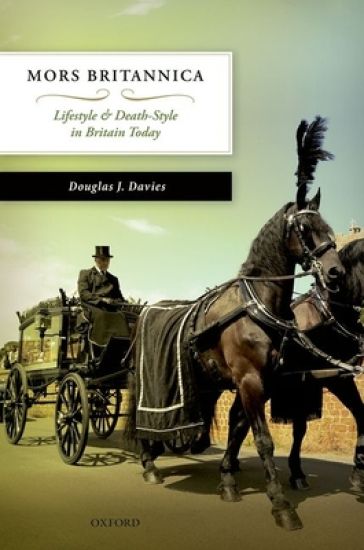
A people's lifestyle is one thing, their death-style another. The proximity or distance between such styles says much about a society, not least in Britain today. Mors Britannica takes up this style-issue in a society where cultural changes involve distinctions between traditional religion, secularisation, and emergent forms of spirituality, all of which involve emotions, where fear, longing, and a sense of loss rise in waves when death marks the root embodiment of our humanity. These world-orientations, evident in older and newer ritual practices, engage death in the hope and desire that love, relationships, community, and human identity be not rendered meaningless. Yet both emotions and ritual have an uneasiness to them because 'death' is a slippery topic as the twenty-first century gets under way in Britain. In this work, Douglas J. Davies draws from a largely anthropological-sociological perspective, with consideration of history, literature, philosophy, psychology, and theology, to provide a window into British life and insights into the foundation links between individuals and society, across the spectrum of traditionally religious views through to humanist and secular alternatives. He considers memorial sites (from churchyards to roadside memorials); forms of corporeal disposal (from cremation to composting); and death rites in a range of religious and secular traditions.
From the 1990s the British developed an interest in natural burial, also known as woodland, green, or eco-logical burial. This continued a stream of British interest in funeral innovation from Victorian cemetery monuments through the birth and rise of cremation to the many things done with cremated remains. The book sets natural burial in the context of creative dealing with death, grief, mourning and the celebration of life. Ideas from sociology and anthropology combine with psychological issues and theological ideas to show how human emotions take shape and help people think of their own death as well as dealing with death of those they love. Douglas Davies and Hannah Rumble explore the variety of motivations for the appeal of natural burial, and use interviews with people using a special natural burial site created by the Church of England but open to all, to illustrate the spiritual understandings of life and death in the sacred, secular and mixed worlds of modern Britain.
Deep emotions pervade our human lives and ongoing moods echo them. Religious traditions often shape these and give devotees a sense of identity in a hopeful and meaningful life despite the conflicts, confusion, pain and grief of existence. Driven by anthropological and sociological perspectives, Douglas J. Davies describes and analyses these dynamic tensions and life opportunities as they are worked out in ritual, music, theology, and the allure of sacred places. Davies brings some newer concepts to these familiar ideas, such as 'the humility response' and 'moral-somatic' processes, revealing how our sense of ourselves responds to how we are treated by others as when injustice makes us 'feel sick' or religious ideas of grace prompt joyfulness. This sense of embodied identity is shown to be influenced not only by 'reciprocity' in the many forms of exchange, gifts, merit, and actions of others, but also by a certain sense of 'otherness, whether in God, ancestors, supernatural forces or even a certain awareness of ourselves. Drawing from psychological studies of how our thinking processes engage with the worlds around us we see how difficult it is to separate out 'religious' activity from many other aspects of human response to our environment. Throughout these pages many examples are taken from the well-known religions of the world as well as from local and secular traditions.
Joseph Smith, Jesus, and Satanic Opposition
Douglas J. Davies
Ashgate Publishing Limited
2010
nidottu
This book explores Mormon theology in new ways from a scholarly non-Mormon perspective. Bringing Jesus and Satan into relationship with Joseph Smith the founding prophet, Douglas Davies shows how the Mormon 'Plan of Salvation' can be equated with mainstream Christianity's doctrine of the Trinity as a driving force of the faith. Exploring how Jesus has been understood by Mormons, his many Mormon identities are described in this book: he is the Jehovah of the Bible, our Elder Brother and Father, probably also a husband, he visited the dead and is also the antagonist of Satan-Lucifer. This book offers a way into the Mormon 'problem of evil' understood as apostasy, from pre-mortal times to today. Three images reveal the wider problem of evil in Mormonism: Jesus' pre-mortal encounter with Lucifer in a heavenly council deciding on the Plan of Salvation, Jesus Christ's great suffering-engagement with evil in Gethsemane, and Joseph Smith's First Vision of the divine when he was almost destroyed by an evil force. Douglas Davies, well-known for his previous accounts of Mormon life and thought, shows how renewed Mormon interest in theological questions of belief can be understood against the background of Mormon church-organization and its growing presence on the world-stage of Christianity.
The first part of the book is grounded in biblical issues and in historical and philosophical theology. It seeks to establish several schemes of death theology related, for example, to early Christianity's Jewish cultural milieu, to belief in Christ's resurrection and to Christology, to issues of millennial belief and to an emergent liturgical practice. The rise of notions of the soul in relation to medieval thought and practice and the place of death in reformation theology are both covered, as is the role of the nineteenth and twentieth century. Finally the rise of biblical theology is considered, especially in the twentieth century. The second part of the book takes up several contemporary models of the theology of death. The first pursues a traditional acceptance of an other-worldly afterlife, the second explores worldly analysis of eternal life as a quality of contemporary existence devoid of any future state. The third develops the worldly model and considers a wider sense of self as a part of an ecological view of the world as a divine creation and explores the meaning of birth-life and death amidst a divine environment. The Theology of Death aims to offer some sharply defined schemes to focus thought in a Christian environment in which death, hell and heaven have almost lost their place. The topic of hope is a key element and the book explores the birth and fostering of hope within Christian traditions.
Christianity as a cultural force, whether rising or falling, has seldom been analysed through the actual processes by which tradition is transmitted, modified, embraced or rejected. This book achieves that end through a study of bishops of the Church of England, their wives and their children, to show how values fostered in the vicarage and palace shape family, work and civic life in a supposedly secular age. Davies and Guest integrate, for the first time, sociological concepts of spiritual capital with anthropological ideas of gift-theory and, alongside theological themes, use these to illuminate how the religious professional functions in mediating tradition and fostering change. Motifs of distant prelates, managerially-minded fathers in God and rebellious clergy children are reconsidered in a critical light as new empirical evidence offers unique insights into how the clergy family functions as an axis of social power in an age incredulous to ecclesiastical hierarchy. Bishops, Wives and Children marks an important advance in the analysis of the spirituality of Catholic, Evangelical and Liberal leaders and their social significance within a distinctive Christian tradition and all it represents in wider British society.
The Church of Jesus Christ of Latter-day Saints is one of the fastest growing religious movements in the world. It is highly visible, with a massive missionary program, yet it remains a mystery in terms of its core beliefs and theological structure. This 2003 book provides an introduction to the basic history, doctrines and practices of The LDS - the 'Mormon' Church. Written by a non-Mormon it neither seeks to prove or disprove the truthfulness of the religious claims of that faith but rather to describe them in ways that non-Mormons can understand. Particular emphasis is given to sacred texts and prophecies as well as to the crucial Temple rituals of endowments, marriage and baptism for the dead, through which human beings may achieve their divine potential. This rich comparative study offers an understanding of Mormon theology and ideas of humanity.
The Church of Jesus Christ of Latter-day Saints is one of the fastest growing religious movements in the world. It is highly visible, with a massive missionary program, yet it remains a mystery in terms of its core beliefs and theological structure. This timely book provides an introduction to the basic history, doctrines and practices of The LDS - the ‘Mormon’ Church. Written by a non-Mormon it neither seeks to prove or disprove the truthfulness of the religious claims of that faith but rather to describe them in ways that non-Mormons can understand. Particular emphasis is given to sacred texts and prophecies as well as to the crucial Temple rituals of endowments, marriage and baptism for the dead, through which human beings may achieve their divine potential. This rich comparative study offers a new understanding of Mormon theology and ideas of humanity.
Describing a great variety of funeral ritual from major world religions and from local traditions, this book shows how cultures not only cope with corpses but also create an added value for living through the encouragement of afterlife beliefs. The explosion of interest in death in recent years reflects the key theme of this book - the rhetoric of death - the way cultures use the most potent weapon of words to bring new power to life. This new edition is one third longer than the original with new material on the death of Jesus, the most theorized death ever which offers a useful case study for students. There is also empirical material from contemporary/recent events such as the death of Diana and an expanded section on theories of grief which will make the book more attractive to death counsellors.
The Mormon Culture of Salvation presents a comprehensive study of Mormon cultural and religious life, offering important new theories of Mormonism - one of the fastest growing movements and thought by many to be the next world religion. Bringing social, scientific and theological perspectives to bear on the Church of Jesus Christ of Latter-day Saints, Douglas Davies draws from theology, history of religions, anthropology, sociology and psychology to present a unique example of a truly interdisciplinary analysis in religious studies. Examining the many aspects of Mormon belief, ritual, family life and history, this book presents a new interpretation of the origin of Mormonism, arguing that Mormonism is rooted in the bereavement experience of Joseph Smith, which influenced the development of temple ritual for the dead and the genealogical work of many Mormon families. Davies shows how the Mormon commitment to work for salvation relates to current Mormon belief in conversion, and to traditional Christian ideas of grace. The Mormon Culture of Salvation is an important work for Mormons and non-Mormons alike, offering fresh insights into how Mormons see the world and work for their future glory in heavenly realms. Written by a non-Mormon with over 30 years' research experience into Mormonism, this book is essential reading for those seeking insights into new interdisciplinary forms of analysis in religion, as well as all those studying or interested in Mormonism and world religions. Douglas J. Davies is Professor in the Study of Religion in the Department of Theology, Durham University, UK. He is the author of many books including Death, Ritual and Belief (Cassell, 1997), Mormon Identities in Transition (Cassell, 1994), Mormon Spirituality (1987), and Meaning and Salvation in Religious Studies (Brill, 1984).