Kirjailija
Douglas Kellner
Kirjat ja teokset yhdessä paikassa: 35 kirjaa, julkaisuja vuosilta 1983-2026, suosituimpien joukossa From Factory Girls to K-Pop Idol Girls. Vertaile teosten hintoja ja tarkista saatavuus suomalaisista kirjakaupoista.
35 kirjaa
Kirjojen julkaisuhaarukka 1983-2026.
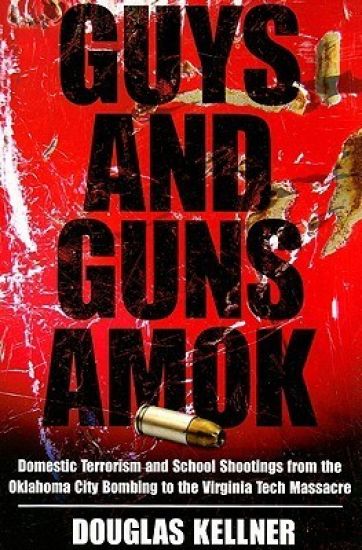
From the recent shootings at Virginia Tech University to the tragedies at Columbine and Oklahoma City, certain common traits can be traced through all of these events. In Guys and Guns Amok, media and cultural critic Douglas Kellner provides a fascinating diagnostic reading of these acts of domestic terrorism. Skillfully connecting each case with the current environment for male socialization and the search for identity in an American culture obsessed with guns and militarism, Kellner's work is a sobering reflection on these tragedies and the pervasive power of media and popular culture as well as a wake-up call for the future.
Vulture Culture
Christine M. Quail; Kathalene A. Razzano; Loubna H. Skalli; Douglas Kellner; Rhonda Hammer
Peter Lang Publishing Inc
2005
nidottu
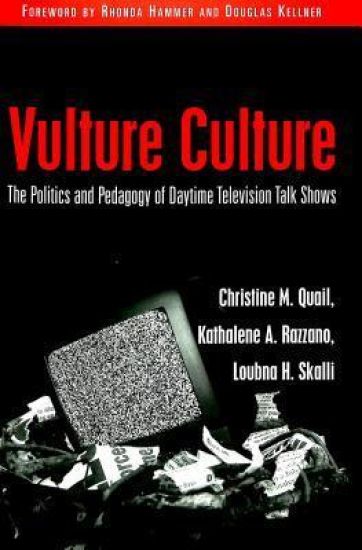
Vulture Culture presents a new and complex way of thinking about daytime television talk shows. Vulture culture is the process by which the media scavenge the personal narratives and popular discourses that make up everyday knowledge and commonsense and (re-)present them back to us as spectacle, entertainment, and information. This book explores these nuances through a probing analysis of the vast landscape of daytime television talk shows and their relation to important political, social, and economic problems. Using an approach that takes into account the multiple perspectives of political economy, cultural studies, and cultural pedagogy, Vulture Culture provides an in-depth and well-rounded examination of this mainstay of television and media culture.
Douglas Kellner's Media Spectacle and the Crisis of Democracy: 9/11, the War on Iraq, and Election 2004 investigates the role of the media in the momentous political events of the past four years. Beginning with the role of the media in contested election of 2000, Kellner examines how corporate media ownership and concentration, linked with a rightward shift of establishment media, have disadvantaged the Democrats and benefited George W. Bush and the Republicans. Exploring the role of media spectacle in the 9/11 attacks and subsequent Terror War in Afghanistan and Iraq, Kellner documents the centrality of media politics in advancing foreign policy agendas and militarism. Building on his analysis in Media Spectacle (Routledge 2003), Kellner demonstrates in detail how conflicting political forces ranging from Al Qaeda to the Bush administration construct media spectacles to advance their politics. Two chapters critically engage the role of the media in the buildup to the Iraq war and the media-centric nature of Bush's Iraq invasion and occupation. Final chapters delineate the role of the media in the highly contested and significant 2004 election campaign that many believe to be one of the key political struggles of the contemporary era. Criticizing Bush's unilateralism, Kellner argues for a multilateral and cosmopolitan globalization and the need for democratic media to help overcome the current crisis of democracy in the United States.
During the mid-1990s, the O.J. Simpson murder trial dominated the media in the United States and were circulated throughout the world via global communications networks. The case became a spectacle of race, gender, class and violence, bringing in elements of domestic melodrama, crime drama and legal drama. According to this fascinating new book, the Simpson case was just one example of what the author calls 'media spectacle' - a form of media culture that puts contemporary dreams, nightmares, fantasies and values on display. Through the analysis of several such media spectacles - including Elvis, The X Files, Michael Jordan, and the Bill Clinton sex scandals - Doug Kellner draws out important insights into media, journalism, the public sphere and politics in an era of new technologies.In this excellent follow up to his best selling Media Culture, Kellner's fascinating new volume delivers an informative read for students of sociology, culture and media.
The battle for the White House following the election of November 7, 2000 was arguably one of the major media spectacles in U.S. history, comparable to the Army-McCarthy hearings, the Kennedy assassination, the Watergate hearings, the Iran-Contra affair, the O.J. Simpson trial, and, most recently, the Clinton sex scandals and Impeachment trials. The election was in many ways more contained and circumscribed than these other epochal events, taking place over 36 days from the uncertainty of election night to Al Gore's concession on December 13 and George W. Bush's acceptance of the mantle of President-Elect. The story was highly theatrical with ups and downs, and surprises and reversals, for the candidates and the global audience, exhibiting unpredictability and uncertainty until the end. Its colorful cast of characters and melodramatic story line could hardly be bettered by the most creative Hollywood central casting. In Grand Theft 2000, Douglas Kellner recounts the story of a stolen election and Republican coup d'etat, focusing on the flaws of the system of democracy in the United States that allowed this event to take place. Kellner examines what the events of Election 2000 tell us about politics in the U.S. today and the alarming consequences for democracy in the battle for the White House. Grand Theft 2000 presents a historical narrative of the heist of the presidency as well as a critique of the media and political system that registers a crisis of democracy in the U.S.A. today. Arguing that the media are largely to blame for the theft of the presidency by the "Bush machine," Kellner shows how failures of voting technology and literacy, Republican manipulation of the Florida electoral process and political system in the counting of the votes, and structural problems with the system of democracy in the United States reveals a crisis of democracy that requires radical measures. Concluding sections on "Lesson and Conclusions" suggests some solutions to the problems revealed and a final secti
This compelling book explores the challenges to theory, politics, and human identity that we face on the threshold of the third millennium. It follows on the successor of Best and Kellner's two previous books, Postmodern Theory, acclaimed as the best critical introduction to the field - and The Postmodern Turn, which provides a powerful mapping of postmodern developments developments in the arts, politics, science, and theory. In The Postmodern Adventure, Best and Kellner analyze a broad array of literary, cultural, and political phenomena from fiction, film, science, and the Internet, to globalization and the rise of a transnational image culture.
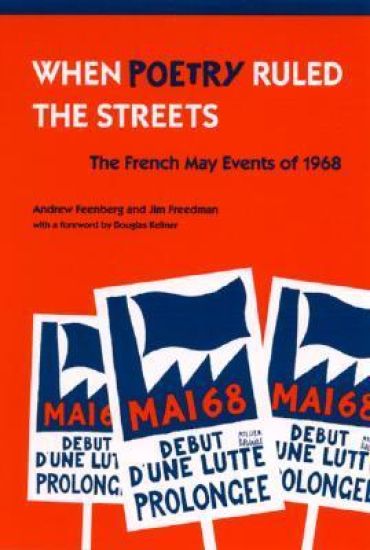
When Poetry Ruled the Streets
Andrew Feenberg; Jim Freedman; Douglas Kellner
State University of New York Press
2001
pokkari
Offers a complete survey of the French May Events of 1968 through narrative, analysis, and documents.More than a history, this book is a passionate reliving of the French May Events of 1968. The authors, ardent participants in the movement in Paris, documented the unfolding events as they pelted the police and ran from the tear gas grenades. Their account is imbued with the impassioned efforts of the students to ignite political awareness throughout society. Feenberg and Freedman select documents, graffiti, brochures, and posters from the movement and use them as testaments to a very different and exciting time. Their commentary, informed by the subsequent development of French culture and politics, offers useful background information and historical context for what may be the last great revolutionary challenge to the capitalist system.
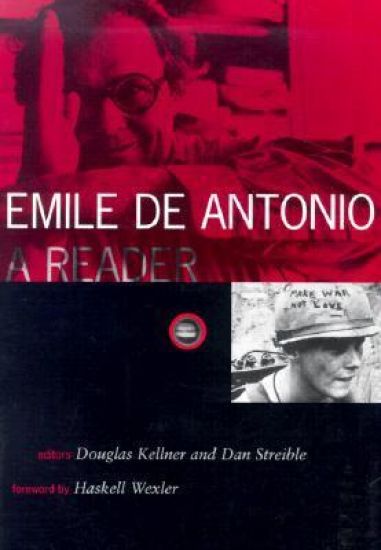
An absorbing collection of writings by and about an American original.Innovative documentary filmmaker; friend of Andy Warhol, John Cage, Jasper Johns, Robert Rauschenberg, and other leading figures of the New York art world; radical leftist critic of the Establishment; and legendary bon vivant: Emile de Antonio (1919-1989) was a larger-than-life personality and a key figure in the development of postwar American cinema. The films de Antonio made between 1963 and 1989-including Point of Order, Rush to Judgment, In the Year of the Pig, Painters Painting, and Millhouse: A White Comedy-revolutionized the documentary format and inspired a generation of artists and filmmakers. A decade after his death, his cinematic legacy-ranging from the brilliantly edited compilation of the 1954 Army-McCarthy hearings that helped construct Senator Joseph McCarthy’s reputation as a rogue demagogue (Point of Order) to a meditative juxtaposition of documents about F.B.I. director J. Edgar Hoover and intimate footage drawn from the filmmaker’s own life (Mr. Hoover and I)-remains unparalleled in American documentary film.Emile de Antonio: A Reader is the first full-length volume devoted to this major American filmmaker. It collects interviews with and writings by de Antonio; reviews and other critical material that detail the genesis, production history, and reception of his films; a comprehensive filmography; and an in-depth biographical essay. Offering a long-overdue assessment of de Antonio’s career, this indispensable book also makes a significant contribution to our understanding of American independent cinema at its most politically engaged.
Articulating The Global And The Local
Ann Cvetkovich; Douglas Kellner
Westview Press Inc
1996
nidottu
This book explores how discourses of the local, the particular, the everyday, and the situated are being transformed by new discourses of globalization and transnationalism, as used both by government and business and in critical academic discourse. Unlike other studies that have focused on the politics and economics of globalization, Articulating the Global and the Local highlights the importance of culture and provides models for a cultural studies that addresses globalization and the dialectic of local and global forces. Arguing for the inseparability of global and local analysis, the book demonstrates how global forces enter into local situations and how in turn global relations are articulated through local events, identities, and cultures; it includes studies of a wide range of cultural forms including sports, poetry, pedagogy, ecology, dance, cities, and democracy. Articulating the Global and the Local makes the ambitious claim that the category of the local transforms the debate about globalization by redefining what counts as global culture. Central to the essays are the new global and translocal cultures and identities created by the diasporic processes of colonialism and decolonization. The essays explore a variety of local, national, and transnational contexts with particular attention to race, ethnicity, gender, and sexuality as categories that force us to rethink globalization itself.
"This is one of the best books I've read on the changing relationship of television to society. It provides a very good analysis of theoretical perspectives on television and makes excellent use of critical theory. An accessible book that at the same time challenges the reader to think more deeply about the role of television in a formally democratic society. —Vincent Mosco Carleton University In this pathbreaking study, Douglas Kellner offers the most systematic, critically informed political and institutional study of television yet published in the United States. Focusing on the relationships among television, the state, and business, he traces the history of television broadcasting, emphasizing its socioeconomic impact and its growing political power. Throughout, Kellner evaluates the contradictory influence of television, a medium that has clearly served the interests of the powerful but has also dramatized conflicts within society and has on occasion led to valuable social criticism.
" a modern mythography, a study of contemporary Hollywood films based on the tools offered by feminism, psychoanalysis, Marxist cultural theory, and deconstruction." —Village Voice "Solidly thought-out observation of the films of the 70's and 80's that comment on the system." —Audience " . . . intelligent, open advocacy. Its responsible arrangement of carefully described cultural materials will challenge students and instructors alike." —Teaching Philosophy Camera Politica is a comprehensive study of Hollywood film during a period of tremendous change in American history, a period that witnessed the end of the American empire, crises in the economy, a failure of political leadership, loss at war, and the rise of the Right.