Kirjojen hintavertailu. Mukana 12 314 240 kirjaa ja 12 kauppaa.

Kirjailija

Douglas Mao

Kirjat ja teokset yhdessä paikassa: 6 kirjaa, julkaisuja vuosilta 2010-2026, suosituimpien joukossa Howards End, A Longman Cultural Edition. Vertaile teosten hintoja ja tarkista saatavuus suomalaisista kirjakaupoista.

6 kirjaa

Kirjojen julkaisuhaarukka 2010-2026.

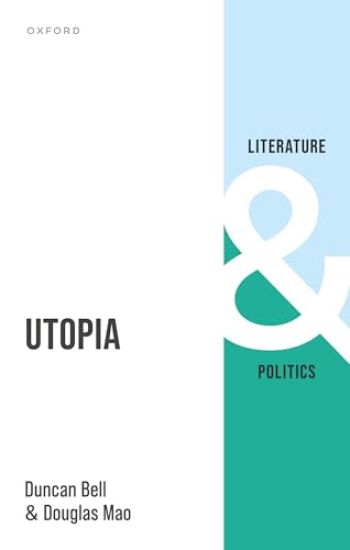
Utopia

Utopia

Duncan Bell; Douglas Mao

Oxford University Press
2026
sidottu
Ideal societies, better worlds, more just and peaceful ways of living: these have long been the stuff of human beings' social dreaming. In this compact volume, two leading scholars from different disciplines join to consider the life of utopian imagining within the frame of literature and politics. Duncan Bell, a political scientist and intellectual historian, opens the book with a critical overview of the Anglophone utopian tradition and a fresh definition of utopia. He then shows how the threat of technological annihilation, and the promise of transcendence of human limitations, has shaped utopian and dystopian writing of the last hundred years. Douglas Mao, a scholar of literature, begins the second part of the book by delving into utopian literature's vexed relation to sentimental feeling, especially as this is signalled by speculation on how inhabitants of utopia themselves would read literary works. He then shows how utopian writing's orientation to problem-solving puts it into surprising relation with both politics and literature in general. An interview in which the two authors compare their methods and conclusions closes out the book.
Utopia

Utopia

Duncan Bell; Douglas Mao

Oxford University Press
2026
nidottu
Ideal societies, better worlds, more just and peaceful ways of living: these have long been the stuff of human beings' social dreaming. In this compact volume, two leading scholars from different disciplines join to consider the life of utopian imagining within the frame of literature and politics. Duncan Bell, a political scientist and intellectual historian, opens the book with a critical overview of the Anglophone utopian tradition and a fresh definition of utopia. He then shows how the threat of technological annihilation, and the promise of transcendence of human limitations, has shaped utopian and dystopian writing of the last hundred years. Douglas Mao, a scholar of literature, begins the second part of the book by delving into utopian literature's vexed relation to sentimental feeling, especially as this is signalled by speculation on how inhabitants of utopia themselves would read literary works. He then shows how utopian writing's orientation to problem-solving puts it into surprising relation with both politics and literature in general. An interview in which the two authors compare their methods and conclusions closes out the book.
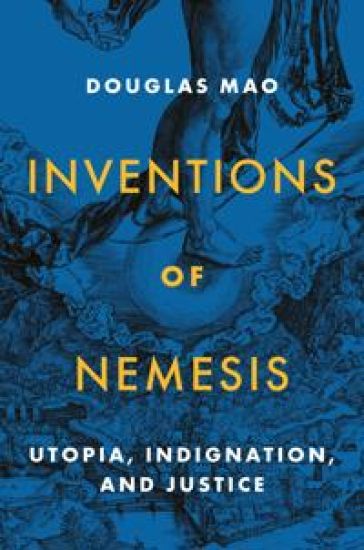
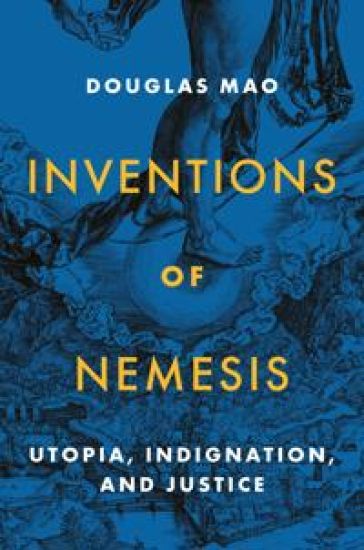
Inventions of Nemesis

Inventions of Nemesis

Douglas Mao

Princeton University Press
2020
pokkari
A wide-ranging reevaluation of utopian literature and philosophy, from Plato to Chang-Rae LeeExamining literary and philosophical writing about ideal societies from Greek antiquity to the present, Inventions of Nemesis offers a striking new take on utopia’s fundamental project.Noting that utopian imagining has often been propelled by an angry conviction that society is badly arranged, Douglas Mao argues that utopia’s essential aim has not been to secure happiness, order, or material goods, but rather to establish a condition of justice in which all have what they ought to have. He also makes the case that hostility to utopias has frequently been associated with a fear that they will transform humanity beyond recognition, doing away with the very subjects who should receive justice in a transformed world. Further, he shows how utopian writing speaks to contemporary debates about immigration, labor, and other global justice issues. Along the way, Inventions of Nemesis connects utopia to the Greek concept of nemesis, or indignation at a wrong ordering of things, and advances fresh readings of dozens of writers and thinkers—from Plato, Thomas More, Nathaniel Hawthorne, Edward Bellamy, Charlotte Perkins Gilman, and H. G. Wells to John Rawls, Robert Nozick, Fredric Jameson, Ursula Le Guin, Octavia Butler, and Chang-Rae Lee.Ambitious and timely, Inventions of Nemesis offers a vital reconsideration of what it really means to imagine an ideal society.
Inventions of Nemesis

Inventions of Nemesis

Douglas Mao

PRINCETON UNIVERSITY PRESS
2020
sidottu
A wide-ranging reevaluation of utopian literature and philosophy, from Plato to Chang-Rae LeeExamining literary and philosophical writing about ideal societies from Greek antiquity to the present, Inventions of Nemesis offers a striking new take on utopia’s fundamental project.Noting that utopian imagining has often been propelled by an angry conviction that society is badly arranged, Douglas Mao argues that utopia’s essential aim has not been to secure happiness, order, or material goods, but rather to establish a condition of justice in which all have what they ought to have. He also makes the case that hostility to utopias has frequently been associated with a fear that they will transform humanity beyond recognition, doing away with the very subjects who should receive justice in a transformed world. Further, he shows how utopian writing speaks to contemporary debates about immigration, labor, and other global justice issues. Along the way, Inventions of Nemesis connects utopia to the Greek concept of nemesis, or indignation at a wrong ordering of things, and advances fresh readings of dozens of writers and thinkers—from Plato, Thomas More, Nathaniel Hawthorne, Edward Bellamy, Charlotte Perkins Gilman, and H. G. Wells to John Rawls, Robert Nozick, Fredric Jameson, Ursula Le Guin, Octavia Butler, and Chang-Rae Lee.Ambitious and timely, Inventions of Nemesis offers a vital reconsideration of what it really means to imagine an ideal society.
Howards End, A Longman Cultural Edition

Howards End, A Longman Cultural Edition

E. Forster; Douglas Mao

Pearson
2010
nidottu
Art and commerce, nature and industry, idealism and pragmatism, women and men: the struggles, partings, and reconciliations between these pairs drive the narrative of one of the great English novels of the twentieth century. One of the newest additions to The Longman Cultural Editions series, Howards End presents the complete text headed by an inviting introduction, and supplemented by helpful annotations; a table of dates to track its composition, publication, and public reception in relation to biographical, cultural and historical events; and a guide for further inquiry and study.
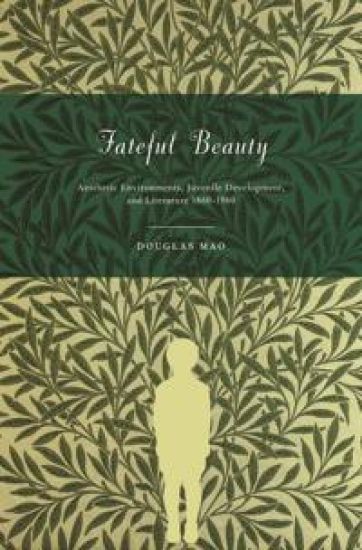
Fateful Beauty

Fateful Beauty

Douglas Mao

Princeton University Press
2010
pokkari
When Oscar Wilde said he had "seen wallpaper which must lead a boy brought up under its influence to a life of crime," his joke played on an idea that has often been taken quite seriously--both in Wilde's day and in our own. In Fateful Beauty, Douglas Mao recovers the lost intellectual, social, and literary history of the belief that the beauty--or ugliness--of the environment in which one is raised influences or even determines one's fate. Weaving together readings in literature, psychology, biology, philosophy, education, child-rearing advice, and interior design, he shows how this idea abetted a dramatic rise in attention to environment in many discourses and in many practices affecting the lives of the young between the late nineteenth century and the middle of the twentieth. Through original and detailed analyses of Wilde, Walter Pater, James Joyce, Theodore Dreiser, Rebecca West, and W. H. Auden, Mao shows that English-language writing of the period was informed in crucial but previously unrecognized ways by the possibility that beautiful environments might produce better people. He also reveals how these writers shared concerns about environment, evolution, determinism, freedom, and beauty with scientists and social theorists such as Herbert Spencer, Hermann von Helmholtz, Ivan Petrovich Pavlov, and W.H.R. Rivers. In so doing, Mao challenges conventional views of the roles of beauty and the aesthetic in art and life during this time.