Kirjojen hintavertailu. Mukana 12 595 353 kirjaa ja 12 kauppaa.

Kirjailija

Douglas Newton

Kirjat ja teokset yhdessä paikassa: 10 kirjaa, julkaisuja vuosilta 1997-2021, suosituimpien joukossa Teaching Design and Technology 3 - 11. Vertaile teosten hintoja ja tarkista saatavuus suomalaisista kirjakaupoista.

10 kirjaa

Kirjojen julkaisuhaarukka 1997-2021.

Private Ryan and the Lost Peace

Private Ryan and the Lost Peace

Douglas Newton

Longueville Media
2021
pokkari
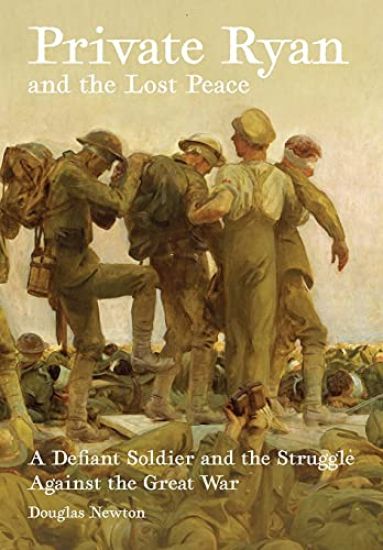
Imagine the Great War ending early, in 1915, or 1916, or even 1917. Imagine round-table negotiations and a compromise peace, ending what seemed to be an unbreakable military stalemate. Had peace come in this way, perhaps there would have been no Communism, no Fascism, no Nazism, no Great Depression, and no Second World War. During the Great War, many urged such a peace.Private Ryan and the Lost Peace is the story of one soldier who rebelled against the war and urged a mediated settlement. He happened to be Australian, but his could be the story of many an 'everyman' at the front. Private Ted Ryan, originally from Broken Hill, sent an angry letter to Britain's famous anti-war politician, Ramsay MacDonald, urging him to keep pushing for peace. Ryan denounced the war as the herding of men to a hideous 'abattoir' of industrialised killing He blasted talk of fighting on to 'the knock-out blow'. Eventually, Ryan's revolt landed him in four courts martial. He even received a death sentence. Were secret diplomatic deals prolonging the war? Were promising opportunities for peace callously rebuffed? From what we know now about the squashing of peace initiatives, Ted Ryan's instincts were dead right. The Great War was a protracted catastrophe, unnecessarily prolonged. Those who rebelled against it - even in the trenches - deserve to have their story heard.
Creative Chemists

Creative Chemists

Simon Rees; Douglas Newton

Royal Society of Chemistry
2020
sidottu
Creative thinking, be it that of the teacher or the student, has tended to be overlooked in science, but exercising it is important. This book shows how it can be done in chemistry, both in the context of creative chemistry teaching and in learning chemistry. Going beyond principles and ideology, readers will find practical strategies, tools, examples, and case studies in a variety of contexts to bring creative thinking theory into practice. Beginning with a discussion on the nature of creativity, the authors’ debunk misconceptions and address the relationship between creativity and problem solving. Delving into opportunities for practising creative thinking in science, for instance, hypothesis generation and experiment design, the authors’ then move on to discussions around assessing and evaluating creative thinking. Further areas covered include: multisensory chemistry, language and literacy, practical work and story-telling. As a resource, this book points the way to fostering exploration and the development of creative thinking in chemistry for the benefit of the student, and for the benefit of the teacher in offering a source of satisfaction and achievement in the work they do. With a foreword by John Holman.
Talking Sense in Science

Talking Sense in Science

Douglas P Newton; Douglas Newton

Routledge
2017
sidottu
Talking Sense in Science is a highly practical guide to getting the most out of primary science lessons through talking with children. This clearly written and straightforward book helps teachers to support understanding by developing their own interaction in the classroom. Each idea is described, illustrated and followed by a short task to develop teaching skills. This book looks at ways of understanding in science, and scientific language as well as how talk can support practical activities. Douglas Newton also addresses the ideas of what to say, when to say it and how to say it, with a view to developing understanding through science conversation. Examples given in the book span the range of primary school science topics, and provide an ideal sourcebook for lesson ideas. Talking Sense in Science is an essential buy for primary teachers who want an accessible way to improve their practice and their pupils' understanding in science. It is also an ideal learning tool for student teachers.
The Darkest Days

The Darkest Days

Douglas Newton

Verso Books
2015
nidottu
The centenary of the outbreak of the First World War may be commemorated by some as a great moment of national history. But the standard history of Britain's choice for war is far from the truth. Using a wide range of sources, including the personal papers of many of the key figures, some for the first time, historian Douglas Newton presents a new, dramatic narrative. He interleaves the story of those pressing for a choice for war with the story of those resisting Britain's descent into calamity. He shows how the decision to go to war was rushed, in the face of vehement opposition, in the Cabinet and Parliament, in the Liberal and Labour press, and in the streets. There was no democratic decision for war.The history of this opposition has been largely erased from the record, yet it was crucial to what actually happened in August 1914. Two days before the declaration of war four members of the Cabinet resigned in protest at the war party's manipulation of the crisis. The government almost disintegrated. Meanwhile large crowds gathered in Trafalgar Square to hear the case for neutrality and peace. Yet this cry was ignored by the government. Meanwhile, elements of the press, the Foreign Office, and the Tory Opposition sought to browbeat the government into a quick decision. Belgium had little to do with it.The key decision to enter the war was made before Belgium was invaded. Those bellowing for hostilities were eager for Britain to enter any war in solidarity with Russia and France - for the future safety of the British Empire. In particular Newton shows how Prime Minister H. H. Asquith, Foreign Minister Sir Edward Grey, and First Lord of the Admiralty Winston Churchill colluded to pre-empt the decisions of Cabinet, to manipulate the parliament, and to hurry the nation toward intervention by any means necessary.
Teaching Design and Technology 3 - 11

Teaching Design and Technology 3 - 11

Douglas Newton

SAGE Publications Inc
2005
sidottu
'Douglas Newton's Teaching Design and Technology gives encouragement to creativity in younger pupils. Aimed at ages 3-11, it contains a variety of suggestions for activities providing more than just a collection of ideas, there are many suggestions that might help children plan and work towards quality products' - The Times Educational Supplement 'An excellent book which is both thought-provoking and extremely practical. The philosophy and history behind D&T is enlightening and very entertaining, whilst the numerous ideas for practical activities make it a 'pick up and use' book. Unusually, it provides a wide range of activities for children as young as 3 up to 11 years of age, and detailed lesson plans demonstrate how they can be presented in class. The problem-solving approach taken by this book supports views on 'best practice' as described in the government publication 'Excellence and Enjoyment'. As the focus in education is on developing a more creative curriculum, this book is a must for both experienced teachers and students alike' - Linda Johnston, Head at Sedgefield Hardwick Primary 'This book is packed full of sound advice and good ideas interlaced with the essence of what Design and Technology in primary schools should be' - David Jinks, Jerwood Laureate 'A very practical book, which focuses on sound advice from an expert in D&T education... Here you will find a wealth of ideas for putting into practice. What shines through is the depth of experience that Newton brings to the work... This is an invaluable resource for any primary school and deserves to be widely read. I have no doubt that teachers will rate it highly' - Primary Science Review 'This very readable book gives a wealth of simple interesting examples of technological development that will be appreciated by children throughout the primary school... Very practical general teaching advice is given throughout... a valuable resource for trainees and teachers who lack experience in this subject' - Journal of Education for Teaching Training to teach Design and Technology? Need ideas for your lessons? Want to refresh your D&T teaching? Professor Douglas Newton's succinct guide to teaching design and technology uses ideas that have been road-tested and developed over his many years of teaching and of training student teachers and practitioners. Assuming no prior knowledge, this straightforward book will quickly help you teach D&T in the primary school and D&T-related activities in the very early years. It gives you ready-made lesson plans and banks of teaching ideas for immediate use in your classroom. Written for the busy trainee and teacher, this practical book features: - A clear account of the nature of D&T and what is expected of you. - Time-saving, photocopiable worksheets to help children grasp problems, develop ideas and plan. - Lots of activities for the children, some set out in step-by-step detail. - Advice on helping children make progress and on assessing their work. - Looking ahead: some guidance for the aspiring teacher on preparing for curriculum leadership. - Helpful chapter summaries.
Teaching Design and Technology 3 - 11

Teaching Design and Technology 3 - 11

Douglas Newton

SAGE Publications Inc
2005
nidottu
'Douglas Newton's Teaching Design and Technology gives encouragement to creativity in younger pupils. Aimed at ages 3-11, it contains a variety of suggestions for activities providing more than just a collection of ideas, there are many suggestions that might help children plan and work towards quality products' - The Times Educational Supplement 'An excellent book which is both thought-provoking and extremely practical. The philosophy and history behind D&T is enlightening and very entertaining, whilst the numerous ideas for practical activities make it a 'pick up and use' book. Unusually, it provides a wide range of activities for children as young as 3 up to 11 years of age, and detailed lesson plans demonstrate how they can be presented in class. The problem-solving approach taken by this book supports views on 'best practice' as described in the government publication 'Excellence and Enjoyment'. As the focus in education is on developing a more creative curriculum, this book is a must for both experienced teachers and students alike' - Linda Johnston, Head at Sedgefield Hardwick Primary 'This book is packed full of sound advice and good ideas interlaced with the essence of what Design and Technology in primary schools should be' - David Jinks, Jerwood Laureate 'A very practical book, which focuses on sound advice from an expert in D&T education... Here you will find a wealth of ideas for putting into practice. What shines through is the depth of experience that Newton brings to the work... This is an invaluable resource for any primary school and deserves to be widely read. I have no doubt that teachers will rate it highly' - Primary Science Review 'This very readable book gives a wealth of simple interesting examples of technological development that will be appreciated by children throughout the primary school... Very practical general teaching advice is given throughout... a valuable resource for trainees and teachers who lack experience in this subject' - Journal of Education for Teaching Training to teach Design and Technology? Need ideas for your lessons? Want to refresh your D&T teaching? Professor Douglas Newton's succinct guide to teaching design and technology uses ideas that have been road-tested and developed over his many years of teaching and of training student teachers and practitioners. Assuming no prior knowledge, this straightforward book will quickly help you teach D&T in the primary school and D&T-related activities in the very early years. It gives you ready-made lesson plans and banks of teaching ideas for immediate use in your classroom. Written for the busy trainee and teacher, this practical book features: - A clear account of the nature of D&T and what is expected of you. - Time-saving, photocopiable worksheets to help children grasp problems, develop ideas and plan. - Lots of activities for the children, some set out in step-by-step detail. - Advice on helping children make progress and on assessing their work. - Looking ahead: some guidance for the aspiring teacher on preparing for curriculum leadership. - Helpful chapter summaries.
Talking Sense in Science

Talking Sense in Science

Douglas P Newton; Douglas Newton

Routledge
2001
nidottu
Talking Sense in Science is a highly practical guide to getting the most out of primary science lessons through talking with children. This clearly written and straightforward book helps teachers to support understanding by developing their own interaction in the classroom. Each idea is described, illustrated and followed by a short task to develop teaching skills. This book looks at ways of understanding in science, and scientific language as well as how talk can support practical activities. Douglas Newton also addresses the ideas of what to say, when to say it and how to say it, with a view to developing understanding through science conversation. Examples given in the book span the range of primary school science topics, and provide an ideal sourcebook for lesson ideas. Talking Sense in Science is an essential buy for primary teachers who want an accessible way to improve their practice and their pupils' understanding in science. It is also an ideal learning tool for student teachers.
British Policy and the Weimar Republic, 1918-1919
This book explores the making of British policy toward Germany in the aftermath of its defeat in the Great War. Douglas Newton shows how British pressures on Germany during the formative months of the new republic were crucial in debilitating the German Revolution and the faltering Weimar democracy. Using a vast array of private papers, Dr Newton reveals the inner workings of British policy-making: the long-standing reluctance to make any commitment to German democratization; the overwhelmingly hostile response to the socialist-led German Revolution; the shunning and starvation of the new socialist government; the support for the resuscitation of a degree of militarism to deal with 'Bolshevism' inside Germany; and the battle to achieve the only real concession made to Germany - the minor relaxation of the economic blockade, in March 1919, to allow emergency food relief. British policy towards the `new Germany' was forged in an atmosphere of great tension. The `moderates', especially strong in the intelligence services, who recommended policies of reconciliation, faced powerful ultra-patriotic and economic pressure groups, supported by the popular press who had long insisted upon a policy of aggrandizement in order to smother anticipated unrest in post-war Britain. Britain's decision-makers vacillated for months. With many misgivings, they eventually opted for a `harsh' treaty, in spite of an emerging consensus among the intelligence `experts' in favour of a moderate peace to consolidate Germany's transition to democracy. Douglas Newton shows how domestic political priorities triumphed over expert opinion, with ominous consequences for the fate of German democracy and for the rest of Europe.