Kirjojen hintavertailu. Mukana 12 390 323 kirjaa ja 12 kauppaa.

Kirjailija

Douglas Rogers

Kirjat ja teokset yhdessä paikassa: 12 kirjaa, julkaisuja vuosilta 2009-2026, suosituimpien joukossa Imaging Anatomy: Chest, Abdomen, Pelvis. Vertaile teosten hintoja ja tarkista saatavuus suomalaisista kirjakaupoista.

12 kirjaa

Kirjojen julkaisuhaarukka 2009-2026.

Imaging Anatomy: Chest, Abdomen, Pelvis

Imaging Anatomy: Chest, Abdomen, Pelvis

Siva P. Raman; Melissa L. Rosado-de-Christenson; Atif Zaheer; Santiago Martínez-Jiménez; Ghaneh Fananapazir; Sherief Garrana; Douglas Rogers; Bryan R. Foster

Elsevier Health Sciences
2023
sidottu
This richly illustrated and superbly organized text/atlas is an excellent point-of-care resource for practitioners at all levels of experience and training. Written by global leaders in the field, Imaging Anatomy: Chest, Abdomen, Pelvis, third edition, contains specifics about radiographic, multiplanar, high-resolution, and cross-sectional body imaging along with thousands of relevant examples to give busy clinicians quick answers to imaging anatomy questions. This must-have reference employs a templated, highly formatted design; concise, bulleted text; and state-of-the-art images throughout that identify characteristic normal imaging findings and anatomic variants in each anatomic area, offering a unique opportunity to master the fundamentals of normal anatomy and accurately and efficiently recognize pathologic conditions. Contains nearly 2,800 print and online-only images, including all relevant imaging modalities, 3D reconstructions, and detailed, high-resolution medical drawings that together illustrate the fine points of imaging anatomy Reflects new understandings of anatomy due to ongoing anatomic research as well as new, advanced imaging techniques Offers new content on the anatomic basis for thoracic developmental abnormalities, anatomic variants of systemic and pulmonary vasculature, and the PI-RADS system and clinical implications of MR for prostate cancer Contains new and updated images of the chest wall musculature with CT and MR examples; abdominal imaging best practices, including the application of body MR in the abdomen and pelvis; and the different modalities used for GU/GYN imaging, specifically retrograde urethrography and MR for specific disease diagnosis Depicts common anatomic variants and covers the common pathological processes that manifest with alterations of normal anatomic landmarks Features representative pathologic examples to highlight the effect of disease on human anatomy Presents essential text in an easy-to-digest, bulleted format, enabling imaging specialists to find quick answers to anatomy questions encountered in daily practice Includes an eBook version that enables you to access all text, figures, and references with the ability to search, customize your content, make notes and highlights, and have content read aloud
The Depths of Russia

The Depths of Russia

Douglas Rogers

Academic Studies Press
2026
pokkari
In The Depths of Russia, Yale anthropologist and historian Douglas Rogers tells the history of Russian oil from the perspective of the Perm region of the Urals. From the discovery of world’s first socialist oil in 1929 to the oil-fueled social and cultural politics of the 2000s, he shows how Permian oil illuminates the place of oil in the modern world in new ways. Rogers pays particular attention to the nature of oil as a material substance and to its role in the formation and interaction of states and corporations in socialist and capitalist contexts. The book is based on extensive ethnographic fieldwork, interviews, and archival research in the Perm region.
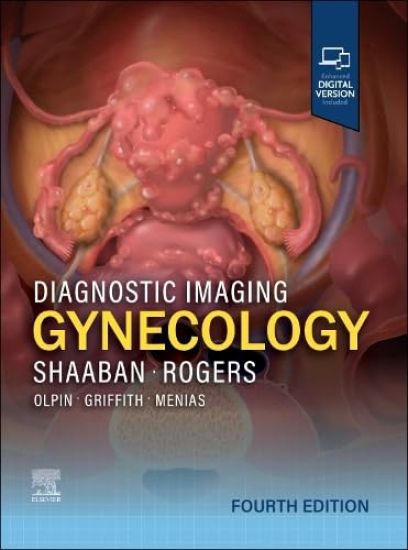
Diagnostic Imaging: Gynecology

Diagnostic Imaging: Gynecology

Akram M. Shaaban; Douglas Rogers

Elsevier Health Sciences
2026
sidottu
Covering the entire spectrum of this fast-changing field, Diagnostic Imaging: Gynecology, fourth edition, is an invaluable resource for general radiologists, specialized radiologists, gynecologists, and trainees?anyone who requires an easily accessible, highly visual reference on today’s gynecologic imaging. Drs. Akram M. Shaaban, Douglas Rogers, and their team of highly regarded experts provide up-to-date information on recent advances in technology and the understanding of pathologic entities to help you make informed decisions at the point of care. The text is lavishly illustrated, delineated, and referenced, making it a useful learning tool as well as a handy reference for daily practice. Features a newly reorganized, more intuitive presentation of disease entities by region and presents all pertinent pathologic entities, including congenital anomalies, infectious/inflammatory diseases, and benign and malignant neoplasms Includes updated pelvic floor content with a more clinically relevant focus, and a greater emphasis on ovarian cancers and their cell origins throughout Provides new and updated information on growing teratoma syndrome, endosalpingiosis, hyperthecosis, postablation tubal sterilization syndrome, follow-up criteria for lesions (including adnexal cysts), and postoperative appearance and complications of transgender surgery for women Reflects staging changes for gynecological malignancies from the International Federation of Gynecology and Obstetrics (FIGO) and American Joint Committee on Cancer (AJCC) TNM Introduces most sections with a review of normal anatomy and variants, bolstered with extensive use of medical illustrations and radiographic images Comprises dedicated sections on imaging techniques designed to optimize radiologic protocols and enhance diagnostic specificity Features x,xxx+ high-quality print images (with an additional x,xxx+ images in the complimentary eBook), including radiology images, full-color medical illustrations, clinical photographs, and gross pathology and histology images, and includes all relevant modalities: ultrasound (with 3D), sonohysterography, hysterosalpingography, MR, PET/CT, and gross pathology imagery Uses succinct bulleted text and highly templated chapters for quick comprehension of essential information at the point of care Includes an eBook that allows you access to everything in the print version as well as new text, 175 videos, and thousands of additional images and references, with the ability to search, customize your content, make notes and highlights, and have content read aloud; additional digital ancillary content may publish up to 6 weeks following the publication date Diagnostic Imaging: Gynecology 4e includes a reorganized TOC, specifically around ovarian cancers and their cell origins. There are 10+ updated chapters on a number of different topics including The growing teratoma syndrome Endosalpingiosis FIGO and AJCC TNM staging changing for gynecological malignancies In addition, the group of pelvic floor chapters are streamlined tin the 4e o focus on what’s most clinically relevant and the approach to image interpretation. New content is included on the follow-up criteria for lesions, including adnexal cysts, and new content exists for the postoperative appearance and complications of transgender surgery for females
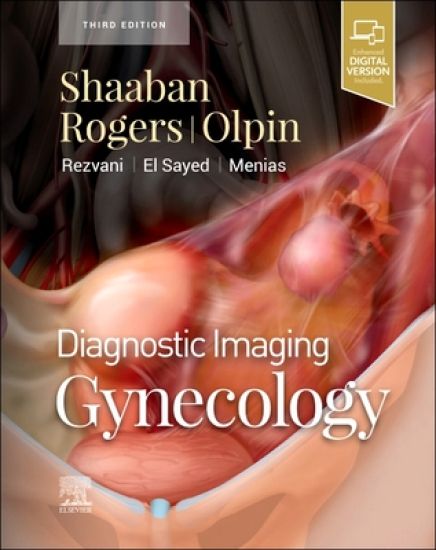
Diagnostic Imaging: Gynecology

Diagnostic Imaging: Gynecology

Akram M. Shaaban; Douglas Rogers

Elsevier - Health Sciences Division
2021
sidottu
Covering the entire spectrum of this fast-changing field, Diagnostic Imaging: Gynecology, third edition, is an invaluable resource for general radiologists, specialized radiologists, gynecologists, and trainees-anyone who requires an easily accessible, highly visual reference on today's gynecologic imaging. Drs. Akram Shaaban, Douglas Rogers, Jeffrey Olpin, and their team of highly regarded experts provide up-to-date information on recent advances in technology and the understanding of pathologic entities to help you make informed decisions at the point of care. The text is lavishly illustrated, delineated, and referenced, making it a useful learning tool as well as a handy reference for daily practice. Serves as a one-stop resource for key concepts and information on gynecologic imaging, including a wealth of new material and content updates throughout Features more than 2,500 illustrations that illustrate the correlation between ultrasound (including 3D), sonohysterography, hysterosalpingography, MR, PET/CT, and gross pathology images, plus an additional 1,000 digital images online Features updates from cover to cover on uterine fibroids, endometriosis, and ovarian cysts/tumors; rare diagnoses; and a completely rewritten section on the pelvic floor Reflects updates to new TNM and WHO classifications, Federation of Gynecology and Obstetrics (FIGO) staging, and American Joint Committee on Cancer (AJCC) TMM staging and prognostic groups Begins each section with a review of normal anatomy and variants featuring extensive full-color illustrations Uses bulleted, succinct text and highly templated chapters for quick comprehension of essential information at the point of care Enhanced eBook version included with purchase, which allows you to access all of the text, figures, and references from the book on a variety of devices
The Depths of Russia

The Depths of Russia

Douglas Rogers

Academic Studies Press
2021
sidottu
In The Depths of Russia, Yale anthropologist and historian Douglas Rogers tells the history of Russian oil from the perspective of the Perm region of the Urals. From the discovery of world’s first socialist oil in 1929 to the oil-fueled social and cultural politics of the 2000s, he shows how Permian oil illuminates the place of oil in the modern world in new ways. Rogers pays particular attention to the nature of oil as a material substance and to its role in the formation and interaction of states and corporations in socialist and capitalist contexts. The book is based on extensive ethnographic fieldwork, interviews, and archival research in the Perm region.
Two Weeks in November

Two Weeks in November

Douglas Rogers

Short Books Ltd
2019
nidottu
Two Weeks in Novemberis the thrilling, surreal, unbelievable and often very funny true story of four would-be enemies - a high ranking politician, an exiled human rights lawyer, a dangerous spy and a low-key white businessman turned political fixer - who team up to help unseat one of Africa's longest serving dictators, Robert Mugabe.What begins as an improbable adventure destined for failure, marked by a mixture of bravery, strategic cunning and bumbling naiveté, soon turns into the most sophisticated political-military operation in African history. By virtue of their being together, the unlikely team of misfit rivals is suddenly in position to spin what might have been seen as an illegal coup into a mass popular uprising that the world - and millions of Zimbabweans - will enthusiastically support.Impeccably researched, deftly written, and told in the style of a contemporary political thriller, Two Weeks in November throws you into the very heart of ‘the game’, a dangerous hidden world that makes you question what is real, what is choreographed, and whether anything can really change in a country where the same players are still dictating the rules.
The Depths of Russia

The Depths of Russia

Douglas Rogers

Cornell University Press
2015
sidottu
Russia is among the world's leading oil producers, sitting atop the planet's eighth largest reserves. Like other oil-producing nations, it has been profoundly transformed by the oil industry. In The Depths of Russia, Douglas Rogers offers a nuanced and multifaceted analysis of oil's place in Soviet and Russian life, based on ethnographic fieldwork and archival research in the Perm region of the Urals. Moving beyond models of oil calibrated to capitalist centers and postcolonial "petrostates," Rogers traces the distinctive contours of the socialist—and then postsocialist—oil complex, showing how oil has figured in the making and remaking of space and time, state and corporation, exchange and money, and past and present. He pays special attention to the material properties and transformations of oil (from depth in subsoil deposits to toxicity in refining) and to the ways oil has echoed through a range of cultural registers. The Depths of Russia challenges the common focus on high politics and Kremlin intrigue by considering the role of oil in barter exchanges and surrogate currencies, industry-sponsored social and cultural development initiatives, and the city of Perm's campaign to become a European Capital of Culture. Rogers also situates Soviet and post-Soviet oil in global contexts, showing that many of the forms of state and corporate power that emerged in Russia after socialism are not outliers but very much part of a global family of state-corporate alliances gathered at the intersection of corporate social responsibility, cultural sponsorship, and the energy and extractive industries.
The Depths of Russia

The Depths of Russia

Douglas Rogers

Cornell University Press
2015
pokkari
Russia is among the world's leading oil producers, sitting atop the planet's eighth largest reserves. Like other oil-producing nations, it has been profoundly transformed by the oil industry. In The Depths of Russia, Douglas Rogers offers a nuanced and multifaceted analysis of oil's place in Soviet and Russian life, based on ethnographic fieldwork and archival research in the Perm region of the Urals. Moving beyond models of oil calibrated to capitalist centers and postcolonial "petrostates," Rogers traces the distinctive contours of the socialist—and then postsocialist—oil complex, showing how oil has figured in the making and remaking of space and time, state and corporation, exchange and money, and past and present. He pays special attention to the material properties and transformations of oil (from depth in subsoil deposits to toxicity in refining) and to the ways oil has echoed through a range of cultural registers. The Depths of Russia challenges the common focus on high politics and Kremlin intrigue by considering the role of oil in barter exchanges and surrogate currencies, industry-sponsored social and cultural development initiatives, and the city of Perm's campaign to become a European Capital of Culture. Rogers also situates Soviet and post-Soviet oil in global contexts, showing that many of the forms of state and corporate power that emerged in Russia after socialism are not outliers but very much part of a global family of state-corporate alliances gathered at the intersection of corporate social responsibility, cultural sponsorship, and the energy and extractive industries.
The Last Resort: A Memoir of Mischief and Mayhem on a Family Farm in Africa
Thrilling, heartbreaking, and, at times, absurdly funny, The Last Resort is a remarkable true story about one family in a country under siege and a testament to the love, perseverance, and resilience of the human spirit. Born and raised in Zimbabwe, Douglas Rogers is the son of white farmers living through that country's long and tense transition from postcolonial rule. He escaped the dull future mapped out for him by his parents for one of adventure and excitement in Europe and the United States. But when Zimbabwe's president Robert Mugabe launched his violent program to reclaim white-owned land and Rogers's parents were caught in the cross fire, everything changed. Lyn and Ros, the owners of Drifters-a famous game farm and backpacker lodge in the eastern mountains that was one of the most popular budget resorts in the country-found their home and resort under siege, their friends and neighbors expelled, and their lives in danger. But instead of leaving, as their son pleads with them to do, they haul out a shotgun and decide to stay. On returning to the country of his birth, Rogers finds his once orderly and progressive home transformed into something resembling a Marx Brothers romp crossed with Heart of Darkness pot has supplanted maize in the fields; hookers have replaced college kids as guests; and soldiers, spies, and teenage diamond dealers guzzle beer at the bar. And yet, in spite of it all, Rogers's parents-with the help of friends, farmworkers, lodge guests, and residents-among them black political dissidents and white refugee farmers-continue to hold on. But can they survive to the end? In the midst of a nation stuck between its stubborn past and an impatient future, Rogers soon begins to see his parents in a new light: unbowed, with passions and purpose renewed, even heroic. And, in the process, he learns that the "big story" he had relentlessly pursued his entire adult life as a roving journalist and travel writer was actually happening in his own backyard. Evoking elements of The Tender Bar and Absurdistan, The Last Resort is an inspiring, coming-of-age tale about home, love, hope, responsibility, and redemption. An edgy, roller-coaster adventure, it is also a deeply moving story about how to survive a corrupt Third World dictatorship with a little innovation, humor, bribery, and brothel management.
The Old Faith and the Russian Land

The Old Faith and the Russian Land

Douglas Rogers

Cornell University Press
2009
pokkari
The Old Faith and the Russian Land is a historical ethnography that charts the ebbs and flows of ethical practice in a small Russian town over three centuries. The town of Sepych was settled in the late seventeenth century by religious dissenters who fled to the forests of the Urals to escape a world they believed to be in the clutches of the Antichrist. Factions of Old Believers, as these dissenters later came to be known, have maintained a presence in the town ever since. The townspeople of Sepych have also been serfs, free peasants, collective farmers, and, now, shareholders in a post-Soviet cooperative. Douglas Rogers traces connections between the town and some of the major transformations of Russian history, showing how townspeople have responded to a long series of attempts to change them and their communities: tsarist-era efforts to regulate family life and stamp out Old Belief on the Stroganov estates, Soviet collectivization drives and antireligious campaigns, and the marketization, religious revival, and ongoing political transformations of post-Soviet times. Drawing on long-term ethnographic fieldwork and extensive archival and manuscript sources, Rogers argues that religious, political, and economic practice are overlapping arenas in which the people of Sepych have striven to be ethical—in relation to labor and money, food and drink, prayers and rituals, religious books and manuscripts, and the surrounding material landscape. He tracks the ways in which ethical sensibilities—about work and prayer, hierarchy and inequality, gender and generation—have shifted and recombined over time. Rogers concludes that certain expectations about how to be an ethical person have continued to orient townspeople in Sepych over the course of nearly three centuries for specific, identifiable, and often unexpected reasons. Throughout, he demonstrates what a historical and ethnographic study of ethics might look like and uses this approach to ask new questions of Russian, Soviet, and post-Soviet history.
The Old Faith and the Russian Land

The Old Faith and the Russian Land

Douglas Rogers

Cornell University Press
2009
sidottu
The Old Faith and the Russian Land is a historical ethnography that charts the ebbs and flows of ethical practice in a small Russian town over three centuries. The town of Sepych was settled in the late seventeenth century by religious dissenters who fled to the forests of the Urals to escape a world they believed to be in the clutches of the Antichrist. Factions of Old Believers, as these dissenters later came to be known, have maintained a presence in the town ever since. The townspeople of Sepych have also been serfs, free peasants, collective farmers, and, now, shareholders in a post-Soviet cooperative. Douglas Rogers traces connections between the town and some of the major transformations of Russian history, showing how townspeople have responded to a long series of attempts to change them and their communities: tsarist-era efforts to regulate family life and stamp out Old Belief on the Stroganov estates, Soviet collectivization drives and antireligious campaigns, and the marketization, religious revival, and ongoing political transformations of post-Soviet times. Drawing on long-term ethnographic fieldwork and extensive archival and manuscript sources, Rogers argues that religious, political, and economic practice are overlapping arenas in which the people of Sepych have striven to be ethical—in relation to labor and money, food and drink, prayers and rituals, religious books and manuscripts, and the surrounding material landscape. He tracks the ways in which ethical sensibilities—about work and prayer, hierarchy and inequality, gender and generation—have shifted and recombined over time. Rogers concludes that certain expectations about how to be an ethical person have continued to orient townspeople in Sepych over the course of nearly three centuries for specific, identifiable, and often unexpected reasons. Throughout, he demonstrates what a historical and ethnographic study of ethics might look like and uses this approach to ask new questions of Russian, Soviet, and post-Soviet history.