Kirjailija
Douglas Rushkoff
Kirjat ja teokset yhdessä paikassa: 20 kirjaa, julkaisuja vuosilta 1996-2025, suosituimpien joukossa Chapel Perilous. Vertaile teosten hintoja ja tarkista saatavuus suomalaisista kirjakaupoista.
20 kirjaa
Kirjojen julkaisuhaarukka 1996-2025.
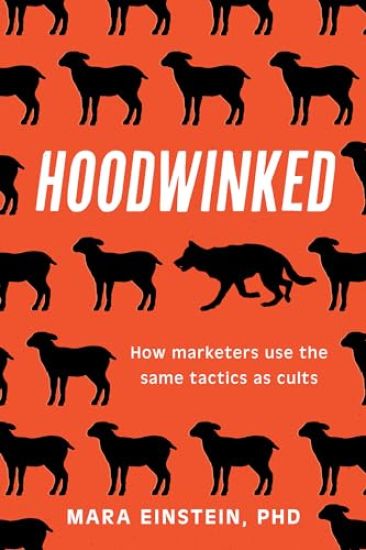
Big brands are the gods of today’s world, and the algorithm is their gospel. What makes the cult marketing vortex so attractive to otherwise smart people, and how does online manipulation render us victim to the dangerous whims of digital companies, corporations, and conglomerates? Hoodwinked reveals the new world of digital marketing where steady, seductive tactics once used by spiritual charlatans are now applied to sell everything from toothpaste to apps and even political leaders. Companies have discovered that us consumers are lured by sophisticated and deceptive marketing techniques, like sensory marketing, cult branding, influencers, and AI programmed to induce maximum anxiety. Combined with behavior-modifying apps and persuasively designed UX that compels us to buy things we don’t need or cannot afford, goods and services like prestige education, fitness trackers, makeup, and those viral leggings from American Eagle seem like must-haves rather than luxury extras. Aided by algorithms and buoyed by the greed of social media CEOs, marketers use the same deceptive and emotionally manipulative tactics that cults do, including scarcity, an all-encompassing ideology, and a charismatic leader. Once indoctrinated, consumer-followers become ensnared in the perfect capitalist loop: anxiety-purchase-anxiety-purchase-anxiety-purchase. Then, social media appearances reinforce the cycle of purchase, performance, and panic.Using memorable real-life cautionary tales, Dr. Einstein narrates how smart, sensible people are sucked into the cult marketing vortex and, importantly, what enables them to get out. Protection comes from understanding the scope of the problem and knowing how to spot the many pervasive tactics used. Combining industry interviews, advertising campaign analysis, and business and scholarly research, Hoodwinked offers an insider’s view into how marketers co-opt our emotions in the name of corporate profits. Armed with this information, readers can learn to spot cult-inspired marketing so they can decide how, or if, they should engage with it.
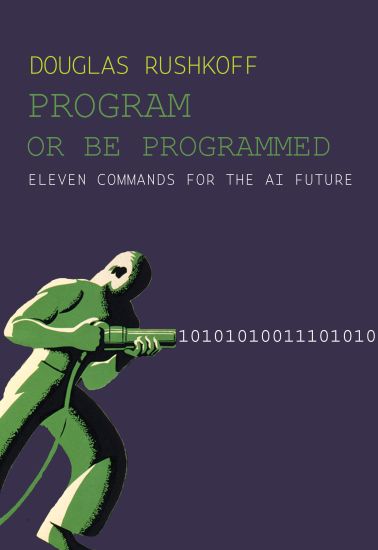
A deep dive into one of this century's most potent questions: do we direct technology, or do we let ourselves be directed by it? This compact new edition of a paradigmatic text packs a big and actionable punch. Updated with a new section on the unique challenges posed by AI, Program or Be Programmed presents a spirited, accessible poetics of new media. On these pages (and screens), Rushkoff picks up where Marshall McLuhan left off, helping readers recognize programming as the new literacy of the digital age. The debate over whether the internet is good or bad for us fills the airwaves and the blogosphere. But for all the heat of claim and counter-claim, the argument is essentially beside the point: it’s here; it’s everywhere. The real question is, do we direct technology, or do we let ourselves be directed by it and those who have mastered it? “Choose the former,” writes Rushkoff, “and you gain access to the control panel of civilization. Choose the latter, and it could be the last real choice you get to make.” In eleven “commands,” Rushkoff provides cyberenthusiasts and technophobes alike with the guidelines to navigate this new universe.
The first biography of the late countercultural novelist and underground philosopher Robert Anton Wilson. Chapel Perilous: The Life and Thought Crimes of Robert Anton Wilson is the first biography of the late countercultural novelist and underground philosopher, Robert Anton Wilson. Author with Robert Shea of ILLUMINATUS --one of American literature's most notorious novels--Wilson's life and work were infused with magical insight and strange occurrence, apparently fated traumas and puckish tricksterism. His experiences of paranoia, celestial influence, and conspiracy have come to furnish both speculative thought and fiction with a unique repertoire of thought experiments, while his legacy might be recognized in the work of writers as diverse as Alan Moore, Douglas Rushkoff, and Tom Robbins. In this far-reaching biography, Gabriel Kennedy charts the undergrowth of Wilson's influence, suggesting that the pulp venues, quack pamphlets, and oddball websites through which his work was usually distributed allowed him to quietly become one of the most prescient American writers of the 20th century, and one of the 21st's most salient.
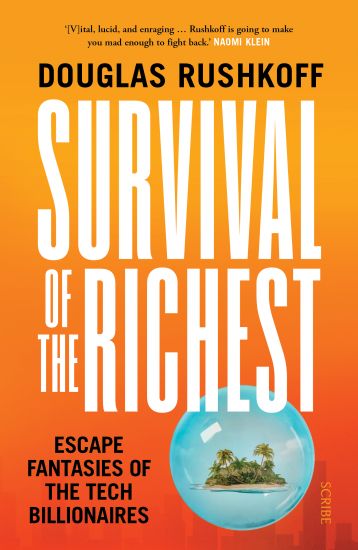
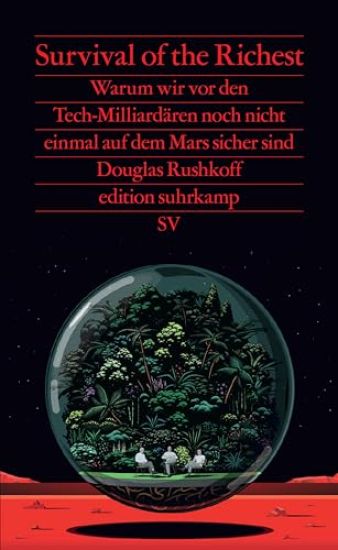
‘A devastating portrait of the cultures and logics underlying big tech. Rushkoff is going to make you mad enough to fight back. A vital, lucid, and enraging read.’ Naomi Klein, author of This Changes Everything The tech elite have a plan to survive the apocalypse: they want to leave us all behind. When Douglas Rushkoff was summoned to the desert to a private talk for the rich and powerful, he learned about ‘The Mindset’: a theory that inevitable societal catastrophe can be evaded by individuals with enough money and the right technology. Here, Rushkoff traces the evolution of The Mindset through its origins in science and technology to its current expression in missions to Mars, island bunkers, and the Metaverse. This mind-blowing work of social analysis shows us how to transcend the landscape The Mindset has created — a world alive with algorithms and intelligences actively rewarding our most selfish tendencies — and rediscover community, mutual aid, and human interdependency.
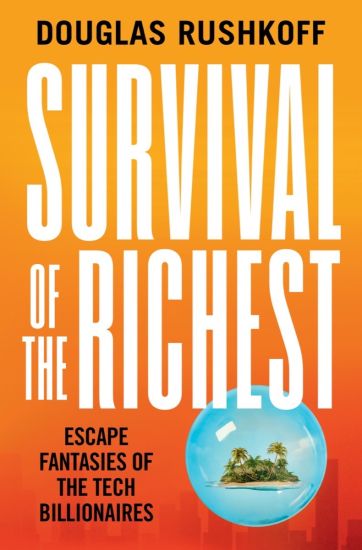
Survival of the Richest: Escape Fantasies of the Tech Billionaires
Douglas Rushkoff
W. W. Norton Company
2023
nidottu
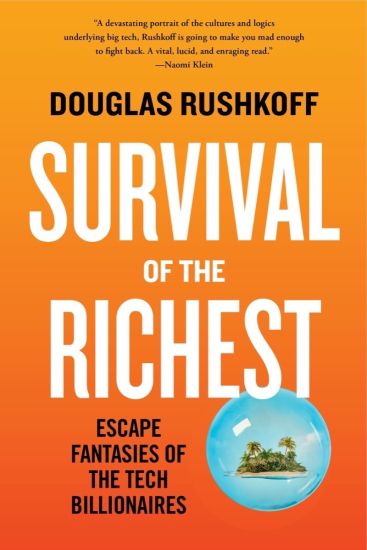
Five mysterious billionaires summoned Douglas Rushkoff to a desert resort for a private talk. The subject? How to survive the "Event" the societal collapse they know is coming. Rushkoff argues that these men were under the influence of The Mindset, a Silicon Valley-style certainty that they and their cohort can escape a disaster of their own making--as long as they have enough money and the right technology.Rushkoff traces the origins of The Mindset in science and technology through its current expression in missions to Mars, island bunkers, AI futurism, and the metaverse. Through fascinating characters--master programmers who want to remake the world as if redesigning a video game and bankers who return from Burning Man convinced incentivized capitalism will prevent environmental disasters--Rushkoff explains why those with the most power to change the world have no interest in doing so. He argues that the only way to survive the coming catastrophe is to ensure it doesn't happen by rediscovering community, mutual aid, and human interdependency.Anticipating the mass layoffs and institutional collapse that have recently rocked Silicon Valley, Rushkoff's Survival of the Richest is "a necessary and timely read" (Los Angeles Review of Books) with a prophetic message about the future of tech and our human community.
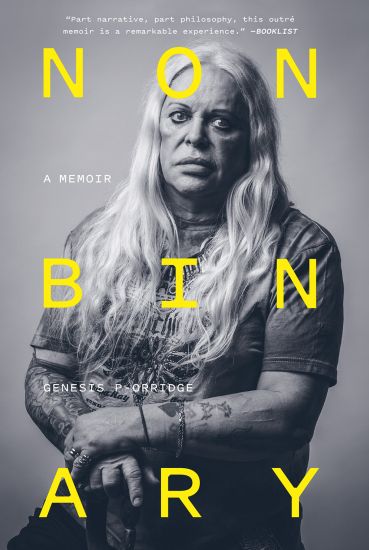
A revealing and beautifully open memoir from pioneering industrial music artist, visual artist, and transgender icon Genesis P-Orridge—now in paperbackIn this groundbreaking book spanning decades of artistic risk-taking, the inventor of “industrial music,” founder of Throbbing Gristle and Psychic TV, and world-renowned fine artist with COUM Transmissions, Genesis P-Orridge (1950–2020) takes us on a journey searching for identity and their true self. It is the story of a life of creation and destruction, where Genesis P-Orridge reveals their unwillingness to be stuck—stuck in one place, in one genre, or in one gender. Nonbinary is Genesis’s final work and is shared with hopes of being an inspiration to the newest generation of trailblazers and nonconformists.Nonbinary is the intimate story of Genesis’s life, weaving the narrative of their history in COUM Transmissions, Throbbing Gristle, and Psychic TV. It also covers growing up in World War II’s fallout in Britain, contributing to the explosion of new music and radical art in the 1960s, and destroying visual and artistic norms throughout their entire life. In addition to being a captivating memoir of a singular artist and musician, Nonbinary is also an inside look at one of our most remarkable cultural lives that will be an inspiration to fans of industrial music, performance art, the occult, and a life in the arts.
Survival of the Richest: Escape Fantasies of the Tech Billionaires
Douglas Rushkoff
W. W. Norton Company
2022
sidottu
Five mysterious billionaires summoned theorist Douglas Rushkoff to a desert resort for a private talk. The topic? How to survive the "Event" the societal catastrophe they know is coming. Rushkoff came to understand that these men were under the influence of The Mindset, a Silicon Valley-style certainty that they and their cohort can break the laws of physics, economics, and morality to escape a disaster of their own making--as long as they have enough money and the right technology.In Survival of the Richest, Rushkoff traces the origins of The Mindset in science and technology through its current expression in missions to Mars, island bunkers, AI futurism, and the metaverse. In a dozen urgent, electrifying chapters, he confronts tech utopianism, the datafication of all human interaction, and the exploitation of that data by corporations. Through fascinating characters--master programmers who want to remake the world from scratch as if redesigning a video game and bankers who return from Burning Man convinced that incentivized capitalism is the solution to environmental disasters--Rushkoff explains why those with the most power to change our current trajectory have no interest in doing so. And he shows how recent forms of anti-mainstream rebellion--QAnon, for example, or meme stocks--reinforce the same destructive order.This mind-blowing work of social analysis shows us how to transcend the landscape The Mindset created--a world alive with algorithms and intelligences actively rewarding our most selfish tendencies--and rediscover community, mutual aid, and human interdependency. In a thundering conclusion, Survival of the Richest argues that the only way to survive the coming catastrophe is to ensure it doesn't happen in the first place.
Judaism Without Tribalism
Rami Shapiro; Douglas Rushkoff
Monkfish Book Publishing Company
2022
pokkari
"Judaism Without Tribalism is a blessing, a much-needed challenge, and a deep well of wisdom and sanity." --Natalie Goldberg, author of Writing Down the BonesThis book investigates Judaism at its best--and sanest. It strips away outdated and harmful beliefs that have accrued over the centuries and returns to the essential truths that are too-often ignored in favor of tradition, tribal identity, or the claims of the powerful.The result is a vibrant Judaism for the 21st century and beyond--a Judaism that draws deeply from history and scripture yet addresses the unmet needs of the present and the future. It is a Judaism that is open and accessible to everyone.Judaism without tribalism is a call to be a light unto the nations, and a blessing to all the people of the earth. It is a Judaism free from legalism and tribalism--a Judaism that refuses to serve patriarchy and power.Written by one of today's most respected--and most unconventional--Jewish thinkers, Judaism Without Tribalism is a manifesto, an invitation to completeness, and a call for inner and outer spiritual revolution. It is also a deeply practical guide to living authentically, breath by breath and day by day.
Programa O Serás Programado: Diez Mandamientos Para La Era Digital / Program or Be Programmed: Ten Commands for a Digital Age
Douglas Rushkoff
Debate
2021
nidottu
Diez mandamientos para la era digital. El debate sobre si la red es buena o mala es irrelevante: la red est aqu para quedarse y si bien somos cada vez m s conscientes de los muchos problemas que ha engendrado la era digital, lo que se requiere ahora es una respuesta humana a la evoluci n de estas tecnolog as. Para Rushkoff es imprescindible empezar a codificar los cambios por los que estamos pasando y desarrollar un nuevo patr n tico, comportamental y comercial para guiarnos. Estamos viviendo un cambio de paradigma real y sin embargo tenemos escasa comprensi n de lo que nos ocurre y de c mo superarlo. La verdadera pregunta que debemos plantearnos es, dirigimos la tecnolog a, o nos dejamos dirigir por ella y aquellos que la han dominado? En el paisaje altamente programado en el que vivimos podemos crear el software o podemos ser el software; programar o ser programados. Hasta ahora, nos hemos limito a ser programados. En este peque o y valioso libro Rushkoff ofrece tanto a los entusiastas cibern ticos como a los tecn fobos las pautas para navegar en este nuevo universo digital y recuperar el control de nuestras vidas. ENGLISH DESCRIPTION A friendly little book with a big and actionable message helps readers come to recognize programming as the new literacy of the digital age. The debate over whether the Net is good or bad for us fills the airwaves and the blogosphere. But for all the heat of claim and counter-claim, the argument is essentially beside the point: It's here; it's everywhere. The real question is, do we direct technology, or do we let ourselves be directed by it and those who have mastered it? "Choose the former," writes Rushkoff, "and you gain access to the control panel of civilization. Choose the latter, and it could be the last real choice you get to make." In this spirited, accessible guide to poetics of new media, Rushkoff picks up where Marshall McLuhan left off to create a template through which to see beyond the social conventions and power structures that have vexed us for centuries. In ten chapters, composed of ten "commands" accompanied by original illustrations from comic artist Leland Purvis, Rushkoff provides cyber enthusiasts and technophobes alike with the guidelines to navigate this new universe.
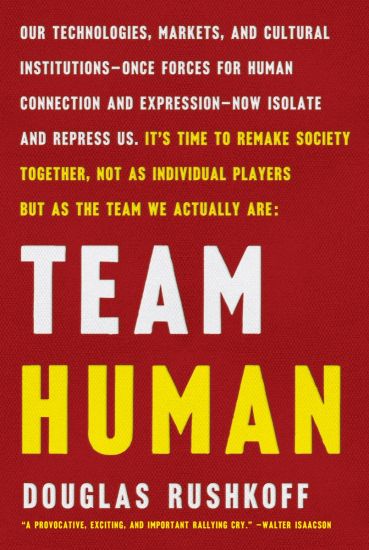
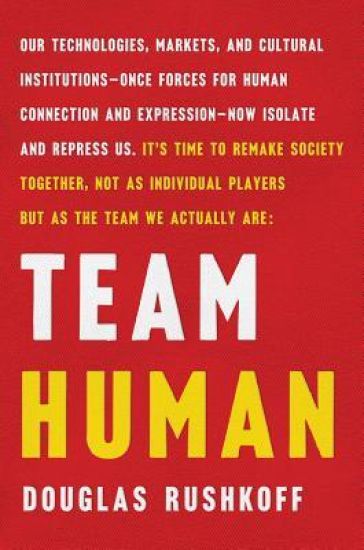
In one hundred lean and incisive statements, Douglas Rushkoff argues that we are essentially social creatures and that we achieve our greatest aspirations when we work together—not as individuals. Yet today society is threatened by a vast antihuman infrastructure that undermines our ability to connect. Money, once a means of exchange, is now a means of exploitation; education, conceived as a way to elevate the working class, has become another assembly line; and the internet has only further divided us into increasingly atomised and radicalised groups. Team Human delivers a call to arms. If we are to resist and survive these destructive forces, we must recognise that being human is a team sport. In Rushkoff’s own words: “Being social may be the whole point”. Harnessing wide-ranging research on human evolution, biology and psychology, Rushkoff shows that when we work together we realise greater happiness, productivity and peace. If we can find others who understand this fundamental truth and reassert our humanity—together—we can make the world a better place to be human.
Media literacy educators have always insisted that we are both creators and receivers of media messages. The truth of this is even more apparent in today’s digital environment, with children and adults alike participating in a ubiquitous, nonstop stream of social media. Clearly, students need the tools to interpret news and information critically—not just for school but for life in a “post-truth” world, where the lines blur between entertainment, information and persuasion. Renee Hobbs demonstrates how a global perspective on contemporary propaganda enables educators to stimulate both the intellectual curiosity and the cultural sensitivities of students. Replete with classroom and online learning activities and samples of student work, Mind Over Media provides a state-of- the-art look at the theory and practice of propaganda in contemporary society and shows how to build learners’ critical thinking and communication skills on topics including computational propaganda, content marketing, fake news and disinformation.
In one hundred lean and incisive statements, Douglas Rushkoff argues that we are essentially social creatures and that we achieve our greatest aspirations when we work together—not as individuals. Yet today society is threatened by a vast antihuman infrastructure that undermines our ability to connect. Money, once a means of exchange, is now a means of exploitation; education, conceived as a way to elevate the working class, has become another assembly line; and the internet has only further divided us into increasingly atomised and radicalised groups. Team Human delivers a call to arms. If we are to resist and survive these destructive forces, we must recognise that being human is a team sport. In Rushkoff’s own words: “Being social may be the whole point”. Harnessing wide-ranging research on human evolution, biology and psychology, Rushkoff shows that when we work together we realise greater happiness, productivity and peace. If we can find others who understand this fundamental truth and reassert our humanity—together—we can make the world a better place to be human.
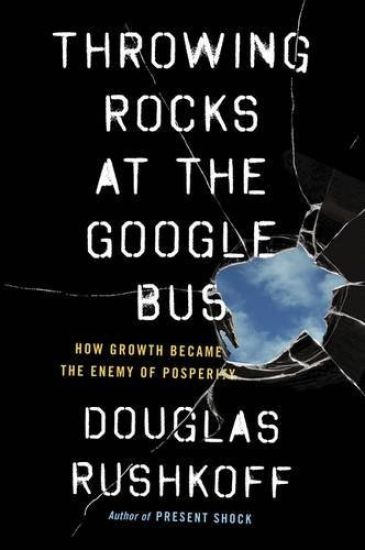
Throwing Rocks at the Google Bus: How Growth Became the Enemy of Prosperity
Douglas Rushkoff
PORTFOLIO
2017
nidottu
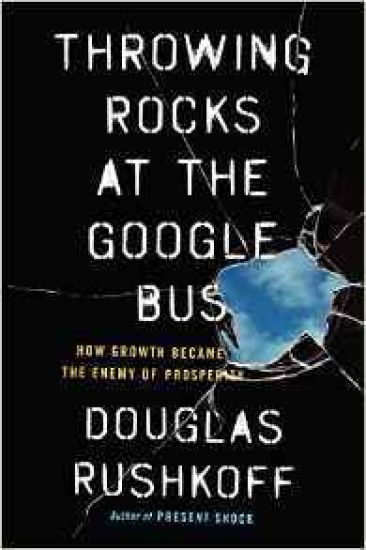
Why doesn t the explosive growth of companies like Facebook and Uber deliver more prosperity for everyone? What is the systemic problem that sets the rich against the poor and the technologists against everybody else? When protesters shattered the windows of a bus carrying Google employees to work, their anger may have been justifiable, but it was misdirected. The true conflict of our age isn t between the unemployed and the digital elite, or even the 99 percent and the 1 percent. Rather, a tornado of technological improvements has spun our economic program out of control, and humanity as a whole the protesters and the Google employees as well as the shareholders and the executives are all trapped by the consequences. It s time to optimize our economy for the human beings it s supposed to be serving. In this groundbreaking book, acclaimed media scholar and author Douglas Rushkoff tells us how to combine the best of human nature with the best of modern technology. Tying together disparate threads big data, the rise of robots and AI, the increasing participation of algorithms in stock market trading, the gig economy, the collapse of the eurozone Rushkoff provides a critical vocabulary for our economic moment and a nuanced portrait of humans and commerce at a critical crossroads.
Why doesn't the explosive growth of companies such as Facebook and Uber deliver more prosperity for everyone? How could things be different?In San Francisco in 2013 activists protesting against the gentrification of their city smashed the windows of a bus carrying Google employees to work. But these protests weren't just a question of the activists versus the Googlers, or even the 99 per cent versus the 1 per cent. Rather they were symptomatic of the true conflict of our age, between humanity as a whole and a digital economy in which boundless growth is valued above all else.In this groundbreaking book, Douglas Rushkoff - named one of the world's ten most influential thinkers by MIT - lays out a ground plan for a different economic and social future. Ranging from big data to the rise of robots, from the gig economy to the collapse of the eurozone, Rushkoff shows how we can combine the best of human nature with the best of modern technology to achieve a state of sustainable, distributed wealth.It's time the economy finally worked for the human beings it's supposed to serve.'Douglas Rushkoff is one of today's most incisive media theorists and a provocative critic of our digital economy. He's also fun to read'WALTER ISAACSON, president and CEO, The Aspen Institute, and author of Steve Jobs and The Innovators'If you don't know Rushkoff, you're not serious about figuring out what's going to happen next'SETH GODIN, author of Purple Cow and Tribes
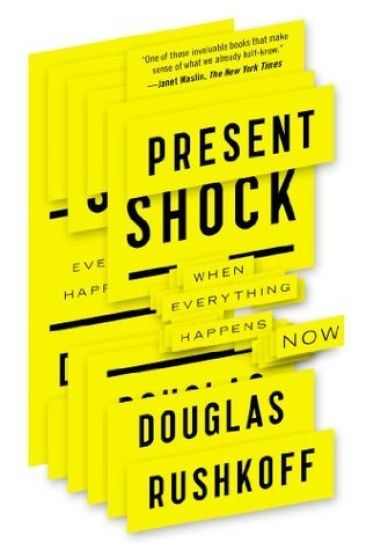
People spent the twentieth century obsessed with the future. We created technologies that would help connect us faster, gather news, map the planet, and compile knowledge. We strove for an instantaneous network where time and space could be compressed. Well, the future's arrived. We live in a continuous now enabled by Twitter, email, and a so-called real-time technological shift. Yet this "now" is an elusive goal that we can never quite reach. And the dissonance between our digital selves and our analog bodies has thrown us into a new state of anxiety: present shock.
Douglas Rushkoff was mugged outside his apartment on Christmas Eve, but when he posted a friendly warning on his community website, the responses castigated him for potentially harming the local real-estate market.
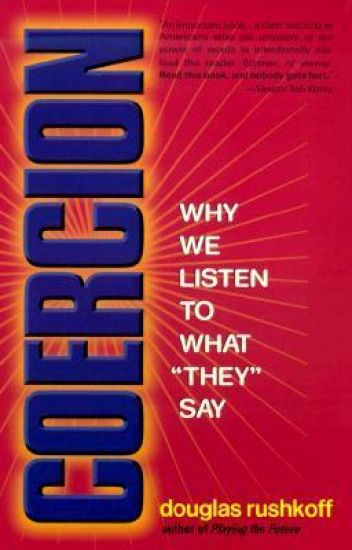
Noted media pundit and author of Playing the FutureDouglas Rushkoff gives a devastating critique of the influence techniques behind our culture of rampant consumerism. With a skilled analysis of how experts in the fields of marketing, advertising, retail atmospherics, and hand-selling attempt to take away our ability to make rational decisions, Rushkoff delivers a bracing account of media ecology today, consumerismin America, andwhy we buy what we buy, helping us recognize when we're being treated like consumers instead of human beings."
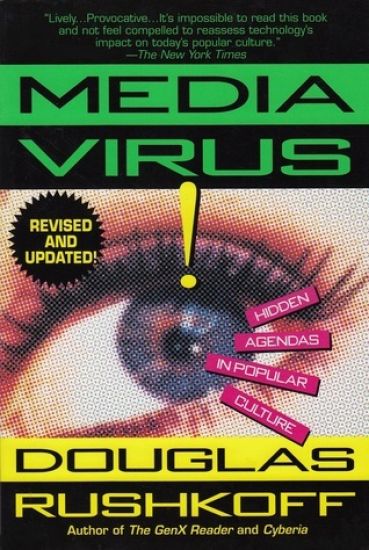
The most virulent viruses today are composed of information. In this information-driven age, the easiest way to manipulate the culture is through the media. A hip and caustically humorous McLuhan for the '90s, culture watcher Douglas Rushkoff now offers a fascinating expose of media manipulation in today's age of instant information.