Kirjojen hintavertailu. Mukana 12 595 353 kirjaa ja 12 kauppaa.

Kirjailija

Douglas S. Huffman

Kirjat ja teokset yhdessä paikassa: 12 kirjaa, julkaisuja vuosilta 2009-2026, suosituimpien joukossa Auserwählt. Vertaile teosten hintoja ja tarkista saatavuus suomalaisista kirjakaupoista.

Mukana myös kirjoitusasut: Douglas S Huffman

12 kirjaa

Kirjojen julkaisuhaarukka 2009-2026.

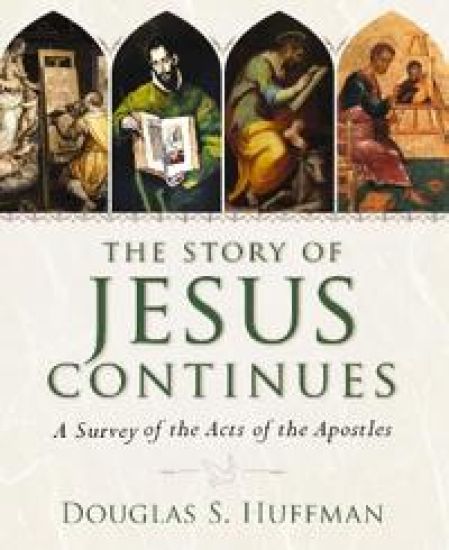
The Story of Jesus Continues

The Story of Jesus Continues

Douglas S. Huffman

ZONDERVAN
2025
sidottu
With full-color photographs, maps, and sidebars about history, ancient literature, and archaeological finds,?The Jesus Story Continues?is a unique introduction to the Acts of the Apostles.Douglas Huffman takes readers through different introductory and interpretive issues in the study of Acts, including the genre, purpose, history, culture, and geographical setting of the story. Equipped with these fascinating details, in broad strokes the author traces Luke's well-told recounting of the ongoing story of Jesus. Sensitive to the purposes Luke had for his text - as well as its connection to the Gospel of Luke - Huffman concludes by noting how the Jesus story is intended to continue into the present.Specifically designed as a textbook, the volume includes chapter overviews and summaries discussion questions and assignments, lists of key terms, and a glossary.
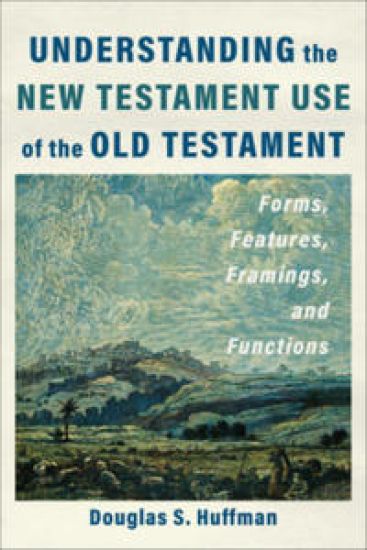
Understanding the New Testament Use of the Old Testament

Understanding the New Testament Use of the Old Testament

Douglas S. Huffman

BAKER PUBLISHING GROUP
2024
nidottu
This up-to-date introduction to the study of the New Testament's use of the Old Testament surveys the current state of the discipline, summarizes the scholarly conversation, illuminates the New Testament writers' respect for Old Testament contexts, proposes advances in classification and terminology, and provides resources for further work in the field.New Testament scholar Douglas Huffman suggests a way beyond the impasse concerning the terminology used by scholars in the discipline. He offers a new approach to identifying and interpreting Old Testament quotations, allusions, and echoes by exploring not just the forms but also the features, framings, and functions of the New Testament use of the Old Testament. Huffman demonstrates the advantages of his approach by analyzing how the Old Testament is used in Luke-Acts and thus provides a model that can be applied to other New Testament authors' use of Old Testament Scripture.Professors and students of the Bible, scholars, and pastors will value this work.
Blessed Are the Chosen, 2

Blessed Are the Chosen, 2

Amanda Jenkins; Dallas Jenkins; Douglas S Huffman

DAVID C COOK PUBLISHING COMPANY
2022
pokkari
Blessed Are the Chosen is an eight-lesson interactive Bible study for individuals or small groups based on season 2 of the groundbreaking television show, The Chosen. This study brings both the Old and New Testaments to life in an approachable and conversational way. This study guide works in tandem with each episode of the show and includes: A deeper look at God's character, power, and promises using the framework of Jesus's Sermon on the MountScript excerpts, quotes, and illustrations from each episodeScripture to provide lesson contextPictures and bios of characters for increased connectionConversational features to invite Bible knowledgeGuiding questions for group or individual discussion or reflection Once we belong to Him, we're not only given a new identity; we're ushered into a new reality--one that is sure, powerful, and life changing. And so-- We have hope no matter our circumstances. We have assurances and resources, even in life's trials. We are blessed in all things because we are chosen by Him.
Verbal Aspect Theory and the Prohibitions in the Greek New Testament
The end of the twentieth and the beginning of the twenty-first centuries have involved much discussion on overhauling and refining a scholarly understanding of the verbal system for first-century Greek. These discussions have included advances in verbal aspect theory and other linguistic approaches to describing the grammatical phenomena of ancient languages. This volume seeks to apply some of that learning to the narrow realm of how prohibitions were constructed in the first-century Greek of the New Testament. Part 1 «The Great Prohibition Debate» seeks to demonstrate that verbal aspect theory has a better explanation than traditional Aktionsart theory for authorial choices between the negated present imperative and the negated aorist subjunctive in expressing prohibitions in the Greek New Testament. Part 2 «All the Prohibitions in the Greek NT» continues to examine prohibitions, but is more of an exercise in functional linguistics. That is, rather than apply verbal aspect theory to the grammar of prohibition constructions, Part 2 seeks only to survey the (initially surprising) wide variety of ways prohibitions can be expressed in koine Greek: more than a dozen different constructions. To do this, the NT prohibitions are grouped in their varying grammatical-syntactical and/or pragmatic constructions, all of which function – in varying degrees – in a prohibitory fashion. This taxonomy may prove to be the beginnings of further investigations into how biblical Greek communicates commands.
Verbal Aspect Theory and the Prohibitions in the Greek New Testament
The end of the twentieth and the beginning of the twenty-first centuries have involved much discussion on overhauling and refining a scholarly understanding of the verbal system for first-century Greek. These discussions have included advances in verbal aspect theory and other linguistic approaches to describing the grammatical phenomena of ancient languages. This volume seeks to apply some of that learning to the narrow realm of how prohibitions were constructed in the first-century Greek of the New Testament. Part 1 «The Great Prohibition Debate» seeks to demonstrate that verbal aspect theory has a better explanation than traditional Aktionsart theory for authorial choices between the negated present imperative and the negated aorist subjunctive in expressing prohibitions in the Greek New Testament. Part 2 «All the Prohibitions in the Greek NT» continues to examine prohibitions, but is more of an exercise in functional linguistics. That is, rather than apply verbal aspect theory to the grammar of prohibition constructions, Part 2 seeks only to survey the (initially surprising) wide variety of ways prohibitions can be expressed in koine Greek: more than a dozen different constructions. To do this, the NT prohibitions are grouped in their varying grammatical-syntactical and/or pragmatic constructions, all of which function – in varying degrees – in a prohibitory fashion. This taxonomy may prove to be the beginnings of further investigations into how biblical Greek communicates commands.
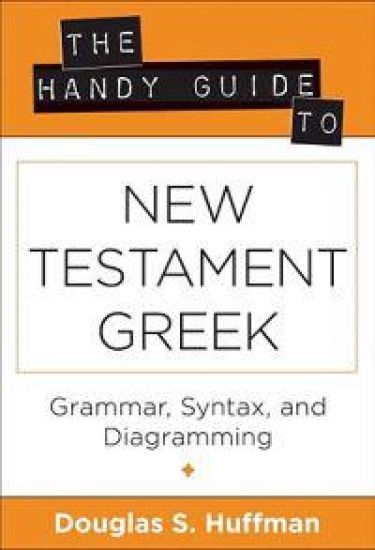
The Handy Guide to New Testament Greek – Grammar, Syntax, and Diagramming
Whether you're learning biblical Greek or using it, this is the reference tool to keep on hand. In a quick visual layout, it supplements textbooks to gives you immediate access to: first-year Greek grammar second-year Greek syntax step-by-step phrase diagramming Easy to carry and easy to use, The Handy Guide to New Testament Greek crystalizes the information you need to know for classes or enables you to develop a sermon or lesson outline from the Greek New Testament faster than you could from an English translation.
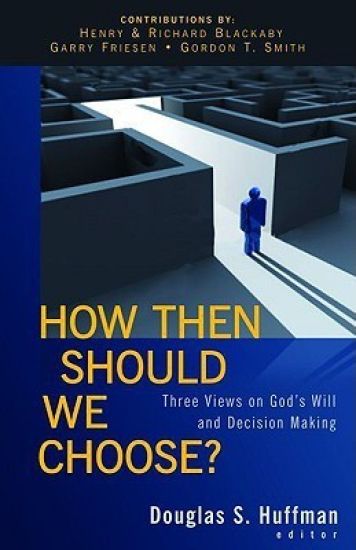
How Then Should We Choose? – Three Views on God`s Will and Decision Making
The three-views approach is an effective and succinct means of introducing theological subjects to readers of all levels. How Then Should We Choose? applies this proven format to the vital topic of decision making and the Christian's search for the will of God. Garry Friesen of Multnomah Bible College, Henry and Richard Blackaby of Blackaby Ministries International, and Gordon T. Smith of Regent College each contribute summaries of their perspectives on God's will and their approaches to decision making. Friesen discusses the "wisdom" view, Henry and Richard Blackaby delineate the "specific will" view, and Smith champions the "relationship" view of God's will. In an effort to make this discussion reader friendly, the contributors have applied their beliefs regarding God's will and decision making to three practical, concrete topics: career, relationships, and stewardship. Using three hypothetical stories, the authors illustrate how their respective views would influence decisions in these common areas of concern.