Kirjojen hintavertailu. Mukana 12 595 353 kirjaa ja 12 kauppaa.

Kirjailija

Douglas S. Massey

Kirjat ja teokset yhdessä paikassa: 16 kirjaa, julkaisuja vuosilta 1990-2022, suosituimpien joukossa Worlds in Motion. Vertaile teosten hintoja ja tarkista saatavuus suomalaisista kirjakaupoista.

Mukana myös kirjoitusasut: Douglas S Massey

16 kirjaa

Kirjojen julkaisuhaarukka 1990-2022.

Worlds in Motion

Worlds in Motion

Douglas S. Massey; Joaquin Arango; Graeme Hugo; Ali Kouaouci; Adela Pellegrino; J. Edward Taylor

Oxford University Press
2005
nidottu
At the end of the 20th century nearly all developed nations have become countries of immigration, absorbing growing numbers of immigrants not only from developed regions, but increasingly from developing nations of the Third World. Although international migration has come to play a central role in the social, economic, and demographic dynamics of both immigrant-sending and immigrant-receiving countries, social scientists have been slow to construct a comprehensive theory to explain it. Efforts at theoretical explanation have been fragmented by disciplinary, geographic, and methodological boundaries. Worlds in Motion seeks to overcome these schisms to create a comprehensive theory of international migration for the next century. After explicating the various propositions and hypotheses of current theories, and identifying area of complementarity and conflict, the authors review empirical research emanating from each of the world's principal international migration systems: North America, Western Europe, the Gulf, Asia and the Pacific, and the Southern Cone of South America. Using data from the 1980s, levels and patterns of migration within each system are described to define their structure and organization. Specific studies are then comprehensively surveyed to evaluate the fundamental propositions of neoclassical economics, the new economics of labour migration, segmented labour market theory, world systems theory, social capital theory, and the theory of cumulative causation. The various theories are also tested by applying them to the relationship between international migration and economic development. Although certain theories seem to function more effectively in certain systems, all contain elements of truth supported by empirical research. The task of the theorist is thus to identify which theories are most effective in accounting for international migration in the world today, and what regional and national circumstances lead to a predominance of one theoretical mechanism over another. The book concludes by offering an empirically-grounded theoretical synthesis to serve as a guide for researchers and policy-makers in the 21st century.
Worlds in Motion

Worlds in Motion

Douglas S. Massey; Joaquin Arango; Graeme Hugo; Ali Kouaouci; Adela Pellegrino; J. Edward Taylor

Clarendon Press
1999
sidottu
At the end of the 20th century nearly all developed nations have become countries of immigration, absorbing growing numbers of immigrants not only from developed regions, byt increasingly from developing nations of the Third World. Although international migration has come to play a central role in the social, economic, and demographic dynamics of both immigrant-sending and immigrant-receiving countries, social scientist have been slow to construct a comprehensive theory to explain it. Efforts at theoretical explanation have been fragmented by disciplinary, geographic, and methodological boudaries. Worlds in Motion seeks to overcome these schisms to create a comprehensive theory of international migration for the next century. After explicating the various propositions and hypotheses of current theories, and identifying area of complementarity and conflict, the authors review empirical research emanting from each of the world's principal international migration systems: North America, Western Europe, the Gulf, Asia and the Pacific, and the Southern Cone of South America. Using data from the 1980s, levels and patterns of migration within each system are described to define their structure and organization. Specific studies are then comprehensively surveyed to evaluate the fundamental propositions of neoclassical economics, the new economics of labour migration, segmented labour market theory, world systems theory, social capital theory, and the theory of cumulative causation. The various theories are also tested by applying them to the relationship between international migration and economic development. Although certain theories seem to function more effectively in certain systems, all contain elements of truth supported by empirical research. The task of the theorist is thus to identify which theories are most effective in accounting for international migration in the world today, and what regional and national circumstances lead to a predominance of one theoretical mechanism over another. The book concludes by offering an empirically-grounded theoretical synthesis to serve as a guide for researchers and policy-makers in the 21st century.
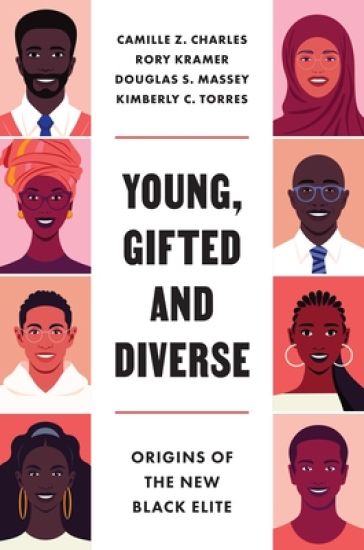
Young, Gifted and Diverse

Young, Gifted and Diverse

Camille Z. Charles; Douglas S. Massey; Kimberly C. Torres; Rory Kramer

PRINCETON UNIVERSITY PRESS
2022
sidottu
An in-depth look at the rising American generation entering the Black professional classDespite their diversity, Black Americans have long been studied as a uniformly disadvantaged group. Drawing from a representative sample of over a thousand Black students and in-depth interviews and focus groups with over one hundred more, Young, Gifted and Diverse highlights diversity among the new educated Black elite—those graduating from America’s selective colleges and universities in the early twenty-first century.Differences in childhood experiences shape this generation, including their racial and other social identities and attitudes, and beliefs about and interactions with one another. While those in the new Black elite come from myriad backgrounds and have varied views on American racism, as they progress through college and toward the Black professional class they develop a shared worldview and group consciousness. They graduate with optimism about their own futures, but remain guarded about racial equality more broadly. This internal diversity alongside political consensus among the elite complicates assumptions about both a monolithic Black experience and the future of Black political solidarity.
Young, Gifted and Diverse

Young, Gifted and Diverse

Camille Z. Charles; Douglas S. Massey; Kimberly C. Torres; Rory Kramer

PRINCETON UNIVERSITY PRESS
2022
pokkari
An in-depth look at the rising American generation entering the Black professional classDespite their diversity, Black Americans have long been studied as a uniformly disadvantaged group. Drawing from a representative sample of over a thousand Black students and in-depth interviews and focus groups with over one hundred more, Young, Gifted and Diverse highlights diversity among the new educated Black elite—those graduating from America’s selective colleges and universities in the early twenty-first century.Differences in childhood experiences shape this generation, including their racial and other social identities and attitudes, and beliefs about and interactions with one another. While those in the new Black elite come from myriad backgrounds and have varied views on American racism, as they progress through college and toward the Black professional class they develop a shared worldview and group consciousness. They graduate with optimism about their own futures, but remain guarded about racial equality more broadly. This internal diversity alongside political consensus among the elite complicates assumptions about both a monolithic Black experience and the future of Black political solidarity.
Climbing Mount Laurel

Climbing Mount Laurel

Douglas S. Massey; Len Albright; Rebecca Casciano; Elizabeth Derickson; David N. Kinsey

Princeton University Press
2019
pokkari
A close look at the aftereffects of the Mount Laurel affordable housing decisionUnder the New Jersey State Constitution as interpreted by the State Supreme Court in 1975 and 1983, municipalities are required to use their zoning authority to create realistic opportunities for a fair share of affordable housing for low- and moderate-income households. Mount Laurel was the town at the center of the court decisions. As a result, Mount Laurel has become synonymous with the debate over affordable housing policy designed to create economically integrated communities. What was the impact of the Mount Laurel decision on those most affected by it? What does the case tell us about economic inequality?Climbing Mount Laurel undertakes a systematic evaluation of the Ethel Lawrence Homes—a housing development produced as a result of the Mount Laurel decision. Douglas Massey and his colleagues assess the consequences for the surrounding neighborhoods and their inhabitants, the township of Mount Laurel, and the residents of the Ethel Lawrence Homes. Their analysis reveals what social scientists call neighborhood effects—the notion that neighborhoods can shape the life trajectories of their inhabitants. Climbing Mount Laurel proves that the building of affordable housing projects is an efficacious, cost-effective approach to integration and improving the lives of the poor, with reasonable cost and no drawbacks for the community at large.
Taming the River

Taming the River

Camille Z. Charles; Mary J. Fischer; Margarita A. Mooney; Douglas S. Massey

Princeton University Press
2016
pokkari
Building on their important findings in The Source of the River, the authors now probe even more deeply into minority underachievement at the college level. Taming the River examines the academic and social dynamics of different ethnic groups during the first two years of college. Focusing on racial differences in academic performance, the book identifies the causes of students' divergent grades and levels of personal satisfaction with their institutions. Using survey data collected from twenty-eight selective colleges and universities, Taming the River considers all facets of student life, including who students date, what fields they major in, which sports they play, and how they perceive their own social and economic backgrounds. The book explores how black and Latino students experience pressures stemming from campus racial climate and "stereotype threat"--when students underperform because of anxieties tied to existing negative stereotypes. Describing the relationship between grade performance and stereotype threat, the book shows how this link is reinforced by institutional practices of affirmative action. The authors also indicate that when certain variables are controlled, minority students earn the same grades, express the same college satisfaction, and remain in school at the same rates as white students. A powerful look at how educational policies unfold in America's universities, Taming the River sheds light on the social and racial factors influencing student success.
Spheres of Influence

Spheres of Influence

Douglas S Massey; Stefanie Brodmann

Russell Sage Foundation
2014
pokkari
The black-white divide has long haunted the United States as a driving force behind social inequality. Yet, the civil rights movement, the increase in immigration, and the restructuring of the economy in favor of the rich over the last several decades have begun to alter the contours of inequality. Spheres of Influence, co-authored by noted social scientists Douglas S. Massey and Stefanie Brodmann, presents a rigorous new study of the intersections of racial and class disparities today. Massey and Brodmann argue that despite the persistence of potent racial inequality, class effects are drastically transforming social stratification in America. This data-intensive volume examines the differences in access to material, symbolic, and emotional resources across major racial groups. The authors find that the effects of racial inequality are exacerbated by the class differences within racial groups. For example, when measuring family incomes solely according to race, Massey and Brodmann found that black families' average income measured $28,400, compared to Hispanic families' $35,200. But this gap was amplified significantly when class differences within each group were taken into account. With class factored in, inequality across blacks' and Hispanics' family incomes increased by a factor of almost four, with lower class black families earning an average income of only $9,300 compared to $97,000 for upper class Hispanics. Massey and Brodmann found similar interactions between class and racial effects on the distribution of symbolic resources, such as occupational status, and emotional resources, such as the presence of a biological father--across racial groups. Although there are racial differences in each group's access to these resources, like income, these disparities are even more pronounced once class is factored in. The complex interactions between race and class are apparent in other social spheres, such as health and education. In looking at health disparities across groups, Massey and Brodmann observed no single class effect on the propensity to smoke cigarettes. Among whites, cigarette smoking declined with rising class standing, whereas among Hispanics it increased as class rose. Among Asians and blacks, there was no class difference at all. Similarly, the authors found no single effect of race alone on health: Health differences between whites, Asians, Hispanics, and blacks were small and non-significant in the upper class, but among those in the lower class, intergroup differences were pronounced. As Massey and Brodmann show, in the United States, a growing kaleidoscope of race-class interactions has replaced pure racial and class disadvantages. By advancing an ecological model of human development that considers the dynamics of race and class across multiple social spheres, Spheres of Influence sheds important light on the factors that are currently driving inequality today.
Climbing Mount Laurel

Climbing Mount Laurel

Douglas S. Massey; Len Albright; Rebecca Casciano; Elizabeth Derickson; David N. Kinsey

PRINCETON UNIVERSITY PRESS
2013
sidottu
Under the New Jersey State Constitution as interpreted by the State Supreme Court in 1975 and 1983, municipalities are required to use their zoning authority to create realistic opportunities for a fair share of affordable housing for low- and moderate-income households. Mount Laurel was the town at the center of the court decisions. As a result, Mount Laurel has become synonymous with the debate over affordable housing policy designed to create economically integrated communities. What was the impact of the Mount Laurel decision on those most affected by it? What does the case tell us about economic inequality? Climbing Mount Laurel undertakes a systematic evaluation of the Ethel Lawrence Homes--a housing development produced as a result of the Mount Laurel decision. Douglas Massey and his colleagues assess the consequences for the surrounding neighborhoods and their inhabitants, the township of Mount Laurel, and the residents of the Ethel Lawrence Homes. Their analysis reveals what social scientists call neighborhood effects--the notion that neighborhoods can shape the life trajectories of their inhabitants. Climbing Mount Laurel proves that the building of affordable housing projects is an efficacious, cost-effective approach to integration and improving the lives of the poor, with reasonable cost and no drawbacks for the community at large.
Latinas/os in the United States

Latinas/os in the United States

Clara E. Rodríguez; Douglas S. Massey

Springer-Verlag New York Inc.
2007
sidottu
Clara E. Rodríguez As is befitting a book on Latinas/os at the start of the 21st century, the chapters in this volume reflect the contemporary panorama of Latinas/os in the United States. Today, Latinas/os are the largest minority group. They accounted for 12. 5% of the total U. S. population in the last decennial census; recent estimates sho wed the Hispanic population to be 41. 3 million as of July 1 1, 2004, or 14% of the nation’s total population. However, this estimate does not include the 3. 9 million residents of Puerto Rico, who are also U. S. citizens and would raise the total to 2 45. 2 million. This would make the U. S. population of Latinos the second-largest Spanish-origin population in the hemisphere, after Mexico. The growth of this population since 1980 has been dramatic. Hispanics/Latinos grew more than seven times faster than the population of the nation as a whole, increasing by half, whereas the white (non-Hispanic) population increased by only 6% between 1980 and 1990 (U. S. Bureau of the Census, 1991, Table 1; U. S. Bureau of the Census, 1993, p. 2). In the 1990s, the Hispanic population increased 58%. Moreover, between 2003 and 2004, one of every two people added to 3 the nation’s population was Hispanic/Latino. Consequently, not only are Latinos a substantial part of the U. S. population, but they account for half its population growth.
Latinas/os in the United States

Latinas/os in the United States

Clara E. Rodríguez; Douglas S. Massey

Springer-Verlag New York Inc.
2007
nidottu
Clara E. Rodríguez As is befitting a book on Latinas/os at the start of the 21st century, the chapters in this volume reflect the contemporary panorama of Latinas/os in the United States. Today, Latinas/os are the largest minority group. They accounted for 12. 5% of the total U. S. population in the last decennial census; recent estimates sho wed the Hispanic population to be 41. 3 million as of July 1 1, 2004, or 14% of the nation’s total population. However, this estimate does not include the 3. 9 million residents of Puerto Rico, who are also U. S. citizens and would raise the total to 2 45. 2 million. This would make the U. S. population of Latinos the second-largest Spanish-origin population in the hemisphere, after Mexico. The growth of this population since 1980 has been dramatic. Hispanics/Latinos grew more than seven times faster than the population of the nation as a whole, increasing by half, whereas the white (non-Hispanic) population increased by only 6% between 1980 and 1990 (U. S. Bureau of the Census, 1991, Table 1; U. S. Bureau of the Census, 1993, p. 2). In the 1990s, the Hispanic population increased 58%. Moreover, between 2003 and 2004, one of every two people added to 3 the nation’s population was Hispanic/Latino. Consequently, not only are Latinos a substantial part of the U. S. population, but they account for half its population growth.
Chronicle of a Myth Foretold: The Washington Consensus in Latin America

Chronicle of a Myth Foretold: The Washington Consensus in Latin America

Douglas S. Massey; Magaly Sanchez R.; Jere R. Behrman

Sage Publications, Inc
2006
sidottu
During the 1990s, the United States encountered an unprecedented economic upsurge. The duration and scope of this boom led many policymakers in D.C., to believe they had finally found a magic formula for sustained economic growth and seamless national development. Labeled the Washington Consensus, this free-market approach was a shift away from regulation and government intervention toward allowing the markets work themselves out on a global level. Was it magic? After all, this was an era where the markets for goods, services, capital, and labor burst forth from North America, Western Europe, and Japan to stretch across the globe. The Soviet Union had collapsed and East and Southeast Asian economies were flourishing. Globalization and A New World Order became the slogans of the day.In what some scholars and policymakers view as a massive social experiment, the U.S. Treasury and the International Monetary Fund (IMF) began leaning on Latin American countries to dismantle their economic regime of import substitution industrialization (ISI). Without a firm understanding of the complexities involved, international lenders pressed for implementation of the Washington Consensus - advocating governments to step out of the way and let the markets do their work. Yet every nation has a different history when it comes to the process of market creation. The attempt to apply a blanket formula on countries with divergent political, social, and cultural legacies flopped miserably. Supporters of the Washington Consensus discovered their magic formula was merely a myth. Although Chile, which already had strong institutional foundations, came closest to succeeding in the implementation of the Washington Consensus, places like Mexico, Peru, Venezuela, and Argentina met with political and economical turmoil that shook their countries to the core. Pulling from a wellspring of knowledge, expertise, and experience from representatives of sociology, economics, demography, anthropology, and urban studies, this special issue of The ANNALS provides a coherent chain of evidence that reveals how the idea for structural adjustment in Latin America arose, how it was applied, the negative consequences it had, and the lessons learned. Sprung from a request by the Andrew W. Mellon Foundation on "Urban Studies and Demography," this collection of thought-provoking articles is the result of a two-year pilot research project conducted by faculty and students affiliated with the Population Studies Center and the Urban Studies program at the University of Pennsylvania. Students, researchers, and policymakers in public affairs, economics, anthropology, international affairs, sociology, urban studies, population studies, and others will gain clarity and insight into this complex phase of world economic history.
Chronicle of a Myth Foretold: The Washington Consensus in Latin America

Chronicle of a Myth Foretold: The Washington Consensus in Latin America

Douglas S. Massey; Magaly Sanchez R. R; Jere R. Behrman

Sage Publications, Inc
2006
nidottu
During the 1990s, the United States encountered an unprecedented economic upsurge. The duration and scope of this boom led many policymakers in D.C., to believe they had finally found a magic formula for sustained economic growth and seamless national development. Labeled the Washington Consensus, this free-market approach was a shift away from regulation and government intervention toward allowing the markets work themselves out on a global level. Was it magic? After all, this was an era where the markets for goods, services, capital, and labor burst forth from North America, Western Europe, and Japan to stretch across the globe. The Soviet Union had collapsed and East and Southeast Asian economies were flourishing. Globalization and A New World Order became the slogans of the day.In what some scholars and policymakers view as a massive social experiment, the U.S. Treasury and the International Monetary Fund (IMF) began leaning on Latin American countries to dismantle their economic regime of import substitution industrialization (ISI). Without a firm understanding of the complexities involved, international lenders pressed for implementation of the Washington Consensus - advocating governments to step out of the way and let the markets do their work. Yet every nation has a different history when it comes to the process of market creation. The attempt to apply a blanket formula on countries with divergent political, social, and cultural legacies flopped miserably. Supporters of the Washington Consensus discovered their magic formula was merely a myth. Although Chile, which already had strong institutional foundations, came closest to succeeding in the implementation of the Washington Consensus, places like Mexico, Peru, Venezuela, and Argentina met with political and economical turmoil that shook their countries to the core. Pulling from a wellspring of knowledge, expertise, and experience from representatives of sociology, economics, demography, anthropology, and urban studies, this special issue of The ANNALS provides a coherent chain of evidence that reveals how the idea for structural adjustment in Latin America arose, how it was applied, the negative consequences it had, and the lessons learned. Sprung from a request by the Andrew W. Mellon Foundation on "Urban Studies and Demography," this collection of thought-provoking articles is the result of a two-year pilot research project conducted by faculty and students affiliated with the Population Studies Center and the Urban Studies program at the University of Pennsylvania. Students, researchers, and policymakers in public affairs, economics, anthropology, international affairs, sociology, urban studies, population studies, and others will gain clarity and insight into this complex phase of world economic history.
The Source of the River

The Source of the River

Douglas S. Massey; Camille Z. Charles; Garvey Lundy; Mary J. Fischer

Princeton University Press
2006
pokkari
African Americans and Latinos earn lower grades and drop out of college more often than whites or Asians. Yet thirty years after deliberate minority recruitment efforts began, we still don't know why. In The Shape of the River, William Bowen and Derek Bok documented the benefits of affirmative action for minority students, their communities, and the nation at large. But they also found that too many failed to achieve academic success. In The Source of the River, Douglas Massey and his colleagues investigate the roots of minority underperformance in selective colleges and universities. They explain how such factors as neighborhood, family, peer group, and early schooling influence the academic performance of students from differing racial and ethnic origins and differing social classes. Drawing on a major new source of data--the National Longitudinal Survey of Freshmen--the authors undertake a comprehensive analysis of the diverse pathways by which whites, African Americans, Latinos, and Asians enter American higher education. Theirs is the first study to document the different characteristics that students bring to campus and to trace out the influence of these differences on later academic performance. They show that black and Latino students do not enter college disadvantaged by a lack of self-esteem. In fact, overconfidence is more common than low self-confidence among some minority students. Despite this, minority students are adversely affected by racist stereotypes of intellectual inferiority. Although academic preparation is the strongest predictor of college performance, shortfalls in academic preparation are themselves largely a matter of socioeconomic disadvantage and racial segregation. Presenting important new findings, The Source of the River documents the ongoing power of race to shape the life chances of America's young people, even among the most talented and able.
Return of the "L" Word

Return of the "L" Word

Douglas S. Massey

Princeton University Press
2005
sidottu
Somewhere in the 1970s liberals in the United States lost their way. After successes like the New Deal, they became arrogant. So argues Douglas Massey in Return of the "L" Word. Faced with the difficult politics of race and class, liberals used the heavy hand of government to impose policies on a resentful public. Conservatives capitalized on this with a staunch ideology of free markets, limited government, and conservative social values. The time is ripe for a liberal realignment, declares Massey, but what has been lacking is a consistent liberal ideology that explains to voters, in simple terms, government's vital role in producing a healthier, more financially equitable, less divided society. This book supplies that ideology. Massey begins his powerful manifesto by laying out the liberals' mistakes over the past twenty years. Drawing on insights from the expanding field of economic sociology, he then sets forth a clear set of liberal principles to explain how markets work in society, principles he applies to articulate salable liberal policies. After outlining a new liberal political philosophy, Massey traces liberalism's opposition and says plainly: liberals should have no illusions about the competition's resolve and skill. He closes with a practical approach to liberal coalition-building in America. The political economy conservatives have constructed in recent decades has benefited 20 percent of the people. Liberal success requires a return to material rather than symbolic politics, showing most Americans why it is in their economic as well as moral interest to support the liberal cause.
American Apartheid

American Apartheid

Douglas S. Massey; Nancy A. Denton

Harvard University Press
1998
nidottu
This powerful and disturbing book clearly links persistent poverty among blacks in the United States to the unparalleled degree of deliberate segregation they experience in American cities.American Apartheid shows how the black ghetto was created by whites during the first half of the twentieth century in order to isolate growing urban black populations. It goes on to show that, despite the Fair Housing Act of 1968, segregation is perpetuated today through an interlocking set of individual actions, institutional practices, and governmental policies. In some urban areas the degree of black segregation is so intense and occurs in so many dimensions simultaneously that it amounts to "hypersegregation."The authors demonstrate that this systematic segregation of African Americans leads inexorably to the creation of underclass communities during periods of economic downturn. Under conditions of extreme segregation, any increase in the overall rate of black poverty yields a marked increase in the geographic concentration of indigence and the deterioration of social and economic conditions in black communities. As ghetto residents adapt to this increasingly harsh environment under a climate of racial isolation, they evolve attitudes, behaviors, and practices that further marginalize their neighborhoods and undermine their chances of success in mainstream American society. This book is a sober challenge to those who argue that race is of declining significance in the United States today.
Return to Aztlan

Return to Aztlan

Douglas S. Massey; Rafael Alarcon; Jorge Durand; Humberto Gonzalez

University of California Press
1990
pokkari
"Return to Aztlan" analyzes the social process of international migration through an intensive study of four carefully chosen Mexican communities. The book combines historical, anthropological, and survey data to construct a vivid and comprehensive picture of the social dynamics of contemporary Mexican migration to the United States.