Kirjojen hintavertailu. Mukana 12 595 353 kirjaa ja 12 kauppaa.

Kirjailija

Douglas Self

Kirjat ja teokset yhdessä paikassa: 14 kirjaa, julkaisuja vuosilta 2008-2026, suosituimpien joukossa Audio Engineering: Know It All. Vertaile teosten hintoja ja tarkista saatavuus suomalaisista kirjakaupoista.

14 kirjaa

Kirjojen julkaisuhaarukka 2008-2026.

Audio Engineering: Know It All

Audio Engineering: Know It All

Douglas Self; Ben Duncan; Ian Sinclair; Richard Brice; John Linsley Hood; Andrew Singmin; Don Davis; Eugene Patronis; John Watkinson

Newnes (an imprint of Butterworth-Heinemann Ltd )
2008
nidottu
The Newnes Know It All Series takes the best of what our authors have written to create hard-working desk references that will be an engineer's first port of call for key information, design techniques and rules of thumb. Guaranteed not to gather dust on a shelf! Audio engineers need to master a wide area of topics in order to excel. The Audio Engineering Know It All covers every angle, including digital signal processing, power supply design, microphone and loudspeaker technology as well as audio compression.
Small Signal Audio Design

Small Signal Audio Design

Douglas Self

TAYLOR FRANCIS LTD
2026
sidottu
Small Signal Audio Design is a highly practical handbook providing an extensive repertoire of circuits that can be assembled to make almost any type of audio system. This updated fifth edition offers new content on recent opamps, electrolytic distortion, noise in MM RIAA preamplifiers, reducing the noise in tone-control stages, balanced line inputs, and much more. This book continues the engaging prose style familiar to readers, as you learn why mercury-filled cables are not a good idea, the pitfalls of plating gold on copper, and what quotes from Star Trek have to do with PCB design. Learn how to: make amplifiers with apparently impossibly low noise design discrete circuitry that can handle enormous signals with vanishingly low distortion transform the performance of low-cost-opamps build active filters with very low noise and distortion, while saving money on expensive capacitors make incredibly accurate volume controls make a huge variety of audio equalisers make magnetic cartridge preamplifiers that have noise so low it is limited by basic physics, by using load synthesis sum, switch, clip, compress, and route audio signals build simple but ultra-low noise power supplies be confident that phase perception is not an issue Including all the crucial theory, but with minimal mathematics, Small Signal Audio Design is the must-have companion for anyone studying, researching, or working in audio engineering and audio electronics.
Small Signal Audio Design

Small Signal Audio Design

Douglas Self

TAYLOR FRANCIS LTD
2026
nidottu
Small Signal Audio Design is a highly practical handbook providing an extensive repertoire of circuits that can be assembled to make almost any type of audio system. This updated fifth edition offers new content on recent opamps, electrolytic distortion, noise in MM RIAA preamplifiers, reducing the noise in tone-control stages, balanced line inputs, and much more. This book continues the engaging prose style familiar to readers, as you learn why mercury-filled cables are not a good idea, the pitfalls of plating gold on copper, and what quotes from Star Trek have to do with PCB design. Learn how to: make amplifiers with apparently impossibly low noise design discrete circuitry that can handle enormous signals with vanishingly low distortion transform the performance of low-cost-opamps build active filters with very low noise and distortion, while saving money on expensive capacitors make incredibly accurate volume controls make a huge variety of audio equalisers make magnetic cartridge preamplifiers that have noise so low it is limited by basic physics, by using load synthesis sum, switch, clip, compress, and route audio signals build simple but ultra-low noise power supplies be confident that phase perception is not an issue Including all the crucial theory, but with minimal mathematics, Small Signal Audio Design is the must-have companion for anyone studying, researching, or working in audio engineering and audio electronics.
Small Signal Audio Design

Small Signal Audio Design

Douglas Self

TAYLOR FRANCIS LTD
2023
sidottu
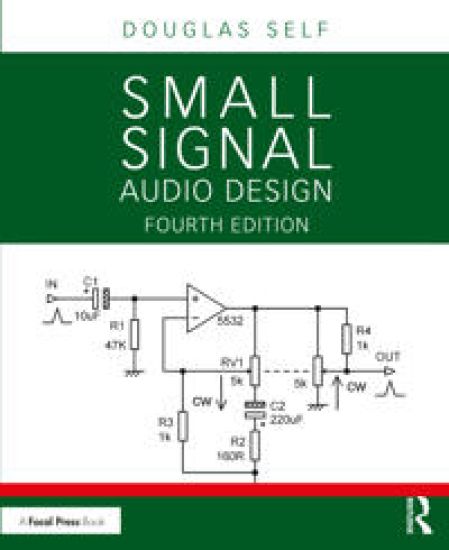
Small Signal Audio Design is a highly practical handbook providing an extensive repertoire of circuits that can be assembled to make almost any type of audio system. This fully revised fourth edition offers wholly new content on internally balanced audio design, electret microphones, emitter-follower stability, microphony in capacitors, and much, much more. This book continues the engaging prose style familiar to readers as you learn why mercury-filled cables are not a good idea, the pitfalls of plating gold on copper, and what quotes from Star Trek have to do with PCB design. Learn how to:make amplifiers with apparently impossibly low noise design discrete circuitry that can handle enormous signals with vanishingly low distortion transform the performance of low-cost opamps build active filters with very low noise and distortion while saving money on expensive capacitorsmake incredibly accurate volume controls make a huge variety of audio equalisersuse load synthesis to make magnetic cartridge preamplifiers that have noise so low it is limited by basic physicssum, switch, clip, compress, and route audio signals build simple but ultra-low noise power suppliesbe confident that phase perception is not an issueIncluding all the crucial theories, but with minimal mathematics, Small Signal Audio Design is the must-have companion for anyone studying, researching, or working in audio engineering and audio electronics.
Small Signal Audio Design

Small Signal Audio Design

Douglas Self

TAYLOR FRANCIS LTD
2023
nidottu
Small Signal Audio Design is a highly practical handbook providing an extensive repertoire of circuits that can be assembled to make almost any type of audio system. This fully revised fourth edition offers wholly new content on internally balanced audio design, electret microphones, emitter-follower stability, microphony in capacitors, and much, much more. This book continues the engaging prose style familiar to readers as you learn why mercury-filled cables are not a good idea, the pitfalls of plating gold on copper, and what quotes from Star Trek have to do with PCB design. Learn how to:make amplifiers with apparently impossibly low noise design discrete circuitry that can handle enormous signals with vanishingly low distortion transform the performance of low-cost opamps build active filters with very low noise and distortion while saving money on expensive capacitorsmake incredibly accurate volume controls make a huge variety of audio equalisersuse load synthesis to make magnetic cartridge preamplifiers that have noise so low it is limited by basic physicssum, switch, clip, compress, and route audio signals build simple but ultra-low noise power suppliesbe confident that phase perception is not an issueIncluding all the crucial theories, but with minimal mathematics, Small Signal Audio Design is the must-have companion for anyone studying, researching, or working in audio engineering and audio electronics.
Small Signal Audio Design

Small Signal Audio Design

Douglas Self

CRC Press
2020
nidottu
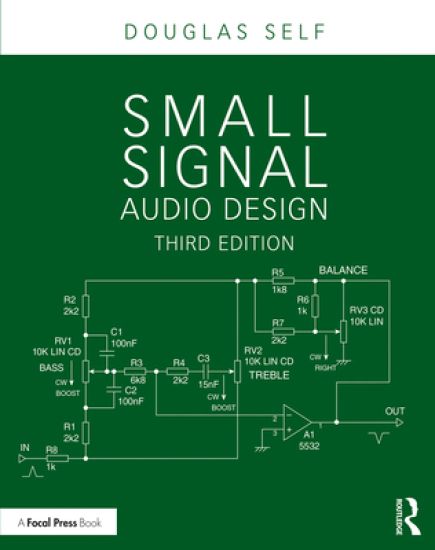
Small Signal Audio Design is a highly practical handbook providing an extensive repertoire of circuits that can be assembled to make almost any type of audio system. The publication of Electronics for Vinyl has freed up space for new material, (though this book still contains a lot on moving-magnet and moving-coil electronics) and this fully revised third edition offers wholly new chapters on tape machines, guitar electronics, and variable-gain amplifiers, plus much more. A major theme is the use of inexpensive and readily available parts to obtain state-of-the-art performance for noise, distortion, crosstalk, frequency response accuracy and other parameters. Virtually every page reveals nuggets of specialized knowledge not found anywhere else. For example, you can improve the offness of a fader simply by adding a resistor in the right place- if you know the right place.Essential points of theory that bear on practical audio performance are lucidly and thoroughly explained, with the mathematics kept to an absolute minimum. Self’s background in design for manufacture ensures he keeps a wary eye on the cost of things. This book features the engaging prose style familiar to readers of his other books. You will learn why mercury-filled cables are not a good idea, the pitfalls of plating gold on copper, and what quotes from Star Trek have to do with PCB design.Learn how to: make amplifiers with apparently impossibly low noise design discrete circuitry that can handle enormous signals with vanishingly low distortion use humble low-gain transistors to make an amplifier with an input impedance of more than 50 megohms transform the performance of low-cost-opamps build active filters with very low noise and distortion make incredibly accurate volume controls make a huge variety of audio equalisers make magnetic cartridge preamplifiers that have noise so low it is limited by basic physics, by using load synthesis sum, switch, clip, compress, and route audio signals be confident that phase perception is not an issue This expanded and updated third edition contains extensive new material on optimising RIAA equalisation, electronics for ribbon microphones, summation of noise sources, defining system frequency response, loudness controls, and much more. Including all the crucial theory, but with minimal mathematics, Small Signal Audio Design is the must-have companion for anyone studying, researching, or working in audio engineering and audio electronics.
The Design of Active Crossovers

The Design of Active Crossovers

Douglas Self

Routledge
2018
sidottu
Active crossovers are used by almost every sound reinforcement system and every recording studio monitoring set-up; but the use of active crossovers is rapidly expanding. This new edition, presents all the updates to loudspeaker technology and crossover design. The edition expands on loudspeaker configurations and design issues, sound reinforcement issues, more on lowpass and highpass filters, and may other filters. This new edition is a must read for anyone wanting comprehensive practical knowledge.
The Design of Active Crossovers

The Design of Active Crossovers

Douglas Self

Routledge
2018
nidottu
Active crossovers are used by almost every sound reinforcement system and every recording studio monitoring set-up; but the use of active crossovers is rapidly expanding. This new edition, presents all the updates to loudspeaker technology and crossover design. The edition expands on loudspeaker configurations and design issues, sound reinforcement issues, more on lowpass and highpass filters, and may other filters. This new edition is a must read for anyone wanting comprehensive practical knowledge.
Electronics for Vinyl

Electronics for Vinyl

Douglas Self

Routledge
2017
sidottu
Electronics for Vinyl is the most comprehensive book ever produced on the electronic circuitry needed to extract the best possible signal from grooves in vinyl. What is called the "vinyl revival" is in full swing, and a clear and comprehensive account of the electronics you need is very timely. Vinyl reproduction presents some unique technical challenges; the signal levels from moving-magnet cartridges are low, and those from moving-coil cartridges lower still, so a good deal of high-quality low-noise amplification is required.Some of the features of Electronics for Vinyl include:integrating phono amplifiers into a complete preamplifier;differing phono amplifier technologies; covering active, passive, and semi-passive RIAA equalisation and transconductance RIAA stages;the tricky business of getting really accurate RIAA equalisation without spending a fortune on expensive components, such as switched-gain MM/MC RIAA amplifiers that retain great accuracy at all gains, the effects of finite open-loop gain, cartridge-preamplifier interaction, and so on;noise and distortion in phono amplifiers, covering BJTs, FETs, and opamps as input devices, hybrid phono amplifiers, noise in balanced MM inputs, noise weighting, and cartridge load synthesis for ultimately low noise;archival and non-standard equalisation for 78s etc.;building phono amplifiers with discrete transistors;subsonic filtering, covering all-pole filters, elliptical filters, and suppression of subsonics by low-frequency crossfeed, including the unique Devinyliser concept;ultrasonic and scratch filtering, including a variety of variable-slope scratch filters;line output technology, including zero-impedance outputs, on level indication for optimal setup, and on specialised power supplies; anddescription of six practical projects which range from the simple to the highly sophisticated, but all give exceptional performance.Electronics for Vinyl brings the welcome news that there is simply no need to spend huge sums of money to get performance that is within a hair’s breadth of the best theoretically obtainable. But you do need some specialised knowledge, and here it is.
Electronics for Vinyl

Electronics for Vinyl

Douglas Self

Routledge
2017
nidottu
Electronics for Vinyl is the most comprehensive book ever produced on the electronic circuitry needed to extract the best possible signal from grooves in vinyl. What is called the "vinyl revival" is in full swing, and a clear and comprehensive account of the electronics you need is very timely. Vinyl reproduction presents some unique technical challenges; the signal levels from moving-magnet cartridges are low, and those from moving-coil cartridges lower still, so a good deal of high-quality low-noise amplification is required.Some of the features of Electronics for Vinyl include:integrating phono amplifiers into a complete preamplifier;differing phono amplifier technologies; covering active, passive, and semi-passive RIAA equalisation and transconductance RIAA stages;the tricky business of getting really accurate RIAA equalisation without spending a fortune on expensive components, such as switched-gain MM/MC RIAA amplifiers that retain great accuracy at all gains, the effects of finite open-loop gain, cartridge-preamplifier interaction, and so on;noise and distortion in phono amplifiers, covering BJTs, FETs, and opamps as input devices, hybrid phono amplifiers, noise in balanced MM inputs, noise weighting, and cartridge load synthesis for ultimately low noise;archival and non-standard equalisation for 78s etc.;building phono amplifiers with discrete transistors;subsonic filtering, covering all-pole filters, elliptical filters, and suppression of subsonics by low-frequency crossfeed, including the unique Devinyliser concept;ultrasonic and scratch filtering, including a variety of variable-slope scratch filters;line output technology, including zero-impedance outputs, on level indication for optimal setup, and on specialised power supplies; anddescription of six practical projects which range from the simple to the highly sophisticated, but all give exceptional performance.Electronics for Vinyl brings the welcome news that there is simply no need to spend huge sums of money to get performance that is within a hair’s breadth of the best theoretically obtainable. But you do need some specialised knowledge, and here it is.
Audio Power Amplifier Design

Audio Power Amplifier Design

Douglas Self

Routledge
2017
sidottu
This is the essential book reference for amplifier designers. Douglas Self covers all the design issues of noise, distortion, power supply rejection, protection, reliability, and layout. He describes advanced forms of compensation that give dramatically lower distortion. This edition is much expanded, and packed with new information. It is a must-have for audio power amplifier professionals and audiophiles, amateur constructors and anyone with intellectual curiosity about the struggle towards technical excellence. New to the sixth edition: The characteristics of the audio signal The principles of distortion Feedback intermodulation distortion Non-switching output stages VAS distortion explained Push-pull VAS configurations Output-inclusive compensation In addition, five amplifier design examples that illustrate important design principles are examined and measured in detail. These can be straightforwardly adapted to specific requirements. This new edition also includes a wealth of material on the XD crossover-displacement principle (invented by the author and in use by Cambridge Audio), four-stage amplifier architectures, error correction, current-mirrors, power transistors with internal sensing diodes, amplifier bridging, input-stage-common-mode distortion, amplifier stability, output stages with gain, inrush current suppression, DC servo design, thermal protection, cooling fan control, advanced line input stages, testing and safety, infrared remote control, signal activation, 12V trigger control, the history of solid-state amplifiers and much more. Simple procedures for heatsinking and power supply design are given.
Self on Audio

Self on Audio

Douglas Self

Routledge
2015
sidottu
Self on Audio: The collected audio design articles of Douglas Self, Third Edition is the most comprehensive collection of significant articles in the technical audio press. This third edition features 45 articles that first appeared in Elektor, Linear Audio, and Electronics World.Including expanded prefaces for each article, the author provides background information and circuit commentary. The articles cover both discrete and opamp preamplifier design, mixing console design, and power amplifier design. The preamplifier designs are illuminated by the very latest research on low noise and RIAA equalization. The famous series of 1993 articles on power amplifier distortion is included, with an extensive commentary reflecting the latest research on compensation and ultra-low distortion techniques. This book addresses the widened scope of technology that has become available to the audio designer over the last 35 years.New materials include:Prefaces that explain the historical background of the articles, why they were written, and the best use of the technology of the dayExtensive details, including schematics, of designs that preceded or followed the design in each article, giving an enormous amount of extra information and a comprehensive overview of how author's design approaches have evolvedNew directions for the technology, describing new lines of thought such as curvilinear Class-A
Self on Audio

Self on Audio

Douglas Self

Routledge
2015
nidottu
Self on Audio: The collected audio design articles of Douglas Self, Third Edition is the most comprehensive collection of significant articles in the technical audio press. This third edition features 45 articles that first appeared in Elektor, Linear Audio, and Electronics World.Including expanded prefaces for each article, the author provides background information and circuit commentary. The articles cover both discrete and opamp preamplifier design, mixing console design, and power amplifier design. The preamplifier designs are illuminated by the very latest research on low noise and RIAA equalization. The famous series of 1993 articles on power amplifier distortion is included, with an extensive commentary reflecting the latest research on compensation and ultra-low distortion techniques. This book addresses the widened scope of technology that has become available to the audio designer over the last 35 years.New materials include:Prefaces that explain the historical background of the articles, why they were written, and the best use of the technology of the dayExtensive details, including schematics, of designs that preceded or followed the design in each article, giving an enormous amount of extra information and a comprehensive overview of how author's design approaches have evolvedNew directions for the technology, describing new lines of thought such as curvilinear Class-A
Audio Power Amplifier Design

Audio Power Amplifier Design

Douglas Self

Focal Press
2013
nidottu
This is the essential book reference for amplifier designers. Douglas Self covers all the design issues of noise, distortion, power supply rejection, protection, reliability, and layout. He describes advanced forms of compensation that give dramatically lower distortion. This edition is much expanded, and packed with new information. It is a must-have for audio power amplifier professionals and audiophiles, amateur constructors and anyone with intellectual curiosity about the struggle towards technical excellence. New to the sixth edition: The characteristics of the audio signal The principles of distortion Feedback intermodulation distortion Non-switching output stages VAS distortion explained Push-pull VAS configurations Output-inclusive compensationIn addition, five amplifier design examples that illustrate important design principles are examined and measured in detail. These can be straightforwardly adapted to specific requirements.This new edition also includes a wealth of material on the XD crossover-displacement principle (invented by the author and in use by Cambridge Audio), four-stage amplifier architectures, error correction, current-mirrors, power transistors with internal sensing diodes, amplifier bridging, input-stage-common-mode distortion, amplifier stability, output stages with gain, inrush current suppression, DC servo design, thermal protection, cooling fan control, advanced line input stages, testing and safety, infrared remote control, signal activation, 12V trigger control, the history of solid-state amplifiers and much more. Simple procedures for heatsinking and power supply design are given.