Kirjojen hintavertailu. Mukana 12 175 005 kirjaa ja 12 kauppaa.

Kirjailija

Douglas W. Arner

Kirjat ja teokset yhdessä paikassa: 8 kirjaa, julkaisuja vuosilta 2007-2023, suosituimpien joukossa Finance in Asia. Vertaile teosten hintoja ja tarkista saatavuus suomalaisista kirjakaupoista.

Mukana myös kirjoitusasut: Douglas W Arner

8 kirjaa

Kirjojen julkaisuhaarukka 2007-2023.

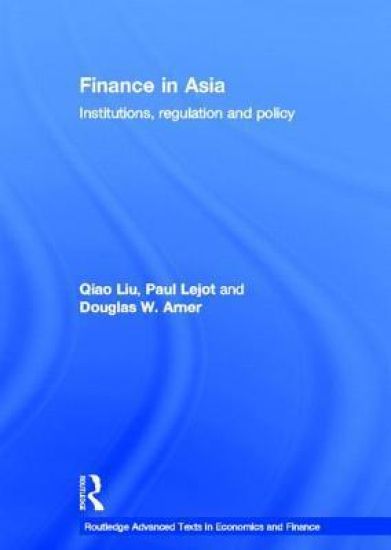
Finance in Asia

Finance in Asia

Qiao Liu; Paul Lejot; Douglas W. Arner

Routledge
2013
sidottu
Asia’s demand for second-generation financial institutions and markets needs to be met in order for the region’s further development to be sustained. This book provides a compelling, fact-based assessment of current practices and regulations in Asia’s financial institutions and markets and carefully documents the exciting opportunities and challenges that lie ahead in the region’s financial systems. This book differs in design from typical treatments of financial institutions and markets because its focus is on Asia rather than using the US model (in terms of market configurations or products) as a benchmark, and its takes a contemporary and forward-looking view of financial markets. Examples of practice from Asia are used to illustrate major accepted themes in finance and financial regulation. To the extent that Asia’s main economies share characteristics that are distinct, for example, in the relationship between government and the banking sector, or in aspects of corporate governance, the book will discuss the consequences for market operation and intermediation. The book’s carefully structured facts and rigorously argued analysis carry important implications both for students in business and law and for professionals new to financial markets in Asia. It will change the way that Asian financial markets and institutions is taught in universities as well as provide a valuable resource for professionals working in finance in Asia.
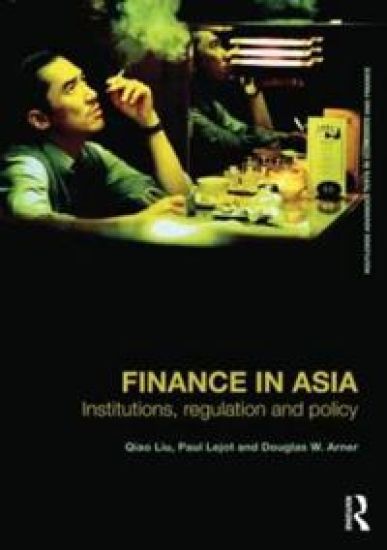
Finance in Asia

Finance in Asia

Qiao Liu; Paul Lejot; Douglas W. Arner

Routledge
2013
nidottu
Asia’s demand for second-generation financial institutions and markets needs to be met in order for the region’s further development to be sustained. This book provides a compelling, fact-based assessment of current practices and regulations in Asia’s financial institutions and markets and carefully documents the exciting opportunities and challenges that lie ahead in the region’s financial systems. This book differs in design from typical treatments of financial institutions and markets because its focus is on Asia rather than using the US model (in terms of market configurations or products) as a benchmark, and its takes a contemporary and forward-looking view of financial markets. Examples of practice from Asia are used to illustrate major accepted themes in finance and financial regulation. To the extent that Asia’s main economies share characteristics that are distinct, for example, in the relationship between government and the banking sector, or in aspects of corporate governance, the book will discuss the consequences for market operation and intermediation. The book’s carefully structured facts and rigorously argued analysis carry important implications both for students in business and law and for professionals new to financial markets in Asia. It will change the way that Asian financial markets and institutions is taught in universities as well as provide a valuable resource for professionals working in finance in Asia.
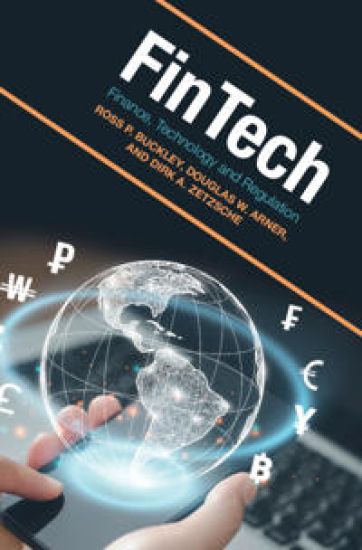
FinTech

FinTech

Ross P. Buckley; Douglas W. Arner; Dirk A. Zetzsche

Cambridge University Press
2023
sidottu
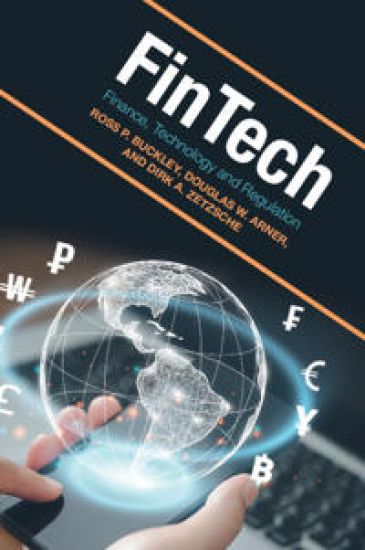
In this comprehensive, accessible work, Ross P. Buckley, Douglas W. Arner, and Dirk A. Zetzsche offer an ideal reference for anyone seeking to understand the technological transformation of finance and the role of regulation: the world of FinTech. They consider FinTech technologies including artificial intelligence, blockchain, BigData, cloud computing, cryptocurrencies, central bank digital currencies, and distributed ledger technology, and provide a unique perspective on FinTech as an interactive system involving finance, technology, law, and regulation. Starting with an evolutionary perspective, the authors then consider the major technologies transforming finance, arguing for approaches to balance the risks and challenges of innovation. They address the central role of infrastructure in digital financial transformation, highlighting lessons from China, India, and the EU, as well as the impact of pandemics and other sustainability crises, while considering the risks generated by FinTech. They conclude by offering forward-looking regulatory strategies to address the challenges facing our world today.
FinTech

FinTech

Ross P. Buckley; Douglas W. Arner; Dirk A. Zetzsche

Cambridge University Press
2023
pokkari
In this comprehensive, accessible work, Ross P. Buckley, Douglas W. Arner, and Dirk A. Zetzsche offer an ideal reference for anyone seeking to understand the technological transformation of finance and the role of regulation: the world of FinTech. They consider FinTech technologies including artificial intelligence, blockchain, BigData, cloud computing, cryptocurrencies, central bank digital currencies, and distributed ledger technology, and provide a unique perspective on FinTech as an interactive system involving finance, technology, law, and regulation. Starting with an evolutionary perspective, the authors then consider the major technologies transforming finance, arguing for approaches to balance the risks and challenges of innovation. They address the central role of infrastructure in digital financial transformation, highlighting lessons from China, India, and the EU, as well as the impact of pandemics and other sustainability crises, while considering the risks generated by FinTech. They conclude by offering forward-looking regulatory strategies to address the challenges facing our world today.
The REGTECH Book

The REGTECH Book

Janos Barberis; Douglas W. Arner; Ross P. Buckley

John Wiley Sons Inc
2019
nidottu
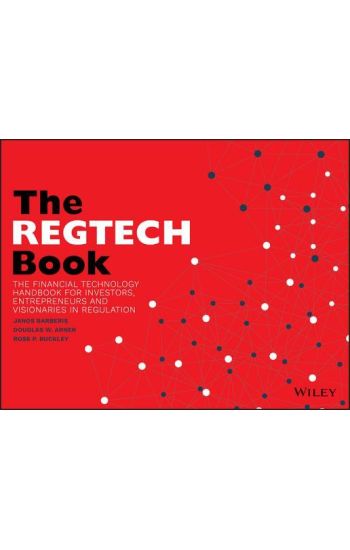
The Regulatory Technology Handbook The transformational potential of RegTech has been confirmed in recent years with US$1.2 billion invested in start-ups (2017) and an expected additional spending of US$100 billion by 2020. Regulatory technology will not only provide efficiency gains for compliance and reporting functions, it will radically change market structure and supervision. This book, the first of its kind, is providing a comprehensive and invaluable source of information aimed at corporates, regulators, compliance professionals, start-ups and policy makers. The REGTECH Book brings into a single volume the curated industry expertise delivered by subject matter experts. It serves as a single reference point to understand the RegTech eco-system and its impact on the industry. Readers will learn foundational notions such as: • The economic impact of digitization and datafication of regulation • How new technologies (Artificial Intelligence, Blockchain) are applied to compliance • Business use cases of RegTech for cost-reduction and new product origination • The future regulatory landscape affecting financial institutions, technology companies and other industries Edited by world-class academics and written by compliance professionals, regulators, entrepreneurs and business leaders, the RegTech Book represents an invaluable resource that paves the way for 21st century regulatory innovation.
Financial Markets in Hong Kong

Financial Markets in Hong Kong

Douglas W Arner; Berry Hsu; Say H Goo; Syren Johnstone; Paul Lejot

Oxford University Press
2016
sidottu
Since the publication of the first edition in 2006, financial regulation around the world has changed dramatically as a result of the 2008 global financial crisis. As one of the world's leading financial centres, international regulatory reforms have had a significant impact on the legal and regulatory system in Hong Kong. This new second edition provides a comprehensive and authoritative single-volume guide to the main areas of financial regulation and financial law in Hong Kong. Given the massive changes in financial regulation globally and in Hong Kong, the second edition has been substantially rewritten and revised to address changes in markets and their legal and regulatory frameworks, as well as the implications of these changes to future market development. The book is in five parts: The first part considers the evolution of Hong Kong's role as a financial centre and the development of its financial regulatory structure, one that is perhaps unusually complex given the size of the jurisdiction. The second part discusses the regulation of the banking, securities, insurance sectors, including the regulatory powers of the Hong Kong Monetary Authority (HKMA), the Securities and Futures Commission of Hong Kong (SFC), the Office of the Commissioner of Insurance (OCI), and the forthcoming Independent Insurance Authority (IIA). The third part covers regulation of financial products and services, including securities offerings and listings, investment products and asset management, financial derivatives, and takeovers and mergers. The fourth part addresses market conduct and misconduct, including corporate governance, market abuse and financial crime. Finally, the fifth part examines the international context, focusing on the relationship between Hong Kong's financial markets and regulation and mainland China as well as key issues for Hong Kong's role as a major global financial centre.
Financial Stability, Economic Growth, and the Role of Law

Financial Stability, Economic Growth, and the Role of Law

Douglas W. Arner

Cambridge University Press
2007
sidottu
Financial crises have become an all too common occurrence over the past twenty years, largely as a result of changes in finance brought about by increasing internationalization and integration. As domestic financial systems and economies have become more interlinked, weaknesses can significantly impact not only individual economies but also markets, financial intermediaries, and economies around the world. This volume addresses the twin objectives of financial development in the context of financial stability and the role of law in supporting both. Financial stability (frequently seen as the avoidance of financial crisis) has become an objective of both the international financial architecture and individual economies and central banks. At the same time, financial development is now seen to play an important role in economic growth. In both financial stability and financial development, law and related institutions have a central role.
Financial Stability, Economic Growth, and the Role of Law

Financial Stability, Economic Growth, and the Role of Law

Douglas W. Arner

Cambridge University Press
2007
pokkari
Financial crises have become an all too common occurrence over the past twenty years, largely as a result of changes in finance brought about by increasing internationalization and integration. As domestic financial systems and economies have become more interlinked, weaknesses can significantly impact not only individual economies but also markets, financial intermediaries, and economies around the world. This volume addresses the twin objectives of financial development in the context of financial stability and the role of law in supporting both. Financial stability (frequently seen as the avoidance of financial crisis) has become an objective of both the international financial architecture and individual economies and central banks. At the same time, financial development is now seen to play an important role in economic growth. In both financial stability and financial development, law and related institutions have a central role.