Kirjojen hintavertailu. Mukana 12 390 323 kirjaa ja 12 kauppaa.

Kirjailija

Douglas W. Woods

Kirjat ja teokset yhdessä paikassa: 11 kirjaa, julkaisuja vuosilta 2008-2025, suosituimpien joukossa Managing Tourette Syndrome. Vertaile teosten hintoja ja tarkista saatavuus suomalaisista kirjakaupoista.

Mukana myös kirjoitusasut: Douglas W Woods

11 kirjaa

Kirjojen julkaisuhaarukka 2008-2025.

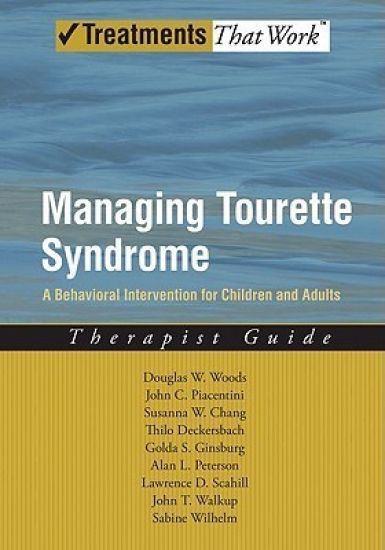
Managing Tourette Syndrome TG

Managing Tourette Syndrome TG

Douglas W. Woods; John C. Piacentini; Alan L. Peterson; Lawrence D. Scahill; John T. Walkup

OXFORD UNIVERSITY PRESS INC
2025
nidottu
This therapist guide addresses the treatment of Tourette syndrome (TS) in children and adults. The goal of this 11-session program is to teach the patient effective tic management skills rather than to cure the tic disorder. Complete with step-by-step instructions for running sessions, as well as lists of materials needed, session outlines, and copies of forms necessary for treatment, this therapist guide provides all the information needed to successfully treat tic disorders. Now into its second edition, this well-established treatment protocol is now recognized as a first-line treatment for tics in individuals across the world and outlines the protocol for the Comprehensive Behavioral Intervention for Tics (CBIT). Written by the treatment developers, this book provides not only the technical knowledge of how the treatment can be effectively implemented, but also includes the collected wisdom from nearly 20 years of treating patients with the protocol. This updated protocol is a must have for anyone treating individuals with tic disorders. Also available is an updated and revised corresponding workbook for parents and their children, as well as the original workbook designed specifically for adolescent and adult clients.
Managing Tourette Syndrome

Managing Tourette Syndrome

Douglas W Woods; John Piacentini; Susanna Chang; Thilo Deckersbach; Golda Ginsburg; Alan Peterson; Lawrence D Scahill; John Walup; Sabine Wilhelm

Oxford University Press Inc
2008
nidottu
In 2002, the Tourette Syndrome Association formed the TS Behavioral Sciences Consortium (BSC). The charge of the BSC was to develop and test nonpharmacological treatment options for individuals, both children and adults with Tourette Syndrome. This manual is the result of their work, and represents the most scientifically effective behavioral treatment for Tourette Syndrome available today. The treatment program uses Habit Reversal Training (HRT) for children and adults with chronic tic disorder. Individual treatment is based at its core on awareness training, the development of a specific competing response for each tic, and the use of functionally-based strategies for the elimination of tic-exacerbating antecedent and consequent variables. In addition, individual treatment includes techniques designed to enhance patient compliance, including social support and an inconvenience review, as well as scheduled time for the therapist and client to discuss areas of functioning that individuals with TS may find difficult, such as social/familial difficulties and disruptive anger/rage behavior. Each week, clients are given homework assignments, to be done 4-5 times per week, consisting of 20 to 30 minutes of awareness and competing response training to tics addressed in session. The client will be encouraged to keep tally marks to monitor tic behavior. Home-based monitoring and competing response training are reviewed at each session. All homework assignments will be available in this companion workbook.
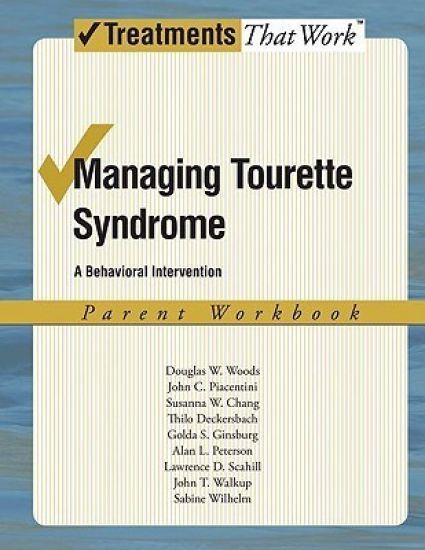
Managing Tourette Syndrome Parent WB

Managing Tourette Syndrome Parent WB

Douglas W. Woods; John C. Piacentini; Alan L. Peterson; Lawrence D. Scahill; John T. Walkup

OXFORD UNIVERSITY PRESS INC
2025
nidottu
This Parent Workbook addresses the treatment of Tourette syndrome (TS) in children and adults. The goal of this 11-session program is to teach the patient effective tic management skills rather than to cure the tic disorder. Children, alongside parents, will be taught how to become aware of tics, how to substitute other behaviors to manage tics when they start to appear, and how to avoid factors that may make tics worse, as well as relaxation techniques to reduce stress and relapse prevention strategies. The workbook provides user-friendly forms for tracking symptoms and monitoring tic severity. Now into its second edition, this well-established treatment protocol is recognized as a first-line treatment for tics in individuals across the world and outlines the protocol for the Comprehensive Behavioral Intervention for Tics (CBIT). Written by the treatment developers, this book provides not only the technical knowledge of how the treatment can be effectively implemented, but also includes the collected wisdom from nearly 20 years of treating patients with the protocol. This updated protocol is a must have for anyone trying to manage tic disorder. Also available is an updated and revised corresponding therapist guide, as well as the original workbook designed specifically for adolescent and adult clients.
Trichotillomania, Skin Picking, and Other Body-Focused Repetitive Behaviors

Trichotillomania, Skin Picking, and Other Body-Focused Repetitive Behaviors

Jon E. Grant; Dan J. Stein; Douglas W. Woods; Nancy J. Keuthen

American Psychiatric Association Publishing
2011
pokkari
Underestimated, under-researched, and often poorly understood, the body-focused repetitive disorders nevertheless cause human suffering that is serious, persistent, and pervasive. These disorders can occur in both adults and children and manifest themselves as hair pulling (trichotillomania), pathologic skin picking, thumb sucking, and nail biting. Although these disorders are common, very few medical students and residents hear them addressed in lectures or know where to begin when confronted with a patient presenting with these behaviors. Trichotillomania, Skin Picking, and Other Body-Focused Repetitive Behaviors seeks to remedy this situation by synthesizing the latest research on body-focused repetitive disorders and presenting it in a systematic, easy-to-grasp manner. Much has changed in the more than a decade since the last book on this topic was published. This new volume reflects the most current and substantive research into the etiology and symptoms of body-focused repetitive disorders and therapeutic options. Organized in logical fashion, it begins with a review of the clinical characteristics, moves on to diagnosis and evaluation, and concludes with a full review of treatment options. Special features include: • Extensive material to help clinicians and patients understand the underlying purpose of engaging in these behaviors, which include, reducing tension, regulating strong emotion, and alleviating boredom.• Separate chapters on adults and children, who may have a different presentation and a different set of treatment options. An additional chapter focuses on the role of the child patient's family in the diagnosis and treatment of the disorder.• Thorough coverage of the full range of treatments—including psychotherapy, medication, and alternative treatments—which provides the clinician with an evidence-based approach to treating patients.• Discussion of the psychobiology of hair pulling and skin picking, which allows the reader to understand and contextualize the disorder from a neurological perspective and offers clues that may assist in optimizing treatment.• A presentation style that is detailed enough for clinicians, yet accessible enough for a lay audience, including patients with the disorder and the families who seek to understand and support them. Trichotillomania, Skin Picking, and Other Body-Focused Repetitive Behaviors fills a critical gap in the literature by addressing this common and frequently debilitating disorder in an utterly current, highly practical, and wholly compassionate manner.
Managing Tourette Syndrome

Managing Tourette Syndrome

Douglas W Woods; John Piacentini; Susanna Chang; Thilo Deckersbach; Golda Ginsburg; Alan Peterson; Lawrence d Scahill; John T Walkup; Sabine Wilhelm

Oxford University Press Inc
2008
nidottu
In 2002, the Tourette Syndrome Association formed the TS Behavioral Sciences Consortium (BSC). The charge of the BSC was to develop and test nonpharmacological treatment options for individuals, both children and adults with Tourette Syndrome. This manual is the result of their work, and represents the most scientifically effective behavioral treatment for Tourette Syndrome available today. The treatment program uses Habit Reversal Training (HRT) for children and adults with chronic tic disorder. Individual treatment is based at its core on awareness training, the development of a specific competing response for each tic, and the use of functionally-based strategies for the elimination of tic-exacerbating antecedent and consequent variables. In addition, individual treatment includes techniques designed to enhance patient compliance, including social support and an inconvenience review, as well as scheduled time for the therapist and client to discuss areas of functioning that individuals with TS may find difficult, such as social/familial difficulties and disruptive/anger/rage behavior. Each week, clients are given homework assignments, to be done 4-5 times per week, consisting of 20 to 30 minutes of awareness and competing response training to tics addressed in session. The client will be encouraged to keep tally marks to monitor tic behavior. Home-based monitoring and competing response training are reviewed at each session. All homework assignments will be available in the companion workbook.
Managing Tourette Syndrome

Managing Tourette Syndrome

Douglas W Woods; John Piacentini; Susanna Chang; Thilo Deckersbach; Golda Ginsburg; Alan Peterson; Lawrence D Scahill; John T Walkup; Sabine Wilhelm

Oxford University Press Inc
2008
nidottu
In 2002, the Tourette Syndrome Association formed the TS Behavioral Sciences Consortium (BSC). The charge of the BSC was to develop and test nonpharmacological treatment options for individuals, both children and adults with Tourette Syndrome. This manual is the result of their work, and represents the most scientifically effective behavioral treatment for Tourette Syndrome available today. The treatment program uses Habit Reversal Training (HRT) for children and adults with chronic tic disorder. Individual treatment is based at its core on awareness training, the development of a specific competing response for each tic, and the use of functionally-based strategies for the elimination of tic-exacerbating antecedent and consequent variables. In addition, individual treatment includes techniques designed to enhance patient compliance, including social support and an inconvenience review, as well as scheduled time for the therapist and client to discuss areas of functioning that individuals with TS may find difficult, such as social/familial difficulties and disruptive/anger/rage behavior. Each week, clients are given homework assignments, to be done 4-5 times per week, consisting of 20 to 30 minutes of awareness and competing response training to tics addressed in session. The client will be encouraged to keep tally marks to monitor tic behavior. Home-based monitoring and competing response training are reviewed at each session. All homework assignments will be available in the companion workbook.
Trikotillomani

Trikotillomani

Michael P. Twohig; Douglas W. Woods

Akademika
2013
nidottu
Bokbeskrivelse Trikotillomani, eller hårnappingslidelse, er i dag en relativt ukjent lidelse som ofte underdiagnostiseres på grunn av manglende kunnskap. Trikotillomani er en psykisk lidelse som kan behandles. Denne terapeuthåndboken presenterer forskningsbasert kunnskap om hvordan du som terapeut kan tilby en effektiv behandling av trikotillomani til dine pasienter. Gjennom ACT-forsterket atferdsterapi får pasienten hjelp til å akseptere trangen til å nappe hår uten å gi etter for den. Pasienten vil ikke lenger måtte kjempe med seg selv hele tiden, og kan heller bruke kreftene på å øke sin egen livskvalitet. I dette behandlingsopplegget jobber pasient og terapeut sammen for å konkretisere livsverdier og verdivalg i pasientens liv. Behandlingen består blant annet av vaneendringstrening (HRT) og teknikker for stimuluskontroll.
Trikotillomani

Trikotillomani

Michael P. Twohig; Douglas W. Woods

Akademika
2013
nidottu
Trikotillomani eller hårnappingslidelse er i dag en relativt ukjent lidelse som underdiagnostiseres på grunn av manglende kunnskap. Trikotillomani er en psykisk lidelse som er mulig å behandle sammen med en terapeut. Personer som lider av trikotillomani vet hvor frustrerende og vanskelig det er å slutte med hårnappingen. Men det fins behandlingsmetoder som hjelper. Fagpersoner anbefaler ACT-forsterket atferdsterapi som førstevalg for behandling. Gjennom behandlingen vil du få hjelp til å akseptere trangen til å nappe hår uten at du behøver å gi etter for den. Du vil ikke lenger måtte kjempe mot deg selv hele tiden og kan heller bruke kreftene på å øke din egen livskvalitet. Denne arbeidsboken er laget for personer som lider av trikotillomani og skal benyttes i kombinasjon med kvalifisert behandling hos en terapeut. I terapien vil du jobbe med å konkretisere livsverdier og gjøre verdivalg i ditt liv. Behandlingen inkluderer vaneendringstrening (HRT) og teknikker for stimuluskontroll. I løpet av de ti ukene som behandlingen varer, vil du lære å gjenkjenne tanker og følelser som er knyttet til hårnappingen, og du vil lære å akseptere trangen og bruke ulike teknikker for å slutte å nappe. Douglas W. Woods, PhD, er professor i psykologi og Director of Clinical Training ved University of Wisconsin-Milwaukee. Dr. Woods er en anerkjent spesialist innen forskning og behandling av trikotillomani, Tourettes syndrom og lidelser i tvangsspektrumområdet. Michael P. Twohig, PhD, er førsteamanuensis ved Department of Psychology ved Utah State University i Logan, Utah. Han har hovedsakelig forsket på behandling med HRT (vaneendringsterapi) og ACT (aksept- og engasjementsterapi) av tvangslidelser (OCD) og tvangsspektrumlidelser, trikotillomani og hudplukking.
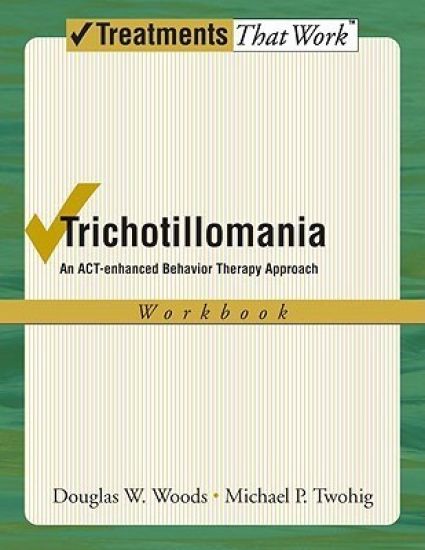
Trichotillomania: Workbook

Trichotillomania: Workbook

Douglas W. Woods; Michael P. Twohig

Oxford University Press Inc
2008
nidottu
Trichotillomania (TTM) is a complex disorder which involves at least two levels of psychological functioning. At one level, it is a habitual behaviour. This type of TTM involves 'automatic pulling' and typically occurs without a person's awareness. The second type of TTM is more closely related to emotional functioning or regulation and is known as 'focused pulling'. Generally, it is believed that most individuals with TTM exhibit both types of pulling. THe most common treatment for TTM is Habit Reversal Therapy (HRT), and its main focus is the habitual, or 'automatic' aspect of the disorder. In this new treatment program, Drs Wood and Twohig have designed a treatment which combines the basic aspects of HRT with Acceptance and Commitment Therapy (ACT) to address the 'focused' aspects of the pulling. ACT seeks to alter the thoughts and feelings surrounding the pulling, and removes the compulsive aspect of the pulling urge, while HRT focuses on increasing the awareness of the pulling and teaches the person to utilise a competing behaviour instead of pulling. Together, these two techniques work to decrease all incidents of pulling, and help the client understand and come to terms with the emotional triggers of their disorder. In a clinical setting, this combined treatment was proven very effective, with high maintenance rates over a three-month period. This treatment consists of 10 60-minute sessions spread out over six weeks, with the final two sessions taking place every two weeks to ease the client out of the therapeutic environment and intrduce relapse prevention techniques. This corresponding workbook will contain monitoring forms to help the client maintain an awareness of their pulling, as well as self-assessment tests and other homework exercises.
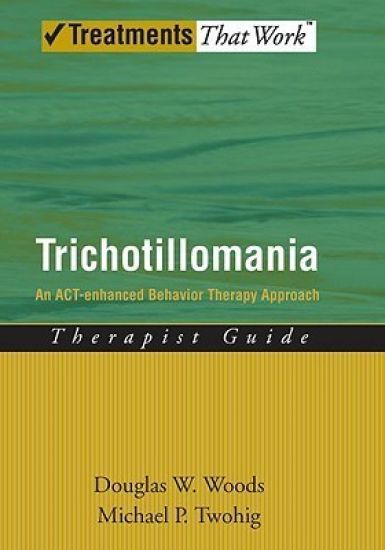
Trichotillomania: Therapist Guide

Trichotillomania: Therapist Guide

Douglas W. Woods; Michael P. Twohig

Oxford University Press Inc
2008
nidottu
Trichotillomania (TTM) is a complex disorder that is difficult to treat as few effective therapeutic options exist. Behaviour therapy has the greatest empirical support, but the number of mental health providers familiar with TTM and its treatment is quite small. This manual was written as a tool for therapists to become familiar with an effective treatment for TTM. The treatment approach described in this guide blends traditional behaviour with therapy elements of habit reversal training and stimulus control techniques with the more contemporary behavioural elements of Acceptance and Commitment Therapy (ACT). In the first phase of the program, clients are taught skills for stopping and preventing their unconscious pulling episodes. In the second phase, clients are introduced to ACT. Unlike traditional interventions that aim to change type or frequency of pulling-related cognitions in the hopes of reducing urges to pull hair, this innovative program uses strategies to change the function of these cognitions. Clients are taught to see urges for what they really are and to accept their pulling-related throughts, feelings, and urges wihtout fighting against them. This is accomplished through discussions about the function of language and defusion exercises that show the client how to respond to thoughts about pulling less literally. Over the course of 10 weeks, clients learn to be aware of their pulling and warning signals, use self-management strategies for stopping and preventing pulling, stop fighting against their pulling-related urges and thoughts, and work towards increasing their quality of life. Self-monitoring and homework assignments keep clients motivated and engaged throughout. Designed to be used with older adolescents and adults, this innovative intervention has proven efficacy and is sure to be a powerful tool for the clinician who treats TTM.