Kirjojen hintavertailu. Mukana 12 326 959 kirjaa ja 12 kauppaa.
Kirjailija
Douglas Winslow Cooper
Kirjat ja teokset yhdessä paikassa: 9 kirjaa, julkaisuja vuosilta 2011-2024, suosituimpien joukossa Refirement, Not Retirement! Vibrant at 80, Beyond Just Survival, Your Continuing Survival. Vertaile teosten hintoja ja tarkista saatavuus suomalaisista kirjakaupoista.
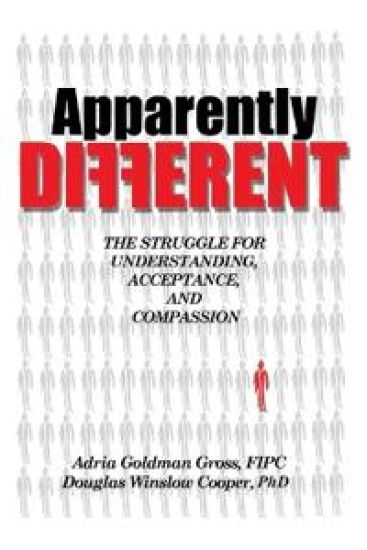
Physical or mental handicaps can make one seem apparently different from others and lead to being excluded or included with an inferior status. Apparently DIFFERENT, written by over a score of authors who know this situation intimately, will make its readers realize the importance of treating all of us as precious human beings.As Eileen Goudge, New York Times best-selling author, puts it: "One of our life's greatest mysteries is how to be accepted. It is a case which has yet to be solved. The clues left behind in Apparently DIFFERENT give us a glimpse of the world many of us never experience. May you fall in love with their bravery and embrace them with all your heart."The book's authors---Adria Goldman Gross, FIPC, and Douglas Winslow Cooper, PhD---begin, "We dedicate this empathetically to all those who cope with being perceived negatively as being different. You deserve understanding, acceptance, and compassion; we hope this book contributes to your obtaining all these."The authors summarize their goals for this book: "Apparently DIFFERENT has been published to request people to accept relationships with others with challenging conditions. We all deserve respect and admiration. When reading Apparently DIFFERENT, imagine yourself living with their life experiences."
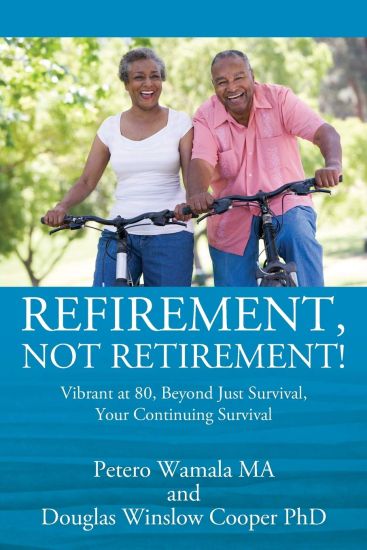
Have you ever wondered what retirement will be like? Suddenly no longer having a title, responsibilities, a place to go on a regular schedule? In Refirement, Not Retirement Vibrant at 80, Beyond Just Survival, Your Continuing Survival, Petero Wamala, MA, and Douglas Winslow Cooper, PhD, share the principles and practices of retirement and "refirement" and also, uniquely, clarify tips and tricks by following the story of Henry, who demonstrates the refired life in practice.
In this independently funded study, the authors address the future of the world's supplies of clean water, exploring in depth the U.S.A.'s Colorado River Basin, where a variety of approaches have been used and proposed to manage provision and allocation of the Colorado River water. Increases in population and water usage, along with uncertainties associated with climate change, put the future availability of adequate water supplies in doubt. Rules and regulations are traditional approaches to handling common resource maintenance and usage. With no rules, the tendency to use the resource inefficiently and not to maintain it produces the free-rider problem sometimes called the "tragedy of the commons," a phrase popularized by Garrett Hardin in 1968. An alternative to rule-setting and enforcement is to establish market rights to water supply, with the higher-value uses commanding higher prices and receiving more investment. The pros and cons of this approach are discussed in a chapter of this book. The book discusses the various policy options, describes the recent crisis in supplying Flint, Michigan, with safe, potable water, explains the water cycle, discusses cyber security issues, surveys the threat from waterborne illnesses, and calls attention to one of the most recent sophisticated mathematical approaches to predicting droughts and floods, the use of Bayes's theorem.
According to AARP (2015), 16.6%, one out of every six, of Americans provide unpaid care to an adult. In many cases, this care goes beyond custodial care and qualifies as skilled nursing care. Imagine this: someone you care deeply about is being released from the hospital, given the alternatives of home care, hospice care, or a nursing home. You have to decide, or help them decide, which alternative is best. If you decide on home care, you may need to manage it. This book will help you understand how to provide skilled nursing care at home and will aid in your decision-making on whether to undertake this. This book answers your primary questions: Why choose home care rather than care at a nursing facility? What will you need? Whom will you hire? When will they have to do what? Where in your home will they do it? How will you manage the care? The authors make it easier for those who step forward to provide care in their home for a family member or friend, although not being trained medical professionals themselves. You can manage something without being an expert, but it does require a working knowledge of the major concepts and the implementation of some variety of systematization. Whether you are managing the care at home or just monitoring care being given at home by an agency, this book should be of assistance to you in understanding what is needed and what is being done. The co-authors have been involved for over a decade in supplying and managing skilled nursing care at home for an immune-compromised quadriplegic patient who is on a ventilator and is fed and medicated through a gastric tube. The round-the-clock care mimics that which she received in the critical care unit of her regional hospital. How to Manage Nursing Care at Home tells its readers what to expect and gives them the necessary information and structure, in terms of needed forms, "charts," to understand and oversee the nursing care given by RNs and LPNs. As one expert notes: "...authors Douglas Winslow Cooper and Diane R. Beggin address one of the most complex global issues faced in the 21st century: caring for someone you love, one who is also diagnosed with a severe medical condition, doing this safely, and in the home.... a valuable guide that will ease your worry as you begin your journey as one of the millions of untrained family caregivers who want to safely provide complex medical care services so that your loved one can remain home." (Eboni I. Green, PhD, RN, Co-Founder of Caregiver Support Services)