Kirjojen hintavertailu. Mukana 12 390 323 kirjaa ja 12 kauppaa.

Kirjailija

Dr. Val Napoleon

Kirjat ja teokset yhdessä paikassa: 4 kirjaa, julkaisuja vuosilta 2020-2025, suosituimpien joukossa Ravens Talking. Vertaile teosten hintoja ja tarkista saatavuus suomalaisista kirjakaupoista.

4 kirjaa

Kirjojen julkaisuhaarukka 2020-2025.

Ravens Talking

Ravens Talking

Rebecca Johnson; Debra McKenzie; Dr. Val Napoleon; Emily Snyder

UNIVERSITY OF TORONTO PRESS
2025
pokkari
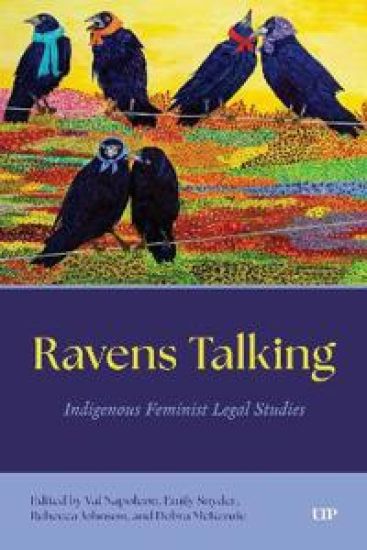
While awareness of the sexual and gendered colonial violence faced by Indigenous women, girls, and 2SLGBTQI+ people has grown, the field of Indigenous law and beyond has yet to fully engage with Indigenous feminisms, gender, and sexuality in a sustained way. Ravens Talking challenges this gap, treating Indigenous feminisms as essential, insightful, and deeply transformative. Through critical feminist analyses, this book examines key issues in Indigenous law, demonstrating how legal understandings shift when gender is consistently, meaningfully, and creatively engaged. The contributors to this collection confront the forms of power shaping these essential conversations and bring to the fore intergenerational Indigenous feminisms; Indigenous law and gender; the forms of expression and translation between and across legal and political worlds; and the rich array of disagreements and conflicts between Indigenous women. Ravens Talking intends to capture the complexities arising from Indigenous feminisms in living contexts to provoke questions and develop critical perspectives. Both intellectually rigorous and practically grounded, Ravens Talking is a vital contribution encouraging dialogue on Indigenous legal traditions, justice, and sovereignty.
Ravens Talking

Ravens Talking

Rebecca Johnson; Debra McKenzie; Dr. Val Napoleon; Emily Snyder

UNIVERSITY OF TORONTO PRESS
2025
sidottu
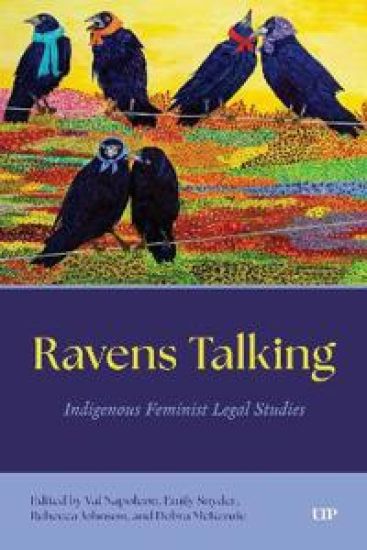
While awareness of the sexual and gendered colonial violence faced by Indigenous women, girls, and 2SLGBTQI+ people has grown, the field of Indigenous law and beyond has yet to fully engage with Indigenous feminisms, gender, and sexuality in a sustained way. Ravens Talking challenges this gap, treating Indigenous feminisms as essential, insightful, and deeply transformative. Through critical feminist analyses, this book examines key issues in Indigenous law, demonstrating how legal understandings shift when gender is consistently, meaningfully, and creatively engaged. The contributors to this collection confront the forms of power shaping these essential conversations and bring to the fore intergenerational Indigenous feminisms; Indigenous law and gender; the forms of expression and translation between and across legal and political worlds; and the rich array of disagreements and conflicts between Indigenous women. Ravens Talking intends to capture the complexities arising from Indigenous feminisms in living contexts to provoke questions and develop critical perspectives. Both intellectually rigorous and practically grounded, Ravens Talking is a vital contribution encouraging dialogue on Indigenous legal traditions, justice, and sovereignty.
Creating Indigenous Property

Creating Indigenous Property

Dr. Val Napoleon; Sari Graben; Dr. Angela Cameron

University of Toronto Press
2020
sidottu
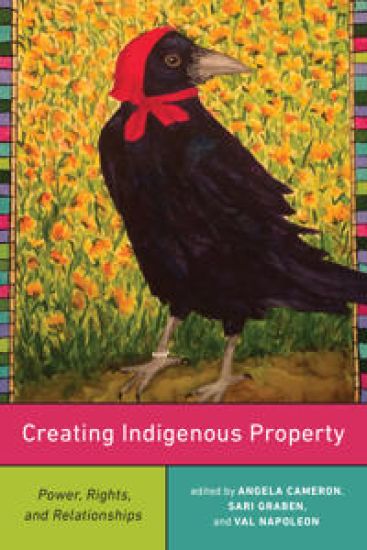
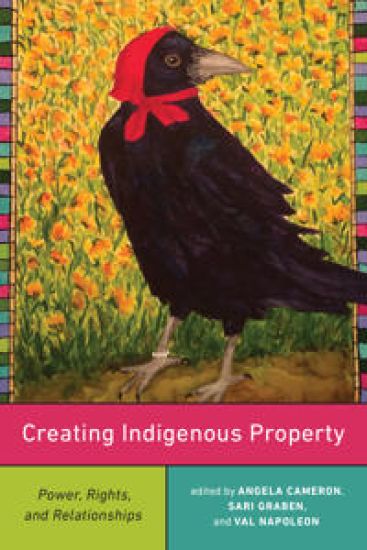
While colonial imposition of the Canadian legal order has undermined Indigenous law, creating gaps and sometimes distortions, Indigenous peoples have taken up the challenge of rebuilding their laws, governance, and economies. Indigenous conceptions of land and property are central to this project. Creating Indigenous Property identifies how contemporary Indigenous conceptions of property are rooted in and informed by their societally specific norms, meanings, and ethics. Through detailed analysis, the authors illustrate that unexamined and unresolved contradictions between the historic and the present have created powerful competing versions of Indigenous law, legal authorities, and practices that reverberate through Indigenous communities. They have identified the contradictions and conflicts within Indigenous communities about relationships to land and non-human life forms, about responsibilities to one another, about environmental decisions, and about wealth distribution. Creating Indigenous Property contributes to identifying the way that Indigenous discourses, processes, and institutions can empower the use of Indigenous law. The book explores different questions generated by these dynamics, including: Where is the public/private divide in Indigenous and Canadian law, and why should it matter? How do land and property shape local economies? Whose voices are heard in debates over property and why are certain voices missing? How does gender matter to the conceptualization of property and the Indigenous legal imagination? What is the role and promise of Indigenous law in negotiating new relationships between Indigenous peoples and Canada? In grappling with these questions, readers will join the authors in exploring the conditions under which Canadian and Indigenous legal orders can productively co-exist.
Creating Indigenous Property

Creating Indigenous Property

Dr. Val Napoleon; Sari Graben; Dr. Angela Cameron

University of Toronto Press
2020
pokkari
While colonial imposition of the Canadian legal order has undermined Indigenous law, creating gaps and sometimes distortions, Indigenous peoples have taken up the challenge of rebuilding their laws, governance, and economies. Indigenous conceptions of land and property are central to this project. Creating Indigenous Property identifies how contemporary Indigenous conceptions of property are rooted in and informed by their societally specific norms, meanings, and ethics. Through detailed analysis, the authors illustrate that unexamined and unresolved contradictions between the historic and the present have created powerful competing versions of Indigenous law, legal authorities, and practices that reverberate through Indigenous communities. They have identified the contradictions and conflicts within Indigenous communities about relationships to land and non-human life forms, about responsibilities to one another, about environmental decisions, and about wealth distribution. Creating Indigenous Property contributes to identifying the way that Indigenous discourses, processes, and institutions can empower the use of Indigenous law. The book explores different questions generated by these dynamics, including: Where is the public/private divide in Indigenous and Canadian law, and why should it matter? How do land and property shape local economies? Whose voices are heard in debates over property and why are certain voices missing? How does gender matter to the conceptualization of property and the Indigenous legal imagination? What is the role and promise of Indigenous law in negotiating new relationships between Indigenous peoples and Canada? In grappling with these questions, readers will join the authors in exploring the conditions under which Canadian and Indigenous legal orders can productively co-exist.