Kirjojen hintavertailu. Mukana 12 215 126 kirjaa ja 12 kauppaa.

Kirjailija

Drucilla Cornell

Kirjat ja teokset yhdessä paikassa: 25 kirjaa, julkaisuja vuosilta 1987-2022, suosituimpien joukossa The Spirit of Revolution. Vertaile teosten hintoja ja tarkista saatavuus suomalaisista kirjakaupoista.

25 kirjaa

Kirjojen julkaisuhaarukka 1987-2022.

Today's Struggles, Tomorrow's Revolutions

Today's Struggles, Tomorrow's Revolutions

Drucilla Cornell

BLOOMSBURY PUBLISHING PLC
2022
sidottu
The black insurgence movement and experiments in Caribbean socialism, following the work of the committed revolutionary CLR James, have resounding significance for the political struggles of today. This book addresses class struggle and the battle against racialized capitalism, which in turn makes us reconceptualize the idea of revolution, liberation and rebellion by focusing on this great revolutionary theorist.Renowned political theorist Drucilla Cornell argues that the universal heartbeat of the struggle for socialism is a new praxis of being human together beyond the exploitation of colonial-racial capitalism. On this basis, this book’s intervention emphasizes the continuous history of revolution, rather than understanding revolutions as “events” that either succeed or fail. In today’s moment, with the simultaneity of the collapse of the post-Cold War neoliberal order and climate change, the struggle over what it means to be human on the planet today has taken on a new urgency. Cornell argues that today, the greatest vectors of this revolutionary struggle for a new humanity are Black, decolonial, and queer movements, as they show us ways of being beyond the reign of white economic man. Placing the insights of these struggles in conversation with “traditional” Marxist thought, this book speaks to the pragmatic questions of insurrection, insurgency, rebellion, revolution in a way that speaks to the politics of our time.
Today's Struggles, Tomorrow's Revolutions

Today's Struggles, Tomorrow's Revolutions

Drucilla Cornell

ROWMAN LITTLEFIELD
2022
nidottu
The black insurgence movement and experiments in Caribbean socialism, following the work of the committed revolutionary CLR James, have resounding significance for the political struggles of today. This book addresses class struggle and the battle against racialized capitalism, which in turn makes us reconceptualize the idea of revolution, liberation and rebellion by focusing on this great revolutionary theorist.Renowned political theorist Drucilla Cornell argues that the universal heartbeat of the struggle for socialism is a new praxis of being human together beyond the exploitation of colonial-racial capitalism. On this basis, this book’s intervention emphasizes the continuous history of revolution, rather than understanding revolutions as “events” that either succeed or fail. In today’s moment, with the simultaneity of the collapse of the post-Cold War neoliberal order and climate change, the struggle over what it means to be human on the planet today has taken on a new urgency. Cornell argues that today, the greatest vectors of this revolutionary struggle for a new humanity are Black, decolonial, and queer movements, as they show us ways of being beyond the reign of white economic man. Placing the insights of these struggles in conversation with “traditional” Marxist thought, this book speaks to the pragmatic questions of insurrection, insurgency, rebellion, revolution in a way that speaks to the politics of our time.
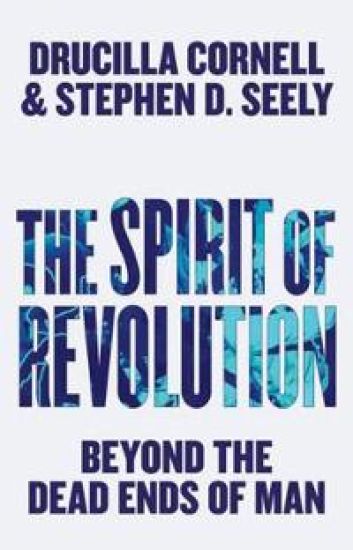
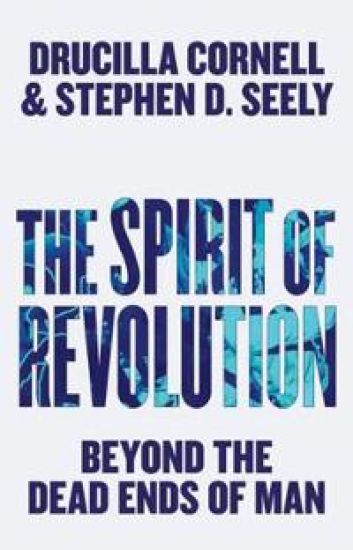
The Spirit of Revolution

The Spirit of Revolution

Drucilla Cornell; Stephen D. Seely

Polity Press
2015
nidottu
In recent years, feminist and queer theory have effectively disavowed both “the human” and revolutionary politics. In the face of massive geopolitical crisis, posthumanists have called for us to reconsider fundamentally the superiority and centrality of mankind and “the human,” and question how Man can presume to change the world by revolutionary action, particularly when Marx’s dreams seem to have been swept into the dustbin of history.This provocative book reaffirms what is most basic in feminism – the attack on the “universality” and sovereignty of Man – but contends that the only way this can mean anything other than pessimistic rhetoric is to embrace human agency and the struggle against colonialism and capitalism. In a series of “creolized” readings – Foucault with Ali Shari’ati, Lacan with Fanon, and Spinoza with Sylvia Wynter – the authors demonstrate what is at stake in the ongoing debate between humanism and posthumanism, putting this debate in the context of contemporary global crises and the possibilities of revolution.In its defense of “political spirituality,” this book pushes for a new trajectory in response to the gross inequalities of today, one that offers us a very different view of revolution and its present-day potential.
The Spirit of Revolution

The Spirit of Revolution

Drucilla Cornell; Stephen D. Seely

Polity Press
2015
sidottu
In recent years, feminist and queer theory have effectively disavowed both “the human” and revolutionary politics. In the face of massive geopolitical crisis, posthumanists have called for us to reconsider fundamentally the superiority and centrality of mankind and “the human,” and question how Man can presume to change the world by revolutionary action, particularly when Marx’s dreams seem to have been swept into the dustbin of history.This provocative book reaffirms what is most basic in feminism – the attack on the “universality” and sovereignty of Man – but contends that the only way this can mean anything other than pessimistic rhetoric is to embrace human agency and the struggle against colonialism and capitalism. In a series of “creolized” readings – Foucault with Ali Shari’ati, Lacan with Fanon, and Spinoza with Sylvia Wynter – the authors demonstrate what is at stake in the ongoing debate between humanism and posthumanism, putting this debate in the context of contemporary global crises and the possibilities of revolution.In its defense of “political spirituality,” this book pushes for a new trajectory in response to the gross inequalities of today, one that offers us a very different view of revolution and its present-day potential.
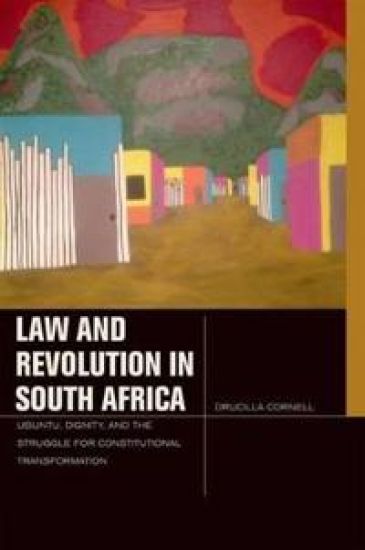
Law and Revolution in South Africa

Law and Revolution in South Africa

Drucilla Cornell

Fordham University Press
2014
sidottu
The relation between law and revolution is one of the most pressing questions of our time. As one country after another has faced the challenge that comes with the revolutionary overthrow of past dictatorships, how one reconstructs a new government is a burning issue. South Africa, after a long and bloody armed struggle and a series of militant uprisings, negotiated a settlement for a new government and remains an important example of what a substantive revolution might look like. The essays collected in this book address both the broader question of law and revolution and some of the specific issues of transformation in South Africa.
Law and Revolution in South Africa

Law and Revolution in South Africa

Drucilla Cornell

Fordham University Press
2014
pokkari
The relation between law and revolution is one of the most pressing questions of our time. As one country after another has faced the challenge that comes with the revolutionary overthrow of past dictatorships, how one reconstructs a new government is a burning issue. South Africa, after a long and bloody armed struggle and a series of militant uprisings, negotiated a settlement for a new government and remains an important example of what a substantive revolution might look like. The essays collected in this book address both the broader question of law and revolution and some of the specific issues of transformation in South Africa.
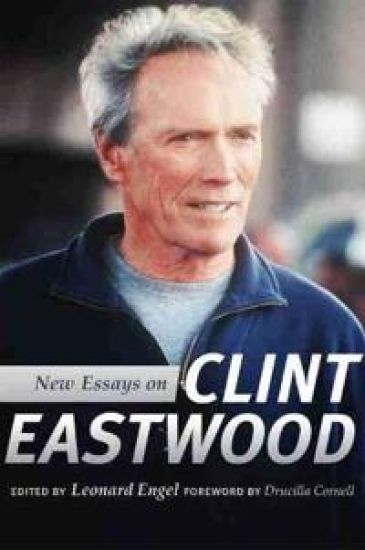
New Essays on Clint Eastwood

New Essays on Clint Eastwood

Drucilla Cornell

University of Utah Press,U.S.
2012
nidottu
New Essays on Clint Eastwood is a companion to Engel’s previous book, Clint Eastwood, Actor and Director: New Perspectives. It includes discussion of some of Eastwood’s most recent films as well as his earliest work, and deepens our overall appreciation of his artistry and his growth as an ever more accomplished storyteller. The contributors to this new volume examine Eastwood’s body of work as both actor and director: his portrayal of Rowdy Yates in the television series Rawhide, his directorial debut with Play Misty for Me, his directorial and starring role in Gran Torino, and his recent directorial successes with Hereafter and J. Edgar.A common thread throughout the volume is the respect for Eastwood’s commitment to cinematic storytelling. Individually and collectively, the essays highlight the variety and complexity of Eastwood’s themes and his accomplishments throughout a lifetime of endeavours. Examining his Westerns and detective films illustrates how Eastwood left his iconic stamp on those genres, while discussion of his more recent films expounds on his use of family, history, and myth to transcend generic conventions and to project a hard-won vision of a united humanity beyond the separation of ethnic, racial, and national conflicts. Cumulatively, the essays remind us of his lifelong devotion to perfecting his artistry and his powers as a storyteller.
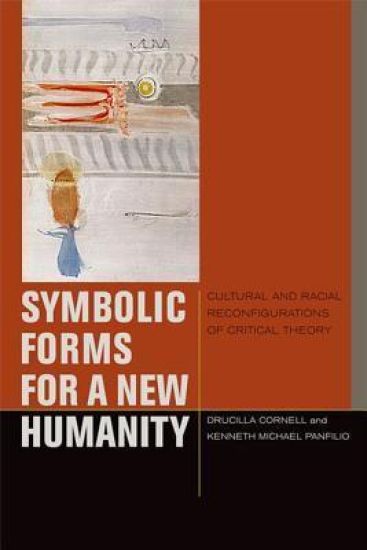
Symbolic Forms for a New Humanity

Symbolic Forms for a New Humanity

Drucilla Cornell; Kenneth Michael Panfilio

Fordham University Press
2010
sidottu
In dialogue with afro-caribbean philosophy, this book seeks in Cassirer's philosophy of symbolic forms a new vocabulary for approaching central intellectual and political issues of our time. For Cassirer, what makes humans unique is that we are symbolizing creatures destined to come into a world through varied symbolic forms; we pluralistically work with and develop these forms as we struggle to come to terms with who we are and our place in the universe. This approach can be used as a powerful challenge to hegemonic modes of study that mistakenly place the Western world at the center of intellectual and political life. Indeed, the authors argue that the symbolic dimension of Cassirer's thinking of possibility can be linked to a symbolic dimension in revolution via the ideas of Frantz Fanon, who argued that revolution must be a thoroughgoing cultural process, in which what is at stake is nothing less than how we symbolize a new humanity and bring into being a new set of social institutions worthy of that new humanity.
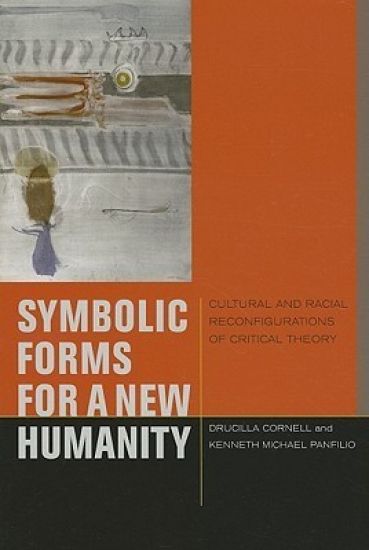
Symbolic Forms for a New Humanity

Symbolic Forms for a New Humanity

Drucilla Cornell; Kenneth Michael Panfilio

Fordham University Press
2010
pokkari
In dialogue with afro-caribbean philosophy, this book seeks in Cassirer's philosophy of symbolic forms a new vocabulary for approaching central intellectual and political issues of our time. For Cassirer, what makes humans unique is that we are symbolizing creatures destined to come into a world through varied symbolic forms; we pluralistically work with and develop these forms as we struggle to come to terms with who we are and our place in the universe. This approach can be used as a powerful challenge to hegemonic modes of study that mistakenly place the Western world at the center of intellectual and political life. Indeed, the authors argue that the symbolic dimension of Cassirer's thinking of possibility can be linked to a symbolic dimension in revolution via the ideas of Frantz Fanon, who argued that revolution must be a thoroughgoing cultural process, in which what is at stake is nothing less than how we symbolize a new humanity and bring into being a new set of social institutions worthy of that new humanity.
Clint Eastwood and Issues of American Masculinity

Clint Eastwood and Issues of American Masculinity

Drucilla Cornell

Fordham University Press
2009
sidottu
In this risk-taking book, a major feminist philosopher engages the work of the actor and director who has progressed from being the stereotypical "man's man" to pushing the boundaries of the very genres—the Western, the police thriller, the war or boxing movie—most associated with American masculinity. Cornell's highly appreciative encounter with the films directed by Clint Eastwood revolve around the questions "What is it to be a good man?" and "What is it to be, not just an ethical person, but specifically an ethical man?" Focusing on Eastwood as a director rather than as an actor or cultural icon, she studies Eastwood in relation to major philosophical and ethical themes that have been articulated in her own life's work. In her fresh and revealing readings of the films, Cornell takes up pressing issues of masculinity as it is caught up in the very definition of ideas of revenge, violence, moral repair, and justice. Eastwood grapples with this involvement of masculinity in and through many of the great symbols of American life, including cowboys, boxing, police dramas, and ultimately war—perhaps the single greatest symbol of what it means (or is supposed to mean) to be a man. Cornell discusses films from across Eastwood's career, from his directorial debut with Play Misty for Me to Million Dollar Baby. Cornell's book is not a traditional book of film criticism or a cinematographic biography. Rather, it is a work of social commentary and ethical philosophy. In a world in which we seem to be losing our grip on shared symbols, along with community itself, Eastwood's films work with the fragmented symbols that remain to us in order to engage masculinity with the most profound moral and ethical issues facing us today.
Clint Eastwood and Issues of American Masculinity

Clint Eastwood and Issues of American Masculinity

Drucilla Cornell

Fordham University Press
2009
pokkari
In this risk-taking book, a major feminist philosopher engages the work of the actor and director who has progressed from being the stereotypical "man's man" to pushing the boundaries of the very genres—the Western, the police thriller, the war or boxing movie—most associated with American masculinity. Cornell's highly appreciative encounter with the films directed by Clint Eastwood revolve around the questions "What is it to be a good man?" and "What is it to be, not just an ethical person, but specifically an ethical man?" Focusing on Eastwood as a director rather than as an actor or cultural icon, she studies Eastwood in relation to major philosophical and ethical themes that have been articulated in her own life's work. In her fresh and revealing readings of the films, Cornell takes up pressing issues of masculinity as it is caught up in the very definition of ideas of revenge, violence, moral repair, and justice. Eastwood grapples with this involvement of masculinity in and through many of the great symbols of American life, including cowboys, boxing, police dramas, and ultimately war—perhaps the single greatest symbol of what it means (or is supposed to mean) to be a man. Cornell discusses films from across Eastwood's career, from his directorial debut with Play Misty for Me to Million Dollar Baby. Cornell's book is not a traditional book of film criticism or a cinematographic biography. Rather, it is a work of social commentary and ethical philosophy. In a world in which we seem to be losing our grip on shared symbols, along with community itself, Eastwood's films work with the fragmented symbols that remain to us in order to engage masculinity with the most profound moral and ethical issues facing us today.
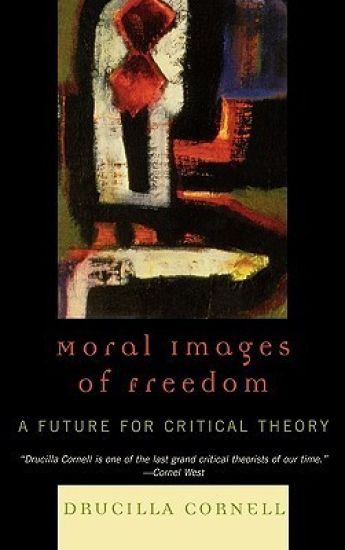
Moral Images of Freedom

Moral Images of Freedom

Drucilla Cornell

Rowman Littlefield
2007
sidottu
Moral Images of Freedom resurrects the Kantian project of affirmative political philosophy and traces its oft-forgotten influences found in thinkers such as Martin Heidegger, Ernst Cassirer, Frantz Fanon, and Walter Benjamin. Drucilla Cornell responds to nihilistic claims about the empty purpose of critical theory in a world so utterly captured by violence in all of its worst forms: economic, social, political, and cultural. Cornell instead draws together a sweeping thread of hope in the varied symbolic forms of freedom persistent throughout the work of a broader range of critical theorists and addresses the burning challenge for such work to respond seriously to the need for a decolonization of critical theory itself and a sustained commitment to the possible future of socialism.
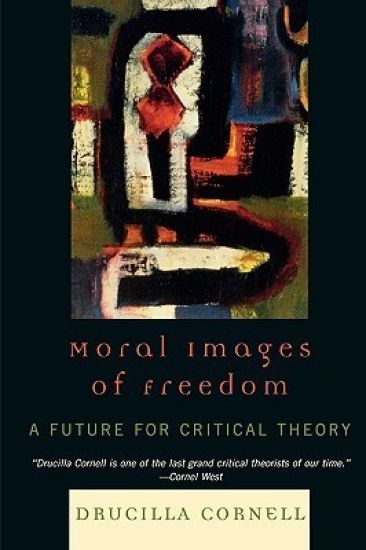
Moral Images of Freedom

Moral Images of Freedom

Drucilla Cornell

Rowman Littlefield
2007
nidottu
Moral Images of Freedom resurrects the Kantian project of affirmative political philosophy and traces its oft-forgotten influences found in thinkers such as Martin Heidegger, Ernst Cassirer, Frantz Fanon, and Walter Benjamin. Drucilla Cornell responds to nihilistic claims about the empty purpose of critical theory in a world so utterly captured by violence in all of its worst forms: economic, social, political, and cultural. Cornell instead draws together a sweeping thread of hope in the varied symbolic forms of freedom persistent throughout the work of a broader range of critical theorists and addresses the burning challenge for such work to respond seriously to the need for a decolonization of critical theory itself and a sustained commitment to the possible future of socialism.
Between Women and Generations

Between Women and Generations

Drucilla Cornell

Rowman Littlefield Publishers
2005
nidottu
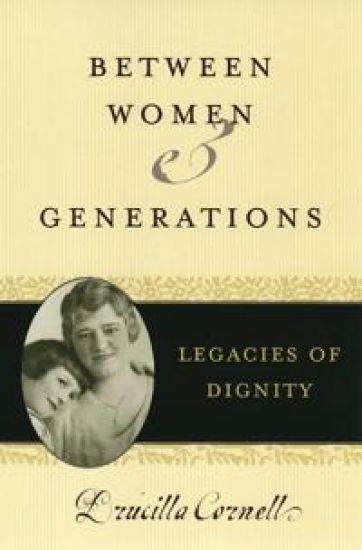
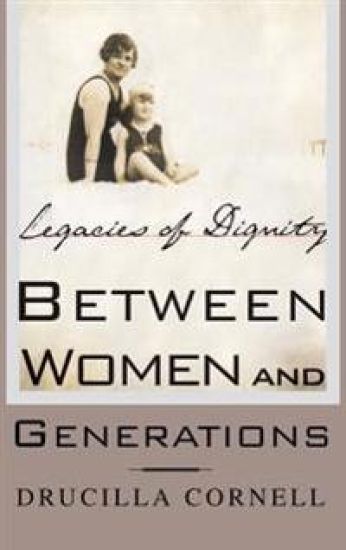
Before Drucilla Cornell's mother died, she asked her daughter to write a book, "that would bear witness to the dignity of her death" and that "her bridge class would be able to understand." Shortly thereafter, Cornell's mother, who had degenerative disease, decided to claim her right to die. Forceful, honest, and unsentimental, this is the book that Cornell promised to write. The fundamental argument of Between Women and Generations is that all women have dignity: we must ensure that they have the conditions under which they can claim that dignity in their own lives; even if they are physically harmed or morally wronged, their dignity cannot be lost. Cornell uses the personal as a springboard to discuss contemporary issues concerning women today. She engages with the difficult nature of intergenerational relationships between women by writing about her relationship to her own mother. In telling the story of her adoption of Sarita Graciela Kellow Cornell, her Paraguayan daughter, and of her relationship with UNITY, a cooperative of house cleaners in Long island, New York, Cornelll creates a powerful picture of the legacies of dignity between women and generations.
Between Women and Generations

Between Women and Generations

Drucilla Cornell

Palgrave Macmillan
2002
sidottu
This book defies easy categorization but will be one of the most original, thoughtful, and genuinely interesting books published next year. Before the author's mother died, she asked her daughter, Drucilla, to write a book 'that would bear witness to the dignity of her death [and one that] her bridge class would be able to understand.' As if that wasn't difficult enough, Drucilla's mother, who had a degenerative disease, decided to end her life by ingesting a lethal cocktail of drugs. Drucilla was in the unenviable position of bearing witness to her mother's act. Unsentimental yet poignant, candid and courageous, this is the book that Drucilla promised her mother she'd write. Unlike her earlier academically-oriented books, Between Women and Generations is an intensely personal narrative which interweaves the personal and political decisions Drucilla's made throughout her life. She uses the personal as a springboard to talk about larger philosophical issues such as how one achieves dignity in life and in death, and the nature of intergenerational relationships between women. Drucilla speaks candidly of her relationship with her mother, about her decision to adopt a non-Western child, and about her commitment to UNITY, a cooperative of house cleaners in Long Island, New York. This book will resonate strongly with Western women.
Between Women and Generations

Between Women and Generations

Drucilla Cornell

Palgrave Macmillan
2002
nidottu
This book defies easy categorization but will be one of the most original, thoughtful, and genuinely interesting books published next year. Before the author's mother died, she asked her daughter, Drucilla, to write a book 'that would bear witness to the dignity of her death [and one that] her bridge class would be able to understand.' As if that wasn't difficult enough, Drucilla's mother, who had a degenerative disease, decided to end her life by ingesting a lethal cocktail of drugs. Drucilla was in the unenviable position of bearing witness to her mother's act. Unsentimental yet poignant, candid and courageous, this is the book that Drucilla promised her mother she'd write. Unlike her earlier academically-oriented books, Between Women and Generations is an intensely personal narrative which interweaves the personal and political decisions Drucilla's made throughout her life. She uses the personal as a springboard to talk about larger philosophical issues such as how one achieves dignity in life and in death, and the nature of intergenerational relationships between women. Drucilla speaks candidly of her relationship with her mother, about her decision to adopt a non-Western child, and about her commitment to UNITY, a cooperative of house cleaners in Long Island, New York. This book will resonate strongly with Western women.
Just Cause

Just Cause

Drucilla Cornell

Rowman Littlefield
2000
nidottu
One of the distinguishing features of Drucilla Cornell's work is its emphasis on the significance of ideals. The essays collected here examine how the ideals of freedom and equality associated with the democratic revolutions of the West have survived the challenges of twentieth century critiques. Cornell argues that, far from threatening these ideals, feminism, race theory and other new theories have deepened their meaning and so allowed them to survive. In particular, Cornell here engages with issues surrounding representation and rights. Drawing on her experiences as a union organizer, she recounts how workers, and in particular women workers, came to imagine themselves in a way that allowed them to engage in political activism. The kind of representation— the imaginative acts by which we envisage the world and our role in it— is entwined, she argues, with struggles for representation in democratic practice. Cornell's work on law also reveals her vision of the role of the ideal. Included here are two of her most important contributions to legal theory—her well-known defense of worker's rights (also included is the response to her essay by Judge Richard Posner) and her ground-breaking defense of Spanish-language rights.
Beyond Accommodation

Beyond Accommodation

Drucilla Cornell

Rowman Littlefield
1999
nidottu
This new edition of Drucilla Cornell's highly acclaimed book includes a substantial new introduction by the author, which situates the book within current feminist debates. In Beyond Accommodation, Drucilla Cornell offers a highly original vision of what feminist theory can give contemporary women. She challenges essentialist and naturalist accounts of feminine sexuality, arguing that any attempt to affirm woman's value and difference by either emphasizing her maternal role or repudiating the feminine only entraps women, once again, in a container that curtails feminine sexual difference, legitimates the masculine fantasy of woman, and reinstates, rather than dismantles, the gender hierarchy. In response to these movements, Beyond Accommodation strives to broaden the scope of feminist theory by articulating a platform, under the concept of relative universalism, which proposes the idea that women are not a unified and homogenous group although they are positioned as women in patriarchy. Cornell's theory allows for differences in women's situations without giving up on the idea that women are fighting a common phenomenon called patriarchy.
Beyond Accommodation

Beyond Accommodation

Drucilla Cornell

Rowman Littlefield
1999
sidottu
This new edition of Drucilla Cornell's highly acclaimed book includes a substantial new introduction by the author, which situates the book within current feminist debates. In Beyond Accommodation, Drucilla Cornell offers a highly original vision of what feminist theory can give contemporary women. She challenges essentialist and naturalist accounts of feminine sexuality, arguing that any attempt to affirm woman's value and difference by either emphasizing her maternal role or repudiating the feminine only entraps women, once again, in a container that curtails feminine sexual difference, legitimates the masculine fantasy of woman, and reinstates, rather than dismantles, the gender hierarchy. In response to these movements, Beyond Accommodation strives to broaden the scope of feminist theory by articulating a platform, under the concept of relative universalism, which proposes the idea that women are not a unified and homogenous group although they are positioned as women in patriarchy. Cornell's theory allows for differences in women's situations without giving up on the idea that women are fighting a common phenomenon called patriarchy.
At the Heart of Freedom

At the Heart of Freedom

Drucilla Cornell

Princeton University Press
1998
pokkari
How can women create a meaningful and joyous life for themselves? Is it enough to be equal with men? In this provocative and wide-ranging book, Drucilla Cornell argues that women should transcend the quest for equality and focus on what she shows is a far more radical project: achieving freedom. Cornell takes us on a highly original exploration of what it would mean for women politically, legally, and culturally, if we took this ideal of freedom seriously--if, in her words, we recognized that "hearts starve as well as bodies." She takes forceful and sometimes surprising stands on such subjects as abortion, prostitution, pornography, same-sex marriage, international human rights, and the rights and obligations of fathers. She also engages with what it means to be free on a theoretical level, drawing on the ideas of such thinkers as Kant, Rawls, Ronald Dworkin, Hegel, and Lacan. Cornell begins by discussing what she believes lies at the heart of freedom: the ability for all individuals to pursue happiness in their own way, especially in matters of love and sex. This is only possible, she argues, if we protect the "imaginary domain"--a psychic and moral space in which individuals can explore their own sources of happiness. She writes that equality with men does not offer such protection, in part because men themselves are not fully free. Instead, women must focus on ensuring that individuals face minimal interference from the state and from oppressive cultural norms. They must also respect some controversial individual choices. Cornell argues in favor of permitting same-sex couples to marry and adopt children, for example. She presses for access to abortion and for universal day care. She also justifies lifestyles that have not always been supported by other feminists, ranging from staying at home as a primary caregiver to engaging in prostitution. She argues that men should have similar freedoms--thus returning feminism to its promise that freedom for women would mean freedom for all. Challenging, passionate, and powerfully argued, Cornell's book will have a major impact on the course of feminist thought.