Kirjailija
Duane A. Smith
Kirjat ja teokset yhdessä paikassa: 24 kirjaa, julkaisuja vuosilta 1988-2019, suosituimpien joukossa Henry M. Teller. Vertaile teosten hintoja ja tarkista saatavuus suomalaisista kirjakaupoista.
Mukana myös kirjoitusasut: Duane A Smith
24 kirjaa
Kirjojen julkaisuhaarukka 1988-2019.
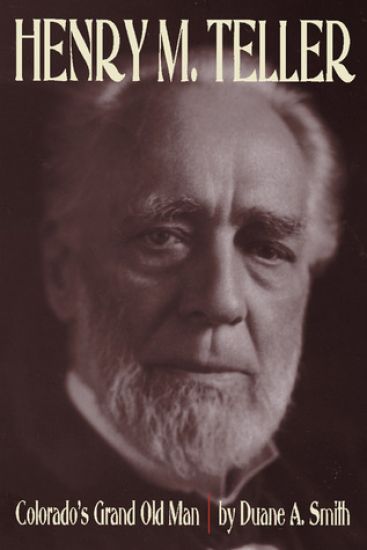
Serving longer in the US Senate than any other Coloradan, Henry M Teller was one of the Centennial State's greatest statesmen and political leaders. Teller was a prime example of what a politician should be in an era when elected officials left a great deal to be desired. As Colorado's representative, Teller stated his beliefs and stuck by them. Not all agreed with him, but all admired him for his honesty and integrity. His legal career in Colorado encompassed much of the early legislation in the territory, such as developing mining law and the organisation of the Colorado Central Railroad, while his Washington career touched on nearly every important western economic development issue that occurred in Colorado between 1876 and 1909. Teller declared to the US Congress that Colorado was a part of the nation, and that the West deserved a say in its decisions.
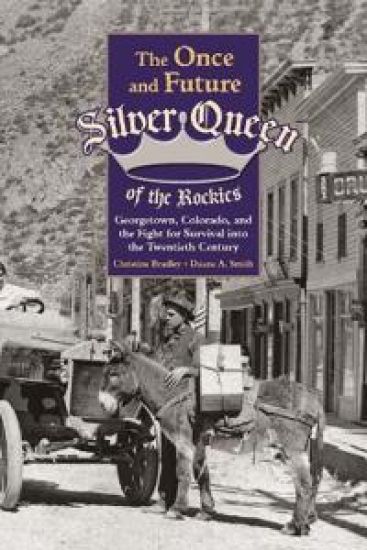
The Once and Future Silver Queen of the Rockies
Christine Bradley; Duane A Smith
University Press of Colorado
2019
nidottu
There are many studies of local communities during their heydays, but the life of a community in decline is rarely studied. The Once and Future Silver Queen of the Rockies delves into the life of Georgetown, Colorado, after the turn of the twentieth century as mining in Clear Creek County steadily declined and ultimately collapsed. One of the earliest mining communities in the state, Georgetown began to struggle for survival as the nineteenth century drew to a close. The price of silver dropped precipitously while other mining camps were still opening around the region. The new, bright future once envisioned for the “Silver Queen of the Rockies” began to fade. Yet the community managed to survive and re-create itself in the new world of the twentieth century. Tourism, skiing, and historic preservation replaced mineral extraction as the basis of the regional economy. Today, Georgetown maintains the aesthetic feel of a nineteenth-century mining town and stands as an example of community-supported historic preservation. This richly illustrated sequel to The Rise of the Silver Queen tells the compelling story of Georgetown’s survival, and ultimate flourishing, after the loss of its principal industry. It is an interesting and engaging addition to the history of Colorado and the West.
Traditionally the American frontier was the home of the self-sufficient individualist, a rural environment where settlers lived without the comforts of society. But from the first gold rush into the Rockies in 1859 until the 1890s, when most gold fields had been played out, the unsettled wilderness of the Rocky Mountains became the setting of a unique phenomenon—the Western mining camp. To be profitable, miners needed a community of support—including secure lines of transportation, farmers who could raise crops, and merchants who could supply equipment. The lure of easy money also attracted a drifting crowd of gamblers, prostitutes, and con men, and a saloon and a brothel often were the first businesses to appear in a prospering mining town. Unstable populations and a lack of planning exacerbated the problems of the mining camps, including lawlessness, destructive fires, and rough-and-ready vigilante justice, but most maturing communities stabilized and quickly established schools, churches, and libraries. In this absorbing history of the Rocky Mountain mining towns, Duane A. Smith traces their cycle of growth from birth to boom and either extinction or transformation into permanent agricultural-mining communities, and he recounts colorful histories of camps that sprang up overnight and developed into urban settlements.
A Colorado History, 10th Edition
Maxine Benson; Duane A. Smith; Carl Ubbelohde
West Winds Press
2015
sidottu
Experience Colorado with this new, enlarged edition of A COLORADO HISTORY. For fifty years, the authors of this preeminent resource have led readers on an extraordinary exploration of how the state has changed—and how it has stayed the same. From the arrival of Paleo-Indians in the Mesa Verde region to the fast pace of the twenty-first century, A COLORADO HISTORY covers the political, economic, cultural, and environmental issues, along with the fascinating events and characters, that have shaped this dynamic state. In print for fifty years, this distinctive examination of the Centennial State is a must-read for history buffs, students, researchers—or anyone—interested in the remarkable place called Colorado.
A Colorado History, 10th Edition
Maxine Benson; Duane A. Smith; Carl Ubbelohde
West Winds Press
2015
nidottu
Experience Colorado with this new, expanded edition of A Colorado History. For fifty years, the authors of this preeminent resource haveled readers on an extraordinary exploration of how the state has changed—and how it has stayed the same.An engaging narrative, A Colorado History begins with the prehistoric cliff dwellers of Mesa Verde and proceeds chronologically with accounts of Colorado’s role as a frontier territory—its fur trade, mining, Indian relations, cattle ranching, and homesteading—and continues to the present day political, economic, cultural, and environmental issues. Fascinating, informative, and accessible to history buffs, students, researchers—or anyone—interested in the remarkable story of a remarkable place. The tenth edition features a new chapter on recent events, new photos, and an updated bibliography section.
No One Ailing Except a Physician
Duane A. Smith; Ronald C. Brown
University Press of Colorado
2014
nidottu
Co-Winner of the 2004 Colorado Endowment for the Humanities Publication PrizeFrom burying scurvy victims up to their necks in the earth to drinking kerosene mixed with sugar to treat influenza, mid-nineteenth century medicine in the mining communities of the West usually consisted of home remedies that were often remarkable for their inventiveness but tragically random in their effectiveness. Only as a desperate last resort would people turn to the medical community, which had developed a deplorable reputation for quackery and charlatanism because of its lack of licensing regulations and uniform educational standards. No One Ailing Except a Physician takes readers back to those free-wheeling days in the mining towns and the dark recesses of the mines themselves, a time when illness or injury was usually survived more due to sheer luck than the interventions of medicine. In this important new contribution to both mining and medical history, historians Duane A. Smith and Ronald C. Brown present a detailed analysis of the ailments that confronted the miners and the methods with which they and their doctors attempted to "cure" them. The occupational hazards of mining, with its strenuous labor and exposure to the elements, contributed to the miners' vulnerability to disease and injury, which was further worsened by the typical miner's refusal to heed prevailing medical wisdom and common sense, often leading to easily preventable diseases such as scurvy. And because medical science of the era had not progressed much beyond that of the ancient Greeks, such debilitating diseases such as cholera, influenza, dysentery, and malaria proved to be virtual death sentences, to say nothing of occupational accidents with fires and explosions, mine collapses, and safety cage mishaps.
The house didn't know it was evil. How could It? It barely knew how to control peoples' thoughts. But when it came to eating Hahn House was well versed in the art. An ancient house holding an even more ancient evil attracts its food with sweet thoughts much like the Venus Fly-Trap attracts its food with an alluring smell. And, like that carnivorous plant, the house takes in and devours its prey.
Chronicling the people, places, and events of the state's colorful history, Colorado: The Highest State is the story of how Colorado grew up. Through booms and busts in farming and ranching, mining and railroading, and water and oil, Colorado's past is a cycle of ups and downs as high as the state's peaks and as low as its canyons. The second edition is the result of a major revision, with updates on all material, two new chapters, and ninety new photos.Each chapter is followed by questions, suggested activities, recommended reading, a "Did you know?" trivia section, and recommended websites, movies, and other multimedia that highlight the important concepts covered and lead the reader to more information. Additionally, the book is filled with photographs, making Colorado: The Highest State a fantastic text for middle and high school Colorado history courses.
Colorado Goes to the Fair
Duane A. Smith; Karen A. Vendl; Mark A. Vendl
University of New Mexico Press
2011
nidottu
In many ways, the 1893 World's Columbian Exposition in Chicago, more popularly known as the Chicago World's Fair, symbolized the American people's belief that today's glory and tomorrow's future rested with them, their country, and their democracy. A six-month extravaganza of education, entertainment, and amazement, it sparkled in the daytime and emerged at night, seductive and enchanting.The Fair aroused patriotism, pride, and a sense of achievement in almost all Americans, yet 1893 proved a troubling year for the United States, and for the young state of Colorado in particular. The repeal of the Sherman Silver Purchase Act created labor tension in the Colorado mines and contributed to a devastating national depression that would have a lingering impact on Colorado for years. In this heavily illustrated text, the authors trace the glory of the World's Fair and the impact it would have on Colorado, where Gilded Age excess clashed with the enthusiasm of westward expansion.
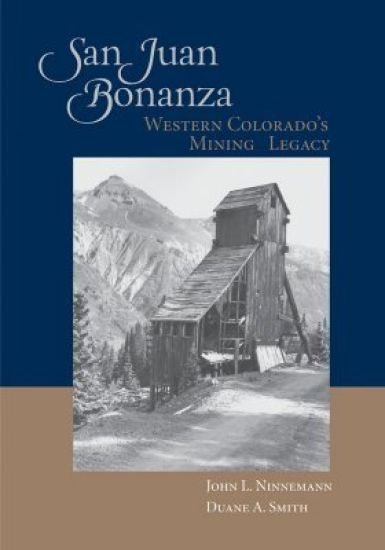
As early as the eighteenth century, Spanish explorers left place-names, lost mines, and legends scattered throughout Colorado's San Juan Mountains. In 1869 and the early 1870s the legends lured hopeful prospectors to the area, ushering in its greatest mining era and transforming it into one of the country's most celebrated mining districts. Faced with a boom-bust economy, unpredictable weather, and the risk of violent death, mining camps and towns nevertheless struggled to institute local governments that would address issues such as sanitation, the maintenance of schools, and the enforcement of law and order. As the economic boom headed toward its inevitable decline, towns like Silverton, Ouray, Telluride, Creede, Lake City, and Rico found themselves seeking visitors and tourists who wanted to experience the historical West and its accompanying folklore and legend. The pioneers and mining communities were supplanted in that rugged and unforgiving terrain. In this history of the San Juan mining region, Duane Smith's text and John Ninnemann's photographs offer a glimpse into the lives of towns that sprang up in remote canyons and mountain plateaus in southwestern Colorado and the settlers who attempted to recreate the eastern communities they had left behind.
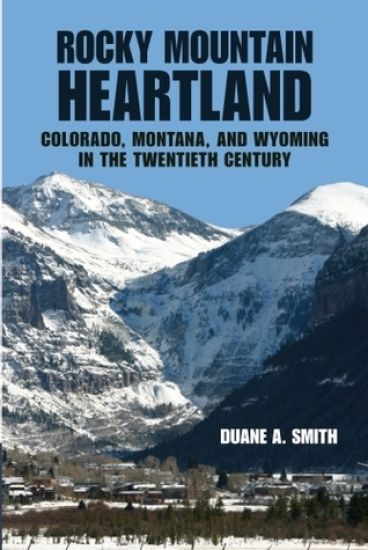
This is a lively history of three Rocky Mountain states in the twentieth century. With the sure hand of an experienced writer and the engaging voice of a veteran storyteller, the well-known historian Duane Smith recounts the major social, political, and economic events of the period with verve and zest. It is obvious that Smith is thoroughly familiar with his subject and has a genuine enthusiasm for the history of the region. Written with the general reader in mind, Rocky Mountain Heartland will appeal to students, teachers, and , rmchair historians? of all ages. This is the colorful saga of how the Old West became the New West. Beginning at the end of the nineteenth century and concluding after the turn of the twentyfirst, Rocky Mountain Heartland explains how Colorado, Montana, and Wyoming evolved over the course of the century. Smith is mindful of all the factors that propelled the region: mining, agriculture, water, immigration, tourism, technology, and two world wars. And he points out how the three states responded in varying ways to each of these forces. Although this is a regional story, Smith never loses sight of the national events that influenced events in the region. As Smith skillfully shows, the vast natural resources of the three states attracted optimistic, hopeful Americans intent on getting rich, enjoying the outdoors, or creating new lives for themselves and their families. How they resolved these often conflicting goals is the modern story of the Rocky Mountain region.
Colorado's San Juan Mountains are home to some of the most historic, and notorious, gold and silver mining towns in the West: Ouray, Silverton, Telluride, and Creede. For five centuries, the San Juans were the summer home to the Ute Indians. They were explored and claimed by Spaniards 250 years ago, and it has only been 150 years since they were entered and permanently settled by European Americans. Probably above all else, the San Juan Mountains' legacy will be tied to the mining camps and towns that littered their terrain. The 1859 Pikes Peak gold rush brought the prospectors, followed by entrepreneurs of all stripes who opened saloons, hotels, and general stores. Still others came to practice their chosen professions: lawyers, newspaper editors, gamblers, and the occasional gunman. Two decades later, the rich silver veins in the San Juans were adding to the mining frenzy. John Ninnemann's photographs illustrate the text and include the natural, and sometimes harsh, beauty of the area, narrow-gauge railroads, and mountain trails. Duane Smith, recognised historian of Colorado's mining areas, provides the history of the San Juan Mountains, the mining camps, boomtowns, and ghost towns.
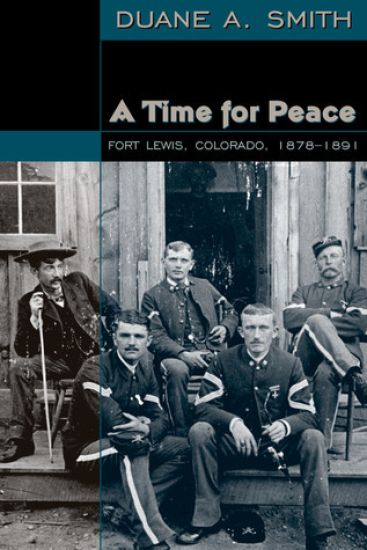
TIME FOR PEACE, historian Duane Smiths chronicle of southwest Colorados Fort Lewis, belies the Western myth of soldiers riding out from isolated posts to rescue wagon trains and protect pioneer towns. Long on daily routine and blissfully short on action, Fort Lewis lost nary a soldier in battle. Nevertheless, it was influential in the settlement of the West. Fort Lewis and its contemporaries provided an economic windfall, a sense of security, and a cultural hub for settlers. The presence of Fort Lewis in the four corners region of Colorado, New Mexico, Arizona, and Utah attracted farmers, businesspeople, and ranchers to settle the area. The forts social season, band, and baseball team helped make this rugged outpost an agreeable destination. The men who served at Fort Lewis, who made up a diverse cross-section of nineteenth-century America, served for little pay and poor food. With Smiths history, their contribution to the settlement of the West is recognised at last. Readers interested in Western and military history and in Colorado will enjoy this long-untold story.
Revised and updated, Duane A. Smith's classic study of this important silver mining town is back in print.
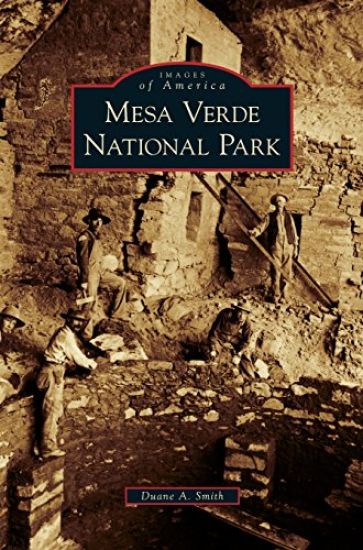
Originally published in 1988, Mesa Verde National Park: Shadows of the Centuries is an engaging and artfully illustrated history of an enigmatic assemblage of canyons and mesas tucked into the southwestern corner of Colorado. Duane A. Smith recounts the dramatic 1888 "discovery" of the cliff dwellings and other Anasazi ruins and the ensuing twenty-year campaign to preserve them. Smith also details the resulting creation of a national park in 1906 and assesses the impact of more recent developments - railroads and highways, air pollution, and the growing significance of tourism - on the park's financial and ecological vitality. This revised and completely redesigned edition includes more than 50 illustrations and will be enjoyed by readers interested in environmental, Western, and Colorado history.
First produced at the Central City Opera House in 1956, "The Ballad of Baby Doe" is now widely considered a classic and is the second most produced American opera. In The Ballad of Baby Doe, Duane A. Smith tells the tale of the complicated birth of this most American of operas. Inspired in 1953 by composer Douglas Moore's interest in Horace Tabor's story and funded by the Central City Opera House Association, the opera came together through a unique combination of hard work and serendipity. Smith relates how key people - including investors and historians in addition to creative talent - turned Moore's idea into a reality and brought the story of the Tabors to millions of opera fans worldwide. In addition, Smith compares the opera's libretto with historical reality, and the book even includes a chapter on the production written by John Moriarty, who conducted the opera in 1981, 1988, and 1996. For anyone interested in opera history or this Colorado story in particular - the emblematic tale of silver millionaire Horace Tabor and the two women he married - The Ballad of Baby Doe will be the definitive history for years to come.
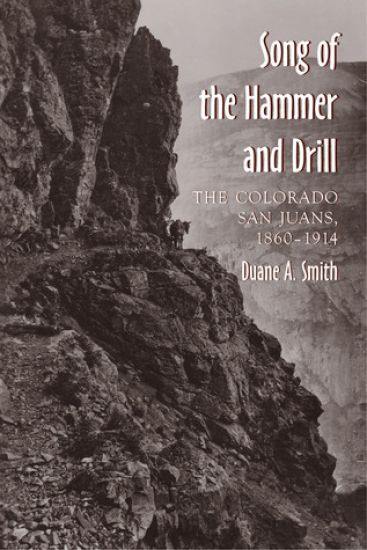
As one of the great mining regions of Colorado and the United States, the San Juan Mountains provide insight into the development of both the industry and the state. First published in 1982, Song of the Hammer and Drill, with the help of more than 100 historical photographs, traces the mining and urban history of the San Juans from 1860-1914 through the lives of the people who opened, settled, and developed the beautiful but rugged mineral-rich peaks of southwestern Colorado.
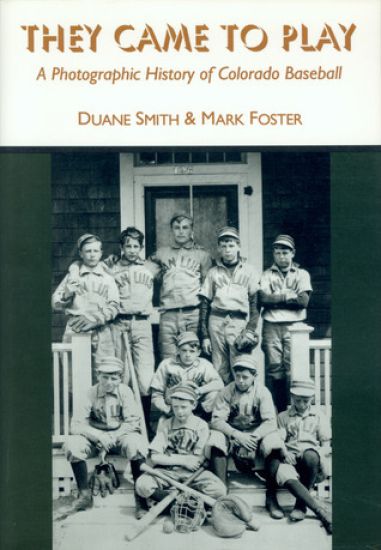
Over one hundred and thirty years ago, pioneers arriving in Colorado during the Civil War era brought the game of baseball to the high and dry Rocky Mountains frontier. From the days of games in pastures with no gloves to the high drama of Coors Field and the Colorado Rockies, baseball and Coloradans have had a love affair that has continued to flourish over the decades. In THEY CAME TO PLAY, historians and avid baseball fans Duane Smith and Mark Foster have collected the finest historic baseball photographs of teams, players, and games from around the state. They are all here, the town teams, company teams, early professional clubs, and the ethnic teams that made baseball an integral part of the life and times in Colorado's mountain towns, prairie hamlets, and bustling frontier cities. Combined with the wonderful photographs and captions is an essay that brings baseball's rich heritage in Colorado to life for the reader.